Featherdale Sydney Wildlife Park: The Complete Visitor Guide
Featherdale Sydney Wildlife Park in Doonside is one of the few places near Sydney where you can get genuinely close to Australian wildlife, from koalas and wombats to Tasmanian devils and freshwater crocodiles. Open daily from 8:00 am, it suits families and animal lovers who want more than a glimpse through a fence.
Quick Facts
- Location
- 217 Kildare Road, Doonside NSW 2767 (approx. 40 km west of Sydney CBD)
- Getting There
- Train to Blacktown Station, then bus 729 from Stand E to the park entrance (approx. 10 min)
- Time Needed
- 2–3 hours for a thorough visit; 4+ hours if you add keeper talks and feeding sessions
- Cost
- Adults A$49 | Children (3–15) A$29 | Under 3 free. confirm current prices before visiting
- Best for
- Families, wildlife photography, first-time visitors to Australia wanting native animal encounters
- Official website
- www.featherdale.com.au
What Featherdale Actually Is (And Why It Matters)
Featherdale Sydney Wildlife Park is a privately operated Australian wildlife park that has been running since 1972. Unlike larger zoo complexes, Featherdale keeps its focus tight: the collection is almost entirely native Australian fauna, and the enclosures are designed for proximity rather than spectacle. You are not watching animals from a railing twenty metres away. In many areas, you are standing beside them.
That intimacy is both the park's strongest selling point and the thing worth thinking about before you go. The grounds cover a compact area, the paths are unpretentious, and there is nothing architecturally dramatic here. What the park offers instead is consistent, repeatable access to animals that most visitors to Australia never see at anything closer than a tourist photograph: koalas at arm's length, wombats snuffling past your feet, wallabies that walk up to you without encouragement.
If your Sydney itinerary already includes a visit to Taronga Zoo, it is worth asking whether you need both. Taronga offers a far broader collection and one of the great harbour views in Sydney. Featherdale offers something different: a slower, more accessible encounter with the species that actually define Australian wildlife. Many visitors find they prefer one or the other depending on what they want from the day.
💡 Local tip
Arrive at opening (8:00 am) on weekdays. Weekday mornings see the lightest crowds, the animals are most active before midday heat sets in, and keeper feeding sessions tend to run earlier in the day. Weekend afternoons are the park's busiest window.
Getting There: The Practical Route from Sydney
Doonside is in Sydney's western suburbs, roughly 40 kilometres from the CBD. By public transport, the most reliable route is a train on the North Shore and Western line to Blacktown Station, then bus 729 from Stand E, which drops you at the park entrance in approximately ten minutes. The total journey from Central Station takes around 50 minutes to one hour depending on the service.
If you are driving, free parking is available directly at the entrance, with overflow parking nearby. The Great Western Highway provides the most direct road access from the city. For families with prams or young children, driving is often the more practical choice, particularly if you are also visiting other western Sydney attractions on the same day.
ℹ️ Good to know
Featherdale is open daily 8:00 am–5:00 pm, and on Christmas Day 8:00 am–2:00 pm. Plan your return journey accordingly, as bus frequency on route 729 can vary in the late afternoon.
Tickets & tours
Live prices and dates from our booking partner. If you book, we may earn a commission at no extra cost to you.
Wildlife, waterfalls and wine full-day private tour from Sydney
From 196 €Instant confirmationWildlife Sydney Zoo tickets
From 23 €Instant confirmationFree cancellationWildlife, waterfalls and wine full day guided tour from Sydney
From 193 €Instant confirmationThe Rocks historic walking tour
From 20 €Instant confirmationFree cancellation
Inside the Park: What You Will Actually See
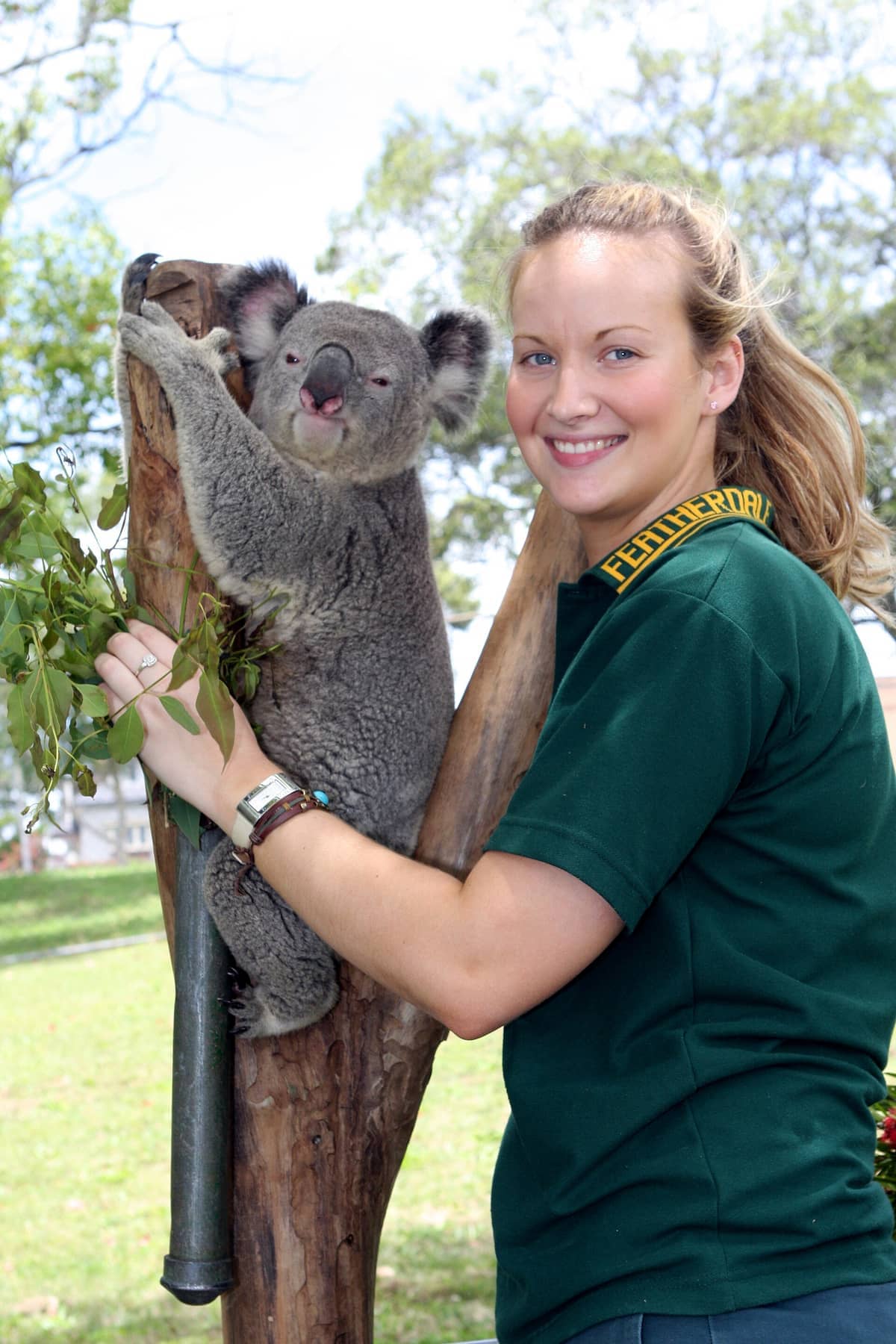
The layout follows a series of connected walk-through and viewing areas. Koalas are among the first animals you encounter, housed in naturalistic settings with low perching structures that put them within touching distance for photo opportunities. Koalas sleep between 18 and 22 hours per day, so do not expect animated encounters, but the closeness of the access is genuinely unusual outside a purpose-built wildlife hospital.
The kangaroo and wallaby areas are free-roaming: you walk among the animals rather than past them. The park provides small bags of feed pellets, and several species will approach visitors directly. Eastern grey kangaroos, red-necked wallabies and wallaroos are all represented. Wombats move through the same zones and tend to draw a disproportionate amount of visitor attention for their size and temperament.
Beyond the marsupials, the park holds Tasmanian devils, a range of Australian reptiles including freshwater crocodiles, numerous bird species (including kookaburras, emus, and various parrot families), and short-beaked echidnas. The echidna habitat is one of the more underrated sections: echidnas are notoriously difficult to observe in the wild, and the park's small group allows close, unhurried observation of an animal many Australians have never seen up close.
Keeper Talks and Feeding Sessions
The park runs scheduled keeper presentations throughout the day. These vary by season and staffing, so check the board at the entrance on arrival rather than planning your entire visit around a fixed timetable. Feeding sessions for specific animals, including the Tasmanian devils, tend to attract the largest crowds. Arrive a few minutes early to get a clear sightline, as the viewing areas in front of enclosures can fill quickly.
How the Experience Changes by Time of Day
The first two hours after opening are consistently the best window for animal activity. In the cooler morning air, kangaroos and wallabies move more freely and feed more actively. Reptiles and echidnas, being temperature-sensitive, are often less visible by mid-afternoon when enclosure temperatures rise. Koalas, true to form, maintain a steady indifference to the time of day.
By late morning on weekends, the park's compact layout means paths near the koala area and free-roaming kangaroo zone can feel congested. This is less an issue of the park being overcrowded in absolute terms, and more a consequence of the intimate scale: the same hundred people who would be invisible in a large zoo become very noticeable in a narrow, tree-lined path. If you arrive after midday on a Sunday, adjust your expectations accordingly.
In summer (December through February), temperatures in western Sydney regularly exceed 35°C and occasionally approach 40°C. On very hot days, some animals retreat to shade and the experience diminishes noticeably. The park does not close for heat, but your comfort and the animals' activity levels both decline. Shoulder seasons, particularly March through May and September through November, provide milder conditions and are the most comfortable time to visit.
⚠️ What to skip
Western Sydney experiences more extreme heat than the coastal suburbs. On days forecast above 38°C, the park remains open but consider rescheduling if you have young children or are sensitive to heat. Bring more water than you think you need.
Photography at Featherdale
The close access makes Featherdale genuinely good for animal photography without specialist equipment. A smartphone with a capable camera will produce usable images in most sections. In the free-roaming kangaroo areas, patience matters more than focal length: wait for the animals to settle and face toward natural light rather than chasing them. The dappled light under tree cover in the mid-morning hours produces the most flattering conditions.
For the koala sections, early morning light is softer and less likely to produce harsh shadows through the enclosure netting. Tasmanian devil enclosures involve glass panels in some viewing areas, which can introduce reflections; a polarising filter helps, or simply position yourself close to the glass and angle slightly to reduce glare.
If wildlife photography is your primary reason for visiting Sydney, also consider the Sydney wildlife guide for outdoor spotting locations where native animals appear in their natural habitat, including national parks on the city's fringe.
Practical Details and Accessibility
The park is wheelchair accessible throughout, with accessible toilets and parents' rooms on site. Wheelchairs and walkers are available at no additional charge, which makes Featherdale a practical option for visitors with mobility limitations who want native wildlife access without the terrain challenges of a national park setting. Assistance dogs are accommodated with advance registration through the park's official contact channels.
There is a cafe on site for light meals and snacks. Outside food and drink can be brought in, and picnic areas are available, which is worth knowing if you are visiting with young children and prefer not to rely on the on-site food options. Sun protection is essential: the path layout involves significant time in open areas, and the UV index in Sydney can be high even on overcast days.
Featherdale works well as part of a western Sydney day trip. It can be combined with a visit to Sydney Olympic Park if you are driving, or paired with a trip toward the lower Blue Mountains. For a longer itinerary heading west, see the Blue Mountains day trip guide for options that extend the journey beyond the suburban fringe.
Who This Suits and Who Might Want to Look Elsewhere
Featherdale is particularly well suited to first-time visitors to Australia who want their initial encounter with native fauna to be unhurried and close. It is also a consistent choice for families with children under twelve, where the scale of the park works in your favour: there is enough to see without the exhaustion of a full-day major zoo visit, and the interactive elements hold children's attention well.
Visitors who have already spent time in Australian wildlife parks elsewhere, or who have had reasonable wildlife encounters in national parks, may find the admission price high relative to what the park adds to their existing experience. The collection, while high quality for its focus on native species, is not extensive by zoo standards: if diversity of species is your goal, a larger institution will serve you better.
Travellers whose primary interest is Sydney's coastal and urban landscape, rather than wildlife, may prefer to put their time toward the Bondi to Coogee coastal walk or an afternoon at the Royal Botanic Garden instead. Featherdale rewards visitors who specifically want what it offers; it is not a general-purpose Sydney attraction.
Insider Tips
- Weekday mornings between 8:00 am and 10:30 am offer the best combination of animal activity and low visitor numbers. The kangaroo zone in particular feels very different with twenty people in it compared to two hundred.
- Bring small notes or coins for the animal feed dispensers rather than assuming card payment is accepted at every station inside the park.
- The echidna habitat is frequently overlooked because it sits off the main circuit path. Make a point of finding it: echidnas are far more active and visible here than most visitors expect, and the area rarely draws a crowd.
- If you are travelling by bus 729 from Blacktown, check the Transport for NSW trip planner before your return journey. Afternoon frequency can drop, and the walk to an alternative bus stop is not difficult but requires knowing the route in advance.
- On hot days, the shaded bird aviaries and reptile houses provide natural cooling breaks and are worth spending longer in than you might otherwise plan.
Who Is Featherdale Wildlife Park For?
- First-time visitors to Australia wanting up-close encounters with native animals like koalas, wombats and wallabies
- Families with children aged 3 to 12, where the park's compact scale and interactive feeding areas work well
- Wildlife photographers who want close access without needing telephoto lenses
- Visitors with mobility limitations seeking accessible native wildlife experiences outside a major zoo complex
- Travellers spending time in western Sydney who want a half-day activity that does not require returning to the city centre
Nearby Attractions
Combine your visit with:
- Blue Mountains National Park
Blue Mountains National Park covers around 268,000 hectares of sandstone plateaus, deep gorges and temperate rainforest west of Sydney. It is a popular national park in New South Wales and one of the most rewarding day trips or overnight escapes from the city, provided you know where to go and when to arrive.
- Figure Eight Pools
Figure Eight Pools are naturally formed rock pools on the coastal shelf of Royal National Park, south of Sydney. Reaching them requires a 6km return walk over steep terrain and careful timing around tides and surf. The reward is a striking geological curiosity in one of Australia's oldest national parks.
- Hunter Valley Wine Region
The Hunter Valley is Australia's oldest premium wine-producing region, sitting roughly two hours north of Sydney. Spread across 2,605 hectares of vineyard land near the village of Pokolbin, it rewards visitors with cellar door tastings, open countryside, and a pace that feels genuinely removed from city life. Whether you come for a single afternoon or a full weekend, understanding how the region works before you arrive makes a real difference.
- Jervis Bay
Jervis Bay is a protected marine park and coastal wilderness about three hours south of Sydney, combining some of the country's most startling white-sand beaches with snorkelling, dolphin watching, and old-growth forest. It takes genuine effort to reach, but the payoff is a stretch of coastline that rarely disappoints.
Planning a trip? Discover personalized activities with the Nomado app.