Figure Eight Pools: The Royal National Park Rock Pools Worth the Effort
Figure Eight Pools are naturally formed rock pools on the coastal shelf of Royal National Park, south of Sydney. Reaching them requires a 6km return walk over steep terrain and careful timing around tides and surf. The reward is a striking geological curiosity in one of Australia's oldest national parks.
Quick Facts
- Location
- Rock shelf south of Burning Palms Beach, Royal National Park, NSW
- Getting There
- Drive to Garawarra Farm carpark off Garie Road; the pools are a 3km walk from the carpark
- Time Needed
- About 4 hours walking, plus time at the pools
- Cost
- A$12 per vehicle per day for Royal National Park entry (verify before visiting)
- Best for
- Experienced walkers, geology enthusiasts, coastal photographers
What Are the Figure Eight Pools?
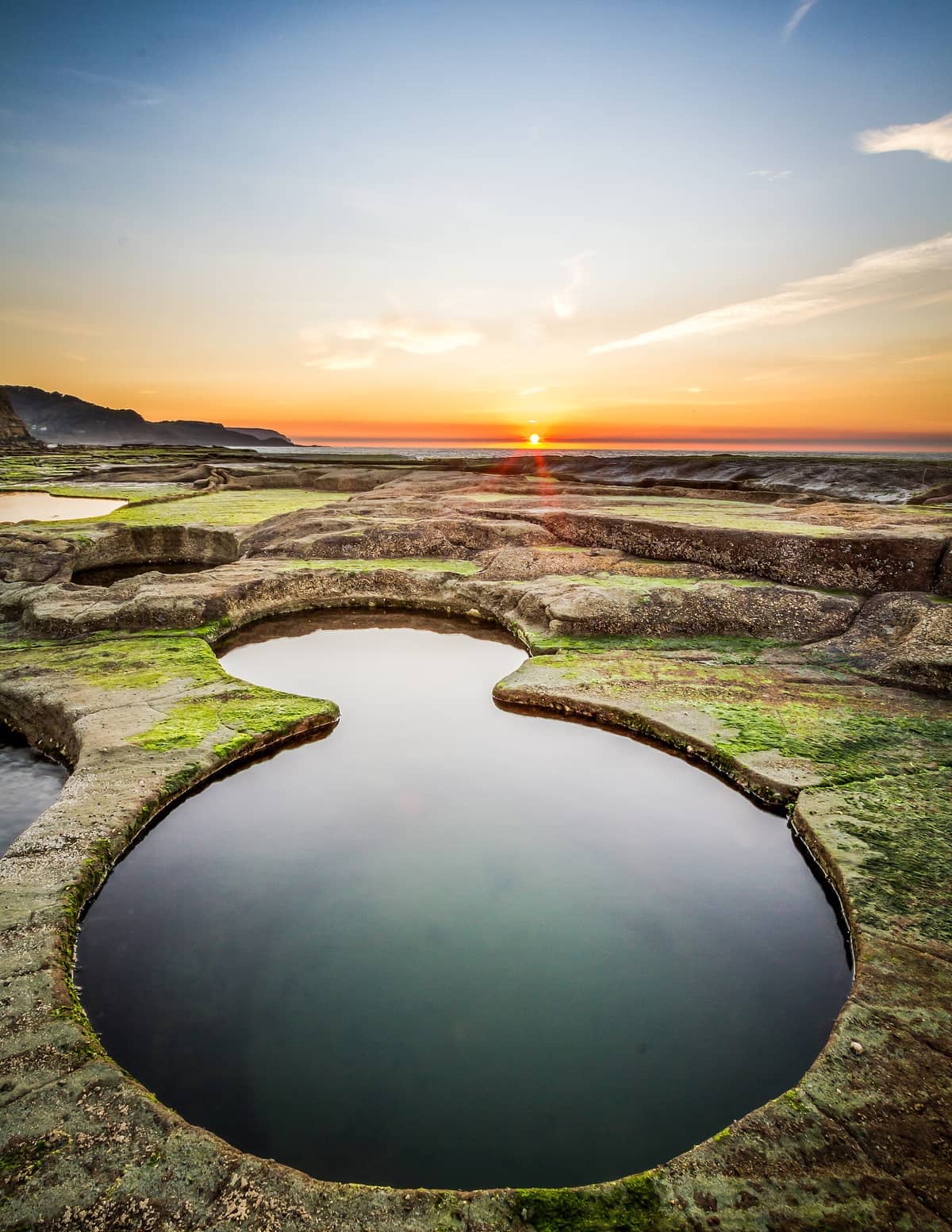
Figure Eight Pools are a pair of naturally carved rock pools on the wave-cut shelf of the Royal National Park coastline, Figure Eight Pools are a pair of naturally carved rock pools on the wave-cut shelf of the Royal National Park coastline, south of Burning Palms Beach.. The pools are named for the approximate figure-eight shape formed by two interconnected basins in the sandstone. Over an immense period, wave action has ground and scoured the soft rock into these circular depressions, filling them with seawater and, at times, small fish, anemones, and algae. The effect, when seen from above with clear water catching the light, is genuinely arresting.
This is not a managed swimming facility. There are no lifeguards, no fences, and no infrastructure at the pools themselves. What draws visitors here is the combination of geological novelty and the surrounding coastal wilderness of the Royal National Park, one of the oldest national parks in the world, gazetted in 1879.
⚠️ What to skip
The NSW National Parks and Wildlife Service classifies the rock shelf as hazardous. People have been swept off the platform by waves. Only approach the pools when surf is genuinely calm and the tide is low. Check the Bureau of Meteorology surf forecast and a local tide chart before setting out — conditions can change quickly.
The Walk In: What to Expect on the Trail
The walk begins at Garawarra Farm carpark, which is reached by driving along Garie Road inside Royal National Park. The carpark is functional rather than scenic: a gravel lot with a basic information board and toilet facilities. From here, the route follows a section of the Coast Track, the long-distance trail that runs through the park's coastal fringe.
The roughly 3km walk from Garawarra Farm carpark descends steeply through heath scrub and eucalypt forest before reaching Burning Palms Beach, a secluded cove with coarse sand and a small resident community of caretaker cottages. The descent involves uneven stone steps, exposed roots, and loose ground in places. The same terrain you walked down must be climbed on the return, and many visitors underestimate how demanding the uphill stretch feels after several hours on rock platforms in the sun. Factor in at least 4 to 6 hours for the full return trip, including time at the pools.
From Burning Palms Beach, you continue south along the rock platform itself. This stretch requires scrambling over boulders and navigating uneven sandstone shelves. There are no trail markers once you leave the beach. The pools are not immediately visible from the beach; you follow the rock platform and look for the distinctive depressions once you are close.
💡 Local tip
Wear closed-toe shoes with grip — trail runners or light hiking shoes are ideal. Thongs (flip-flops) and bare feet are genuinely dangerous on wet rock. Bring at least 1.5 litres of water per person; there is no fresh water on the route.
Tickets & tours
Live prices and dates from our booking partner. If you book, we may earn a commission at no extra cost to you.
The Rocks historic walking tour
From 20 €Instant confirmationFree cancellationBeginner surf lesson at Bondi Beach
From 79 €Instant confirmationFree cancellationSydney whale-watching cruise with breakfast or lunch
From 62 €Instant confirmationFree cancellationBlue Mountains Waterfalls Full-Day Tour with Lunch and Dinner
From 171 €Instant confirmationFree cancellation
Timing Your Visit: Tides, Surf, and Time of Day
Timing is the single most important factor in determining whether your visit is safe and worthwhile. The pools are only accessible and visible when the tide is low enough to expose the shelf, and only safe when the ocean swell is small. A combination of low tide and calm, flat surf is essential. On days when the swell is even moderately elevated, waves can surge across the platform with almost no warning.
In practical terms, this means most successful visits happen on calm weather days in the morning, when low tide coincides with daylight hours. Because tides shift by roughly 50 minutes each day, the optimal window moves around the calendar constantly. Check the Bureau of Meteorology tide predictions for Port Hacking or Cronulla, and the regional surf forecast, before every visit. A day that looks perfect from Sydney's suburbs can have a completely different swell on the exposed south-facing coast.
Photographically, overcast mornings suppress harsh reflections on the water and bring out the texture of the sandstone. Clear mornings with low sun can produce vivid turquoise tones in the pools, but the light is intense and the glare can flatten the image by mid-morning. Late afternoon visits are logistically difficult to time around tides and still allow a safe return walk before dark.
The Royal National Park surrounding the pools is worth exploring in its own right. For context on the broader park system and other walks in the area, see the Royal National Park guide and consider the Sydney coastal walks guide for comparable routes along the NSW coast.
What You See at the Pools
Standing at the edge of the figure-eight formation on a calm, low-tide morning, the pools are genuinely striking. The water is clear and often still, reflecting the sky in a deep blue or green depending on the light. The sandstone around them is layered and striated, coloured in warm ochres, rusts, and greys. The scale is modest: the pools are not large, and a photograph with no reference point can make them appear grander than they are. In person, the experience is more about the surrounding coastal wilderness than the pools alone.
The wider rock platform is dotted with smaller pools and channels, each hosting its own miniature ecosystem. Sea anemones anchor themselves in crevices, small crabs navigate the rocks, and hardy coastal vegetation clings to the higher ledges. On quiet days, the dominant sounds are the rhythmic wash of distant swells, the call of seabirds, and the occasional crunch of your footsteps on barnacled rock.
It is worth being direct about expectations: visitors who have seen the pools in photographs taken with a drone or wide-angle lens on a flawlessly calm day may find the reality more ordinary. The figure-eight shape is recognisable but not always dramatic from ground level. The experience is best understood as the destination at the end of a rewarding coastal walk, rather than an attraction that stands on its own.
Getting There: Practical Logistics
There is no public transit that takes you directly to the Garawarra Farm carpark. The realistic option for most visitors is to drive. Royal National Park can be reached by following the Princes Highway south from Sydney and entering the park at one of its access points; Garie Road branches off from within the park toward the Garawarra carpark. Allow at least an hour from central Sydney, and more during peak-hour traffic.
There is a train service to Otford station on the South Coast Line from Sydney, and some walkers approach via the Coast Track from Otford, which adds significant distance and elevation change to the already demanding route. This is an option for experienced long-distance walkers but is not a practical day-trip option for casual visitors.
Park entry costs A$12 per vehicle per day. Confirm current fees with the NSW National Parks and Wildlife Service before your visit, as charges can change. An annual park pass may offer better value for regular visitors to NSW national parks.
If you are planning a broader day trip south of Sydney, the Figure Eight Pools can be combined with time at Royal National Park or considered alongside other day trips from Sydney that cover the southern coastal corridor.
Safety, Accessibility, and Who Should Reconsider
The NSW National Parks and Wildlife Service explicitly states that the route is unsuitable for prams and young children, and that the rock shelf is hazardous. This is not cautious boilerplate: people have died at the Figure Eight Pools after being swept off the platform by waves. The danger is real and does not always announce itself. A swell that looks manageable from the platform can send water surging across the rocks with a force that is difficult to brace against.
The walk itself is rated moderate to hard. The steep descent and the uneven terrain on the rock platform require reasonable fitness and stable ankles. Anyone with significant mobility limitations, knee problems, or a fear of exposed coastal environments should reconsider. The route is not wheelchair accessible at any point.
Visitors who have limited hiking experience, who are travelling with young children, or who are visiting on a day with elevated surf should not attempt to reach the pools. The coastal scenery on the upper sections of the track, and the view from Burning Palms Beach itself, offers a worthwhile partial alternative without requiring access to the rock platform.
⚠️ What to skip
Royal National Park may close during periods of high fire danger or after significant storms. Check the NSW National Parks website or call the visitor line before driving out, particularly in summer and early autumn.
Photography Tips
The figure-eight shape is most legible from a slightly elevated vantage point on the surrounding rock platform, looking down into the pools. Arriving at low tide means more of the rock shelf is exposed, which helps separate the pools visually from the surrounding water. A polarising filter reduces surface glare and deepens the colour of the water, though it requires a camera with a filter thread.
Drone photography is subject to national park regulations; check the current NSW National Parks policy on drone use before bringing one. Many of the most widely circulated images of the pools were taken by drone, which is part of why the visual reality at ground level can feel underwhelming by comparison.
For other photography-worthy coastal landscapes near Sydney, the Bondi to Coogee coastal walk and the best viewpoints in Sydney offer strong alternatives that are more accessible and less weather-dependent.
Insider Tips
- Check a tide chart for Port Hacking or Cronulla specifically, not a generic Sydney tide chart. The times and heights differ enough to matter when planning access to the rock shelf.
- The carpark at Garawarra Farm fills early on weekends in good weather. Arriving before 8am gives you both a parking spot and cooler temperatures for the walk in.
- Bring a dry bag for your phone and camera. Even on calm days, sea spray can reach you on the platform without warning.
- The Coast Track is clearly signposted from the carpark to Burning Palms Beach, but once you are on the rock platform, navigation is intuitive rather than marked. Follow the shelf south and look for the two interconnected pools at roughly the midpoint of the platform.
- If you arrive and find the surf has picked up since you checked the forecast, turn back. The pools will still be there on your next visit. There is no view from the platform that justifies standing on wet rock with breaking waves nearby.
Who Is Figure Eight Pools For?
- Experienced day hikers comfortable on uneven coastal terrain
- Geology and natural history enthusiasts interested in wave erosion landforms
- Photographers seeking coastal landscape subjects away from crowds
- Visitors who want to explore Royal National Park beyond its well-known beaches
- Travellers who prefer natural, unmanaged environments over curated attractions
Nearby Attractions
Combine your visit with:
- Blue Mountains National Park
Blue Mountains National Park covers around 268,000 hectares of sandstone plateaus, deep gorges and temperate rainforest west of Sydney. It is a popular national park in New South Wales and one of the most rewarding day trips or overnight escapes from the city, provided you know where to go and when to arrive.
- Featherdale Wildlife Park
Featherdale Sydney Wildlife Park in Doonside is one of the few places near Sydney where you can get genuinely close to Australian wildlife, from koalas and wombats to Tasmanian devils and freshwater crocodiles. Open daily from 8:00 am, it suits families and animal lovers who want more than a glimpse through a fence.
- Hunter Valley Wine Region
The Hunter Valley is Australia's oldest premium wine-producing region, sitting roughly two hours north of Sydney. Spread across 2,605 hectares of vineyard land near the village of Pokolbin, it rewards visitors with cellar door tastings, open countryside, and a pace that feels genuinely removed from city life. Whether you come for a single afternoon or a full weekend, understanding how the region works before you arrive makes a real difference.
- Jervis Bay
Jervis Bay is a protected marine park and coastal wilderness about three hours south of Sydney, combining some of the country's most startling white-sand beaches with snorkelling, dolphin watching, and old-growth forest. It takes genuine effort to reach, but the payoff is a stretch of coastline that rarely disappoints.
Planning a trip? Discover personalized activities with the Nomado app.