Jervis Bay: Crystal Water, Wild Coastline, and a Marine Park Worth the Drive
Jervis Bay is a protected marine park and coastal wilderness about three hours south of Sydney, combining some of the country's most startling white-sand beaches with snorkelling, dolphin watching, and old-growth forest. It takes genuine effort to reach, but the payoff is a stretch of coastline that rarely disappoints.
Quick Facts
- Location
- South Coast NSW, approx. 3 hrs drive south of Sydney CBD
- Getting There
- Car recommended via Princes Hwy then toward Huskisson or Vincentia; no direct train to the bay
- Time Needed
- Full day minimum; overnight stay strongly recommended
- Cost
- Jervis Bay Marine Park: free to visit. Booderee National Park vehicle pass: AUD $20/day (concession AUD $10); walkers and cyclists free
- Best for
- Beach lovers, snorkellers, wildlife spotters, photographers, nature hikers
What Jervis Bay Actually Is
Jervis Bay Marine Park is a protected coastal system on the New South Wales South Coast, established in 1998 with active zone management beginning in October 2002. It covers approximately 215 square kilometres of ocean and more than 100 kilometres of coastline, stretching from Kinghorn Point in the north down to Sussex Inlet in the south. The marine park exists alongside Jervis Bay National Park (managed by NSW National Parks) and Booderee National Park, a separately administered Commonwealth area managed in partnership with the Wreck Bay Aboriginal Community. Understanding this three-park structure matters practically: entry fees, rules, and permitted activities differ depending on which section of coastline you are standing on.
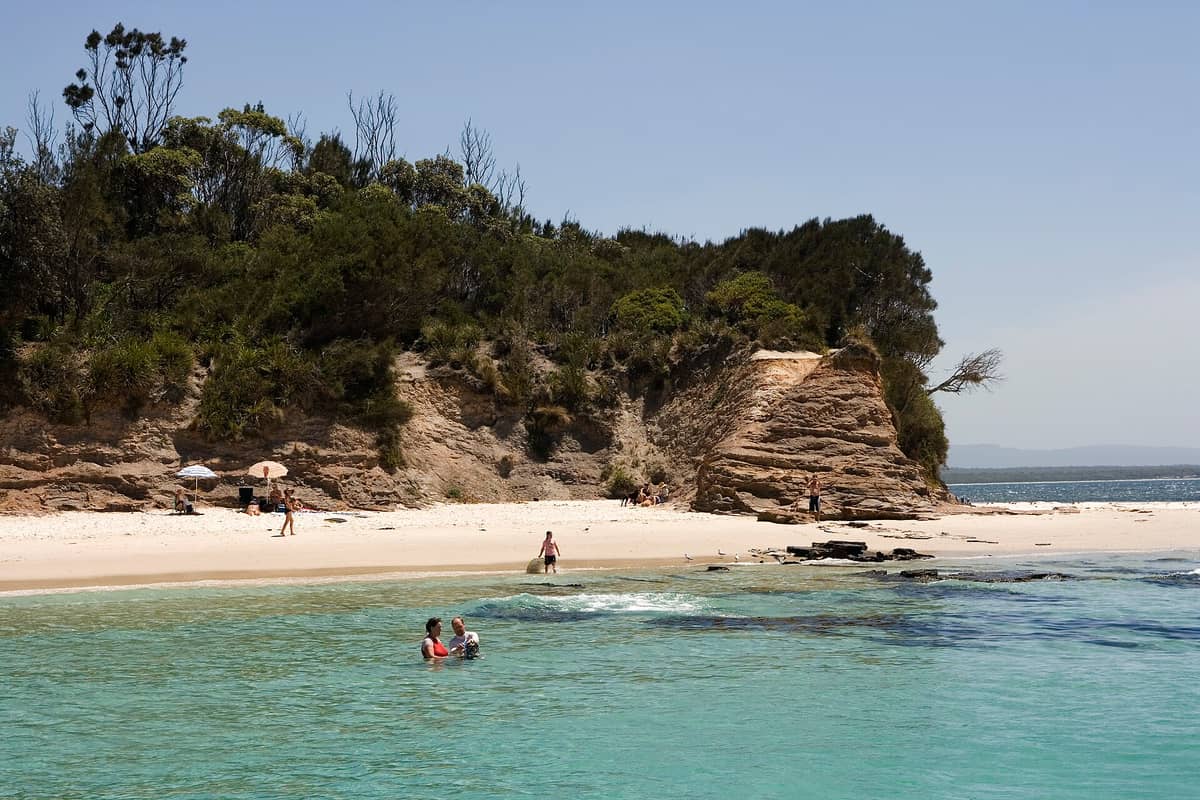
Most visitors arrive for the beaches, particularly Hyams Beach, which is frequently cited as having some of the whitest sand in the world. That claim is hard to verify in absolute terms, but what is verifiable is the quality of the quartz: fine, almost powder-like underfoot, and bright enough on a sunny day to require sunglasses. The water colour shifts depending on depth and light conditions, ranging from a pale jade in the shallows to a deeper blue-green offshore. On a calm morning, the combination is genuinely striking.
💡 Local tip
Arrive at Hyams Beach before 9:30am on weekends. The small car park fills completely by mid-morning during summer and public holidays, and there is no overflow facility. Weekday visits are considerably more relaxed year-round.
Getting There from Sydney
Jervis Bay is not accessible by direct public transport from Sydney. The practical option is to drive: head south on the Princes Highway (A1) from Sydney, pass through Nowra, then follow signs toward Huskisson or Vincentia depending on your intended beach. The drive from Sydney CBD takes approximately three hours under normal traffic conditions, though this can extend significantly on Friday afternoons and before long weekends when South Coast traffic congestion is a known issue.
If you prefer not to drive, some commercial tour operators run day trips from Sydney. Alternatively, NSW TrainLink services connect Sydney Central to Bomaderry (the station for Nowra), from which a taxi or rideshare is needed for the remaining distance to Huskisson. This combination adds time and cost and makes tight day-trip scheduling difficult. For most visitors, this is an attraction that rewards those willing to rent a car. Pair it with a day trip itinerary from Sydney if you want to build a broader South Coast route.
Fuel up before leaving Nowra. Petrol stations exist in Huskisson and nearby towns, but prices on the coast are typically higher than in the city, and some of the quieter beach access roads have no services nearby.
Tickets & tours
Live prices and dates from our booking partner. If you book, we may earn a commission at no extra cost to you.
The Rocks historic walking tour
From 20 €Instant confirmationFree cancellationBeginner surf lesson at Bondi Beach
From 79 €Instant confirmationFree cancellationSydney whale-watching cruise with breakfast or lunch
From 62 €Instant confirmationFree cancellationBlue Mountains Waterfalls Full-Day Tour with Lunch and Dinner
From 171 €Instant confirmationFree cancellation
The Beaches: What to Expect on the Ground
Hyams Beach is the name most people search for, and it lives up to reasonable expectations. The beach itself is relatively short, backed by low vegetation, and sheltered enough that the water is usually calm. On a clear, low-wind morning the colour contrast between the white sand and the pale water is extraordinary, and this is the hour when the beach photographs best. By early afternoon, sea breezes typically pick up and the light becomes harsher.
Greenfield Beach, a short walk or drive from Hyams, is quieter and less photographed. It offers a similar sand quality with slightly more wave action, making it better for swimming on days when Hyams feels too crowded. Murrays Beach inside Booderee National Park requires the park vehicle pass but is surrounded by forest reaching almost to the sand, creating a different, more enclosed atmosphere.
For those willing to walk further, the Booderee National Park section of coastline holds several beaches that see a fraction of the visitor numbers of Hyams. The tradeoff is that facilities (toilets, shade structures) are minimal or absent. Bring water, sun protection, and expect sand that has seen far fewer footprints.
⚠️ What to skip
Jervis Bay National Park may close temporarily due to extreme fire danger or severe weather. Check the NSW National Parks website before making a long drive, particularly during summer.
Marine Life and Water Activities
The marine park status translates into noticeably healthier reef systems than unprotected stretches of coastline nearby. Snorkelling at Hole in the Wall, near Booderee, exposes the patient visitor to weedy sea dragons, a species that is slow-moving and well-camouflaged in kelp but rewarding to find. Blue groper, wobbegong sharks resting on sandy patches, and various wrasse species are commonly reported. Water visibility can be exceptional on calm days, though it deteriorates significantly after heavy rain runoff from the catchments.
Dolphin watching is a genuine highlight rather than a marketing abstraction. Common bottlenose dolphins use the bay regularly, and boat-based tours out of Huskisson report sightings on the majority of departures. The dolphins often approach vessels rather than needing to be chased, which makes for a calmer and more rewarding encounter than in more commercialised whale-watching zones. Between June and November, humpback whale migrations pass through the region, and whale-watching tours are offered from Huskisson during this season.
Kayak and stand-up paddleboard hire is available in Huskisson, giving independent access to the inner bay. The sheltered western side of the bay is manageable for most fitness levels on calm days. For a sense of how coastal water activities fit into broader Sydney region travel, the Sydney coastal walks guide offers useful context, though Jervis Bay's scale and wildness differ from anything closer to the city.
Booderee National Park: Forest, History, and Slow Travel
Booderee National Park occupies the Bherwerre Peninsula at the southern end of Jervis Bay and is jointly managed by the Australian Government and the Wreck Bay Aboriginal Community. The name Booderee comes from the Dhurga language of the local Koori people, and the park contains significant cultural sites and evidence of continuous Aboriginal occupation over thousands of years. Visitors should be aware that some areas have specific restrictions reflecting this heritage.
The vehicle day pass (AUD $20, concession AUD $10 as of December 2024, walkers and cyclists free) gives access to the campgrounds, beaches, and botanical garden within the park. The Booderee Botanic Garden is one of only two Commonwealth botanic gardens in Australia and focuses on the plant species of the region, including several that are locally threatened. It is not a formal landscaped garden in the Royal Botanic style; it is wilder and more educational than decorative. For a very different botanic experience closer to the city, the Royal Botanic Garden Sydney offers a useful point of comparison.
The walking tracks inside Booderee range from easy foreshore loops to longer forest routes. Birdlife is significant: yellow-tailed black cockatoos are frequently heard before they are seen, their calls carrying through the eucalyptus canopy, and the forest trails regularly produce sightings of crimson rosellas and various honeyeater species. Early morning is the right time to walk these tracks, before the heat of the day and when bird activity peaks.
Practical Walkthrough: How to Structure Your Visit
A single long day from Sydney is possible but leaves little room for anything beyond a beach visit and a brief explore of Huskisson. The town has a main street with cafes, a pub, and the Jervis Bay Maritime Museum. If you are driving three hours each way, spending one night in Huskisson or at the Booderee campground makes the trip considerably more satisfying.
Morning priority: arrive at Hyams Beach or Murrays Beach before crowds build. Pack snorkelling gear if you have it, or arrange hire in Huskisson the previous afternoon. Midday can be spent in the water or eating in Huskisson. Afternoons are well-suited to the forest walks in Booderee, when beach parking pressure eases and birdlife becomes active again before sunset. The light on the water in the late afternoon, particularly from the headlands around Booderee, is the kind of scene that makes the drive feel worthwhile.
If combining Jervis Bay with a broader South Coast itinerary, it fits naturally alongside other regional destinations. A multi-stop South Coast road trip could include Royal National Park on the way south, with Jervis Bay as the centrepiece.
ℹ️ Good to know
The Jervis Bay Visitor Information Centre is located at 11 Dent Street, Huskisson NSW 2540. The car park has disabled parking and accessible museum entry. This is a useful first stop for maps and current park condition information.
Honest Assessment: Who Should and Shouldn't Make the Trip
Jervis Bay is worth the drive for anyone who values unspoiled coastal scenery, marine wildlife, and a lower visitor density than Sydney's famous beaches. It is not a convenient half-day excursion. The round trip driving time alone exceeds six hours, and the experience is substantially diminished if you arrive in the middle of the day in peak season, spend an hour at a crowded Hyams Beach, and immediately turn around.
Travellers on a tight Sydney schedule who have already seen Bondi, Manly, and the harbour foreshore might find Jervis Bay adds a genuinely different dimension to their trip. Travellers with only two or three days in Sydney should probably prioritise the harbour, the inner beaches, and the city itself before making the three-hour commitment south.
Those interested in Australian coastal wildlife at a more accessible scale might consider closer options first. Manly Scenic Walkway or the Bondi to Coogee coastal walk are solid alternatives when time is limited, though they offer a very different experience in terms of scale and wildness.
Insider Tips
- Book Booderee campground accommodation months in advance for school holidays and long weekends. Sites at Green Patch (sheltered, forested, close to water) are the most sought-after and disappear fastest.
- Bring a face mask and snorkel even if you don't consider yourself a snorkeller. Hole in the Wall at Booderee is calm and shallow enough for beginners, and weedy sea dragons are present with enough patience and slow movement.
- Huskisson's cafes and the main street get crowded on weekend mornings. Pick up coffee and breakfast supplies the night before if you're staying locally, and you'll be at the beach while others are still queuing.
- Check NSW National Parks' fire closure page on the morning of your visit during summer. The park does temporarily close under extreme conditions, and there is no reliable phone signal along parts of the access roads.
- The western, inner-bay side of the peninsula near Huskisson is significantly calmer than the ocean-facing beaches and is better for children and inexperienced swimmers. Save the ocean beaches for calmer weather windows.
Who Is Jervis Bay For?
- Swimmers and snorkellers looking for clear, protected water outside Sydney's main beaches
- Wildlife enthusiasts interested in marine species, coastal birds, and dolphin encounters
- Photographers who want dramatic coastal scenery without heavy crowds, especially at dawn
- Families who can plan a two-night stay and want a mix of beach, forest, and wildlife
- Road trippers building a South Coast itinerary from Sydney toward the Victorian border
Nearby Attractions
Combine your visit with:
- Blue Mountains National Park
Blue Mountains National Park covers around 268,000 hectares of sandstone plateaus, deep gorges and temperate rainforest west of Sydney. It is a popular national park in New South Wales and one of the most rewarding day trips or overnight escapes from the city, provided you know where to go and when to arrive.
- Featherdale Wildlife Park
Featherdale Sydney Wildlife Park in Doonside is one of the few places near Sydney where you can get genuinely close to Australian wildlife, from koalas and wombats to Tasmanian devils and freshwater crocodiles. Open daily from 8:00 am, it suits families and animal lovers who want more than a glimpse through a fence.
- Figure Eight Pools
Figure Eight Pools are naturally formed rock pools on the coastal shelf of Royal National Park, south of Sydney. Reaching them requires a 6km return walk over steep terrain and careful timing around tides and surf. The reward is a striking geological curiosity in one of Australia's oldest national parks.
- Hunter Valley Wine Region
The Hunter Valley is Australia's oldest premium wine-producing region, sitting roughly two hours north of Sydney. Spread across 2,605 hectares of vineyard land near the village of Pokolbin, it rewards visitors with cellar door tastings, open countryside, and a pace that feels genuinely removed from city life. Whether you come for a single afternoon or a full weekend, understanding how the region works before you arrive makes a real difference.
Planning a trip? Discover personalized activities with the Nomado app.