Blue Mountains National Park: The Complete Visitor Guide
Blue Mountains National Park covers around 268,000 hectares of sandstone plateaus, deep gorges and temperate rainforest west of Sydney. It is a popular national park in New South Wales and one of the most rewarding day trips or overnight escapes from the city, provided you know where to go and when to arrive.
Quick Facts
- Location
- Blue Mountains, NSW — approximately 90 km west of Sydney CBD
- Getting There
- Trains on the Blue Mountains Line from Sydney Central serve several stations for park access, including Glenbrook, Wentworth Falls, Leura, Katoomba and Blackheath.
- Time Needed
- Full day minimum; 2 days recommended to explore more than one area
- Cost
- Free entry to most of the park; A$8 per vehicle per day applies at Glenbrook-area attractions only (confirm current fees on the official park page)
- Best for
- Scenic lookouts, bushwalking, wildlife, photography and escaping Sydney's summer heat
What Blue Mountains National Park Actually Is
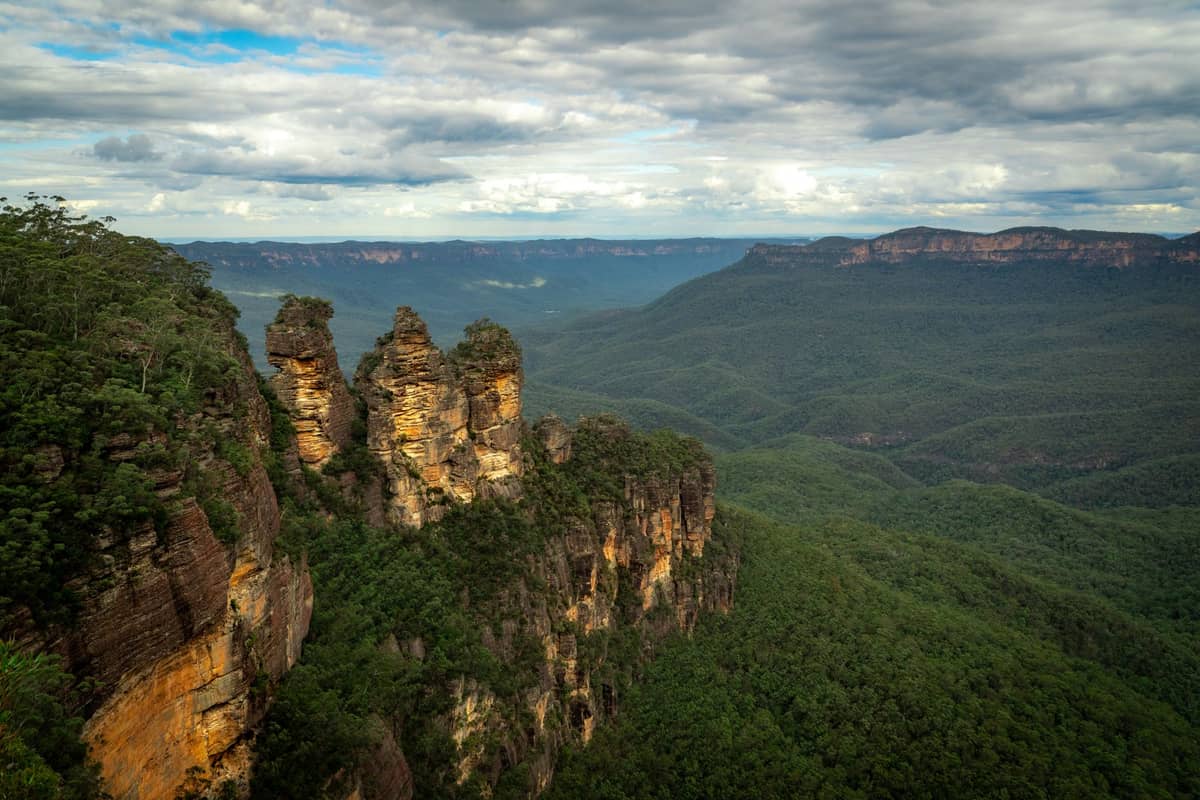
Blue Mountains National Park is a UNESCO World Heritage-listed park covering a deeply eroded sandstone plateau that drops away into valleys hundreds of metres below. The 'blue' in the name is not poetic licence: eucalyptus trees release fine oil droplets that scatter sunlight and genuinely tint the air blue, particularly when you are looking across a wide valley on a clear morning. The effect is most obvious at mid-distance lookouts and changes subtly through the day as the light angle shifts.
The park is not a single viewpoint. It spans multiple towns, dozens of walking tracks, two significant canyon systems, ancient Aboriginal heritage and ecological zones ranging from dry heath on the plateau tops to cool temperate rainforest on valley floors. Most visitors arrive in Katoomba, see the Three Sisters rock formation and call it done. That is a reasonable starting point, but it captures only a fraction of what the park contains.
ℹ️ Good to know
The park can close or restrict access to specific areas during periods of extreme fire danger or severe weather. Check the NSW National Parks website or call ahead before a visit during summer or after heavy rain, when track surfaces become dangerously slippery.
The Landscape: What You Will See and Feel
Standing at a plateau-edge lookout, the drop below you is immediate and vertiginous. The Jamison Valley south of Katoomba falls roughly 300 metres to its floor. On still mornings, mist pools in the valley and the rock walls hold an orange and ochre warmth as the sun climbs. By midday the same view is flatter and harsher. The best light for photography is the first 90 minutes after sunrise and again in the final hour before sunset, when shadows define the cliff faces and the blue haze deepens.
The rainforest sections feel entirely different. Descending via the Giant Stairway at Katoomba or the National Pass track at Wentworth Falls takes you from open cliff-top exposure into tight tree ferns, dripping sandstone overhangs and the sound of water amplified by narrow rock walls. Temperature drops noticeably on the valley floor, sometimes by five to eight degrees compared to the plateau. The smell shifts from dry eucalyptus resin to damp moss and cool stone.
For those wanting to understand how the broader mountains landscape fits together, the Blue Mountains day trip guide covers itineraries for first-timers, photographers and hikers in detail.
Tickets & tours
Live prices and dates from our booking partner. If you book, we may earn a commission at no extra cost to you.
Blue Mountains Waterfalls Full-Day Tour with Lunch and Dinner
From 171 €Instant confirmationFree cancellationBlue Mountains guided tour with Sydney Zoo and Scenic World visit
From 134 €Instant confirmationFree cancellationFull-day abseiling and rock climbing combo at Blue Mountains
From 190 €Instant confirmationFree cancellationThe Blue Mountains World Heritage private guided hike
From 572 €Instant confirmationFree cancellation
Getting There: Train vs. Car
The Blue Mountains Line departs Sydney's Central Station and stops at Glenbrook, Wentworth Falls, Leura, Katoomba, Blackheath and stations beyond. The journey to Katoomba is roughly two hours; check the current timetable for service frequency. No booking is required; use an Opal card or contactless payment. This is genuinely the more relaxed option: you arrive without having to navigate parking and can have a drink at a Katoomba cafe without worrying about the drive back.
Driving gives you flexibility to move between areas that are tedious to reach by public transport. The M4 motorway leads west from Sydney to the Great Western Highway, which runs through the mountain towns. From Katoomba to Blackheath is about 13 km; Glenbrook, the eastern gateway, is roughly 55 km from the CBD. Park where you plan to walk first, because moving the car between lookouts eats time. Note that parking at the Echo Point lookout in Katoomba fills entirely by 9 am on weekends in every season.
⚠️ What to skip
Weekend crowds at the Three Sisters and Echo Point lookout in Katoomba are intense between 10 am and 2 pm. Arriving before 8:30 am or after 3:30 pm transforms the experience. Midweek visits are dramatically quieter year-round.
Where to Go: Areas Worth Your Time
Katoomba and the Jamison Valley
Katoomba is the commercial centre of the mountains and the most accessible entry point. Echo Point, a few kilometres from the station by bus or foot, provides the most photographed view in the park: the Three Sisters sandstone pillars rising from the valley edge, with the Jamison Valley behind them. The formation is dramatic in the early morning light, when tour buses have not yet arrived and the crowd is sparse enough to actually stand at the railing.
The Three Sisters can be admired from the upper lookout in under ten minutes, but a more rewarding route is the Giant Stairway descent into the valley, connecting with the Prince Henry Cliff Walk or the valley floor tracks. Allow at least three hours for a valley loop if you are reasonably fit. The steps are steep and uneven; good footwear is not optional.
Scenic World, a short walk from Echo Point, operates the Scenic Railway (claimed to be one of the world's steepest passenger railways), a cableway and a boardwalk through the rainforest canopy. It charges separately from the national park and operates on timed tickets during busy periods. See the full Scenic World Katoomba guide for ticket details and honest assessment of what it delivers.
Blackheath and Govetts Leap
Blackheath, 13 km west of Katoomba, is where the serious walkers tend to congregate. Govetts Leap lookout sits above the 180-metre Govetts Leap Falls, with a sheer drop into the Grose Valley. The scale here is different from Katoomba: wider, quieter, and with fewer visitors per square metre of view. The Blue Mountains Heritage Centre at 270 Govetts Leap Road, Blackheath, is the best resource in the park for maps, track conditions and ranger advice. It has step-free entry and accessible facilities; bus 698 connects it to Blackheath station, about 3 km away.
The Pulpit Rock and Perrys Lookdown tracks from Blackheath offer views into the Grose Valley that few visitors bother to reach. They are not difficult walks, but they require a car or the park bus, which deters the day-trip crowds. If you have a vehicle and only one day, consider splitting time between Katoomba in the morning and Blackheath in the afternoon.
Wentworth Falls and the National Pass
Wentworth Falls is a quieter option accessible directly by train. The National Pass is widely regarded as one of the most technically impressive walking tracks in the mountains: a route carved into the cliff face in the 1900s that runs horizontally along the rock wall with long drops below and overhanging stone above. The track leads toward the base of Wentworth Falls itself, where swimming is possible in natural rock pools. Check current alerts before setting out: the track is closed between Valley of the Waters and Slacks Stairs. The standard loop takes around two and a half to three and a half hours.
Glenbrook: The Eastern Entry
Glenbrook is the first park area you reach driving from Sydney. A vehicle day-use fee of A$8 applies here, unlike most other sections of the park. It offers swimming at Jellybean Pool and Red Hands Cave, which contains Aboriginal hand stencils. Red Hands Cave is a 7 km return walk on flat to moderate terrain and receives far fewer visitors than the Katoomba lookouts despite being arguably more historically significant.
Aboriginal Heritage and Cultural Context
The Blue Mountains landscape is part of the Country of the Darug and Gundungurra peoples, among others, with continuous connection to this land spanning tens of thousands of years. Red Hands Cave at Glenbrook is one of the most accessible sites where this history is physically present. The cave walls bear hand stencils, a form of Aboriginal rock art found across many Australian sites.
For broader context on First Nations history and culture connected to the Sydney region, the Sydney Aboriginal culture guide provides useful background before visiting sites like Red Hands Cave.
Practical Details: What to Bring and Wear
Temperature on the plateau is consistently cooler than Sydney, often by five to ten degrees. On a 30°C Sydney summer day, Katoomba might be 22°C with a cold wind at the cliff edges. In winter, plateau temperatures regularly drop below 5°C overnight, and frost is common. Layers are not optional regardless of season. Rain in the mountains can arrive quickly and makes cliff tracks genuinely dangerous, so waterproofs and closed shoes with grip are worth carrying even on clear-forecast days.
Carry more water than you think you need. Valley walks involve significant elevation change and take longer than the signposted times suggest for most casual visitors. Sunscreen is essential at exposed lookouts, even in winter. Phone signal is unreliable in valleys and on some tracks; download offline maps and the relevant track notes from NSW National Parks before you leave your accommodation.
💡 Local tip
The NSW National Parks app allows you to download park maps for offline use. Do this before leaving Sydney. Mobile signal in the valley tracks and more remote sections is patchy at best.
Who Should Reconsider Visiting
The park's most celebrated viewpoints are accessible to nearly everyone, including people with limited mobility, because they are short flat walks from parking areas or bus stops. The valley walks are a different matter entirely: hundreds of steep steps, uneven surfaces and significant elevation change make them inappropriate for anyone with knee problems, limited cardiovascular fitness or very young children in prams. Do not underestimate the return climb from any valley floor.
Visitors who expect beaches and coastal energy will want to stay in Sydney. The mountains reward patience, physical effort and willingness to slow down. If you are working through a tight Sydney itinerary, weigh the full-day commitment carefully against other options covered in this guide to day trips from Sydney.
Insider Tips
- The Gordon Falls lookout in Leura, a short walk from Leura station, is almost entirely unknown to first-time visitors and offers cliff-edge views without the Echo Point crowds. It takes 20 minutes to reach on foot from the station.
- Katoomba's cafe strips along Katoomba Street and Lurline Street fill up fast between 9 am and 11 am on weekends. Eat breakfast before leaving Sydney or arrive at Leura instead, where the cafes are quieter and of comparable quality.
- The Grose Valley viewed from Govetts Leap turns a vivid orange and red in the late afternoon light. If you are driving, arriving at Blackheath around 3:30 pm to 4 pm gives you the best chance of catching this light before sunset.
- Most visitors take the bus from Katoomba station to Echo Point, but the cliff-top walk between them takes about 25 minutes and passes several quieter lookouts that are entirely skipped by bus riders.
- The Wentworth Falls Lake, about 1 km from the station, is a local picnic and bird-watching spot that sees almost no day-trip traffic. Eastern rosellas, crimson rosellas and gang-gang cockatoos are commonly seen there in the early morning.
Who Is Blue Mountains National Park For?
- Hikers and walkers wanting full-day track experiences with real elevation
- Photographers chasing early morning cliff light and valley mist
- Sydney visitors wanting a genuine break from the coast and the city
- Nature and wildlife enthusiasts interested in eucalyptus forest and endemic birds
- Travellers with a cultural interest in First Nations heritage sites
Nearby Attractions
Combine your visit with:
- Featherdale Wildlife Park
Featherdale Sydney Wildlife Park in Doonside is one of the few places near Sydney where you can get genuinely close to Australian wildlife, from koalas and wombats to Tasmanian devils and freshwater crocodiles. Open daily from 8:00 am, it suits families and animal lovers who want more than a glimpse through a fence.
- Figure Eight Pools
Figure Eight Pools are naturally formed rock pools on the coastal shelf of Royal National Park, south of Sydney. Reaching them requires a 6km return walk over steep terrain and careful timing around tides and surf. The reward is a striking geological curiosity in one of Australia's oldest national parks.
- Hunter Valley Wine Region
The Hunter Valley is Australia's oldest premium wine-producing region, sitting roughly two hours north of Sydney. Spread across 2,605 hectares of vineyard land near the village of Pokolbin, it rewards visitors with cellar door tastings, open countryside, and a pace that feels genuinely removed from city life. Whether you come for a single afternoon or a full weekend, understanding how the region works before you arrive makes a real difference.
- Jervis Bay
Jervis Bay is a protected marine park and coastal wilderness about three hours south of Sydney, combining some of the country's most startling white-sand beaches with snorkelling, dolphin watching, and old-growth forest. It takes genuine effort to reach, but the payoff is a stretch of coastline that rarely disappoints.
Planning a trip? Discover personalized activities with the Nomado app.