Sydney Olympic Park: The Complete Visitor Guide to Sydney's Olympic Legacy
Built for the 2000 Olympic and Paralympic Games and a 640-hectare precinct in western Sydney, including about 430 hectares of parkland, Sydney Olympic Park is one of Australia's largest urban parklands. Free to enter and easy to reach by train, it rewards visitors with a rare mix of world-class sports venues, quiet wetland walks, and open green space that most tourists never discover.
Quick Facts
- Location
- 8 Australia Avenue, Sydney Olympic Park NSW 2127
- Getting There
- Olympic Park Station (T7 line via Lidcombe); buses and ferries also serve the precinct
- Time Needed
- 2–5 hours depending on pace; a full day if attending an event
- Cost
- Free entry to the parklands; individual events and venues charge separately
- Best for
- Families, sport history enthusiasts, joggers and cyclists, architecture lovers
- Official website
- www.sydneyolympicpark.com.au
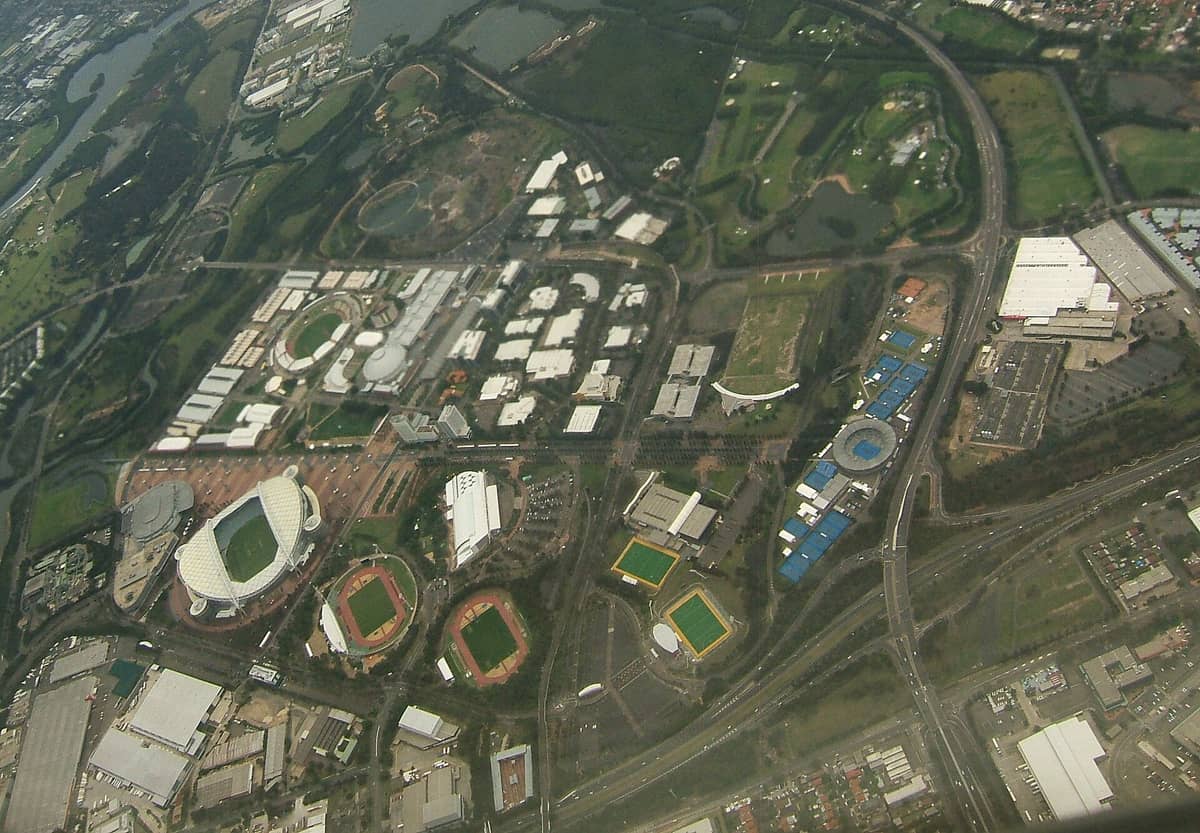
What Sydney Olympic Park Actually Is
Sydney Olympic Park is a 430-hectare precinct in Homebush Bay, roughly 14 kilometres west of the CBD. It was purpose-built to host the Sydney 2000 Olympic and Paralympic Games and has been managed by the Sydney Olympic Park Authority since 2001. The park is not a single attraction but a layered precinct: major sports and entertainment venues sit alongside formal parklands, restored wetlands, cycling and walking paths, and an expanding residential suburb.
On a quiet weekday morning, the scale of the place is striking in a way that photographs cannot convey. The road widths, the spacing between buildings, the long sightlines down empty avenues lined with mature trees — everything was designed for crowds of 80,000 or more. When those crowds are absent, the park has an almost cathedral-like stillness.
ℹ️ Good to know
Entry to the parklands, paths, and public spaces is free. Tickets are required for specific events at Accor Stadium, Qudos Bank Arena, and other venues. Always check the official Sydney Olympic Park website before visiting to confirm hours for specific facilities.
The Landscape: Wetlands, Parklands, and Urban Planning
Bicentennial Park, located within the precinct, is listed as open 8 am to 6 pm daily and is the green heart of the area. It contains restored wetlands, mangrove boardwalks, and open lawns that attract a surprising variety of birdlife. Black swans, ibis, and various duck species are common sightings near the water. Early morning walkers are often rewarded with very little human competition for these views.
The wetland restoration here is not decorative. Before the Olympics, much of Homebush Bay was heavily contaminated industrial land. Remediation was a significant part of the 2000 Games legacy, and what visitors now walk through represents genuine ecological reclamation. The paths are well-maintained and flat, making this an accessible area for prams, wheelchairs, and anyone who finds uneven terrain difficult.
Cyclists will find marked paths throughout the precinct. If you are planning a longer ride, the route connects to broader Sydney cycling infrastructure. For context on other scenic routes accessible from the city, the Sydney coastal walks guide covers how the city's walking and cycling options compare across neighbourhoods.
Tickets & tours
Live prices and dates from our booking partner. If you book, we may earn a commission at no extra cost to you.
Sydney whale-watching cruise with breakfast or lunch
From 62 €Instant confirmationFree cancellationBlue Mountains guided tour with Sydney Zoo and Scenic World visit
From 134 €Instant confirmationFree cancellationSydney Harbour scenic flight - private 20 minutes tour
From 404 €Instant confirmationFree cancellationSydney's Razor Gangs true crime tour
From 21 €Instant confirmationFree cancellation
The Architecture: Olympic Legacy on a Monumental Scale
The sporting venues are the visual centrepiece of the park, and they repay close observation even when no event is on. Accor Stadium (known as Stadium Australia during the Games) seats over 80,000 people and is the largest stadium in Australia. Its exterior, particularly the distinctive roof structure and the approach from Olympic Boulevard, gives a clear sense of the ambition behind the 2000 Games bid.
Qudos Bank Arena, formerly the SuperDome, is one of the largest indoor arenas in the Southern Hemisphere by capacity. The Sydney Showground, which hosted boxing during the 2000 Games, now operates as a convention and exhibition venue. Walking the perimeter of these buildings between events is free and provides a genuine sense of the built legacy. The Olympic cauldron — where the flame was lit during the opening ceremony — remains on site and is worth locating.
Architecture enthusiasts should note that the design language of the precinct reflects late-1990s thinking about large-scale public infrastructure: ambitious, functional, and built for television as much as for the people physically present. Some of it ages better than others. The pedestrian approaches along Olympic Boulevard, however, are genuinely impressive, particularly when crowds stream through before a concert or football match.
Visiting on an Event Day vs. a Quiet Day
The experience shifts considerably depending on whether there is a major event scheduled. On event days, particularly for NRL finals, international football, or large-scale concerts at Qudos Bank Arena, the precinct fills rapidly. The train services from the city increase in frequency, and the approach through Olympic Boulevard becomes a genuine spectacle: food stalls, merchandise vendors, the ambient noise of a large crowd converging. It is energetic, but crowds are real and transit can be slow immediately after events.
On a standard weekday, the park belongs almost entirely to local joggers, dog walkers, office workers from nearby commercial buildings, and the occasional tourist who has specifically sought it out. The sense of scale becomes more pronounced when the population density drops. Bringing your own food is sensible on quiet days, as food and coffee options within the parklands themselves are limited outside of event infrastructure.
💡 Local tip
Check the Sydney Olympic Park events calendar before visiting. If you want atmosphere and energy, plan around a scheduled event. If you want quiet exploration of the parklands and wetlands, avoid major event dates entirely — particularly NRL finals and large concerts.
Getting There and Getting Around
Olympic Park Station is served by the T7 Olympic Park line. Trains on this line require a change at Lidcombe for frequent services from the city. The journey from Central Station typically takes around 30 to 40 minutes depending on connections. Opal card or contactless payment is the standard fare method for all Sydney Trains services.
The closest ferry wharf is Sydney Olympic Park Ferry Wharf, around a 40-minute walk (3.6 km) from the precinct, with a connecting 526 bus. The ferry route offers a pleasant water element if you are coming from Parramatta or Circular Quay. The ferry approach gives a different perspective on the park's relationship to the river and the surrounding urban fabric. Bus services also connect the precinct to surrounding suburbs. The ferry approach gives a different perspective on the park's relationship to the river and the surrounding urban fabric. Bus services also connect the precinct to surrounding suburbs.
The Sydney Olympic Park Authority strongly recommends public transport, particularly on event days when parking becomes extremely limited. If you are making a day trip that includes other attractions, pairing Sydney Olympic Park with Old Government House in Parramatta works well given the ferry connections along the same river corridor.
Within the precinct, walking is the primary means of getting around. Distances between venues can be considerable, particularly if you are also exploring Bicentennial Park. Comfortable shoes are important. The pathways are almost entirely flat and the authority describes them as highly accessible, with accessible parking spaces also available for visitors who drive.
Who Should Visit and Who Can Reasonably Skip It
Sydney Olympic Park rewards visitors who have an interest in the 2000 Games, a genuine enthusiasm for large-scale urban infrastructure, a desire for open green space outside the inner city, or a specific event to attend. Families with children benefit from the open lawns and paths, the relative absence of traffic in pedestrian zones, and the Aquatic Centre, which is open to the public for recreational swimming on non-event days (check hours and session availability directly with the venue before visiting).
Visitors with limited time in Sydney and a focus on the harbour, beaches, or inner-city cultural attractions may find the 30-plus-minute transit time hard to justify. The park does not offer the kind of concentrated cultural or culinary experience that inner-city neighbourhoods provide. If your Sydney itinerary is under four days, the park competes for time with major attractions closer to the water.
Travellers exploring the city more broadly will find that Sydney Olympic Park sits comfortably within a wider western Sydney circuit. For a structured approach to prioritising your time, the things to do in Sydney guide provides a useful framework for building an itinerary that includes both inner-city and outer attractions.
Photography and Practical Notes
The best photography conditions in the precinct are early morning on non-event days, when the light is soft and the scale of the empty Olympic Boulevard reads clearly. The cauldron, the stadium facades, and the wetland boardwalks all photograph well in this window. By midday, harsh summer light flattens the architecture and the heat near the concrete surfaces becomes uncomfortable.
Sydney has a temperate coastal climate. Summer days (December through February) can reach mean daily maximums of around 26 to 27 degrees Celsius, but the park's western location and large paved surfaces can feel hotter than the coastal suburbs. Sun protection, water, and a hat are practical necessities in summer. The autumn and spring shoulder months, March through May and September through November, offer more comfortable temperatures for extended walking.
⚠️ What to skip
If you are visiting specifically to see the Olympic Aquatic Centre or the NSW Tennis Centre as a recreational visitor rather than for an event, confirm opening hours, session availability, and any entry fees directly with the relevant venue before travelling. These facilities operate independently and schedules change.
Insider Tips
- Walk the full length of Olympic Boulevard from the station end to the stadium to understand the ceremonial scale of the precinct design — a 10-minute walk that photographs better than any single venue shot.
- The mangrove boardwalk in Bicentennial Park is quietest on weekday mornings before 9 am. This is when birdlife is most active and you are least likely to share the path.
- If you are attending a major event, the return train queues after the event can be very long. Walking 15 to 20 minutes to a different station or waiting 45 minutes at the venue before heading to the platform are both worth considering.
- The Aquatic Centre is open for general public swimming sessions on non-event days. It is a genuine Olympic-grade facility that most tourists walk past without knowing they can use it. Check the venue's schedule directly before visiting.
- Parkland visitors can get the first two hours free by registering their vehicle, after which fees apply; parking is extremely limited on event days. The official parking FAQs detail locations and conditions — worth reading before you decide whether to drive. The official parking FAQs on the Sydney Olympic Park website detail locations and conditions — worth reading before you decide whether to drive.
Who Is Sydney Olympic Park For?
- Sport and Olympic history enthusiasts who want to walk the actual venues from Sydney 2000
- Families looking for open, flat, traffic-free space with accessible paths and lawns
- Cyclists wanting a flat, well-marked route connected to the broader Sydney cycling network
- Event-goers attending concerts, NRL matches, or football at Accor Stadium or Qudos Bank Arena
- Architecture and urban planning enthusiasts interested in large-scale 1990s public infrastructure
Nearby Attractions
Combine your visit with:
- Blue Mountains National Park
Blue Mountains National Park covers around 268,000 hectares of sandstone plateaus, deep gorges and temperate rainforest west of Sydney. It is a popular national park in New South Wales and one of the most rewarding day trips or overnight escapes from the city, provided you know where to go and when to arrive.
- Featherdale Wildlife Park
Featherdale Sydney Wildlife Park in Doonside is one of the few places near Sydney where you can get genuinely close to Australian wildlife, from koalas and wombats to Tasmanian devils and freshwater crocodiles. Open daily from 8:00 am, it suits families and animal lovers who want more than a glimpse through a fence.
- Figure Eight Pools
Figure Eight Pools are naturally formed rock pools on the coastal shelf of Royal National Park, south of Sydney. Reaching them requires a 6km return walk over steep terrain and careful timing around tides and surf. The reward is a striking geological curiosity in one of Australia's oldest national parks.
- Hunter Valley Wine Region
The Hunter Valley is Australia's oldest premium wine-producing region, sitting roughly two hours north of Sydney. Spread across 2,605 hectares of vineyard land near the village of Pokolbin, it rewards visitors with cellar door tastings, open countryside, and a pace that feels genuinely removed from city life. Whether you come for a single afternoon or a full weekend, understanding how the region works before you arrive makes a real difference.
Planning a trip? Discover personalized activities with the Nomado app.