Old Government House, Parramatta: Australia's Oldest Public Building
Standing inside Parramatta Park since the early 1800s, Old Government House is Australia's oldest surviving public building. A UNESCO World Heritage site of colonial Georgian architecture, it offers an intimate window into the world of early New South Wales governors, and rewards visitors who take the time to look beyond the obvious.
Quick Facts
- Location
- Parramatta Park, Pitt Street entrance, Parramatta NSW 2150 (Burramatta Dharug Country)
- Getting There
- Parramatta Station (train); short walk or taxi to Pitt Street entrance
- Time Needed
- 1.5 to 2.5 hours, including the park grounds
- Cost
- Adult A$15 | Concession A$12 | Family A$42 | National Trust members and children under 5 free (verify before visiting)
- Best for
- History enthusiasts, architecture lovers, families with curious older children
- Official website
- www.nationaltrust.org.au/places/old-government-house
What Old Government House Actually Is
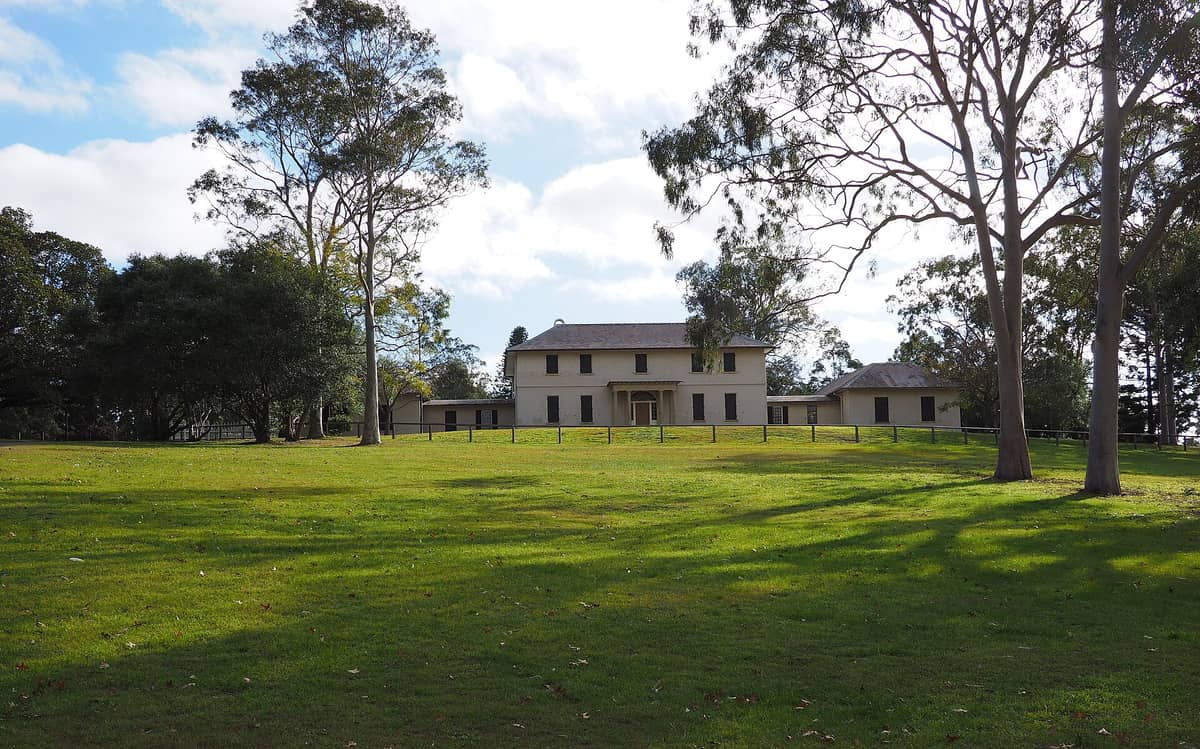
Old Government House in Parramatta is not simply an old building with period furniture. It is the oldest surviving public building in Australia, constructed between 1799 and 1818. The house served as a country residence for the early governors of New South Wales, and it represents the physical point from which colonial authority radiated outward into the continent. That weight is present in the building's stone walls and in its elevated position over the park.
The site forms part of the Australian Convict Sites UNESCO World Heritage property, a listing that covers eleven sites across Australia recognising their significance to understanding the transportation of convicts from Britain and Ireland. Old Government House is one of the anchor sites for that listing. This is not a reconstructed heritage village or a themed experience. The rooms you walk through are the rooms where governors Francis Grose, John Hunter, Philip Gidley King, William Bligh, Lachlan Macquarie, and others shaped the trajectory of a colony.
ℹ️ Good to know
Opening hours are Thursday to Friday 10 am to 4 pm, and Saturday to Sunday 11 am to 4 pm. Last entry is at 3:30 pm. The house is closed on Good Friday, Anzac Day, King’s Birthday, Labour Day, Christmas Day, Boxing Day, New Year’s Eve, and New Year’s Day. Always check the National Trust website before visiting, as hours can change.
The Approach: Parramatta Park Sets the Scene
Getting to the house is part of the experience. You enter Parramatta Park through the Pitt Street entrance and follow a path through open grassland with mature fig and eucalyptus trees. The house appears gradually as you walk, a two-storey Georgian sandstone structure sitting on a slight rise, flanked by low stone outbuildings. On weekday mornings, the park is quiet enough to hear birds calling from the river flat below. On Saturday afternoons, families spread out across the lawns, and the contrast between that Sunday-park ease and the formal severity of the building itself is striking.
The park surrounding the house is managed by Greater Sydney Parklands. It is free to enter, and many visitors simply walk through without going inside the house. That is a reasonable choice if your time is short, but it means missing the interior, which is where the historical depth lies. If you are pairing Old Government House with a broader Parramatta visit, the house and park together sit comfortably alongside the city centre's restaurants and riverside walking paths.
Parramatta rewards a full-day visit. For context on what else the area offers, the Parramatta neighbourhood guide covers the precinct from the riverside to the cultural institutions.
Tickets & tours
Live prices and dates from our booking partner. If you book, we may earn a commission at no extra cost to you.
The Rocks historic walking tour
From 20 €Instant confirmationFree cancellationBeginner surf lesson at Bondi Beach
From 79 €Instant confirmationFree cancellationSydney whale-watching cruise with breakfast or lunch
From 62 €Instant confirmationFree cancellationBlue Mountains Waterfalls Full-Day Tour with Lunch and Dinner
From 171 €Instant confirmationFree cancellation
Inside the House: Georgian Rooms and Colonial Authority
The interior is modest by European gubernatorial standards, which is itself historically interesting. The entry hall is cool and stone-floored, with a faint smell of aged timber and wax. The ground floor rooms are well-proportioned but not grand: a dining room, a drawing room, smaller service spaces. The National Trust has furnished these rooms with period pieces and a careful interpretive approach that avoids the trap of simply celebrating colonial power without acknowledging what it meant for Aboriginal people and convicts.
Upstairs, reached by a wooden staircase with a worn handrail, there is an exhibition that adds context to the physical space below. It covers the governors' tenures, the lives of convicts who built and maintained the estate, and the Dharug people's connection to this country. The first floor is not wheelchair accessible; the ground floor is, with portable ramps available at the entrance. There is no lift.
The house is guided or self-guided depending on availability. On quieter weekdays, a knowledgeable guide can substantially enrich what you see. Ask at the front desk when you arrive. Guides tend to provide details about specific governors that the room labels alone do not convey, including the turbulent tenure of William Bligh, who was removed from office in the 1808 Rum Rebellion, the only military coup in Australian history.
💡 Local tip
Ask about the Rum Rebellion when you arrive. It is one of the more gripping stories associated with the house, and most guides will give you a version that brings it to life far better than a panel display.
Time of Day and Crowds
Weekday mornings, particularly Thursdays, are the quietest times to visit. You may have some rooms almost to yourself, which allows you to stand still and actually take in the proportions and light in the way a building like this demands. By Saturday midday, visitor numbers increase, and the park fills with families, which changes the atmosphere without making it unpleasant.
Morning light enters the east-facing windows on the ground floor and does interesting things to the sandstone walls. If you care about photography, arriving when the house opens gives you better interior light than the flat midday conditions. The building's facade photographs well from the park path in the hour after opening, with soft shadows across the stonework.
Parramatta is west of central Sydney and sits further inland, which means summer temperatures here regularly exceed those at the coast. On hot days above 35 degrees Celsius, the interior of the house offers genuine relief, though the upper floor can warm up by early afternoon. In winter, the stone walls retain cold, so an extra layer is practical even when it seems mild outside.
Getting There from Central Sydney
Parramatta is well connected to the Sydney rail network. Trains from Central Station to Parramatta run frequently and the journey takes around 35 to 45 minutes depending on the service. The Sydney Metro Western Sydney Airport line does not serve Parramatta Station; check the current Transport for NSW network map for the most up-to-date routing. From Parramatta Station, the Pitt Street entrance to the park is walkable in around 15 to 20 minutes, or a short ride-hail away.
If you are planning to move around Sydney by public transport more broadly, the getting around Sydney guide covers trains, ferries, and buses in practical detail.
Parking is available in designated areas inside the park, with fees and time limits applying in some car parks. On weekends, the park can fill up by mid-morning, so public transport is genuinely the easier option if you are coming from the city.
Context: Why This Site Matters
Parramatta was, in the earliest years of the colony, more important than Sydney Cove. The fertile soil around the Parramatta River made it the agricultural centre of New South Wales, while the harbour settlement focused on trade and administration. Old Government House reflects that priority: this was where governors came to manage the practical business of keeping the colony alive, and where decisions about land grants, convict assignments, and relations with Aboriginal nations were made.
The site is located on Burramatta Dharug Country. The Dharug people's name for the area, Burramatta, means something along the lines of 'the place where the eels lie down,' a reference to the river's eel populations that sustained communities here long before European arrival. The National Trust acknowledges this on-site, and the interpretive materials make clear that the colonial history here is inseparable from the dispossession of the Dharug people.
For a wider introduction to Aboriginal heritage across Sydney, the Sydney Aboriginal culture guide provides useful context before or after your visit.
Is It Worth Your Time?
Old Government House is not going to suit every traveller. If you are primarily interested in beaches, contemporary culture, or the harbour experience that defines most Sydney itineraries, then a 40-minute train ride west to spend two hours in a Georgian country house may not be the best use of your day. The site is a specialist interest, and it does not try to be otherwise.
For travellers with a genuine interest in colonial history, early Australian architecture, or UNESCO World Heritage sites, this is one of the most quietly significant places in the country. It is not crowded or heavily commercialised. The interpretation is honest. The building itself is the real thing, not a reproduction. And Parramatta as a city has changed dramatically in recent years, with good food and a riverside precinct that makes the trip feel complete rather than purely dutiful.
If you are building a broader itinerary around historical Sydney, the things to do in Sydney guide and the best museums in Sydney guide will help you prioritise the sites that align with your interests.
Insider Tips
- The last entry is 3:30 pm, not 4 pm. Arriving close to 4 pm means you will be turned away even though the house is technically still open. Aim to arrive by 3 pm if you want to move through the rooms without feeling rushed.
- The park grounds around the house are free to enter at any time during park opening hours. If your budget does not stretch to the house admission, a walk through the park gives you the exterior and the landscape context at no cost.
- Weekday visits (Thursday or Friday) give you a far more contemplative experience than Saturday. The house can feel genuinely still on a Thursday morning, which suits the subject matter.
- The Rum Rebellion of 1808 connects directly to this building. Governor William Bligh, the same Bligh of the Bounty mutiny, was placed under arrest by the NSW Corps in a sequence of events that makes the house feel dramatically alive if you know the background before you walk in.
- Combine Old Government House with a walk along the Parramatta River foreshore. The Parramatta Riverside precinct has changed substantially in recent years and has several good lunch options, making it a natural second half to the morning visit.
Who Is Old Government House, Parramatta For?
- Travellers with a specific interest in Australian colonial and convict history
- Architecture enthusiasts interested in early Georgian buildings in the Southern Hemisphere
- Families with older children (10 and above) who can engage with the interpretive materials
- UNESCO World Heritage site collectors
- Visitors looking to understand Parramatta's historical importance beyond the Sydney Harbour narrative
Planning a trip? Discover personalized activities with the Nomado app.