Edinburgh Zoo: What to Expect Before You Go
Set across 82 acres of wooded hillside in western Edinburgh, Edinburgh Zoo is Scotland's largest wildlife attraction and home to over 2,500 animals. It holds a remarkable place in zoo history as the first zoo in the world to successfully house and breed penguins, and it remains the only UK zoo incorporated by royal charter.
Quick Facts
- Location
- 134 Corstorphine Road, Corstorphine, Edinburgh EH12 6TS
- Getting There
- Multiple Lothian Bus routes run along Corstorphine Road; the zoo is well-signed from the city centre
- Time Needed
- 3 to 5 hours for a thorough visit; half-day minimum recommended
- Cost
- Adults from around £30, children (3–15) from around £22.50, under-3s free, seniors/students from around £27, family from around £62 (online prices, verify before visiting)
- Best for
- Families with children, wildlife enthusiasts, and rainy-day plans that still benefit from fresh air
- Official website
- www.edinburghzoo.org.uk
What Edinburgh Zoo Actually Is
Edinburgh Zoo opened on 22 July 1913 on the south-facing slopes of Corstorphine Hill, about three miles west of the city centre. Formally known as the Scottish National Zoological Park, it was established by the Royal Zoological Society of Scotland, which remains its governing body today. That royal charter, granted by the Crown, makes it the only zoo in the United Kingdom to hold such a distinction.
The site covers 82 acres of wooded, sloping ground. That terrain shapes everything about a visit here: the zoo is not flat, not compact, and not something you can rush through. Paths wind uphill through enclosures, and the elevation changes give certain viewpoints a surprisingly open aspect across western Edinburgh. On a clear day, looking back toward the city from the upper sections of the zoo, you can see why the site was chosen.
The zoo holds a specific place in conservation history. It was the first zoo in the world to house and breed penguins in captivity, a record that dates to the early decades of the twentieth century and still shapes its identity today. For more context on how Edinburgh's institutions fit together as a travel destination, the best museums and attractions in Edinburgh guide offers useful framing for planning a multi-day visit.
The Penguin Experience: Still the Heart of the Zoo
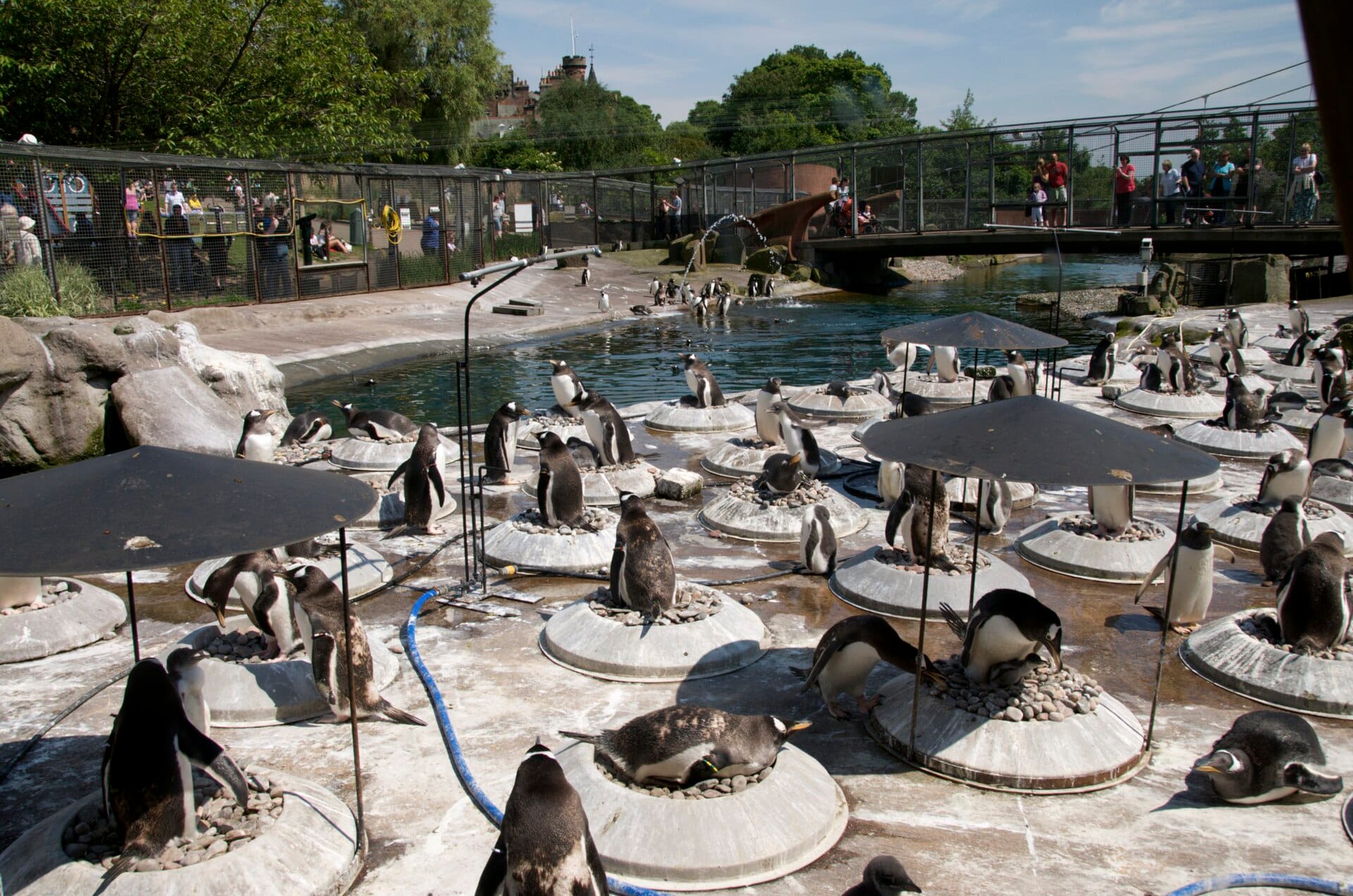
The Penguin Rock enclosure is the zoo's centrepiece and the main reason many families make the trip out to Corstorphine. The colony includes gentoo, northern rockhopper, and macaroni penguins, and the enclosure is large enough to show genuine natural behaviour. Watching rockhoppers navigate their namesake rocky terrain, or gentoos surging through the water in the viewing pool below, gives a sense of each species' character in a way that a small enclosure never could.
The famous Penguin Parade, a tradition since 1951 when a keeper accidentally left a gate open and the penguins walked out, runs only on selected days when animal welfare and staffing allow (check the zoo’s website for current status). Arriving fifteen minutes early is worth it when it is scheduled: the parade route fills up with families along both sides, and latecomers often find their view blocked. It is a genuine spectacle even for adults who arrive sceptical.
💡 Local tip
Check the Penguin Parade schedule at the main entrance when you arrive — times vary by season and are occasionally adjusted. Securing a front-row position along the rope takes patience but rewards you with penguins waddling past at knee height.
Tickets & tours
Live prices and dates from our booking partner. If you book, we may earn a commission at no extra cost to you.
What Else to See: Animals and Enclosures Worth Your Time
The koala enclosure is one of Edinburgh Zoo's most distinctive offerings. The Royal Zoological Society of Scotland has maintained one of Europe's most established koala programmes, and the animals are housed in purpose-built facilities designed to replicate Australian eucalyptus forest conditions. Koalas sleep up to twenty hours a day, so encounters depend on timing: morning visits, before afternoon torpor sets in fully, tend to offer more active behaviour.
The Scottish wildcat exhibit deserves more attention than it typically gets. The Highland tiger, as the wildcat is known locally, is one of the most critically endangered mammals in the UK, with only a handful of purebred individuals believed to remain in the wild. The zoo participates in active breeding programmes for the species. Seeing one up close changes how you think about Scottish conservation — these are not large, exotic animals; they look like a domestic tabby, except for the expression, which is entirely different.
Other highlights include the chimpanzee enclosure, the meerkat exhibit (reliably popular with children), sun bears, and the red pandas, who are easier to spot here than in many other zoos because of how their enclosure is arranged. The African plains section is one of the zoo's larger open areas and worth walking through even when animals are less active.
The Terrain: What the Hillside Means for Your Visit
The slope of Corstorphine Hill is the single most important practical detail to understand before visiting. The zoo is not a flat park. The main entrance sits at a lower elevation, and many of the key exhibits are spread across multiple levels, connected by paths that climb steadily. By the time you reach the upper sections, you have gained real elevation, and the return leg involves either walking back down or using the Hilltrekker, a trackless train service that operates between upper and lower zoo sections.
For visitors with mobility limitations, pushchairs, or anyone who finds sustained uphill walking difficult, this matters. The zoo provides accessibility information and maps on its website, and it is genuinely worth consulting these before your visit rather than arriving and discovering that the section you most want to see requires a significant climb. Wide paths are available on the main routes, but some secondary paths are narrower and steeper.
⚠️ What to skip
Wear comfortable shoes with grip. The paths are maintained but the gradient is real — thin-soled shoes or heels will make the upper sections genuinely uncomfortable, particularly after rain when the wooden boardwalks near some enclosures get slick.
The hillside setting does have genuine advantages. Wooded sections of the zoo offer shelter from rain showers, and the tree canopy keeps temperatures cooler on warm days. Edinburgh summers rarely get unbearably hot, but the shade makes the zoo a pleasant place to spend a sunny afternoon without overheating.
Best Time to Visit and How the Experience Changes
Opening hours change by season. From April through September the zoo opens at 10:00 and closes at 18:00, with last entry at 17:00. October and March see reduced hours of 10:00 to 17:00 (last entry 16:00). November through February the zoo closes at 16:00 with last entry at 15:00. Edinburgh Zoo is open every day of the year except Christmas Day.
Weekday mornings in spring and early autumn are the quietest times to visit. School holidays, particularly during Edinburgh's festival season in August, bring noticeably larger crowds and longer queues at popular enclosures. If you are visiting in August, arriving at opening time is the most effective strategy.
Winter visits have an underrated appeal. Fewer crowds, bare trees that make spotting animals easier in some enclosures, and a certain atmospheric quality to the wooded hillside in low light. The shorter winter hours do limit how much ground you can cover, however. For context on Edinburgh's seasonal rhythms, the guide to the best time to visit Edinburgh covers festival seasons, weather patterns, and how visitor numbers shift across the year.
Getting There and Practical Logistics
The zoo sits at 134 Corstorphine Road in the Corstorphine area of western Edinburgh. Lothian Bus runs frequent services along Corstorphine Road from the city centre, making this one of the more straightforward out-of-centre attractions to reach by public transport. The journey from Princes Street takes roughly 15 to 30 minutes depending on traffic. Check Lothian Buses' website or the Traveline Scotland journey planner for current route numbers and times.
On-site parking is available at around £4–£5 per visit (free for zoo members). The car park is accessed directly from Corstorphine Road. On busy days, especially during school holidays, the car park fills early in the afternoon and road congestion on Corstorphine Road can be significant.
Tickets are cheaper when booked online in advance, and booking ahead also avoids any queue at the entrance. The zoo's official site at edinburghzoo.org.uk is the only authoritative source for current pricing, as admission rates change periodically. If you are planning a full day in this part of the city, the getting around Edinburgh guide explains the bus network and how to combine western Edinburgh attractions efficiently.
Who This Works For, and Who It Probably Does Not
Edinburgh Zoo is a genuinely strong choice for families with children between roughly three and twelve years old. The combination of the Penguin Parade, interactive discovery areas, and variety of species keeps children engaged across a long visit. The hillside setting can exhaust younger legs, but the Hilltrekker helps manage this.
Wildlife and conservation enthusiasts will find the zoo's breeding programmes and species-specific enclosures worth the admission. The Scottish wildcat programme in particular is significant beyond its entertainment value. Visitors who care about how Edinburgh's broader natural environment looks should also consider combining the zoo with the Royal Botanic Garden, which sits on the other side of the city and represents a contrasting but complementary experience.
Travellers with only one or two days in Edinburgh and a strong preference for history, architecture, and urban culture will likely find the zoo a lower priority compared to the Old Town's density of major attractions. The admission price and travel time out to Corstorphine represent a significant portion of a short trip's budget and time. The zoo is not a quick stop — it rewards several hours or not at all.
Visitors with significant mobility limitations should review the zoo's terrain carefully before committing. The upper sections are accessible via the Hilltrekker, but some enclosures involve paths that are not fully flat. The zoo's own accessibility guide on its official website is the most current and reliable source on which routes are suitable.
ℹ️ Good to know
Food options inside the zoo include a main restaurant and several kiosks. Quality and price are typical of a large attraction. Bringing snacks and water is practical, especially for full-day visits with children. The zoo allows outside food.
Insider Tips
- Book tickets online before you visit. Online prices are lower than gate prices, and you skip the entrance queue entirely — which matters on busy summer mornings when families with young children can create long waits.
- The upper zoo sections see fewer visitors even at peak times, because many families turn back before the full climb. If you want a quieter animal experience, push on uphill — the red pandas and some of the smaller mammal exhibits reward the effort.
- Animal activity peaks in the morning, typically between 10:00 and 12:00, when feeding and keeper sessions are most common. Arriving at opening time gives you animals at their most alert before the crowds build.
- The Hilltrekker train operates between the upper and lower sections of the zoo; check current details on cost and schedule when you arrive. Use it strategically on the way down rather than saving energy going up — the climb is easier to manage at the start of a visit when legs are fresh.
- If you are visiting during school term time on a weekday, expect some school group presence in the morning. Groups tend to move on by midday, so the early afternoon can actually be quieter than the morning despite being mid-day.
Who Is Edinburgh Zoo For?
- Families with children aged 3 to 12, particularly those looking for a structured full-day outing away from the city centre
- Wildlife and conservation enthusiasts interested in species breeding programmes, including Scottish wildcats and koalas
- Visitors who want outdoor time on a cool or overcast day, where the zoo's wooded hillside provides shelter and a pleasant walking environment
- Travellers with more than three days in Edinburgh who have already covered the main Old Town and New Town attractions
- Those visiting Edinburgh in the summer with the Penguin Parade on their itinerary as a specific experience
Nearby Attractions
Combine your visit with:
- Colinton Tunnel
The Colinton Tunnel is a 137-metre Victorian railway tunnel on the Water of Leith Walkway, transformed into Scotland's largest heritage mural. Inspired by Robert Louis Stevenson's poem 'From a Railway Carriage', it's free to visit, fully accessible, and open around the clock.
- Craigmillar Castle
Craigmillar Castle is a remarkably complete medieval ruin sitting on a low hill 3 miles southeast of Edinburgh's centre. Once a retreat for Mary, Queen of Scots, it rewards visitors with genuine history, sweeping city views, and crowds that are a fraction of Edinburgh Castle's.
- Cramond Beach & Island
A short bus or drive from the city centre, Cramond Beach leads to one of Edinburgh's most unusual free attractions: a tidal island in the Firth of Forth, reachable only during a narrow low-tide window. Sandy shores, wartime concrete pylons, and quiet woodland paths make this a world away from the Royal Mile.
- Forth Bridge
The Forth Bridge is one of the most recognisable structures in Scotland, a Victorian-era cantilever railway bridge spanning the Firth of Forth near South Queensferry. Inscribed as a UNESCO World Heritage Site in 2015, it remains an active railway crossing and a landmark that rewards a dedicated half-day trip from Edinburgh.
Planning a trip? Discover personalized activities with the Nomado app.