Craigmillar Castle: Edinburgh's Forgotten Fortress Worth Finding
Craigmillar Castle is a remarkably complete medieval ruin sitting on a low hill 3 miles southeast of Edinburgh's centre. Once a retreat for Mary, Queen of Scots, it rewards visitors with genuine history, sweeping city views, and crowds that are a fraction of Edinburgh Castle's.
Quick Facts
- Location
- Craigmillar Castle Road, Edinburgh, EH16 4SY
- Getting There
- Bus to Peffermill Road or Old Dalkeith Road (A7), then ~10 min walk
- Time Needed
- 1.5 to 2.5 hours
- Cost
- Adult £8.50 walk-up / £7.50 online; Child £5.00 / £4.50 online; free for Historic Environment Scotland members
- Best for
- History lovers, photographers, families seeking space, anyone wanting Edinburgh Castle's story without the queues
- Official website
- www.historicenvironment.scot/visit/all/craigmillar-castle
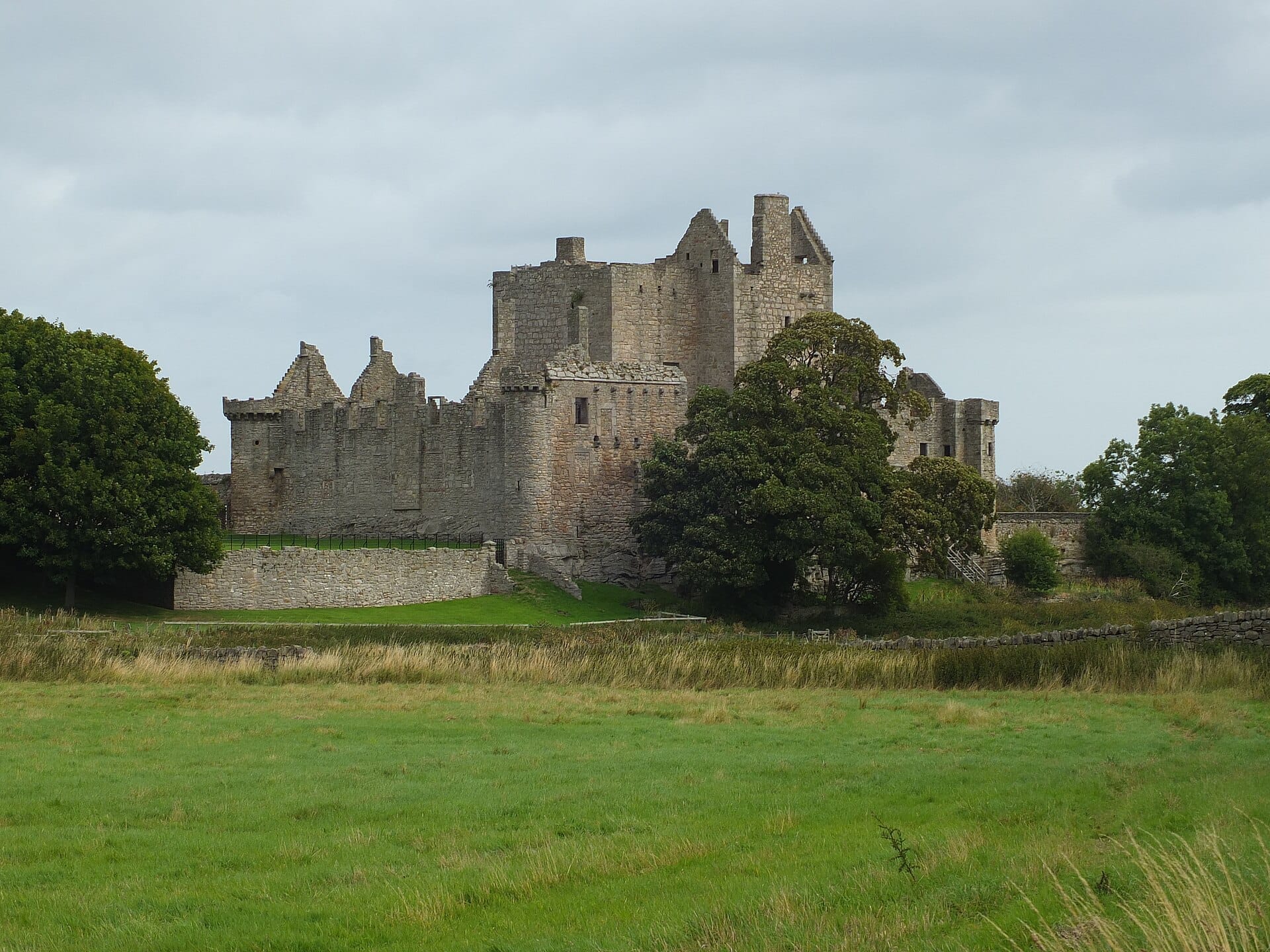
What Craigmillar Castle Actually Is
Craigmillar Castle is one of Scotland's best-preserved medieval tower houses, and by Edinburgh standards it is almost absurdly overlooked. Sitting on a gently sloping hill about 3 miles southeast of Waverley station, the castle is far enough from the Royal Mile to shed most tourist traffic but close enough to reach without a car. Managed by Historic Environment Scotland, it has been in state care since 1946.
Construction began in the late 14th century under the Preston family, feudal barons of Craigmillar, and the complex was extended through the 15th and 16th centuries. The result is a layered fortress: a tall central tower house ringed by an inner courtyard, itself enclosed within a curtain wall and a further outer enclosure. Walking through it, you can read the building's growth across centuries in the stone itself — thicker walls giving way to more refined masonry as each generation added to the structure.
Unlike many Scottish castle ruins where little stands above foundation level, Craigmillar retains much of its original height. Several interior spaces are accessible, including rooms within the tower house directly associated with Mary, Queen of Scots, who sought refuge here in 1566. Historians believe the Craigmillar Conference, at which plans for the fate of her husband Lord Darnley were allegedly discussed, took place within these walls.
💡 Local tip
Book tickets online to save: adult admission drops from £8.50 to £7.50, children from £5.00 to £4.50. The Historic Environment Scotland website handles booking directly.
The Experience: What You See and Hear
The approach from the car park is understated. A gravel path curves uphill through open grassland, and the castle reveals itself gradually, the jagged roofline of the tower house appearing first above the curtain wall. There is no gift shop at the gate, no costumed performers, no audio-visual introduction theatre. You collect your ticket, step through a low gateway, and the medieval stonework is simply there around you.
Inside the main tower, stone spiral stairs are narrow, worn smooth at their centres, and cold to the touch even in July. The walls are thick enough that sound from outside drops away almost immediately. Rooms are largely bare, which works in your favour: it is easier to read the space as a living place when there are no modern displays crowding the sightlines. Slots in the stone where wooden floors were fixed are still visible, giving you a clear sense of how the building was organised vertically.
In the upper rooms, narrow window openings frame views south toward the Pentland Hills and north toward Arthur's Seat and the city skyline. On clear days, the view is substantial, though photography requires patience since the apertures are small. The outer courtyard, partly open to the sky, is good for children who need room to move while adults linger over stonework.
Birdsong is one of the more unexpected sensory features. The site sits within enough green space that jackdaws nest in the upper walls and smaller birds are audible throughout the grounds. Wind funnels through the courtyards at speed on exposed days, so an extra layer is worth carrying regardless of conditions in the city centre.
Tickets & tours
Live prices and dates from our booking partner. If you book, we may earn a commission at no extra cost to you.
West Highland Lochs, mountains and castles tour from Edinburgh
From 61 €Instant confirmationFree cancellationDay Trip to Holy Island, Alnwick Castle and Northumbria from Edinburgh
From 60 €Instant confirmationFree cancellationAlnwick Castle, the Northumberland Coast and the Borders tour from Edinburgh
From 99 €Instant confirmationFree cancellationEdinburgh Castle express guided tour with entrance tickets
From 39 €Instant confirmationFree cancellation
How the Experience Changes by Time of Day
Morning visits before 11:00 offer the site in near-solitude. The low angle of light in spring and autumn rakes across the stonework at an angle that picks out texture and shadow in a way that flat midday light erases entirely. If you are there primarily to photograph the ruin rather than to move through it, morning is the only time that genuinely makes sense.
By midday in summer, family groups dominate the outer courtyard and the tower house stairs can involve short waits at tight turns. This is still manageable — Craigmillar does not queue the way Edinburgh Castle does — but it changes the feel from contemplative to sociable. The afternoon lull between about 14:00 and 16:00 often sees a second window of relative quiet, particularly outside of school holiday periods.
⚠️ What to skip
The castle sits on open high ground. In wet or windy weather the stairs inside the tower become slippery and the upper walkways exposed. Wear shoes with grip. Waterproof layers are worth carrying even if the forecast looks clear.
Late afternoon in summer, with golden light on the sandstone, is the most photogenic window. But last entry is 30 minutes before closing, so plan arrival accordingly: by about 16:30 in summer and 15:30 in winter.
Historical and Cultural Context
The Preston family who built the original tower house were minor nobility in the Scottish feudal system, and Craigmillar served the dual function common to such fortresses: a defensible residence and a symbol of local authority. The castle's expansion in the 15th and 16th centuries tracked the family's rising importance, including the construction of the L-shaped inner enclosure and the elaborate outer walls that made the complex genuinely formidable by the standards of its era.
The association with Mary, Queen of Scots is the historical thread most visitors arrive knowing. Mary came to Craigmillar in late 1566, following the murder of her secretary David Rizzio at the Palace of Holyroodhouse and shortly after the birth of her son James. She was described at the time as suffering from illness and profound grief. The castle offered distance from court life at Holyrood. The room in the tower house associated with her stay retains enough physical integrity to make the connection concrete rather than merely historical.
The castle fell into gradual disuse after the 17th century and its stone was quarried for local building in subsequent generations, as happened with most Scottish ruins. That Craigmillar survives in its current state owes something to the fact that it sat far enough from central Edinburgh to be less convenient as a quarry than sites closer to the growing city. Its placement within a modern residential suburb can feel incongruous at first: you pass ordinary semi-detached houses on the approach road. But step through the gate and that context disappears.
If Craigmillar sparks a wider interest in Edinburgh's layered medieval history, the Edinburgh Vaults and Greyfriars Kirkyard both offer contrasting but complementary perspectives on the city's older fabric.
Getting There and Practical Logistics
Craigmillar Castle is approximately 3 miles (4.8 km) southeast of Edinburgh city centre, at Craigmillar Castle Road, Edinburgh, EH16 4SY. There is a car park on site. By public transport, take a bus on routes serving Peffermill Road or Old Dalkeith Road (the A7) and expect roughly a 10-minute walk to the castle from the nearest stops. Check Lothian Buses current routes before travelling, as stop numbers and routing are subject to change.
Opening hours currently run from 09:30 to 17:00 daily between 1 April and 30 September, and from 10:00 to 16:00 daily between 1 October and 31 March, with last entry 30 minutes before closing. The castle is closed on 25 and 26 December and on 1 and 2 January.
Coach and minibus groups should contact Historic Environment Scotland by email at ticketing@hes.scot in advance to confirm parking availability. The car park is not sized for large vehicles without prior arrangement.
ℹ️ Good to know
Accessibility: The site sits on uneven hillside terrain. Internal staircases are original medieval stonework, narrow and steep in places. Visitors with limited mobility should be aware that significant portions of the interior are only accessible via these stairs. Contact Historic Environment Scotland in advance if you have specific access requirements.
Craigmillar pairs naturally with a walk in Holyrood Park or a visit to Dynamic Earth if you are combining southeast Edinburgh in a single day. For a focused Edinburgh history day, it fits cleanly into a route that includes the Royal Mile before lunch and Craigmillar in the afternoon.
Who Should Manage Expectations
Visitors expecting the full interpretive experience of Edinburgh Castle, with its museum galleries, crown jewels, and crowd infrastructure, will find Craigmillar more austere. There are no large on-site exhibitions, limited interpretive signage by modern heritage standards, and no cafe. If you need amenities or significant covered shelter beyond the interior rooms, plan accordingly.
The exterior grounds are open enough that anyone who finds enclosed stone spaces uncomfortable can spend the visit in the courtyard and outer enclosure with perfectly good views and atmosphere. But those who are uncomfortable with steep, narrow staircases will miss the upper rooms and some of the better views. The site is also genuinely exposed to wind. In poor weather, the visit is shorter and colder than it would be at an equivalent indoor museum.
Travelers with children who have limited historical interest but need active outdoor space might find better value in Arthur's Seat or Holyrood Park instead, unless the castle format itself is the draw.
Insider Tips
- Buy tickets online before you go. The saving is modest but the process at the gate is simpler, and on busy summer days it removes any friction from entry.
- Bring a torch or use your phone light in the lower rooms of the tower house. Even on bright days, parts of the interior are genuinely dim and detail in the stonework is easy to miss without direct light.
- The outer enclosure is the best place to read about the castle's layout before entering the tower. Spend five minutes orienting yourself in the courtyard and the internal logic of the building makes far more sense as you move through it.
- Weekday mornings in September and October hit a sweet spot: summer crowds have thinned but autumn light on the sandstone is some of the most dramatic of the year. This is a genuinely undervisited time at the castle.
- If you are serious about the Mary Queen of Scots historical thread, pair this visit with the Palace of Holyroodhouse. The two sites together tell a more complete story than either does in isolation, and they are run by different bodies (Historic Environment Scotland versus the Royal Collection), so you will need separate tickets.
Who Is Craigmillar Castle For?
- History enthusiasts who want unmediated access to medieval Scottish architecture without the crowds of central Edinburgh
- Photographers seeking atmospheric stonework in natural light, particularly in morning or late afternoon
- Families with children old enough to climb stairs and engage with a genuine ruin rather than a reconstructed visitor attraction
- Travelers who have already done Edinburgh Castle and want something that adds depth rather than repetition
- Anyone planning a relaxed half-day away from the Royal Mile who wants substance rather than scenery
Nearby Attractions
Combine your visit with:
- Colinton Tunnel
The Colinton Tunnel is a 137-metre Victorian railway tunnel on the Water of Leith Walkway, transformed into Scotland's largest heritage mural. Inspired by Robert Louis Stevenson's poem 'From a Railway Carriage', it's free to visit, fully accessible, and open around the clock.
- Cramond Beach & Island
A short bus or drive from the city centre, Cramond Beach leads to one of Edinburgh's most unusual free attractions: a tidal island in the Firth of Forth, reachable only during a narrow low-tide window. Sandy shores, wartime concrete pylons, and quiet woodland paths make this a world away from the Royal Mile.
- Edinburgh Zoo
Set across 82 acres of wooded hillside in western Edinburgh, Edinburgh Zoo is Scotland's largest wildlife attraction and home to over 2,500 animals. It holds a remarkable place in zoo history as the first zoo in the world to successfully house and breed penguins, and it remains the only UK zoo incorporated by royal charter.
- Forth Bridge
The Forth Bridge is one of the most recognisable structures in Scotland, a Victorian-era cantilever railway bridge spanning the Firth of Forth near South Queensferry. Inscribed as a UNESCO World Heritage Site in 2015, it remains an active railway crossing and a landmark that rewards a dedicated half-day trip from Edinburgh.
Planning a trip? Discover personalized activities with the Nomado app.