Forth Bridge: Scotland's Iron Giant on the Firth of Forth
The Forth Bridge is one of the most recognisable structures in Scotland, a Victorian-era cantilever railway bridge spanning the Firth of Forth near South Queensferry. Inscribed as a UNESCO World Heritage Site in 2015, it remains an active railway crossing and a landmark that rewards a dedicated half-day trip from Edinburgh.
Quick Facts
- Location
- Firth of Forth, between South Queensferry (Lothians) and North Queensferry (Fife), approx. 14 km west of central Edinburgh
- Getting There
- Train from Edinburgh Waverley to Dalmeny or North Queensferry stations (trains cross the bridge); bus to South Queensferry for viewpoints
- Time Needed
- 2 to 3 hours including travel from Edinburgh and time at viewpoints
- Cost
- Free to view from public viewpoints; standard rail fare to cross by train (verify current fares with ScotRail)
- Best for
- Architecture enthusiasts, engineering history, photography, and day trips from Edinburgh
- Official website
- www.theforthbridges.org
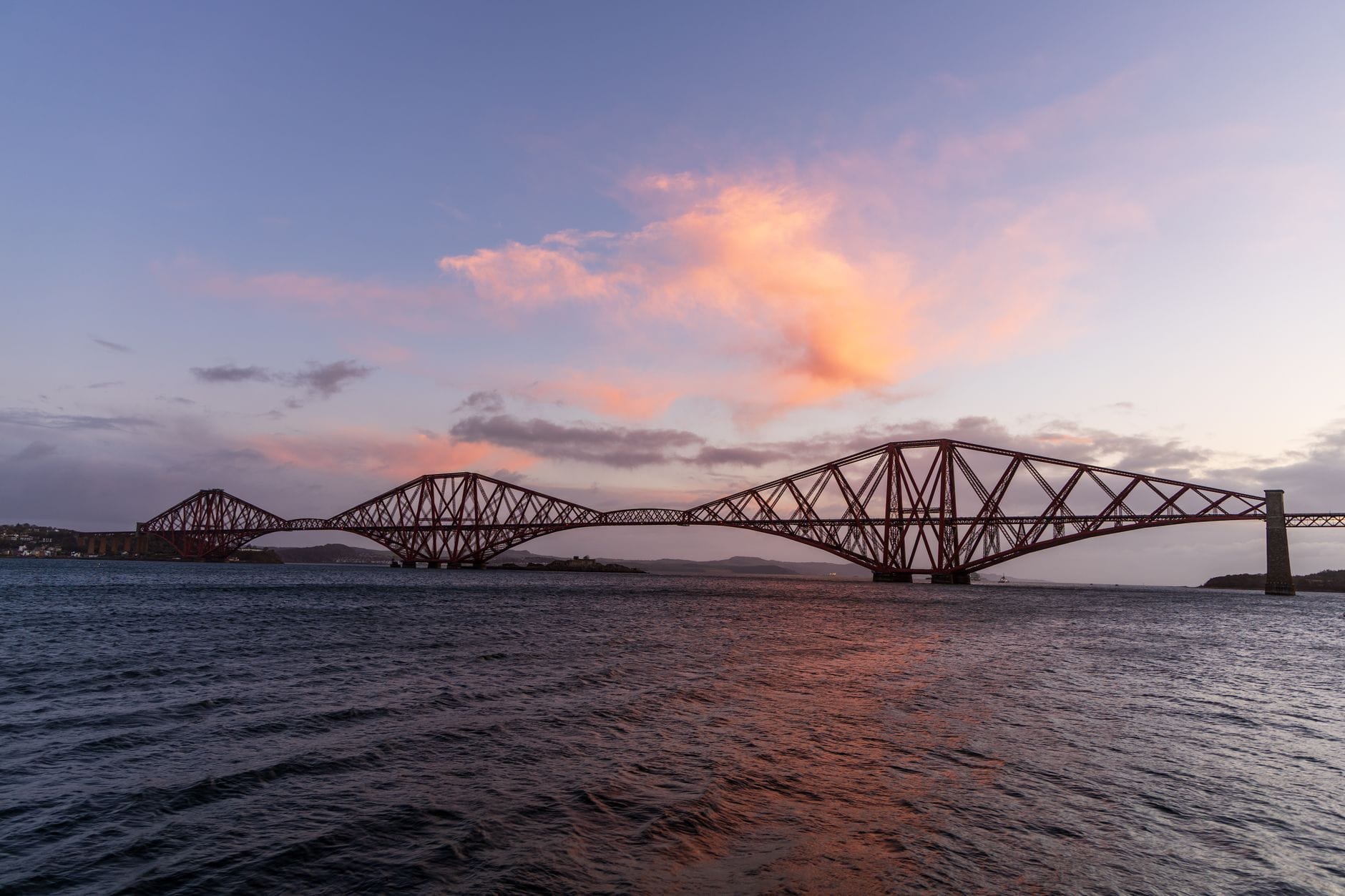
What the Forth Bridge Actually Is
The Forth Bridge is a cantilever railway bridge crossing the Firth of Forth at its narrowest navigable point, connecting the town of South Queensferry on the Lothian shore to North Queensferry in Fife. It stretches approximately 2,529 metres in total length and rises up to 110 metres above the water at its highest point. Construction began in 1882 and the bridge was opened on 4 March 1890 by the Prince of Wales, then Albert Edward. At the time of opening, it held the world's longest cantilever spans at 541 metres each, and it was the first major steel structure built in Britain.
UNESCO inscribed the Forth Bridge as a World Heritage Site on 5 July 2015, recognising it as an extraordinary and innovative achievement in bridge-building. The designation was based on its outstanding universal value as a symbol of the age of rail and its influence on bridge engineering globally. It is not a monument frozen in time, however. Trains still cross it dozens of times every day, which means that, unlike most UNESCO sites, the Forth Bridge is a piece of living infrastructure.
ℹ️ Good to know
There is no pedestrian access on the bridge itself. The only way to cross it is by train. The best views are from the waterfront and elevated spots around South Queensferry and the Forth Bridges Trail.
The Scale of It: What You See from the Shore
No photograph fully prepares you for the physical scale of the Forth Bridge. Standing at the waterfront in South Queensferry and looking east, the three diamond-shaped cantilever towers fill a disproportionate amount of sky. The bridge is painted in a distinctive shade of red oxide, a practical anti-corrosion measure that has become part of its visual identity. On a clear day, the warm reddish tones contrast sharply with the grey-green water of the Firth.
The steel lattice work is extraordinarily dense. From a distance, it looks almost organic, like something grown rather than engineered. Up close, from the South Queensferry waterfront, you begin to see the individual rivets and massive tubular chords. Around 54,000 tonnes of steel were used in construction, along with approximately 6.5 million rivets. The sheer repetition of the structural elements, each one massive in isolation, creates a visual rhythm that is genuinely compelling.
When a train crosses, and this happens frequently throughout the day, you hear a low metallic rumble before you see the carriages. The sound carries across the water. It is a useful reminder that you are looking at a working piece of Victorian engineering, not a relic.
Tickets & tours
Live prices and dates from our booking partner. If you book, we may earn a commission at no extra cost to you.
Guided tour from Edinburgh of Rosslyn Chapel, Stirling Castle and Dunfermline Abbey
From 47 €Instant confirmationFree cancellationGlenfinnan, Fort William and Glencoe Adventure from Edinburgh
From 55 €Instant confirmationFree cancellationWest Highland Lochs, mountains and castles tour from Edinburgh
From 61 €Instant confirmationFree cancellationLoch Ness, Glen Coe and the Highlands tour from Edinburgh
From 66 €Instant confirmationFree cancellation
Best Viewpoints and How to Reach Them
South Queensferry's High Street waterfront is the most accessible viewing point and the one most visitors head to first. The promenade runs directly along the southern bank of the Firth and gives a straight-on view of the bridge. The Hawes Pier area, slightly further west, places you underneath the bridge's southern approach viaduct and is particularly good for photography that emphasises scale. Several pubs and cafes along the High Street have outdoor seating with unobstructed views, which is worth noting if the weather is cooperating.
The Forth Bridges Trail offers a more active alternative. This waymarked walking route runs along the waterfront and can be extended in either direction to take in different angles of all three Forth crossings: the railway bridge, the Forth Road Bridge, and the newer Queensferry Crossing. The trail is largely flat along the waterfront section, though some elevated paths provide higher vantage points. Footwear that can handle uneven ground is advisable if you venture beyond the paved promenade.
For those who want to cross the bridge rather than look at it, the train journey from Edinburgh Waverley to North Queensferry (or Inverkeithing beyond) takes you directly across. The crossing lasts only a few minutes, but the views from the carriage windows, looking down at the water between the cantilever spans, are arresting. This also allows you to see the bridge from North Queensferry, where the waterfront has a quieter, less-visited quality. Check timetables and current fares with ScotRail before you go. The guide to getting around Edinburgh has broader transport context for the region.
💡 Local tip
Morning light falls on the south face of the bridge, making the South Queensferry waterfront ideal for photography between roughly 8 and 11am. In the afternoon, the light shifts and the bridge can appear somewhat flat. Overcast days with even light also work well for close-up detail shots.
Time of Day and Seasonal Considerations
South Queensferry is a popular destination on weekends, particularly during summer, and the waterfront can feel genuinely crowded between 11am and 3pm. Arriving by 9am on a weekend morning gives you near-empty waterfront access and better photographic conditions. Weekday mornings are consistently quieter.
The bridge looks dramatically different in different weather conditions. On a misty morning, the upper towers can disappear into low cloud, which creates an eerie, impressive effect. In winter, when the light is lower in the sky even at midday, the red steelwork takes on a deeper, more saturated colour. The bridge is always visible, always operational, and arguably most atmospheric when the weather is something less than perfect. Edinburgh's climate being what it is, that is not a rare condition.
Summer visits benefit from long daylight hours: in June and July, it stays light until well after 10pm, allowing for a post-dinner visit from Edinburgh without rushing. For context on how seasonality affects the whole city, see the guide to the best time to visit Edinburgh.
Getting There from Edinburgh
South Queensferry is around 14 kilometres west of Edinburgh city centre. By car, it takes 20 to 30 minutes depending on traffic, with parking available in the town. By public transport, the most straightforward option is the Lothian Buses 43 service from the city centre, which stops in South Queensferry. Alternatively, a train from Edinburgh Waverley to Dalmeny station is a short walk from the South Queensferry waterfront. Journey times and fares should be verified before travel as they are subject to change.
If you plan to cross the bridge by train, take any ScotRail service from Edinburgh Waverley toward Dunfermline, Kirkcaldy, or destinations further into Fife. The train crosses the Forth Bridge and stops at North Queensferry, where you can disembark and view the bridge from the northern shore before returning. Allow extra time for this approach, as you are dealing with two separate rail journeys plus time on the ground.
⚠️ What to skip
There is no pedestrian path on the Forth Bridge. Do not plan a trip expecting to walk across it. The bridge carries rail traffic only, and the tracks are not accessible to the public under any circumstances.
What Else to Do in South Queensferry
South Queensferry is a small but worthwhile destination in its own right, not just a backdrop for bridge photography. The High Street has a cluster of independent cafes, pubs, and a few restaurants. The waterfront has a relaxed pace that contrasts noticeably with central Edinburgh. From the town's small harbour, boat tours on the Firth of Forth occasionally operate seasonally, offering views of the bridge from the water. Check local operators before visiting as availability is weather-dependent and schedules vary. Hopetoun House, one of Scotland's grandest stately homes, is located a short distance to the west and makes a logical pairing with a Forth Bridge visit. See the full Hopetoun House guide for details.
The town also sits within easy reach of a broader day-trip circuit. If you are planning to combine several sites outside the city, the day trips from Edinburgh guide covers itinerary options that work well together.
Honest Assessment: Is It Worth the Trip?
The Forth Bridge delivers exactly what it promises: one of the most impressive pieces of civil engineering in the world, still in daily use, in a setting that makes it easy to appreciate its scale. It is not an interactive experience. There is no visitor centre at the bridge itself, no exhibition, no guided tour of the structure. You are going to look at a bridge. For people who find that idea genuinely compelling, the visit is excellent. For those expecting a packaged attraction with facilities and interpretation, expectations should be adjusted accordingly.
Families with children who have a strong interest in trains or engineering tend to respond well. The spectacle of a train emerging from the lattice structure and crossing above the water is something that holds attention. Couples and solo travellers making the effort to visit in good light for photography consistently find it rewarding. For visitors who are purely box-ticking rather than genuinely curious about the structure, it may feel like a long trip for a view.
If you are building a broader itinerary, the Forth Bridge pairs well with other Edinburgh-area landmarks that share a similar spirit of grand Victorian and Georgian ambition. The Royal Yacht Britannia in Leith, for instance, offers a more structured visit with extensive interpretation, and could round out a day that starts with the bridge.
Insider Tips
- Take the train to North Queensferry rather than (or as well as) viewing from the south. The northern waterfront is far less visited, gives you a different angle on the bridge, and the village itself has a quiet charm that South Queensferry on a busy weekend does not.
- The Hawes Inn at Hawes Pier is reputedly mentioned in Robert Louis Stevenson's 'Kidnapped' and sits almost directly under the bridge's southern approach. It is a reasonable pub stop and the outdoor terrace puts you closer to the structure than almost anywhere else accessible.
- Overcast and slightly misty conditions often produce the most atmospheric photographs. The even light eliminates harsh shadows on the steel lattice, and low cloud around the towers adds depth. Do not write off a visit because the weather is grey.
- If you are travelling with children who are curious about the bridge's construction, the Wikipedia article on the Forth Bridge has a well-known photograph of the human cantilever demonstration, which workers used to explain the engineering principle to the public. Showing it to kids before the visit gives them a conceptual hook.
- Parking in South Queensferry fills quickly on summer weekends. The furthest car park from the waterfront tends to retain spaces longer and is only a few minutes' walk to the shore.
Who Is Forth Bridge For?
- Architecture and engineering enthusiasts who appreciate the significance of Victorian-era structural achievement
- Photographers looking for an iconic subject with strong compositional qualities at any time of year
- Families with children who are genuinely interested in trains, bridges, or large-scale construction
- Day-trippers wanting to combine a landmark visit with a relaxed afternoon in a historic waterfront town
- Anyone building a broader Lothians itinerary that includes Hopetoun House or the Firth of Forth coastline
Nearby Attractions
Combine your visit with:
- Colinton Tunnel
The Colinton Tunnel is a 137-metre Victorian railway tunnel on the Water of Leith Walkway, transformed into Scotland's largest heritage mural. Inspired by Robert Louis Stevenson's poem 'From a Railway Carriage', it's free to visit, fully accessible, and open around the clock.
- Craigmillar Castle
Craigmillar Castle is a remarkably complete medieval ruin sitting on a low hill 3 miles southeast of Edinburgh's centre. Once a retreat for Mary, Queen of Scots, it rewards visitors with genuine history, sweeping city views, and crowds that are a fraction of Edinburgh Castle's.
- Cramond Beach & Island
A short bus or drive from the city centre, Cramond Beach leads to one of Edinburgh's most unusual free attractions: a tidal island in the Firth of Forth, reachable only during a narrow low-tide window. Sandy shores, wartime concrete pylons, and quiet woodland paths make this a world away from the Royal Mile.
- Edinburgh Zoo
Set across 82 acres of wooded hillside in western Edinburgh, Edinburgh Zoo is Scotland's largest wildlife attraction and home to over 2,500 animals. It holds a remarkable place in zoo history as the first zoo in the world to successfully house and breed penguins, and it remains the only UK zoo incorporated by royal charter.
Planning a trip? Discover personalized activities with the Nomado app.