Da Nang Museum: Inside the Citadel That Shaped a City
Housed within the walls of the Dien Hai Citadel, a Special National Historical Monument, Da Nang Museum traces the city's transformation from a Cham trading port to a modern Vietnamese metropolis. Compact, air-conditioned, and genuinely informative, it rewards curious travelers willing to spend two hours with the city's past before stepping back into its present.
Quick Facts
- Location
- 42–44 Bạch Đằng Street and 31 Trần Phú Street, Hai Chau District, Da Nang (near the Han River waterfront)
- Getting There
- Several Da Nang city bus routes connect the beach/hotel area with the Hai Chau District; taxi or ride-hailing apps are also convenient
- Time Needed
- 1.5 to 2.5 hours
- Cost
- Typically free or around 20,000 VND depending on current policy; free or reduced rates often apply for Da Nang residents, students, children, elderly people, and people with disabilities (verify current pricing on arrival)
- Best for
- History lovers, architecture enthusiasts, rainy-day visits, travelers seeking cultural context before exploring the wider city
- Official website
- http://baotangdanang.vn
What Da Nang Museum Actually Is
The Da Nang Museum (Bảo tàng Đà Nẵng) is a city-run history and culture museum now positioned in a multi-building complex fronting Bạch Đằng, Quang Trung, and Trần Phú streets near the Han River waterfront. The museum addresses span 31 Trần Phú Street and 42–44 Bạch Đằng Street, placing it squarely in the Hai Chau District administrative core.
The current museum facility opened to visitors in 2011, and its exhibits were designed with a modern curatorial approach in restored late-19th-century riverside buildings. That timeline matters because the exhibits were designed with a modern curatorial approach in restored late-19th-century riverside buildings. The result is a collection that moves logically through time: Cham cultural artifacts, the French colonial era, resistance movements during multiple wars, and finally the economic development of Da Nang as a centrally governed municipality.
ℹ️ Good to know
Opening hours are generally split, with the museum open from 8:00–11:30 and again from 13:30 or 14:00–17:00, Tuesday through Sunday; confirm current hours at baotangdanang.vn or by calling ahead before making a special trip. Plan your visit for a weekday morning and confirm current hours at baotangdanang.vn or by calling ahead before making a special trip.
The Dien Hai Citadel: Why the Setting Matters
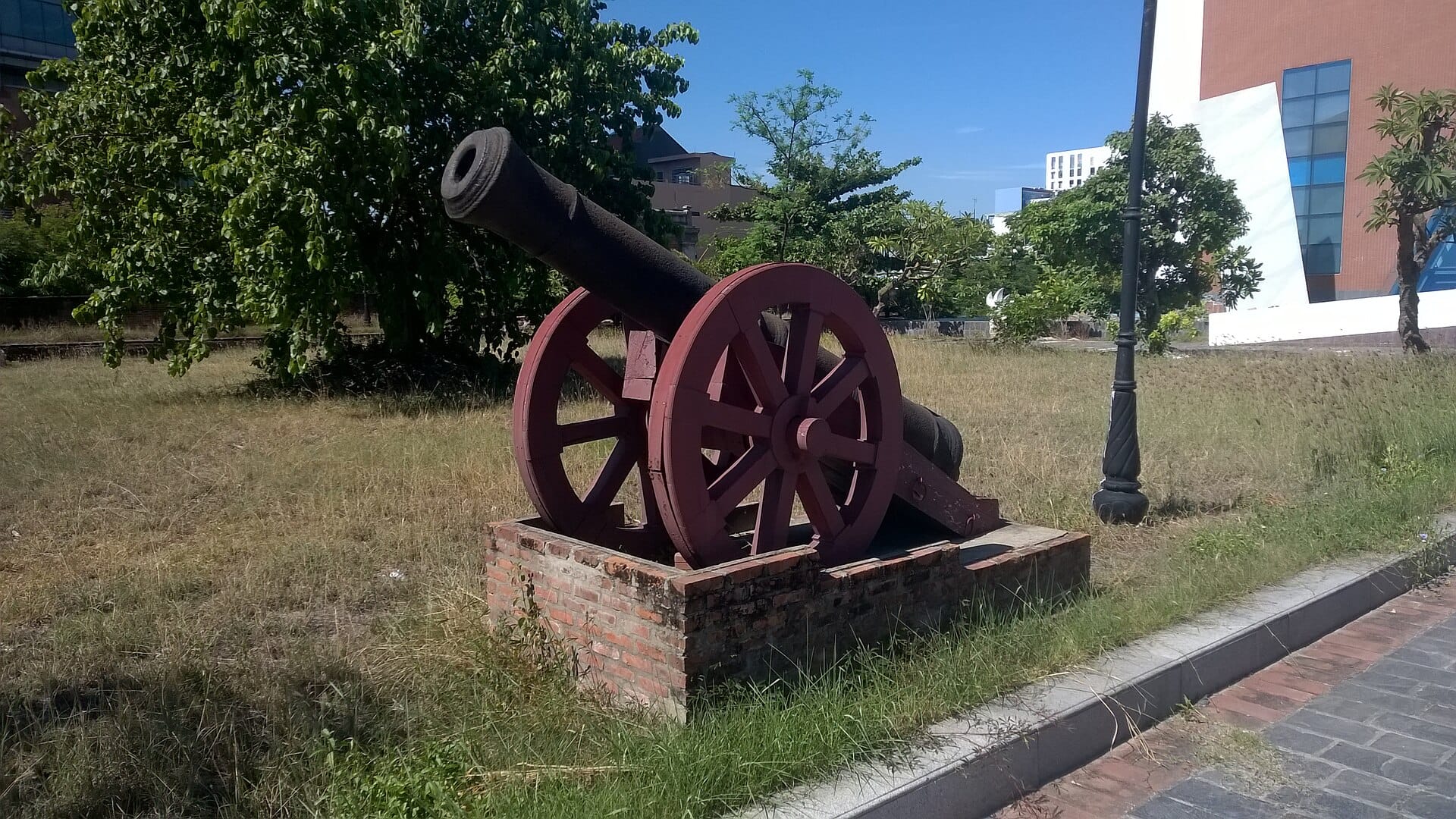
You cannot fully appreciate Da Nang’s history without understanding Dien Hai Citadel, originally constructed under Emperor Gia Long and significantly expanded under Emperor Minh Mang in the 1830s. It served as the primary defensive fortification protecting Da Nang's harbor, and it was at this location that French naval forces engaged Vietnamese defenders in 1858, marking the beginning of France's military campaign in Vietnam. The citadel walls, earthworks, and cannon emplacements that remain on site are not decorative backdrops; they form a separate, important attraction close to the museum.
Walking the Dien Hai Citadel perimeter before or after a museum visit gives Da Nang’s exhibits considerably more weight. The thick laterite walls, angled to deflect cannon fire, and the quiet interior courtyard create a physical sense of what Vietnamese commanders were working with when French warships arrived offshore, contrasting with the glass-and-concrete Han River skyline visible nearby.
The citadel's national monument status also means the surrounding area is maintained with more care than typical urban green space. It sits a short walk from both the Dragon Bridge and the western bank of the Han River, making it easy to combine with a broader downtown walking loop.
Tickets & tours
Live prices and dates from our booking partner. If you book, we may earn a commission at no extra cost to you.
Inside the Museum: What the Exhibits Cover
The museum's permanent collection spans several interconnected galleries organized broadly by historical period. The earliest section covers prehistoric and Cham civilization artifacts, including ceramics, stone carvings, and agricultural implements that establish Da Nang's place in the broader Sa Huynh and Cham cultural networks that shaped central Vietnam for centuries before Vietnamese southward migration.
The colonial-era galleries document French urbanization of Da Nang, known during that period as Tourane, including infrastructure maps, archival photographs, and administrative objects that show how the port city was restructured for export commerce. These rooms tend to be less crowded and are often overlooked by visitors moving quickly toward the war-era sections.
The largest portion of the museum addresses the resistance movements during both the French colonial period and the American War (as it is called in Vietnam), with particular attention to local guerrilla networks and civilian resilience. The artifact density here is high: weapons, propaganda materials, medical kits, personal documents. Labels are in Vietnamese with English translations, though the English text is occasionally condensed compared to the Vietnamese version.
Travelers who have already visited the Museum of Cham Sculpture will find Da Nang Museum complements rather than overlaps with that collection. The Cham Museum focuses on sculpture and monumental art; this museum focuses on historical context, daily life, and political history across a much wider timeline.
Visiting by Time of Day: What Changes
Morning visits, particularly between 8:00 and 10:00, offer the most comfortable experience. The citadel courtyard is shaded at this hour, temperatures are lower, and the museum interior has not yet accumulated the warmth that builds up in the afternoon. School groups sometimes arrive mid-morning on weekdays, which briefly increases noise levels in the main galleries but rarely causes congestion.
Midday is the least recommended time slot. If the museum operates split hours (closing from 11:30 to 14:00), you will arrive at a closed gate. Even if it remains open, the outdoor citadel sections become uncomfortably hot between 11:00 and 14:00, particularly in the May-to-August dry season when temperatures consistently exceed 35°C.
Afternoon visits from 14:30 onward work well for those who prefer quieter galleries. International tourist foot traffic is usually lighter than in the morning, and the light angling across the citadel walls creates better conditions for photographing the exterior stonework. Bring water regardless of when you visit: the outdoor sections provide limited shade, and the walk between citadel zones can feel longer than it looks on a map when humidity is high.
⚠️ What to skip
Da Nang's rainy season runs roughly from September through January, with the heaviest rainfall in October and November. The citadel's outdoor sections become slippery during heavy rain, and some exterior display areas may be temporarily inaccessible. The indoor galleries remain fully operational, but the overall experience is reduced without the citadel walk.
Practical Details for Getting There
The museum's location in Hai Chau District puts it within about 3 kilometers of most beach-area hotels along My Khe. Several Da Nang city bus routes connect the hotel and beach zones with this part of downtown, making it one of the more transit-accessible cultural sites in the city. A taxi or ride-hailing app (Grab operates throughout Da Nang) is the faster and more predictable option, with fares from the beach strip typically modest for this short distance.
The museum pairs well with a broader downtown half-day. The Han River waterfront, Bach Dang Walking Street, and the nearby Da Nang Cathedral are all within comfortable walking distance, letting you build a coherent morning or afternoon circuit without repeated transport.
Parking for motorcycles is available near the citadel entrance. Car parking is more limited in this part of the city center. If you are self-driving or renting a motorbike, arrive before 9:00 to avoid the busier late-morning street traffic around Trần Phú.
Photography and Accessibility Notes
Photography is generally permitted throughout the museum, including the galleries, though flash is typically restricted near older artifacts. The citadel walls and cannon emplacements photograph well in the morning when light enters from the east. Interior gallery lighting is adequate but not optimized for photography, so managing exposure manually or using portrait mode produces cleaner results than automatic settings in the darker display rooms.
The museum reports free or very low-cost admission, with children, students, the elderly, people with disabilities, and Da Nang citizens often receiving free entry; however, the specific age and documentation requirements for these categories should be confirmed at the ticket window, as policies can be updated. The main museum building is single-storey for much of its footprint, but the citadel itself involves uneven surfaces, steps, and earthen ramps that may present challenges for visitors with limited mobility. There is no publicly documented wheelchair access route through the full site.
💡 Local tip
The admission fee (typically free or around 20,000 VND for most visitors as of recent reports) is among the lowest of any major attraction in Da Nang. Even if you are only mildly interested in history, the museum and nearby citadel justify the cost. The combination of fortification architecture and museum exhibits for under $1 USD is genuinely difficult to beat in terms of cultural return on time investment.
Practical Assessment: Is It Worth Your Time?
Da Nang Museum is not a world-class institution. The collection volume is modest, the English labeling is uneven, and some display cases look dated compared to newer regional museums. If you arrive expecting the curation quality of the Vietnam Museum of Ethnology in Hanoi or the War Remnants Museum in Ho Chi Minh City, you will be mildly disappointed.
What it offers instead is local specificity. No other attraction in central Da Nang explains as clearly how this particular city, on this particular coastline, became what it is today. For travelers who want to understand why Da Nang matters historically beyond its beaches and bridges, this museum provides the clearest available answer in under two hours.
Travelers who want the broader regional context should consider pairing this visit with a trip to the Marble Mountains, where Buddhist shrines, Cham stonework, and wartime cave networks create a very different kind of historical layering. For a guide on timing your visit to Da Nang's cultural sites around the best weather, see the best time to visit Da Nang guide.
Visitors with no interest in Vietnamese history, those who have already explored several war-and-resistance museums elsewhere in Vietnam, or travelers with very limited time who must choose between this and the Cham Sculpture Museum should likely prioritize the Cham Museum, which houses a globally significant and irreplaceable collection. Da Nang Museum is highly worthwhile on its own terms, but it is the second choice if forced to pick one.
Insider Tips
- Walk the full Dien Hai Citadel perimeter in addition to visiting the museum. The scale of the earthworks and the sight lines toward the river make the 1858 French naval engagement far easier to visualize, and the museum’s interior exhibits gain considerably more meaning once you have that physical reference point.
- The colonial-era Tourane gallery is consistently the least crowded section and contains some of the most unusual objects in the collection, including early French-era urban planning maps that show how radically the city layout was redrawn in the late 19th century.
- If you are traveling with children, the citadel cannon emplacements and fortification walls generate far more genuine interest than the indoor display cases. Frame the visit as a fortress exploration first and a museum second.
- The ticket window occasionally has limited change available for large-denomination banknotes. Carrying exact or near-exact VND fare avoids a potentially slow transaction during busy morning hours.
- Cross-reference your visit with the Da Nang Fine Arts Museum nearby if your schedule allows. The two institutions cover completely different content, and visiting both in one downtown half-day at the new riverside museum complex gives a more complete picture of Da Nang's cultural infrastructure than either alone.
Who Is Da Nang Museum For?
- History-focused travelers who want context about Da Nang beyond its coastal reputation
- Visitors on a rainy day seeking an air-conditioned, substantive indoor experience
- Architecture enthusiasts interested in 19th-century Vietnamese military fortification design
- Travelers building a downtown Da Nang walking circuit that covers multiple cultural sites in one outing
- Anyone curious about the Cham civilization and colonial-era urban development of central Vietnam
Nearby Attractions
Other things to see while in Han River & Downtown:
- Asia Park & Sun Wheel
Asia Park, home to the 115-metre Sun Wheel Ferris wheel, is Da Nang's most recognizable evening landmark. Open from late afternoon into the night, it offers sweeping city views, a modest collection of rides, and an easy, affordable few hours on the western bank of the Han River.
- Bach Dang Walking Street
Opened in June 2024, Bach Dang Walking Street runs along the west bank of the Han River between Dragon Bridge and Tran Thi Ly Bridge. Free to enter, it operates daily from mid‑afternoon to midnight, with stricter vehicle bans on weekend evenings, and offers food kiosks, live performances, and unobstructed river views — making it one of the most accessible evening destinations in central Da Nang.
- Con Market
Con Market, known locally as Chợ Cồn, is the beating commercial heart of central Da Nang. Covering around 14,000 square metres in Hai Chau District, this sprawling market has served the city since at least the 1950s and remains the place where locals actually shop. Entry is free, the food is exceptional, and the atmosphere changes completely depending on what time you arrive.
- Da Nang Cathedral (Pink Church)
Built in 1923 by French priest Louis Vallet, Da Nang Cathedral is the city's only surviving French colonial-era church. Officially the Sacred Heart of Jesus Cathedral, it stands nearly 70 meters tall on Tran Phu Street in Hai Chau District, painted an unmistakable shade of rose pink and crowned by a rooster-shaped weathervane that gives it a second, more affectionate nickname: Nha Tho Con Ga.
Planning a trip? Discover personalized activities with the Nomado app.