Chiesa della Madonna dell'Orto: Tintoretto's Church in Cannaregio
One of Venice's great Gothic churches, the Chiesa della Madonna dell'Orto sits quietly on the northern edge of Cannaregio. Free to enter, rich with Tintoretto canvases, and largely overlooked by day-trippers, it rewards anyone willing to walk beyond the Rialto circuit.
Quick Facts
- Location
- Campo Madonna dell'Orto, Cannaregio 3512a, Venice
- Getting There
- Orto stop – ACTV lines 4.1, 4.2, 5.1, 5.2
- Time Needed
- 45–75 minutes
- Cost
- Free entry as of 2025, also included in ChorusPass
- Best for
- Art lovers, Gothic architecture, escaping the crowds
- Official website
- http://www.madonnadellorto.org
What Is the Chiesa della Madonna dell'Orto?
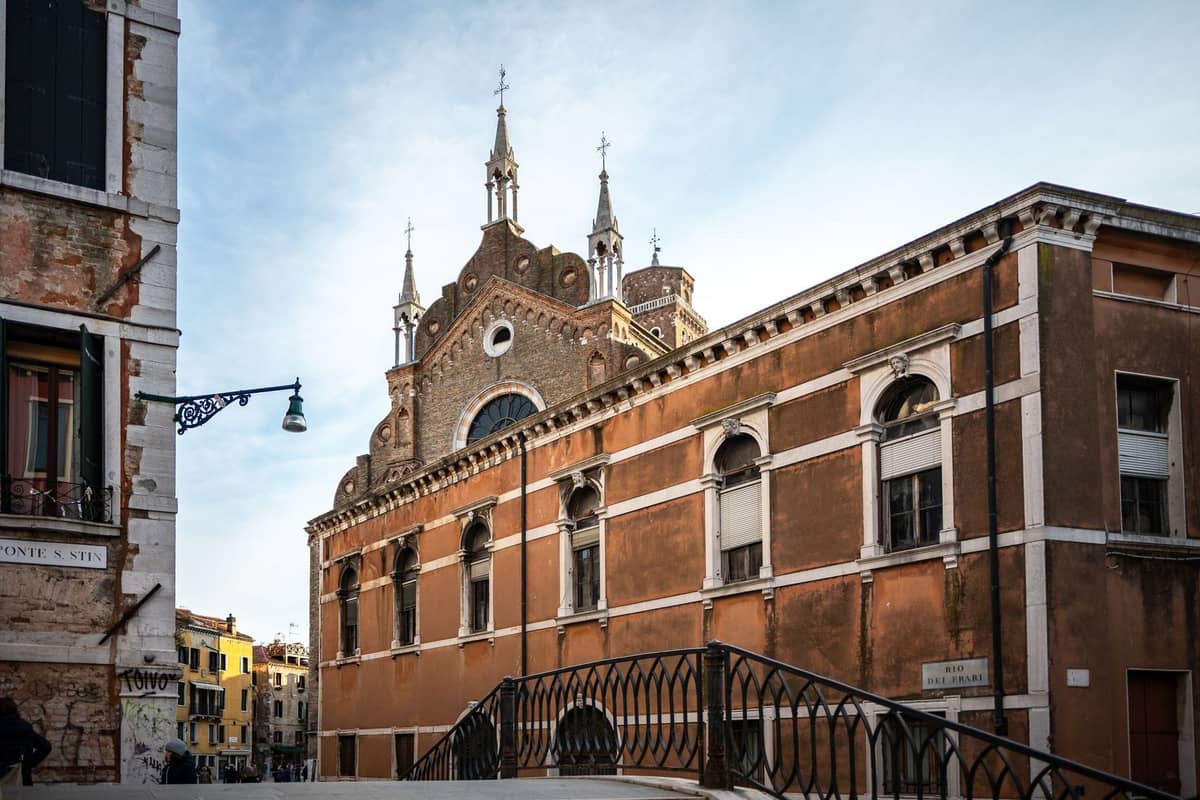
The Chiesa della Madonna dell'Orto is a Gothic parish church on the northern side of the Cannaregio sestiere, and it is one of the most art-rich churches in Venice that many visitors never see. While crowds queue at the Basilica dei Frari and the Basilica dei Santi Giovanni e Paolo, this church stands in a quiet campo on the lagoon edge, its terracotta-brick façade reflected in the still water of the Rio della Madonna dell'Orto.
Entry is free as of 2025, which makes the quality of what's inside even more striking. The church contains some of the most monumental canvases Jacopo Tintoretto ever produced, and it is also where he was buried in 1594. That combination, a working Gothic church, a great Renaissance painter's tomb, and major original artworks, would draw lengthy queues if it were located ten minutes closer to the Piazza San Marco. Here, in the northern reaches of Cannaregio, it does not.
ℹ️ Good to know
Opening hours for artistic visits: Monday to Saturday, 10:30–17:00 (last entry 10 minutes before closing). The church opens on Sundays for Mass (festive Mass at 11:30, weekday Mass at 09:00) and tourist visits are not available during Mass times on Sundays. Always verify current hours via the official site or Chorus Venezia before visiting.
The Architecture: Venetian Gothic in Brick and Stone
The church was founded around 1350 by the Umiliati, a mendicant religious order, and was originally dedicated to Saint Christopher. The name shifted after 1377, when a miraculous statue of the Virgin and Child, originally housed in a nearby vegetable garden (orto), was moved inside. The name has stuck ever since.
Standing in the Campo Madonna dell'Orto and looking at the façade, you see one of the cleaner examples of Venetian Gothic in the city. The central portal is framed by a pointed arch with fine carved decoration, and the roofline is punctuated by five stone statue niches, the central one occupied by St Christopher. The brickwork is warm and textured, weathered over six centuries. Unlike the marble-clad basilicas nearer to San Marco, this façade wears its age plainly: the material is honest, the scale human.
The brick campanile to the left dates to the same Gothic period. In late morning light, the tower casts a long shadow across the campo. In the afternoon, the façade catches the western sun and glows a deep amber. If you are thinking about photography, mid-afternoon on a clear day produces the most dramatic light on the exterior. In late morning light, the tower casts a long shadow across the campo. In the afternoon, the façade catches the western sun and glows a deep amber. If you are thinking about photography, mid-afternoon on a clear day produces the most dramatic light on the exterior.
Tickets & tours
Hand-picked options from our booking partner. Prices are indicative; availability and final rates are confirmed when you complete your booking.
Doge's Palace skip-the-line tour
From 67 €Instant confirmationFree cancellationVenice Legends, Anecdotes and Ghost Stories Tour
From 35 €Instant confirmationFree cancellationGhosts and legends tour of Venice
From 29 €Instant confirmationFree cancellationSkip-the-line guided tour of Doge's Palace and Saint Mark's Basilica
From 106 €Instant confirmationFree cancellation
Inside the Church: Tintoretto's Permanent Gallery
The nave is a single broad space, typical of Venetian mendicant church design. The interior is cool and dim even in summer. Your eyes take a moment to adjust from the bright campo outside, and when they do, the scale of the paintings becomes apparent. These are not panel pictures or altarpieces of modest size. The two paintings flanking the high altar, 'The Adoration of the Golden Calf' and 'The Last Judgment', are enormous canvases, each several meters tall, filling the full height of the chancel walls on either side of the apse. The interior is cool and dim even in summer. Your eyes take a moment to adjust from the bright campo outside, and when they do, the scale of the paintings becomes apparent. These are not panel pictures or altarpieces of modest size. The two paintings flanking the high altar, 'The Adoration of the Golden Calf' and 'The Last Judgment', are enormous canvases, each several meters tall, filling the full height of the chancel walls on either side of the apse.
Tintoretto painted these between approximately 1560 and 1562. The 'Last Judgment' in particular is visceral work: contorted bodies rising and falling, figures rendered in that characteristic Tintoretto drama of diagonal light cutting through deep shadow. Standing at the chancel rail looking at both paintings simultaneously, you understand why critics have called him the most theatrical painter of the Venetian school.
Also look for Tintoretto's 'Presentation of the Virgin in the Temple' in the Contarini Chapel, and the painting of Saint Agnes raising Licinius in another side chapel. Cima da Conegliano's 'St John the Baptist with Saints' over the first altar on the right is calmer in mood, the landscape behind the figures recognizably from the Veneto hills rather than any imagined paradise. For more context on Venetian painting across the city, the Gallerie dell'Accademia makes a useful companion visit, though it is a significant walk away in Dorsoduro.
💡 Local tip
Bring a small flashlight or use your phone torch. Some side chapels are quite dark, and the detail in Tintoretto's shadow areas rewards close inspection that ambient church lighting alone does not always provide.
Tintoretto's Tomb and the Human Scale of the Place
Jacopo Tintoretto was born in Venice around 1518 and lived most of his life in Cannaregio, not far from this church. He was buried here in 1594, and a simple memorial marks the spot in the Contarini Chapel. Jacopo Tintoretto was born in Venice around 1518 and lived most of his life in Cannaregio, not far from this church. He was buried here in 1594, and a simple memorial marks the spot in the Contarini Chapel. His son Domenico and daughter Marietta, also painters, are buried in the same chapel. There is something affecting about the modesty of the tomb. This is not a state monument or a grand dynastic chapel. It is a parish burial in a neighborhood church, which is precisely what it was. There is something affecting about the modesty of the tomb. This is not a state monument or a grand dynastic chapel. It is a parish burial in a neighborhood church, which is precisely what it was.
The church remains an active parish. On weekday mornings before the 10:30 opening for art visits, you may hear the 9:00 Mass underway if you are passing through the campo. The church remains an active parish. On weekday mornings before the 10:30 opening for art visits, you may hear the 9:00 Mass underway if you are passing through the campo. On Sundays the church is closed to tourists, but the neighborhood uses it. That relationship between a living community and a building of major historical significance is easy to take for granted in Venice, but it is worth pausing on. This is not a museum. The candles are lit, the pews are used, and the paintings are watched over by the same institution that has held them for four centuries. That relationship between a living community and a building of major historical significance is easy to take for granted in Venice, but it is worth pausing on. This is not a museum. The candles are lit, the pews are used, and the paintings are watched over by the same institution that has held them for four centuries.
The Neighborhood: Walking to Madonna dell'Orto
The church sits in the northern part of Cannaregio, Venice's most populous sestiere. The walk from the train station or from the area around the Jewish Ghetto takes roughly 20–25 minutes on foot through increasingly quiet calli. The streets narrow, the tourist infrastructure thins out, and you begin to see the Cannaregio of laundry lines and local bars rather than the Cannaregio of souvenir stalls along the Lista di Spagna.
The campo itself is genuinely pleasant: large enough to feel open, small enough to feel like a neighborhood square rather than a tourist plaza. There is a wellhead at its center, the standard Venetian campo furniture. A few benches face the church façade. In the mornings, before the church opens, locals cross the campo on their way to work. By 11:00, the first visitors with guidebooks are arriving. By 2:00 in the afternoon, it is quiet again.
From the fondamenta beside the church, you can look across the Rio della Madonna dell'Orto to a narrow strip of buildings and, beyond them, the northern lagoon. It is one of the less-photographed canal views in Cannaregio, which is part of its appeal.
💡 Local tip
The nearest vaporetto stop is Orto, served by ACTV lines 4.1, 4.2, 5.1, and 5.2. From the stop it is about a two-minute walk to the church. If you are coming from central Venice on foot, allow at least 25 minutes from the Rialto area.
Practical Considerations Before You Go
Entry is free as of 2025, and the ChorusPass also includes this church. Given that entry is currently free, the pass makes most sense if you plan to visit several other Chorus churches during your trip. Verify the current situation at chorusvenezia.org or madonnadellorto.org before your visit, as ticketing arrangements can change. The ChorusPass, which covers multiple Venetian churches, also includes this church. Given that entry is currently free, the pass makes most sense if you plan to visit several other Chorus churches during your trip. Verify the current situation at chorusvenezia.org or madonnadellorto.org before your visit, as ticketing arrangements can change.
Dress code applies as in all active Venetian churches: covered shoulders and knees are required. The flooring is traditional Venetian stone and brick, uneven in places, which matters if you have mobility concerns. Dress code applies as in all active Venetian churches: covered shoulders and knees are required. The flooring is traditional Venetian stone and brick, uneven in places, which matters if you have mobility concerns. There are no detailed accessibility guarantees published on the official pages; contact the church directly on +39 041 719933 if this is a priority for your visit.
Weather affects the area in autumn and winter when acqua alta events can flood the lower parts of Cannaregio. The fondamenta around the church may flood during high tides. If you are visiting between October and January, check tide forecasts and carry waterproof shoes. The acqua alta guide has practical detail on how to navigate Venice during tidal flooding.
Photography inside the church is generally permitted without flash. Given the low light levels in the nave and especially in the side chapels, a phone with good low-light capability or a camera with a fast lens will produce better results than flash, which flattens the paintings and is disruptive in any case. The exterior is easy to photograph from the campo; for the campanile and full façade in one frame, stand near the far end of the campo by the wellhead.
Who Will Not Enjoy This Visit
If your primary interest in Venice is piazzas, canal views, and food rather than religious art, the walk to Cannaregio's northern edge may not feel justified. The church has no café, no gift shop of significance, and no panoramic viewpoint. The paintings require engagement: if Tintoretto's style, dark and dramatic and densely populated with figures, does not appeal, this will feel like a long detour. Families with young children who are not interested in standing still in a dark interior will likely find the visit short and the walk there tiring.
Anyone looking for an overview of Venetian churches would do better starting with a guide to the best churches in Venice to identify which ones match their interests before committing to the walk north through Cannaregio.
Insider Tips
- Arrive within the first 30 minutes of opening (10:30) on a weekday. The church is rarely crowded but the best morning light falls on the Cima da Conegliano altarpiece on the right side of the nave before noon.
- The fondamenta running alongside the church to the north offers a direct view across to the lagoon edge. Walk the full length of it after your visit: the water here is calm and the view northward toward Sant'Erasmo and the open lagoon is one you will not find on most Venice itineraries.
- Combine this visit with the nearby Palazzo Mocenigo or the Jewish Ghetto for a half-day in Cannaregio that covers very different aspects of Venetian history without significant backtracking.
- The ChorusPass covers 15 Venetian churches and may offer value if you plan a systematic tour of church art. Even with free entry here, the pass gives access to churches that do still charge. Check the current church list at chorusvenezia.org.
- If you are visiting in winter, check the Venice tide forecast app (Città di Venezia) the evening before. The fondamenta outside the church floods relatively early in a high-water event.
Who Is Chiesa di Madonna dell'Orto For?
- Travelers with genuine interest in Renaissance painting who want to see Tintoretto's work in the setting it was made for
- Visitors on a second or third trip to Venice who have already covered the major sites and want to explore Cannaregio at depth
- Architecture enthusiasts interested in Venetian Gothic outside the San Marco showcase circuit
- Budget travelers: free entry makes this one of the highest-quality no-cost experiences in the city
- Anyone seeking a quieter Venice, away from the concentrated tourist flow around Rialto and San Marco
Nearby Attractions
Other things to see while in Cannaregio:
- Ca' d'Oro (Galleria Giorgio Franchetti)
Built for the Contarini family between 1421 and roughly 1430, the Ca' d'Oro is one of the finest Gothic palaces on the Grand Canal. It houses the Galleria Giorgio Franchetti, currently closed for renovation (closed to the public from early 2026, with a planned reopening in spring 2027 — verify at cadoro.org).
- Chiesa di Santa Maria dei Miracoli
Built between 1481 and 1489 by Pietro Lombardo, the Chiesa di Santa Maria dei Miracoli is a compact Renaissance masterpiece sheathed entirely in polychrome marble. Tucked into a quiet canal corner of Cannaregio, it rewards visitors who seek it out with some of the finest stone carving in Venice.
- Jewish Ghetto of Venice (Ghetto Ebraico)
Founded by decree in 1516, the Ghetto Ebraico di Venezia in Cannaregio is the oldest Jewish ghetto in the world. Today it holds five historic synagogues, a respected Jewish museum, active kosher restaurants, and one of Venice's most atmospheric campi, all within a compact seven-acre enclave that rewards slow, careful exploration.
- Jewish Museum of Venice
The Museo Ebraico di Venezia sits at the heart of Campo di Ghetto Nuovo, the 16th-century enclave that gave the world the word 'ghetto'. This small but serious museum traces five centuries of Venetian Jewish life through ceremonial objects, archival documents, and guided access to synagogues that are still in active use.