Jewish Museum of Venice: Inside the World's First Ghetto
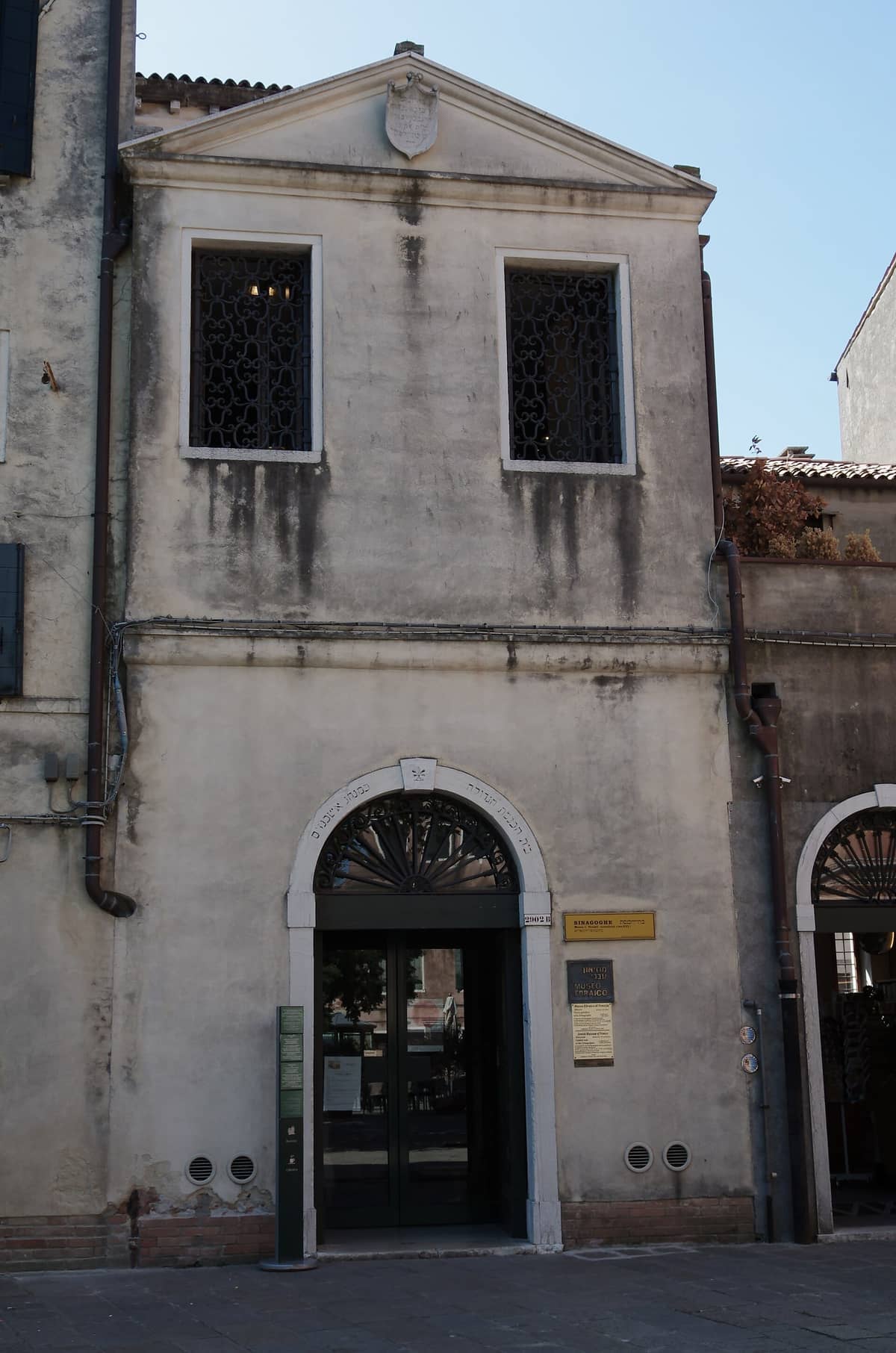
The Museo Ebraico di Venezia sits at the heart of Campo di Ghetto Nuovo, the 16th-century enclave that gave the world the word 'ghetto'. This small but serious museum traces five centuries of Venetian Jewish life through ceremonial objects, archival documents, and guided access to synagogues that are still in active use.
Quick Facts
- Location
- Campo di Ghetto Nuovo, Cannaregio 2902/B, Venice
- Getting There
- Guglie (line 5.2) — approx. 5-minute walk
- Time Needed
- 1.5 to 2.5 hours (museum + synagogue tour)
- Cost
- Museum + audio guide: €12 full / €10 reduced. Guided tour: €15 / €13. Plus €2 per-ticket booking fee. Verify before visiting.
- Best for
- History lovers, architecture enthusiasts, cultural travellers
- Official website
- www.ghettovenezia.com
What the Jewish Museum of Venice Actually Is
The Museo Ebraico di Venezia is not a large institution. Its physical footprint is modest, occupying a historic building in Campo di Ghetto Nuovo in the Cannaregio sestiere. But size is not the point. What this museum offers is access: to the physical fabric of the world's first ghetto, to synagogues that have been in use since the 16th century, and to a five-hundred-year story that sits just below the surface of everyday Venice.
The term 'ghetto' originates here. In 1516, the Venetian Republic confined its Jewish population to this small island area in Cannaregio, naming it after the geto (foundry) that had previously occupied the site. Jews were permitted to participate in trade and moneylending during the day but were required to return to the ghetto by nightfall, when the gates were locked. This arrangement lasted, with varying degrees of restriction and tolerance, until Napoleon abolished it in 1797.
The museum was founded in 1954 by the Jewish Community of Venice, making it one of the older Jewish cultural institutions in Italy. It underwent significant renovation in the 1980s and a major expansion project beginning in 2004. For the 500th anniversary of the ghetto's establishment in 2016, a further redevelopment enlarged the space and updated the interpretive approach. The result is a museum that feels current without losing the weight of place. It sits directly within the Cannaregio neighbourhood, one of Venice's least tourist-saturated sestieri, which adds considerably to the experience of getting there.
⚠️ What to skip
The museum is closed on Saturdays and Jewish holidays, as well as 25 December, 1 January, and 1 May. Always verify current hours and holiday closures at ghettovenezia.com before planning your visit, as schedules change seasonally.
Getting There: The Walk Through Cannaregio
From the Guglie vaporetto stop, the walk to Campo di Ghetto Nuovo takes around five minutes on foot. The route passes through the Sotoportego del Ghetto, a low stone passageway that once held the gates used to seal off the Jewish quarter at night. Ducking under that archway is one of those rare moments in Venice where the past becomes physically tangible rather than merely decorative.
The campo itself is quieter than almost any open space of comparable size in the city centre. There are no souvenir stalls and very few cafes oriented toward tourist traffic. On weekday mornings it can feel almost empty: pigeons, a few locals crossing through, the faint sound of Hebrew coming from a school or community building. The square is edged by some of the tallest residential buildings in Venice, a direct consequence of the overcrowding that resulted from confining a growing population to a fixed island with no option to build outward, only upward.
💡 Local tip
Take a few minutes in the campo before entering the museum. Look up at the building heights, then look at the bronze bas-relief plaques on the exterior walls of the square, which commemorate the deportation of Venetian Jews during the Holocaust. This context sharpens everything you will see inside.
Tickets & tours
Hand-picked options from our booking partner. Prices are indicative; availability and final rates are confirmed when you complete your booking.
The Jewish Ghetto of Venice with Audio Commentary
From 14 €Instant confirmationThe Jewish Ghetto of Venice with Audio Commentary
From 12 €Instant confirmationThe Jewish Ghetto of Venice with Audio Commentary
From 9 €Instant confirmationPrivate two-hour tour of the Venetian Jewish Quarter
From 28 €Instant confirmationFree cancellation
Inside the Museum: What the Permanent Collection Shows
The museum's permanent collection centres on ceremonial objects: Torah scrolls and their embroidered mantles, silver rimonim (scroll finials), Hanukkah lamps, Passover plates, and marriage contracts written in careful calligraphic Hebrew. Many of these objects were crafted by Venetian artisans and carry the precise aesthetic fingerprint of the city — gilded surfaces, rich textile work, an eye for ornament that clearly belongs to the same cultural moment as the churches and palaces a few streets away.
Archival documents and printed materials trace the legal, commercial, and intellectual history of the community. Venice's Jewish population played a significant role in the early history of Hebrew printing: the city hosted important Hebrew presses from the early 16th century, and several first editions and rare printed texts are represented in the collection. For visitors with no prior knowledge of Jewish ritual objects, the labelling is clear and the interpretive approach is genuinely explanatory rather than reverential-but-opaque.
The museum also documents the darker chapters honestly. The section covering the deportations of 1943 and 1944, during the German occupation of Venice, is spare and direct. Of the approximately 200 Venetian Jews deported to concentration camps, only a handful returned. This history is not softened or buried in the narrative flow.
The Synagogue Tours: The Real Reason to Come
The guided synagogue tour is the most distinctive part of the visit and the main reason the museum justifies a dedicated trip rather than a quick stop. The Venetian Ghetto contains five historic synagogues, known as scole, each built by different Jewish communities who settled here from across Europe and the Mediterranean. Three are typically accessible on the standard tour: the Scola Tedesca (German, 1528), the Scola Canton (1531–32), and the Scola Italiana (1575). Access to others varies; confirm at the time of booking.
The synagogues are positioned on the upper floors of ordinary-looking residential buildings, completely invisible from street level. This was deliberate: by Republic law, they could not be identifiable as places of worship from the outside. Inside, however, they are extraordinary. The Scola Levantina and Scola Spagnola in the adjacent Campo di Ghetto Vecchio are among the most architecturally refined interiors in Venice, with carved wooden furnishings and painted ceilings that rival anything in the city's more famous churches. The interiors are not just historic relics: several of these synagogues are still used for religious services.
Tours depart at fixed times and are conducted in both Italian and English. Group sizes are limited. The tour takes roughly 45 minutes and is led by knowledgeable guides who are also available to answer questions. Photography policies inside the synagogues may be restricted; ask the guide before raising a camera.
💡 Local tip
Book synagogue tour tickets in advance, especially between April and October. Spots fill quickly and walk-in availability is not guaranteed. The €2 per-ticket booking fee applies online but it is worth it to secure your time slot.
Time of Day and Crowd Patterns
The museum and the campo around it see very different crowd profiles compared to the main tourist circuit. In the late morning, around 10:30 to 11:30, you will typically find a steady flow of visitors but nothing resembling the queues at the Doge's Palace or St Mark's Basilica. Afternoons between 13:00 and 15:00 can be slightly quieter. The square itself is at its most atmospheric on weekday mornings before the school groups arrive, when the light comes in low over the taller buildings to the east and the campo holds a genuine stillness.
In high summer, the museum can feel warm and close indoors, as air conditioning in historic buildings is limited. A visit in the morning hours is more comfortable. In winter, the ghetto is one of the more fog-prone parts of Cannaregio, and the campo in mist carries a particular quality that no photograph quite captures. Acqua alta affects the lower parts of the square occasionally in autumn and winter, though the museum's interior is elevated enough to avoid most flood events. Check the Venice acqua alta forecast if visiting between October and February.
For visitors trying to see the city efficiently, the museum pairs naturally with a walk through the broader Cannaregio district. From Campo di Ghetto Nuovo, you can reach the Jewish Ghetto of Ghetto Vecchio in two minutes on foot, and the church of Madonna dell'Orto, one of Venice's finest Gothic churches, is about a fifteen-minute walk north.
Practical Details and Who Should Skip This
Opening hours as of 2025 (verify before visiting): Thursday to Sunday 10:00 to 18:00, Friday 9:00 to 17:00. Closed Saturdays, Jewish holidays, 25 December, 1 January, and 1 May. The museum is located at Cannaregio 2902/B, Campo di Ghetto Nuovo, reachable by vaporetto to Guglie (line 5.2) followed by a five-minute walk.
Accessibility is limited by the nature of the buildings. The ghetto's historic fabric involves stairs, narrow doorways, and uneven stone floors, particularly in the synagogues reached on upper floors. Visitors with significant mobility restrictions should contact the museum directly via ghettovenezia.com before visiting to understand what is and is not accessible.
Visitors who are primarily interested in Venice's visual grandeur, its Grand Canal palaces, or its art collections may find this museum slower-paced than expected. It requires reading, attention, and some tolerance for modest interiors. Those expecting the scale of the Gallerie dell'Accademia or the theatrical impact of the Doge's Palace will need to recalibrate their expectations. The payoff here is historical depth and an encounter with living community history, not spectacle.
Modest dress is expected as a matter of cultural respect: covered shoulders and knees are appropriate when entering the synagogues. This is consistent with norms across Venice's religious buildings. The museum and guided areas are not suitable for very young children who cannot sustain quiet attention during the synagogue tour.
ℹ️ Good to know
The Jewish Community of Venice still operates from within the ghetto. The museum and synagogues are not simply preserved relics — they remain part of an active, if small, community. Approach the visit with the same respect you would bring to any working place of worship.
Connecting the Museum to the Wider City
The Jewish Museum of Venice fits naturally into a day focused on the less-visited parts of the city. Cannaregio is a good base for understanding Venice away from the San Marco crowds, and the walk from Guglie along the Cannaregio Canal to the ghetto passes some of the most characteristic residential calli in the city. If you are putting together a longer itinerary, the lesser-known Venice guide covers several other sites in the northern sestieri that complement a visit here.
For context on the broader cultural history of Venice's religious architecture, the guide to Venice's best churches provides useful background on the parallel history of Christian building in the same centuries. Understanding what was happening architecturally and politically across the city makes the ghetto's compressed, upward-reaching buildings all the more striking by comparison.
Insider Tips
- The bronze bas-relief plaques on the exterior walls of Campo di Ghetto Nuovo, created by sculptor Arbit Blatas, document the Holocaust deportations from Venice. They are easily overlooked by visitors heading straight for the museum entrance, but they are among the most affecting public memorials in the city.
- If you are visiting on a Friday, note the earlier closing time of 17:00. Arriving close to this time is not recommended, as the museum winds down quickly before the Sabbath.
- The museum bookshop carries a curated selection of titles on Venetian Jewish history, Hebrew art, and Italian Jewish literature that you are unlikely to find in general Venice bookshops. It is worth browsing even if you do not buy.
- Campo di Ghetto Vecchio, a two-minute walk from the museum through the sotoportego, contains the Scola Levantina and Scola Spagnola. Their exteriors give little away, but the interior of the Levantina in particular is considered by architectural historians to be among the finest Baroque interiors in Venice.
- The walk from the Guglie vaporetto stop takes you along the Cannaregio Canal, one of the few wide canals in Venice outside the Grand Canal. It is a good stretch for canal-side walking without tourist congestion.
Who Is Jewish Museum of Venice For?
- Travellers with a serious interest in European Jewish history and culture
- Architecture enthusiasts drawn to interiors that are genuinely off the standard circuit
- Visitors who want to understand Venice as a multi-community city rather than a backdrop for gondola rides
- Repeat visitors to Venice looking for depth beyond the major monuments
- Educators or students on cultural history itineraries
Nearby Attractions
Other things to see while in Cannaregio:
- Ca' d'Oro (Galleria Giorgio Franchetti)
Built for the Contarini family between 1421 and roughly 1430, the Ca' d'Oro is one of the finest Gothic palaces on the Grand Canal. It houses the Galleria Giorgio Franchetti, currently closed for renovation (closed to the public from early 2026, with a planned reopening in spring 2027 — verify at cadoro.org).
- Chiesa di Madonna dell'Orto
One of Venice's great Gothic churches, the Chiesa della Madonna dell'Orto sits quietly on the northern edge of Cannaregio. Free to enter, rich with Tintoretto canvases, and largely overlooked by day-trippers, it rewards anyone willing to walk beyond the Rialto circuit.
- Chiesa di Santa Maria dei Miracoli
Built between 1481 and 1489 by Pietro Lombardo, the Chiesa di Santa Maria dei Miracoli is a compact Renaissance masterpiece sheathed entirely in polychrome marble. Tucked into a quiet canal corner of Cannaregio, it rewards visitors who seek it out with some of the finest stone carving in Venice.
- Jewish Ghetto of Venice (Ghetto Ebraico)
Founded by decree in 1516, the Ghetto Ebraico di Venezia in Cannaregio is the oldest Jewish ghetto in the world. Today it holds five historic synagogues, a respected Jewish museum, active kosher restaurants, and one of Venice's most atmospheric campi, all within a compact seven-acre enclave that rewards slow, careful exploration.