Ca' d'Oro (Galleria Giorgio Franchetti): Venice's Golden Palace on the Grand Canal
Built for the Contarini family between 1421 and roughly 1430, the Ca' d'Oro is one of the finest Gothic palaces on the Grand Canal. It houses the Galleria Giorgio Franchetti, currently closed for renovation (closed to the public from early 2026, with a planned reopening in spring 2027 — verify at cadoro.org).
Quick Facts
- Location
- Cannaregio 3932, Venice (Grand Canal frontage, sestiere of Cannaregio)
- Getting There
- Vaporetto Line 1 (and night line N) to stop 'Ca' d'Oro', a short walk from the palace entrance
- Time Needed
- Gallery closed for renovation (planned reopen spring 2027; verify at cadoro.org). Exterior views from the Grand Canal remain possible.
- Cost
- Gallery currently closed for renovation — verify reopening and tickets at cadoro.org before planning a visit.
- Best for
- Art lovers, architecture enthusiasts, and anyone wanting a quieter alternative to the Accademia
- Official website
- www.cadoro.org/?lang=en
What the Ca' d'Oro Actually Is
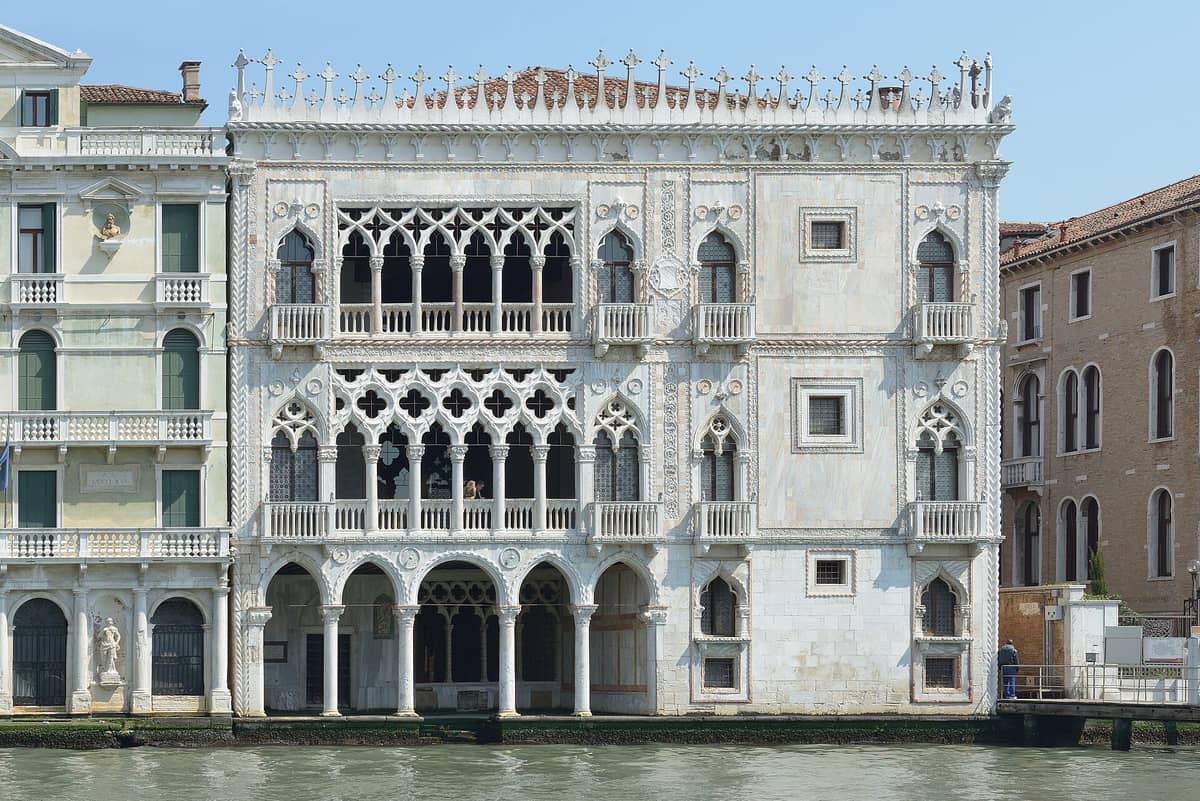
The Ca' d'Oro, officially the Galleria Giorgio Franchetti alla Ca' d'Oro, is two things at once: a 15th-century Gothic palazzo of exceptional architectural quality, and a state-run art gallery holding a collection assembled by one obsessive private collector. Most visitors come for the facade glimpsed from the water. The ones who go inside tend to be pleasantly surprised.
Its full Italian name is Palazzo Santa Sofia, though nobody uses that name today. 'Ca' d'Oro' translates roughly as 'House of Gold', a reference to the gilded and polychrome decoration that once covered the facade. That gilding is long gone, but the pale Istrian stone tracery and the layered Gothic arches still rank the building among the most photographed canal frontages in Venice.
The palace sits in Cannaregio, Venice's northernmost sestiere, about a ten-minute walk from the Rialto Bridge through quieter residential calli. It faces the Grand Canal directly, which means arriving by vaporetto gives you the best first impression of the building as a whole.
💡 Local tip
Take Line 1, not Line 2, to the Ca' d'Oro stop. The faster Line 2 does not serve this stop. The vaporetto landing stage is immediately in front of the palace entrance, so you cannot miss it.
A Brief History: From Contarini to Franchetti to the Italian State
Construction began in 1421 for Marino Contarini, a member of one of Venice's most powerful patrician families, and was completed around 1430. The architects are believed to include Giovanni and Bartolomeo Bon, the Venetian Gothic sculptors responsible for the Ca' d'Oro's refined stonework. The facade's asymmetric arrangement of loggias, quatrefoil windows, and pointed arches was deliberate, not unfinished, and represents the Venetian Gothic style at close to its peak.
Over the following centuries the palace passed through many hands, fell into disrepair, and was subjected to poorly judged 19th-century modifications including the removal of its original staircase and the paving-over of its courtyard well. The building's modern rescue came through Baron Giorgio Franchetti, who purchased the Ca' d'Oro in 1894 and spent years restoring it while simultaneously filling it with sculpture, paintings, tapestries, and decorative objects acquired across Europe. In 1916 Franchetti donated the entire property, together with his collection, to the Italian State. The gallery opened to the public in 1927 and has carried his name ever since.
Tickets & tours
Hand-picked options from our booking partner. Prices are indicative; availability and final rates are confirmed when you complete your booking.
Doge's Palace skip-the-line tour
From 67 €Instant confirmationFree cancellationVenice Legends, Anecdotes and Ghost Stories Tour
From 35 €Instant confirmationFree cancellationGhosts and legends tour of Venice
From 29 €Instant confirmationFree cancellationSkip-the-line guided tour of Doge's Palace and Saint Mark's Basilica
From 106 €Instant confirmationFree cancellation
The Collection: What to Look For Inside
The Galleria Giorgio Franchetti is not a comprehensive survey museum. It is a collector's museum, which means the works are uneven in period and medium but occasionally exceptional. The collection spans roughly five centuries of Italian and Flemish art, with particular strength in bronzes, medals, and small-scale sculpture alongside a handful of major paintings.
The single most important work in the gallery is Andrea Mantegna's 'Saint Sebastian', painted around 1490. The painting arrived at the Ca' d'Oro after Franchetti acquired it, and it remains the artistic centerpiece of the first floor. Mantegna's characteristic precision, the stone-like quality of the figure's flesh, and the crumbling Roman architecture in the background reward sustained looking. Most visitors spend two minutes in front of it; give it ten.
Beyond the Mantegna, look for Tullio Lombardo's double portrait bust in marble, a notable example of Venetian Renaissance sculpture, and a set of Flemish tapestries that retain impressive color despite their age. The collection of bronze medals and decorative bronzes, largely overlooked by visitors who move quickly through, reflects Franchetti's particular enthusiasm and includes pieces of real quality.
If you are building a broader art itinerary, the Ca' d'Oro pairs naturally with the Gallerie dell'Accademia for Venetian painting across periods, or with the Peggy Guggenheim Collection if you want to cover both the medieval-Renaissance tradition and the modern collection in a single day. The Ca' d'Oro is the least crowded of the three by a significant margin.
The Architecture: Reading the Building as You Move Through It
The interior sequence matters as much as any individual artwork. Enter from the calle side, pass through the androne (the ground-floor entrance hall), and you reach the courtyard, where the original Gothic wellhead, restored by Franchetti, sits at the center of a geometrically patterned marble floor. The wellhead is a Bartolomeo Bon work from the 15th century and is often overlooked by visitors who walk straight past it toward the stairs.
The loggia on the first piano nobile (first main floor) is the architectural high point of the visit. The open arcade faces the Grand Canal directly, and the view through the Gothic arches frames the opposite bank of the canal in a way that feels composed rather than accidental. In morning light, roughly between 9:00 and 11:00, the canal surface reflects light back up through the tracery. By afternoon, the loggia falls into shade and the far bank catches the sun instead. Both versions are worth experiencing if you have time to linger.
Important: the Galleria Giorgio Franchetti is closed to the public for a major renovation campaign from early 2026, with a planned reopening in spring 2027. Check cadoro.org for the latest access updates before you go — do not assume indoor collection rooms or a full museum visit will be available.
ℹ️ Good to know
During the renovation closure, treat any published opening hours as provisional. Confirm current access (if any) and the reopening timeline directly at cadoro.org before including Ca' d'Oro in your itinerary.
How the Experience Changes by Time of Day
Until the gallery reopens, the most reliable experience for most visitors is the exterior view from a vaporetto on the Grand Canal or from the opposite bank. Plan an indoor visit only after confirming that the museum has reopened.
Midday on weekdays brings a moderate flow of visitors, mostly independent travelers rather than large tour groups. The loggia becomes the predictable bottleneck as everyone stops to photograph the Grand Canal view, so if you want a clear photograph of the canal framed by the Gothic arches, aim for early morning or late afternoon rather than the 11:00 to 13:00 window.
Late afternoon light in summer (16:00 to 18:00) comes from the west and illuminates the far bank of the canal warmly. The Rialto fish market on the San Polo side has long since closed for the day, so the canal traffic is lighter and the vaporetti less frequent.
⚠️ What to skip
The Ca' d'Oro occupies a historic building with multiple floors connected by stairs. If you have significant mobility limitations, contact the museum directly at cadoro.org before visiting to confirm current accessibility arrangements, as detailed lift and wheelchair access information is not consistently available from third-party sources.
Getting There and the Surrounding Neighborhood
The simplest approach is by water. Vaporetto Line 1, which runs the full length of the Grand Canal from Piazzale Roma and Santa Lucia station to San Marco, stops directly at Ca' d'Oro. The journey from Santa Lucia station takes around 15 minutes; from Rialto it is two stops. Night Line N follows the same route after regular hours. Current museum opening time is 10:00, so plan your arrival accordingly.
On foot from the Rialto Bridge, follow the Strada Nova northwest through Cannaregio. This is one of Venice's main pedestrian arteries and takes roughly ten minutes at a comfortable pace. The entrance to the Ca' d'Oro is on the calle that branches off from the Strada Nova toward the canal.
The surrounding neighborhood rewards some exploration before or after the museum. Cannaregio contains the Jewish Ghetto, the oldest in Europe, a ten-minute walk northwest. In the other direction toward San Marco, the Strada Nova passes several good bacari (wine bars) where you can stop for cicchetti and a glass of wine at standing-room prices. This is a practical, local-facing stretch of the city that contrasts with the more heavily touristed areas near San Marco.
Photography Tips and Practical Notes
For exterior shots of the facade, the standard viewpoint is from the vaporetto or from the opposite bank of the Grand Canal. A position near the Ca' d'Oro vaporetto stop on the San Polo side gives a direct view across the water. Morning light falls on the facade directly; by early afternoon the building is largely in shadow from the east. The gilding is gone, but the pale stone reads well in overcast light too, which is common in Venice from October through March.
Inside, when the interior rooms are open, the loggia is the best photography location, both for the architectural detail close-up and for canal views through the arches. Photography is generally permitted in the permanent collection rooms without flash; check current museum policy on entry. The Mantegna 'Saint Sebastian' is in a gallery with controlled lighting and can be tricky to photograph without glare from the protective glass when accessible.
If rain or acqua alta is forecast, check conditions before heading out. The Ca' d'Oro's ground level sits close to the canal, and the area around the vaporetto stop can flood during high water events. For more on navigating this, the acqua alta guide covers what to watch for and how to prepare.
Insider Tips
- The Galleria Giorgio Franchetti is closed for renovation from early 2026, with a planned reopening in spring 2027. Verify status and any limited access at cadoro.org before you go — do not rely on older ticket or combined-ticket information.
- The Gothic wellhead in the courtyard is a 15th-century original by Bartolomeo Bon. Most visitors walk straight past it. Stop for two minutes: the marble carving on the basin's panels is among the best-preserved Gothic stonework accessible in Venice, and remains visible even during the current period when only the courtyard route is open.
- When the museum reopens, arriving at opening on a weekday is usually the quietest window. Until then, confirm any temporary access arrangements on the official site.
- When the gallery reopens, Mantegna's 'Saint Sebastian' is the collection's centerpiece — stand slightly off-center if glass glare is an issue. Until then, enjoy the Gothic facade from the water.
- The Strada Nova runs between the Ca' d'Oro and the train station and is lined with functioning local shops and bakeries rather than tourist-oriented souvenir stalls. Arriving from the station on foot along this route takes about 15 minutes and gives a better sense of residential Cannaregio than arriving by water.
Who Is Ca' d'Oro (Galleria Giorgio Franchetti) For?
- Art travelers who want to see Mantegna's late work in an intimate setting rather than a crowded national gallery
- Architecture enthusiasts studying Venetian Gothic palazzo design and Bartolomeo Bon's stonework
- Visitors on a second or third trip to Venice who have already covered the major museums and want a quieter, more specific experience
- Travelers combining a museum visit with exploration of the Cannaregio neighborhood, including the Jewish Ghetto and the bacari along Strada Nova
- Anyone interested in the history of private collecting and how a single patron's obsession shaped a public institution
Nearby Attractions
Other things to see while in Cannaregio:
- Chiesa di Madonna dell'Orto
One of Venice's great Gothic churches, the Chiesa della Madonna dell'Orto sits quietly on the northern edge of Cannaregio. Free to enter, rich with Tintoretto canvases, and largely overlooked by day-trippers, it rewards anyone willing to walk beyond the Rialto circuit.
- Chiesa di Santa Maria dei Miracoli
Built between 1481 and 1489 by Pietro Lombardo, the Chiesa di Santa Maria dei Miracoli is a compact Renaissance masterpiece sheathed entirely in polychrome marble. Tucked into a quiet canal corner of Cannaregio, it rewards visitors who seek it out with some of the finest stone carving in Venice.
- Jewish Ghetto of Venice (Ghetto Ebraico)
Founded by decree in 1516, the Ghetto Ebraico di Venezia in Cannaregio is the oldest Jewish ghetto in the world. Today it holds five historic synagogues, a respected Jewish museum, active kosher restaurants, and one of Venice's most atmospheric campi, all within a compact seven-acre enclave that rewards slow, careful exploration.
- Jewish Museum of Venice
The Museo Ebraico di Venezia sits at the heart of Campo di Ghetto Nuovo, the 16th-century enclave that gave the world the word 'ghetto'. This small but serious museum traces five centuries of Venetian Jewish life through ceremonial objects, archival documents, and guided access to synagogues that are still in active use.