Shopping in Beijing: Markets, Malls & What to Buy
Beijing's shopping scene runs from chaotic weekend antique markets to polished luxury malls, with every stop in between. This guide breaks down the best places to shop, what's worth buying, where to negotiate, and what to skip.
Plan and book this trip
Tools from our partner Travelpayouts help you compare flights and hotels. If you book through them, we may earn a commission at no extra cost to you.
Flights
Hotels map
TL;DR
- Panjiayuan Antique Market (18 Huawei Li, Chaoyang) is the best place for curios and crafts; go on a Saturday or Sunday morning for the full outdoor vendor experience.
- Silk Street (8 Xiushui East Street) is an indoor market open daily 09:30–21:00; expect aggressive sales tactics and always negotiate hard.
- Best things to buy: silk products, pu-erh and jasmine tea, traditional crafts, calligraphy supplies, and cloisonné enamelware.
- For modern malls, head to Sanlitun in Chaoyang for international brands, rooftop dining, and a younger local crowd.
- Check our Beijing scams and safety guide before buying antiques or visiting tourist markets — fakes and inflated prices are common.
Understanding How Beijing Shopping Works
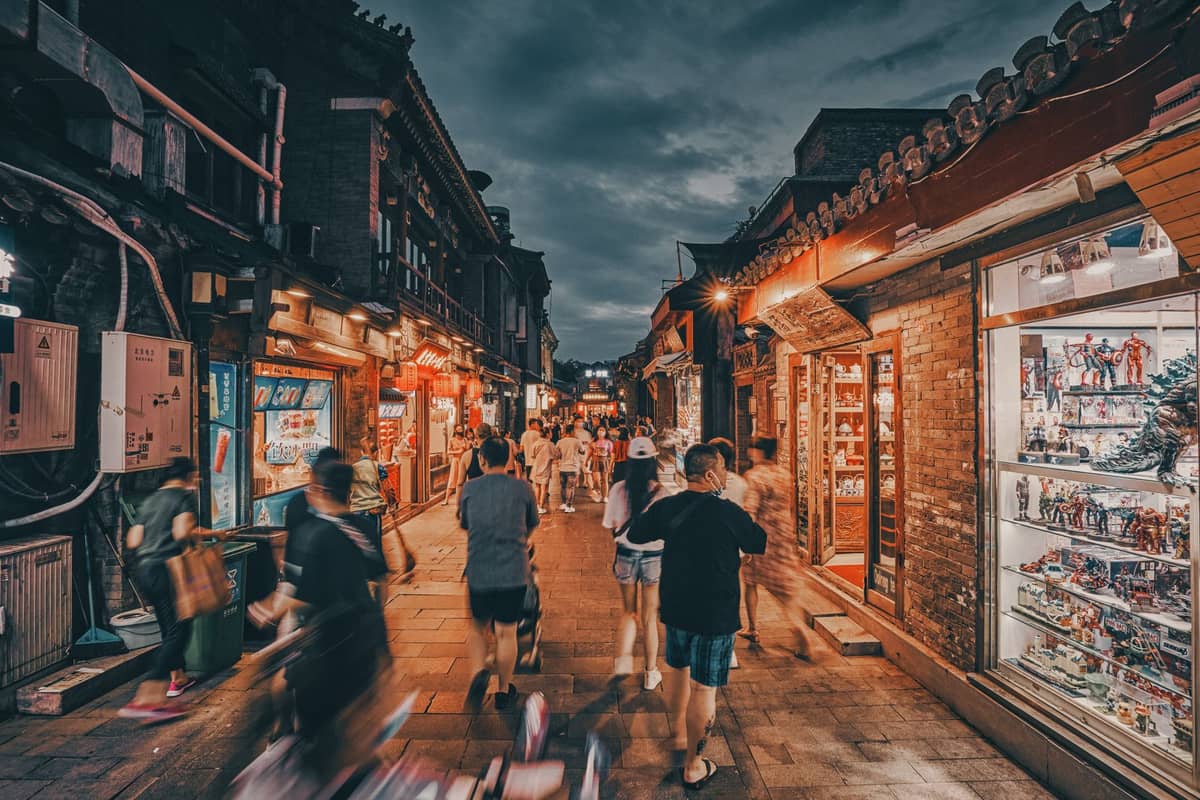
Shopping in Beijing does not follow a single format. The city's retail landscape spans centuries-old market traditions, Soviet-era department stores, modern luxury shopping centers, and sprawling weekend bazaars. Understanding which format suits what you want to buy will save you time and money.
Payment is the first practical hurdle for foreign visitors. Most markets still prefer cash in Chinese yuan (RMB, ¥). Some vendors at tourist-facing markets accept WeChat Pay or Alipay, but international bank cards are less commonly accepted at stalls. Large malls generally take Visa and Mastercard, though surcharges can apply. Bring enough RMB for market days. For broader logistics, see our guide on getting around Beijing, since several key markets require a subway transfer or taxi to reach.
⚠️ What to skip
Bargaining is expected at markets like Panjiayuan and Silk Street, but it is not customary in malls or fixed-price stores. Starting at 20–30% of the first asking price is a reasonable opening position at tourist markets. If a vendor accepts your first counter-offer without hesitation, you likely went too high.
Most Beijing malls open around 10:00 and close by 21:00 in summer, with some trimming that schedule by 30 to 60 minutes in winter. Markets have their own rhythms: outdoor stalls at Panjiayuan are liveliest on weekend mornings, while indoor tourist markets like Silk Street operate the same hours daily. Always verify current hours before making a special trip, especially around national holidays like Golden Week (October 1–7), when crowds surge and some venues adjust operations.
The Classic Markets: Panjiayuan, Silk Street, and Dashilar
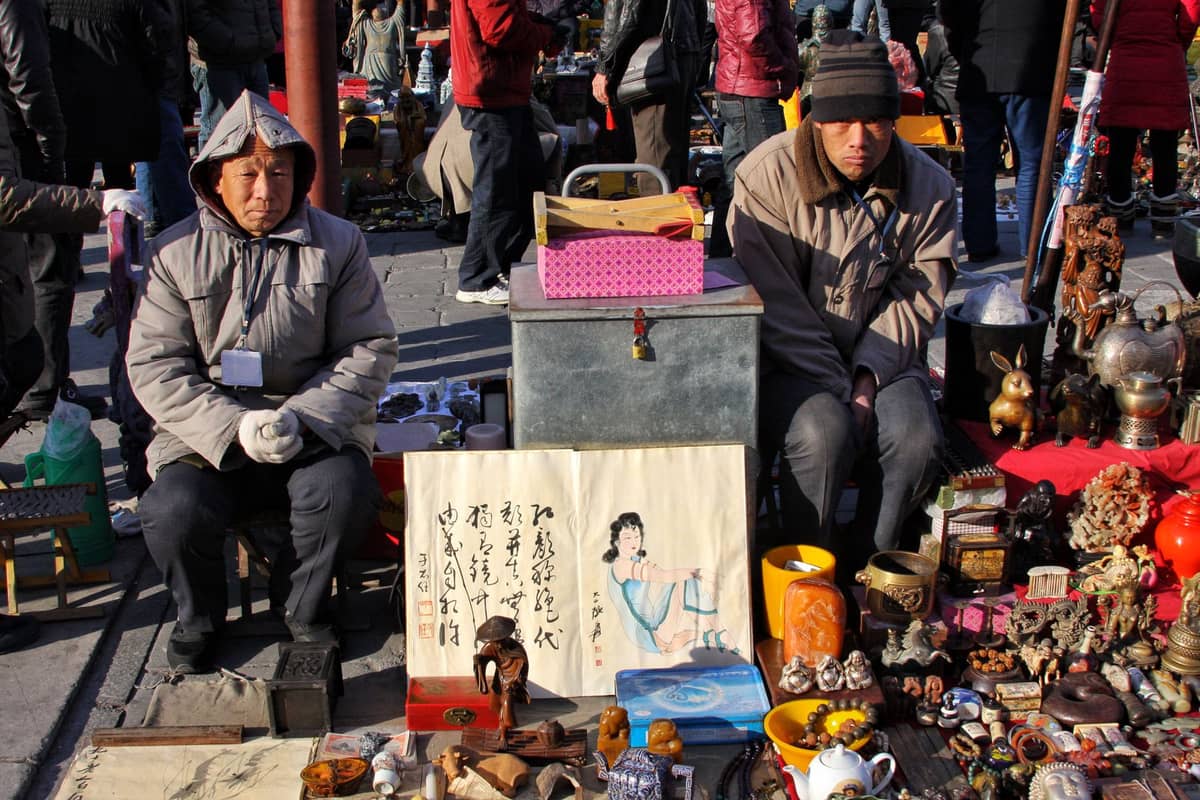
Panjiayuan Antique Market at 18 Huawei Li, Panjiayuan Road in Chaoyang District is the most serious shopping destination in Beijing for anyone interested in antiques, vintage items, folk crafts, and cultural artifacts. The curio section operates daily, but the outdoor vendors and art-wares area concentrate their activity on Saturdays and Sundays. Arrive early on weekends, ideally by 08:00, before the coach tour groups arrive and the best stalls get picked over. You will find everything from Mao-era porcelain and Cultural Revolution memorabilia to Tibetan jewelry, old maps, paper fans, and reproduction furniture.
⚠️ What to skip
Not every item sold at Panjiayuan is genuinely old or officially exportable. If you plan to buy anything presented as a real antique, ask for a proper invoice and check export documentation requirements. Chinese law restricts the export of certified cultural relics; reputable dealers understand this and can advise. When in doubt, treat it as a decorative piece, not an investment.
Silk Street (Xiushui Market) at 8 Xiushui East Street, near Jianguomenwai Avenue, is a five-story indoor market open daily from approximately 09:30 to 21:00. Despite the name, it sells far more than silk: think clothing, bags, shoes, accessories, electronics, and souvenirs. The market is centrally located near the embassy district and is a short walk from Yong'an Li subway station. Be aware that vendor tactics here are persistent, and the "brand-name" goods on sale are almost universally counterfeit. If you know exactly what you want and enjoy negotiating, Silk Street delivers. If you dislike high-pressure selling, it can be exhausting.
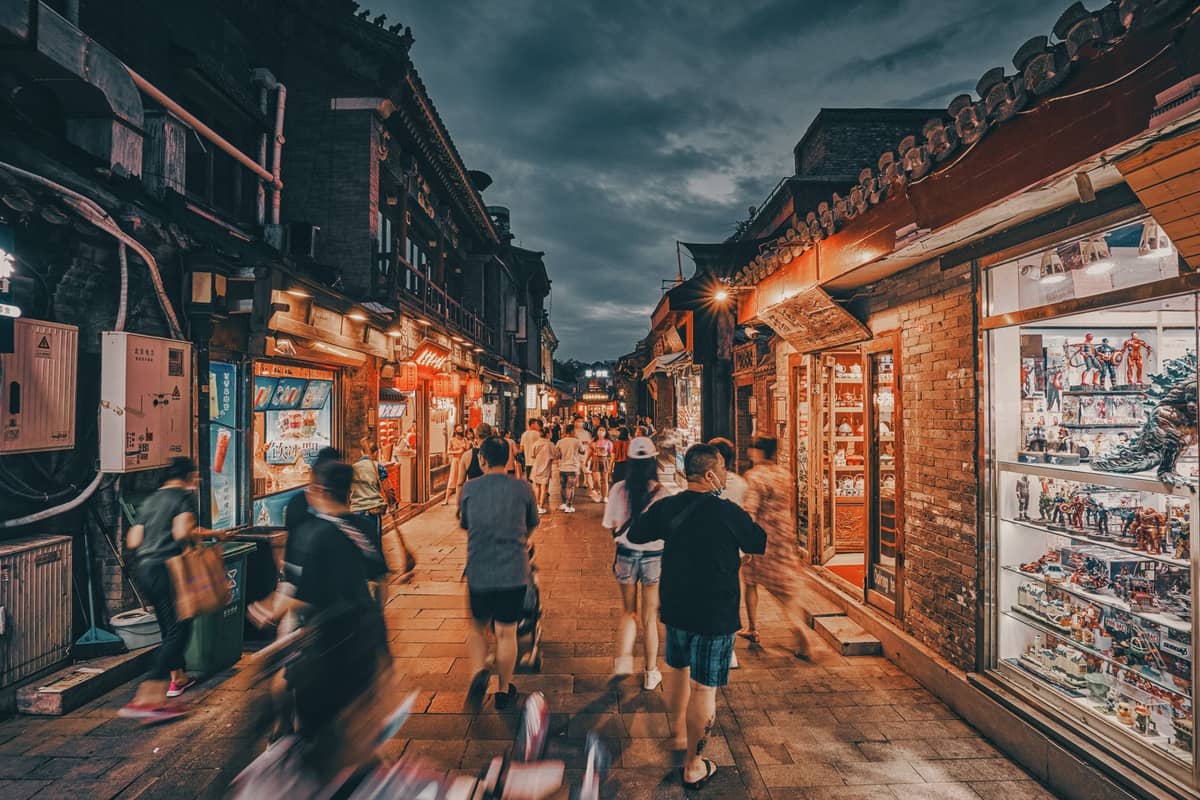
For a more atmospheric, less commercial experience, Dashilar Street near Qianmen in Dongcheng offers a mix of century-old traditional shops, renovated boutiques, and local snack vendors. Several long-established Beijing brands have flagship stores here, including traditional medicine pharmacies, hat makers, and tea houses. The area is walkable and pairs naturally with a stroll down Qianmen Street, though the latter has become heavily commercialized.
Modern Malls and Commercial Districts
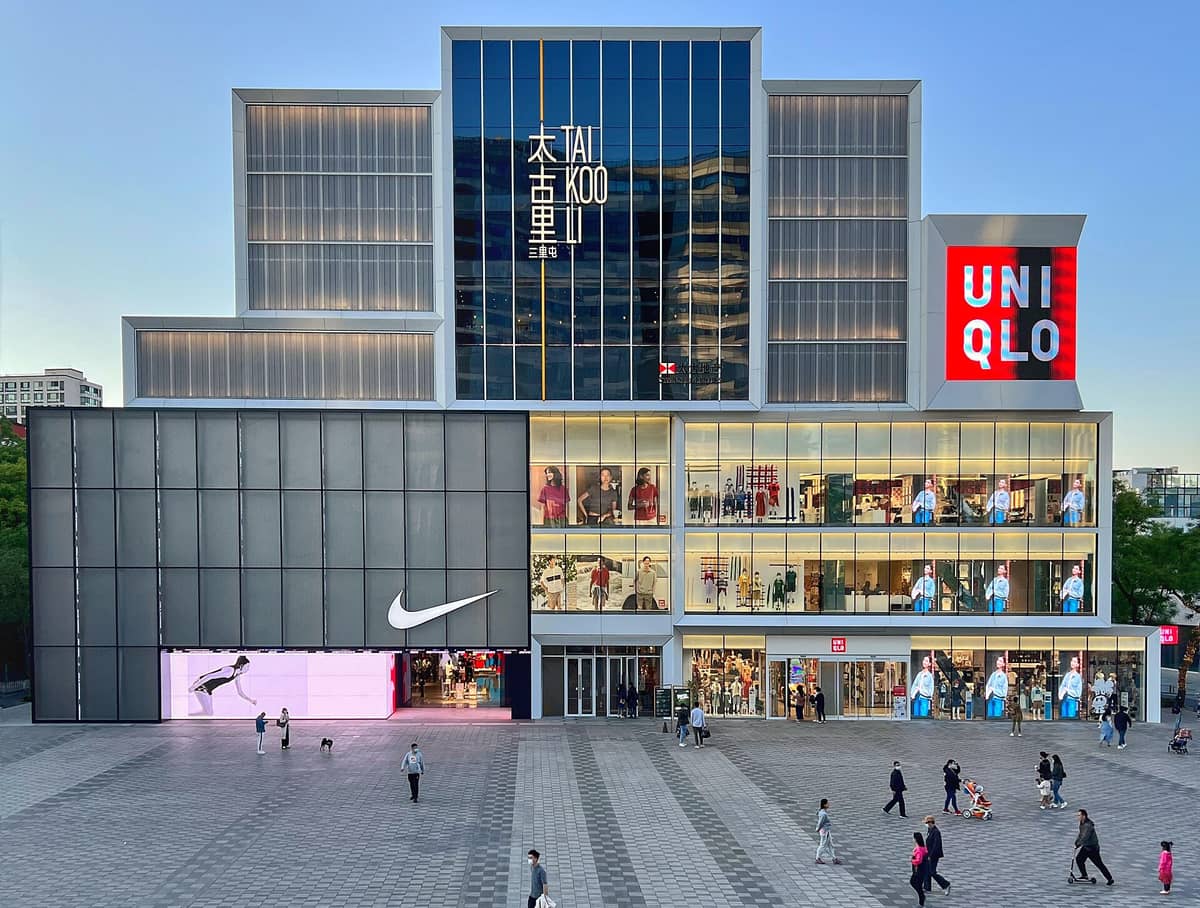
Sanlitun in Chaoyang District is Beijing's most internationally recognized shopping destination. The Taikoo Li complex consists of low-rise open-air blocks designed for browsing, with a mix of global flagship stores, Chinese designer brands, and independent boutiques. The adjacent Sanlitun SOHO towers house additional retail and food options. This is where Beijing's fashion-forward younger crowd shops, and it stays lively into the evening.
Wangfujing is the traditional commercial spine of central Beijing, a pedestrianized street in Dongcheng that has hosted retail since the Yuan dynasty. Today it anchors a cluster of malls and department stores ranging from the Beijing Department Store to APM Mall with its extended evening hours. The famous Wangfujing Snack Street runs perpendicular to the main drag and sells street food alongside tourist trinkets. The shopping here skews toward mid-range Chinese brands and local chains, with a smattering of international retailers.
- Taikoo Li Sanlitun Open-air complex with international flagship stores, designer boutiques, and rooftop dining. Best for fashion and lifestyle brands.
- Wangfujing APM Mall Central location in Dongcheng, open until 22:00 on weekends. Good for mid-range shopping and catching a movie after dinner.
- China World Mall (Guomao) Upscale mall in the CBD anchored by major luxury brands. Connects to the China World Hotel and the SK-II/Hermès crowd.
- Xidan Youth-oriented commercial district in Xicheng with multiple large malls targeting teens and young adults. Budget-friendly fast fashion and electronics.
- The Place (Shimao Gongyi) Known for its giant LED sky screen above a pedestrian mall, with mid-range retail, restaurants, and bars. Popular for evening outings.
💡 Local tip
If you are shopping in Chaoyang's embassy and business district, the China World Mall connects directly to Guomao subway station on Lines 1 and 10, making it easy to combine with visits to other parts of the city without a taxi.
What to Buy in Beijing: The Short List
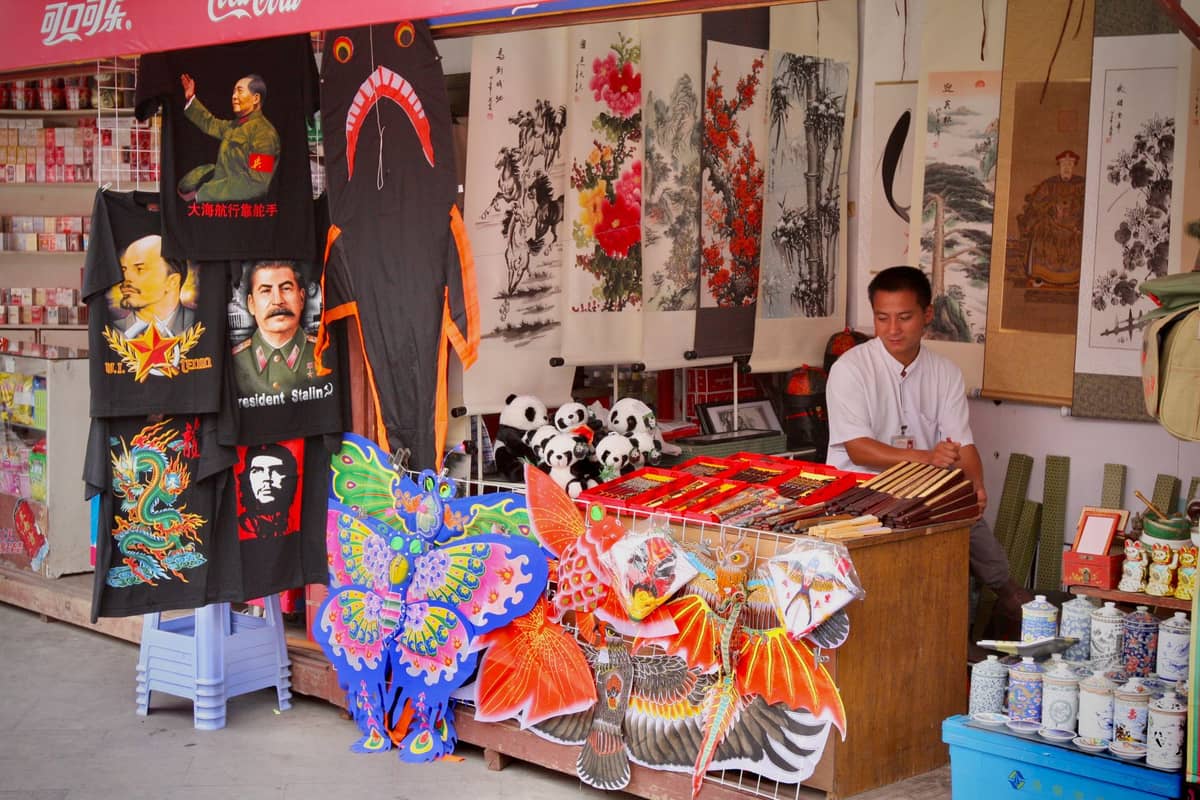
Beijing has its own distinct craft traditions that hold up well against generic souvenir shopping. The items below are genuinely worth seeking out, though quality varies widely by vendor.
- Tea Maliandao Tea Street in Xuanwu (now western Xicheng) is Beijing's dedicated tea market with dozens of specialist shops selling pu-erh, jasmine, longjing, and oolong. Shops typically offer tastings. Prices range from ¥30 for everyday teas to thousands for premium aged pu-erh.
- Silk products Scarves, robes, and bed linens in silk are widely available. For quality verification, ask vendors to demonstrate the burn test on a loose thread: real silk chars rather than melts, though this is not foolproof.
- Cloisonné enamelware A Beijing specialty since the Ming dynasty. Handcrafted vases, bowls, and decorative items are sold at the Liulichang Cultural Street and higher-end craft shops. Factory-made versions flood tourist markets at lower prices.
- Calligraphy supplies Liulichang Cultural Street is the best address for ink sticks, quality brushes, inkstones, and rice paper. Even if you do not practice calligraphy, brush sets make compact and culturally meaningful gifts.
- Traditional clothing (qipao/cheongsam) Custom-made qipao takes several days and fittings; off-the-rack versions are available at Silk Street and Panjiayuan. Budget ¥300–¥800 for a decent ready-to-wear piece; custom work starts higher.
- Hutong antiques and vintage goods Small antique shops tucked into hutong lanes sometimes offer more authentic finds than the major markets, at less aggressive pricing. Nanluoguxiang and its surrounding alleys have a handful.
For cultural context behind what you are buying, the Liulichang Cultural Street area in Xicheng deserves its own dedicated visit. The street has operated as an arts and antiques district since the Qing dynasty, and while it is partially touristified today, the specialist shops for scrolls, rubbings, and traditional crafts remain legitimately useful for informed buyers.
Specialized Shopping: Arts, Electronics, and Theme Parks
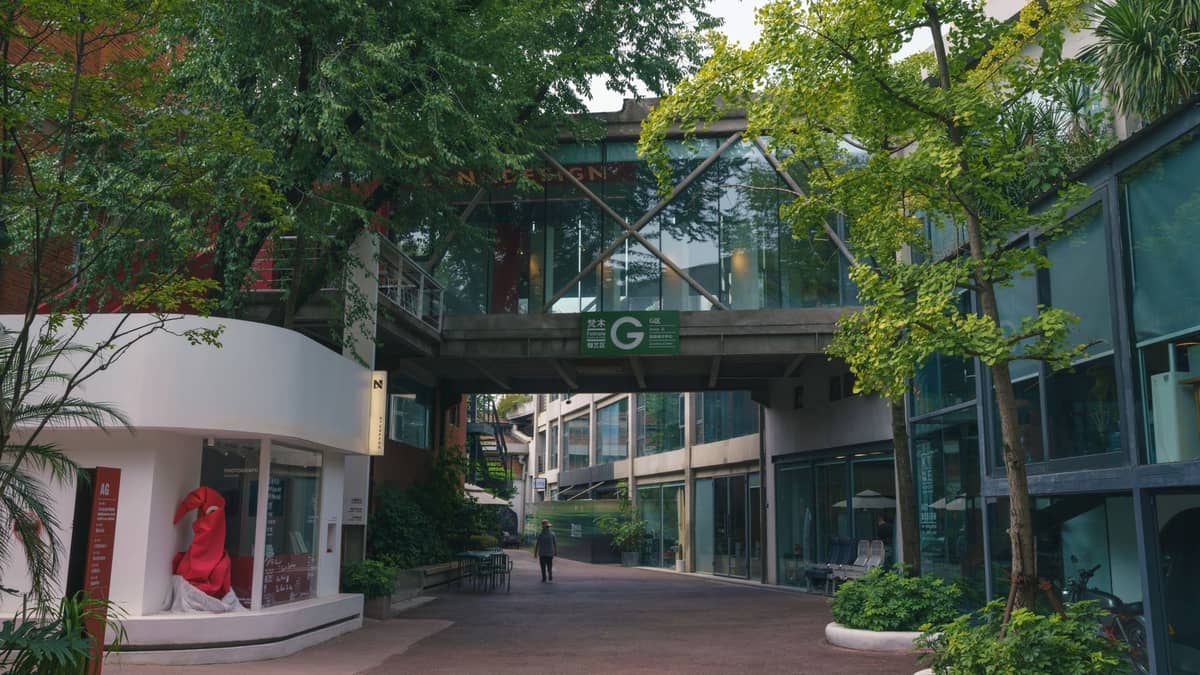
The 798 Art District in Chaoyang's Dashanzi area is Beijing's contemporary art hub, and it doubles as an unusual shopping destination. Galleries sell prints, photography, sculpture, and design objects from emerging and established Chinese artists. Prices vary enormously; small prints can go for a few hundred yuan, while major works run into the tens of thousands. For a broader overview of what is showing, consult our Beijing contemporary art guide before visiting.
Electronics shopping in Beijing centers on Zhongguancun in Haidian District, Beijing's answer to Silicon Valley. The area has multiple large electronics malls selling computers, phones, components, and accessories. Prices on standard consumer electronics are not dramatically lower than in the West after currency conversion, but specialized components, accessories, and locally produced brands can represent good value. Be cautious of gray-market products and devices locked to Chinese networks.
Universal Beijing Resort, which opened in 2021 in Tongzhou District, has retail built into the park experience rather than as a standalone shopping destination. The Minion Mart, The Darkroom (Harry Potter merchandise), and several character-themed stores are accessible only with park admission. Tickets must be purchased for a specific dated entry and are available through the official resort app, the official Fliggy flagship store, or the resort contact center at +86-010-89688688. For a full picture of what the park offers, see the Universal Studios Beijing attraction page.
✨ Pro tip
If you are buying art or high-value crafts as a gift, ask the seller to package items securely and provide a receipt with a description of the item. Custom inspection requirements at your home country may require proof of purchase, and fragile pieces need proper padding for a long-haul flight. Large scroll paintings can be rolled and carried in a protective tube; cloisonné pieces need firm padding.
Shopping Logistics: Getting There, Timing, and Staying Safe
Most major shopping destinations in Beijing are accessible by subway. The Beijing Subway is the most reliable way to reach Wangfujing (Line 1, Wangfujing station), Silk Street (Line 1, Yong'an Li station), Panjiayuan (Line 10, Panjiayuan station), and Sanlitun (Line 10, Tuanjiehu station, then a short walk). For a full breakdown of transport options, see our guide to getting around Beijing.
Weekday mornings between 10:00 and 13:00 are the quietest times at most indoor markets. Weekends are significantly more crowded at all major shopping areas, particularly Panjiayuan, Wangfujing, and Sanlitun. During Golden Week (October 1–7) and the Spring Festival holiday period, domestic tourism surges and queues can form even at large malls. If shopping is a priority, plan for shoulder periods: late April to May or late September are generally calmer and more pleasant temperature-wise.
- Keep small bills (¥10, ¥20, ¥50) on hand for market transactions; vendors may claim not to have change for large notes.
- Carry a shopping bag: many markets charge for bags or do not provide them at all.
- Photograph price tags or agreed prices with your phone before handing over cash, especially for large purchases.
- If a vendor offers to take you to a "special wholesale" or "factory" location, decline. This is a well-documented scam that ends with high-pressure selling and inflated prices.
- Confirm return or exchange policies in writing before buying electronics or tailored clothing; most market stalls do not accept returns.
For a broader look at scams targeting visitors in tourist shopping areas, the Beijing scams and safety guide covers the tea house scam, the art student trick, and market overcharging tactics in detail. These are not rare occurrences: tourist-facing markets are where most visitors encounter problems.
FAQ
Is bargaining expected at Beijing markets?
Yes, at tourist and antique markets like Panjiayuan and Silk Street, bargaining is standard. Start at roughly 20–30% of the first asking price and work up from there. Do not bargain in department stores, malls, or shops with clearly posted fixed prices. If you are uncomfortable negotiating, stick to fixed-price venues.
What is the best market in Beijing for authentic antiques?
Panjiayuan Antique Market in Chaoyang is the largest and most respected destination for antiques, though authenticity varies enormously by stall. Weekend mornings offer the widest selection. For higher confidence in authenticity and provenance, specialist dealers in Liulichang Cultural Street in Xicheng tend to be more serious operations with established reputations.
Can I use a credit card at Beijing markets?
Most market stalls are cash-only or accept WeChat Pay and Alipay. International credit cards are widely accepted at major malls like China World Mall and Taikoo Li Sanlitun, but not reliable elsewhere. Carry sufficient RMB cash when planning a market day. ATMs in major malls and subway stations generally accept foreign Visa and Mastercard.
What are the best souvenirs to buy in Beijing?
Tea (especially pu-erh and jasmine blends from Maliandao), silk scarves, cloisonné enamelware, calligraphy brush sets, and hand-painted fans are consistently good value and pack well. Avoid cheap "Made in China" tourist trinkets sold near major attractions, which are identical to items available everywhere and usually overpriced at source.
Are there restrictions on taking antiques out of China?
Yes. Chinese law restricts or prohibits the export of certified cultural relics. Items made before 1911 may require special export approval, and items from before 1949 face additional scrutiny. Always request a proper invoice describing what you bought. When in doubt, treat your purchase as a decorative reproduction rather than a historical artifact, and consult Chinese customs guidance or your country's import rules before you travel.