Yoyogi Park: Tokyo's Great Outdoor Escape in the Heart of Harajuku
Yoyogi Park is one of Tokyo's largest and most relaxed green spaces, sitting just steps from Harajuku Station. Free to enter year-round, it draws everyone from joggers and picnickers to festival crowds and amateur musicians, offering a rare pocket of open sky in one of the world's densest cities.
Quick Facts
- Location
- 2-1 Yoyogikamizono-cho, Shibuya-ku, Tokyo 151-0052
- Getting There
- Harajuku Station (JR Yamanote Line) or Yoyogi-Koen Station (Tokyo Metro Chiyoda Line, C02)
- Time Needed
- 1 to 3 hours depending on season and events
- Cost
- Free entry; some ticketed events held on-site
- Best for
- Cherry blossom picnics, weekend people-watching, jogging, families, slow days
- Official website
- www.tokyo-park.or.jp/park/yoyogi/index.html
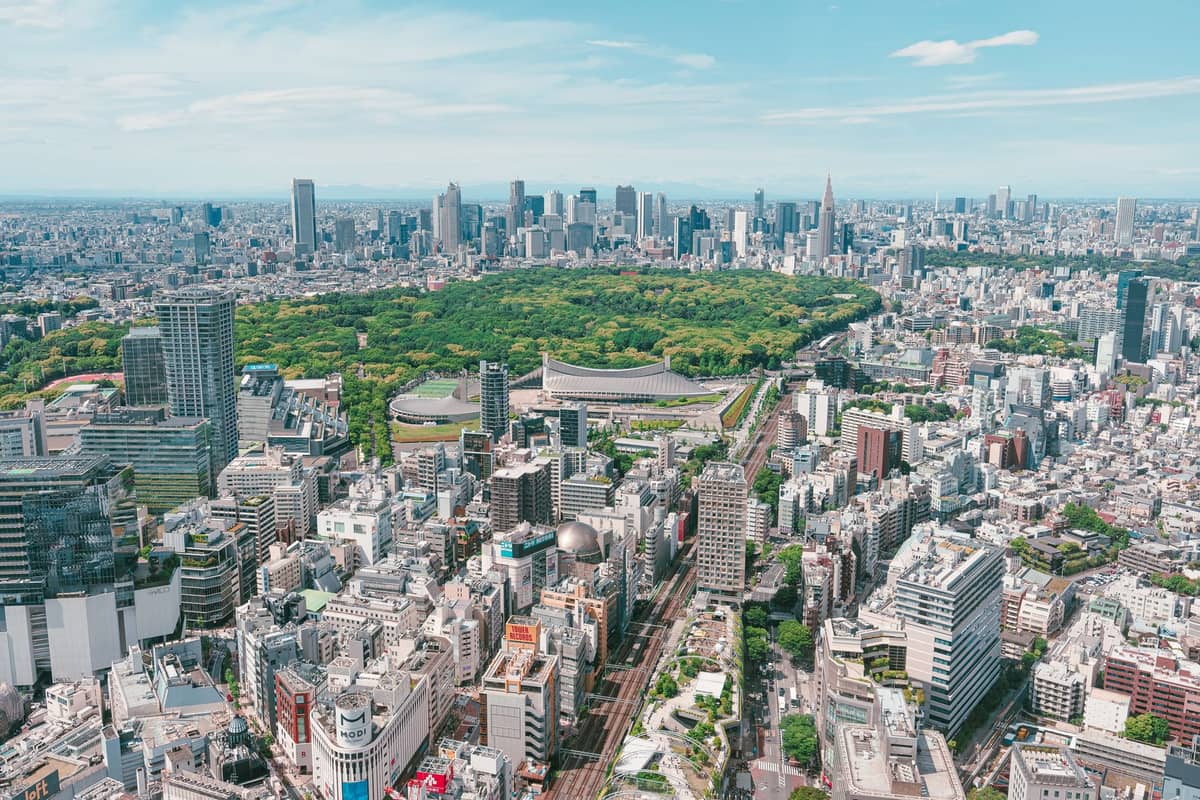
What Yoyogi Park Actually Is
Yoyogi Park (都立代々木公園, Toritsu Yoyogi Koen) is a large metropolitan park managed by the Tokyo Metropolitan Government, sitting within Shibuya ward. It is one of Tokyo's largest city parks, covering a substantial stretch of lawns, wooded paths, and open plazas between Harajuku Station to the east and the quieter residential streets near Yoyogi-Koen Station to the west.
Unlike the manicured elegance of Tokyo's traditional gardens, Yoyogi is deliberately informal. Wide, unpaved paths cut through stands of mature trees. The grass areas are genuinely open and usable, not cordoned off or roped into symbolic green. On a weekend afternoon, the park looks less like a tourist sight and more like a large, democratic commons where the city comes to decompress.
It shares a boundary with Meiji Jingu Shrine, and most visitors combine the two in a single morning. The contrast is striking: the shrine's forested approach is quiet and ceremonial, while Yoyogi immediately beyond it is loose, loud, and full of movement.
How the Park Feels at Different Times of Day
Arrive before 9:00 on a weekday and Yoyogi belongs to joggers. The outer loop is popular with regular runners who treat it as a daily commute ritual. The air smells of damp earth and tree bark, especially after rain, and the only sounds are footfalls and distant birdsong. This is the park at its most atmospheric.
Midday on a weekend is a different scene entirely. Groups arrive with convenience store bags and picnic sheets. Acoustic guitarists set up near the fountain plaza. In the open lawn areas, frisbees are in the air, dogs are running loose in the dog run zone, and families spread across the grass in the kind of relaxed cluster that Tokyo's dense streets rarely allow. The smell of food carts and yakisoba lingers near the event areas.
By late afternoon the crowd thins gradually. The low sun filters through the tree canopy on the forested western paths and the light on the open lawns goes golden. If you want pleasant photographs of the park's natural character, the hour before sunset is worth the timing effort.
💡 Local tip
The park grounds are open 24 hours and free year-round. Facilities like the sports grounds and service center typically operate 09:00–17:00. If you plan to use rentals or the sports areas, go before mid-afternoon.
Tickets & tours
Hand-picked options from our booking partner. Prices are indicative; availability and final rates are confirmed when you complete your booking.
Tsukiji Fish Market Walking Food Tour
From 40 €Instant confirmationFree cancellationMt.Fuji,Owakudani, Hakone Cruise & Ropeway, Oshino Hakkai 1-Day Trip
From 54 €Instant confirmationFree cancellationTour to Mt. Fuji Area, Oshino Hakkai and Kawaguchi Lake from Tokyo
From 57 €Instant confirmationFree cancellationNikko UNESCO Shrine and Nature View 1-Day Tour from Tokyo
From 78 €Instant confirmationFree cancellation
Cherry Blossom Season: The Park at Its Most Crowded
Yoyogi Park is one of Tokyo's most popular cherry blossom (hanami) destinations. When the trees bloom, typically in late March to early April, the open lawn sections fill with picnic groups from midday until well into the evening. Blue tarpaulins cover almost every patch of grass. The atmosphere is festive and genuinely communal, with food and drink vendors operating around the park perimeter.
If you want hanami without the density, arrive by 09:00 before the picnic groups set up. Alternatively, explore the quieter path along the forested western section of the park. For a broader perspective on cherry blossom timing and planning across Tokyo, the Tokyo in spring guide covers the city's main viewing spots with seasonal timing advice.
⚠️ What to skip
During peak cherry blossom weekends, Harajuku Station exits toward the park can get congested. Consider entering via Yoyogi-Koen Station (Chiyoda Line) on the park's west side, which sees noticeably less foot traffic.
Events and the Weekend Market Culture
Throughout the year, Yoyogi Park hosts a rotating calendar of outdoor events, food fairs, international festivals, and cultural markets. These range from large national-holidays festivals occupying the main event plaza to smaller weekend flea markets near the Harajuku gate. Some events have ticketed entry zones; most have free access to the surrounding grounds.
The event plaza near the Harajuku entrance is the most commercially active part of the park and can feel more like a festival ground than a green space during busy weekends. If you come specifically for quiet greenery and find a large event in progress, the forested paths on the Yoyogi-Koen Station side of the park remain largely unaffected and provide genuine respite.
This corner of the neighborhood sits within easy walking distance of Harajuku and Omotesando, so combining a park visit with a walk down Takeshita-dori or a coffee along Omotesando makes for a natural half-day.
Getting There and Getting Around Inside
The most common entry point is the gate near Harajuku Station on the JR Yamanote Line. From the station's Omotesando exit, the park entrance is a short, flat walk across the road. This side of the park leads directly into the event plaza and the main lawn areas.
For the west side of the park, take the Tokyo Metro Chiyoda Line to Yoyogi-Koen Station (C02). The station has elevators between street and platform level, wheelchair-accessible escalators, and accessible toilets inside and outside the ticket gates. Note that the platform-to-train gap at this station is larger than the guideline values at designated boarding points, so wheelchair users may want to request staff assistance.
Meiji-Jingumae Station (Chiyoda Line C03 / Fukutoshin Line F15) provides access to the park's northern edge and is the most convenient stop if you plan to combine the park with a visit to Meiji Shrine. Yoyogi-Hachiman Station on the Odakyu Line is roughly a six-minute walk to the park's southwest.
For a broader orientation around the Yamanote Line and Tokyo's transit network, the getting around Tokyo guide covers IC card setup, line maps, and practical transit tips for first-time visitors.
Photography, What to Wear, and Honest Expectations
Yoyogi is photogenic in the way that open, unscripted spaces often are: less about a single landmark and more about layers of activity. The tree-lined paths in autumn are particularly good, with yellows and reds visible from late October into November. In summer, the humidity is real and the midday sun on the open lawns is unrelenting. Bring water, wear light clothing, and expect to sweat.
There is no single iconic frame to capture here. The park rewards documentary-style photography over wide landscape shots. Focus on the dog run, the fountain plaza on weekends, the parallel lines of cyclists on the main loop, or the shaded path where joggers move through filtered light.
If you are visiting Tokyo primarily for parks and green spaces, also look at the Shinjuku Gyoen and Tokyo's garden guide for a comparison of the city's different styles of green space, from formal Japanese gardens to semi-wild forested parks.
ℹ️ Good to know
Yoyogi Park is not overhyped as a single destination, but it is sometimes oversold as 'unmissable.' For most visitors, it works best as part of a Harajuku half-day alongside Meiji Shrine and Omotesando, rather than as a standalone trip across town.
Who Might Want to Skip It
If you are visiting Tokyo for a short stay and prioritizing historic sites, cultural museums, or specific neighborhoods, Yoyogi Park may not rank high enough to justify your time unless cherry blossom season aligns with your trip. The park has no historical monuments, no museum, and no single architectural feature to anchor the visit. It is, deliberately, just a park.
Visitors who struggle with heat should be careful in July and August. The open lawns provide minimal shade during peak afternoon hours, and summer temperatures regularly reach 31 degrees Celsius with high humidity. Come early, leave by midday, or save the park for autumn.
Insider Tips
- The west-side entrance near Yoyogi-Koen Station is significantly quieter than the Harajuku gate on weekends. If the main plaza is packed with event crowds, this is your exit strategy.
- The park's forested area on the Yoyogi-Koen side has a separate feel from the open lawns. It is cooler in summer, less crowded year-round, and the tree cover makes it worth a loop even when the main lawn is busy.
- For cherry blossom viewing without fighting for space on a tarpaulin, arrive between 08:00 and 09:30 on a weekday. The bloom is the same; the crowd is a fraction of the weekend size.
- The dog run near the park's central area is a genuine local institution. Even if you are not a dog person, the organized chaos there on a Sunday morning is worth five minutes of observation.
- Large outdoor food festivals in the park often feature regional Japanese cuisine from prefectures outside Tokyo, rotating seasonally. If you happen to hit one, it is worth slowing down and eating before you leave.
Who Is Yoyogi Park For?
- Travelers who want open outdoor space after days of dense urban sightseeing
- Families with young children who need room to run around
- Cherry blossom season visitors looking for a convivial hanami atmosphere
- Joggers and early risers who want a green loop before the city wakes up
- Anyone combining a Harajuku morning with Meiji Shrine and Omotesando in a single half-day
Nearby Attractions
Other things to see while in Harajuku & Omotesando:
- Meiji Jingu Shrine
Meiji Jingu is a Shinto shrine set within 70 hectares of forested grounds in Harajuku, dedicated to Emperor Meiji and Empress Shoken. Entry to the main shrine is free, the atmosphere shifts dramatically by time of day, and it remains one of Tokyo's most genuinely calming places to visit year-round.
- Omotesando
Omotesando is Tokyo's most architecturally ambitious street: a broad, zelkova-lined avenue connecting the entrance of Meiji Shrine to the galleries of Aoyama. Lined with flagship stores designed by the world's most celebrated architects, it moves at a different pace from the rest of the city. Free to walk, endlessly rewarding to explore.
- Takeshita Street
Takeshita Street (竹下通り) is a roughly 350-meter pedestrian shopping corridor in Harajuku that has defined Tokyo's youth fashion scene since the 1970s. Free to enter and open year-round, it packs crepe stands, second-hand clothing stores, costume jewelry, and some of Japan's most visually intense street fashion into a single impossibly crowded lane.
- Ukiyo-e Ota Memorial Museum of Art
The Ukiyo-e Ota Memorial Museum of Art holds one of Tokyo's most important private collections of Japanese woodblock prints, with over 12,000 works rotated through intimate, carefully curated exhibitions. Tucked just off Omotesando's main boulevard, it offers a rare moment of quiet contemplation in one of the city's most frenetic neighborhoods.