Takeshita Street: Harajuku's Chaotic, Colorful Fashion Corridor
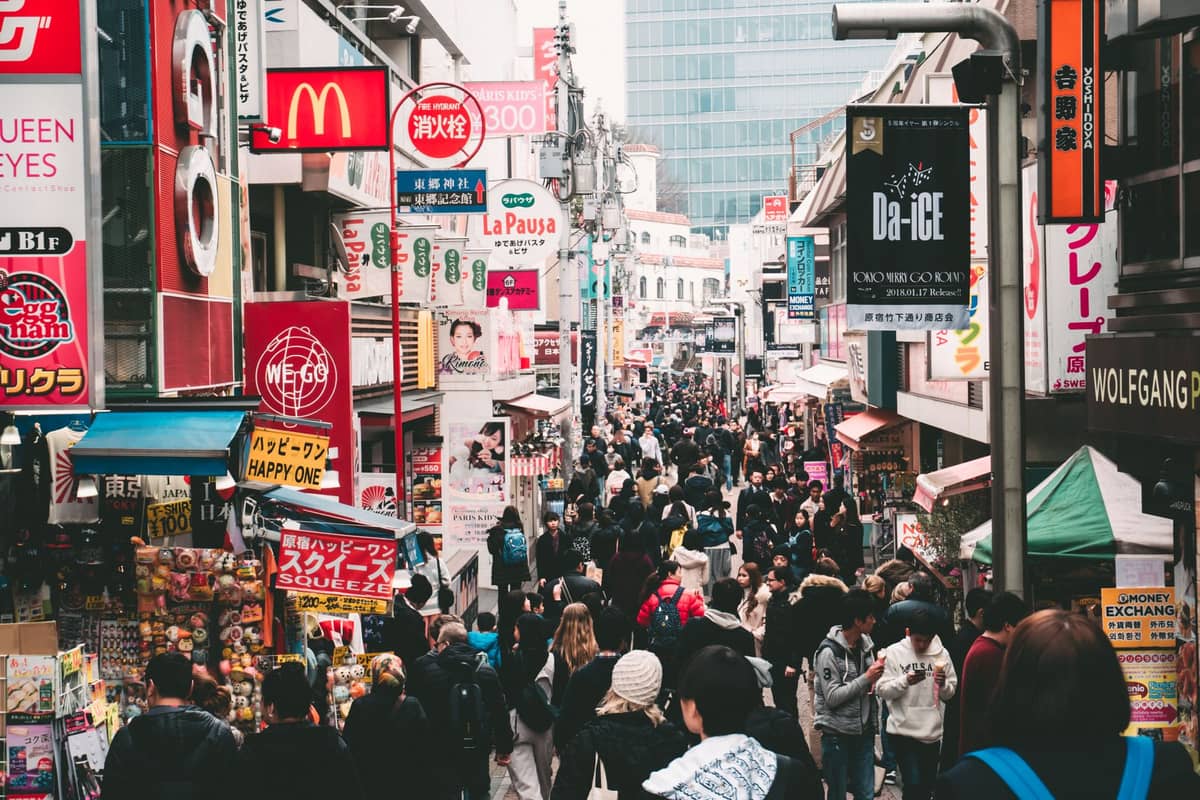
Takeshita Street (竹下通り) is a roughly 350-meter pedestrian shopping corridor in Harajuku that has defined Tokyo's youth fashion scene since the 1970s. Free to enter and open year-round, it packs crepe stands, second-hand clothing stores, costume jewelry, and some of Japan's most visually intense street fashion into a single impossibly crowded lane.
Quick Facts
- Location
- 1-chome Jingumae, Shibuya City, Tokyo 150-0001
- Getting There
- JR Harajuku Station (JR Yamanote Line) – Takeshita Exit opens directly onto the street. Also reachable from Tokyo Metro Meiji-jingumae (Harajuku) Station in about 3–4 minutes on foot.
- Time Needed
- 45 minutes to 1.5 hours
- Cost
- Free entry. Individual shop and food purchases in JPY.
- Best for
- Youth fashion, street food, people-watching, kawaii culture
- Official website
- www.gotokyo.org/en/spot/48/index.html
What Takeshita Street Actually Is
Takeshita Street, officially the Harajuku Takeshita-dori Shotenkai (原宿竹下通り商店街), is a roughly 350-meter pedestrian lane running from JR Harajuku Station south toward Meiji-dori Avenue. It is free to enter, technically accessible around the clock as a public street, and organized as a formal shopping district. The street is pedestrian-only between 11:00 and 18:00 daily, when vehicle access is banned entirely.
What you find inside is a concentrated expression of Japan's kawaii (cute) and cosplay-influenced street fashion culture, compressed into a corridor so narrow that two tour groups passing each other at peak hours create a near-standstill. The shops lean hard into maximalism: candy-colored wigs, platform shoes, lolita dresses, vintage athletic gear, themed accessories, and fast-fashion pieces that seem designed to go viral. Crepe stands and cotton candy vendors wedge themselves between storefronts, filling the air with the smell of warm batter and strawberry syrup.
💡 Local tip
The Takeshita Exit of JR Harajuku Station deposits you at the exact northern entrance of the street. If you arrive this way, you are already there — no navigation required.
How the Street Changes by Time of Day
Arriving before 10:30 on a weekday gives you a version of Takeshita Street that most visitors never see: roll-up shutters still half-closed, delivery carts blocking the entrance to crepe shops, staff sweeping the pavement. The street has a slight downhill slope from the station toward Meiji-dori, and in the early morning you can actually appreciate the geometry of the signage stacked four or five layers high on every facade — neon, vinyl, LED, and hand-painted boards competing for the same square meter of sky.
By noon on a weekend, the street transforms completely. The crowd density becomes its own phenomenon. Sounds layer: J-pop bleeding out of one shop, an announcer's voice from another, the hiss of a tapioca machine, the clatter of platform shoes on asphalt. Moving through the crowd requires a kind of slow shuffle, making eye contact with no one and keeping your bag in front of you. This is not an exaggeration — it is one of the more genuinely overwhelming pedestrian experiences in Tokyo, and some visitors find it claustrophobic.
Weekday afternoons between 13:00 and 16:00 offer the most manageable experience. Crowds thin enough to actually stop and look at things, and shop staff are more likely to be available if you want to ask questions. By 20:00, most shops are closed and the street reverts to a quiet, somewhat anonymous alley — a completely different atmosphere that rewards a second visit just for comparison.
⚠️ What to skip
Weekend afternoons between 13:00 and 17:00 are the most crowded. If you have limited mobility or are traveling with a stroller, the density during peak hours makes movement genuinely difficult, even though the street surface itself is flat and paved.
Tickets & tours
Hand-picked options from our booking partner. Prices are indicative; availability and final rates are confirmed when you complete your booking.
Tsukiji Fish Market Walking Food Tour
From 40 €Instant confirmationFree cancellationMt.Fuji,Owakudani, Hakone Cruise & Ropeway, Oshino Hakkai 1-Day Trip
From 54 €Instant confirmationFree cancellationTour to Mt. Fuji Area, Oshino Hakkai and Kawaguchi Lake from Tokyo
From 57 €Instant confirmationFree cancellationNikko UNESCO Shrine and Nature View 1-Day Tour from Tokyo
From 78 €Instant confirmationFree cancellation
The Cultural Context: Why This Street Matters
Takeshita Street's identity as a center of youth fashion dates to the 1970s, when small independent boutiques began catering to teenage subcultures that had no commercial home in Tokyo's more conservative shopping districts. Over the following decades, the street became the incubator for fashion movements that spread globally: the decora style (layers of colorful plastic accessories and clips), gothic lolita (Victorian silhouettes in black or white), and gyaru (bleached hair, deep tans, and elaborate makeup) all have roots in the shops and street corners here.
The kawaii aesthetic that made Harajuku internationally recognizable was not manufactured by brands or media — it grew organically from teenagers spending weekends on this particular street, experimenting with looks and photographing each other. Internationally, Harajuku became shorthand for a certain kind of theatrical self-expression, referenced in fashion editorials, music videos, and academic cultural studies. For a broader look at how this neighborhood fits into Tokyo's cultural map, the Tokyo neighborhoods guide provides useful context on what distinguishes Harajuku from surrounding areas.
Today's Takeshita Street is more commercially consolidated than it was in the 1980s and 1990s. Some long-time independent shops have been replaced by fast-fashion chains and franchise crepe brands. The most genuinely avant-garde dressing now tends to happen on the quieter side streets radiating off Takeshita rather than on the main drag itself. That said, the street still functions as an accessible entry point into kawaii culture for visitors who want to understand it without decoding Tokyo's more obscure subculture venues.
What to Look For: A Practical Walkthrough
The street runs roughly 350 meters from north (Harajuku Station) to south (Meiji-dori). Walking it from end to end without stopping takes about five minutes. Walking it slowly, stopping to look inside shops, and eating something along the way takes 45 minutes to an hour and a half, depending on how decisively you shop.
The northern third, closest to the station, is the most densely packed and most mainstream. This is where the major crepe chains, tapioca drink shops, and franchise clothing stores concentrate. The crepes are a Harajuku tradition worth taking seriously: fresh-made, loaded with whipped cream and fruit, folded into a paper cone you eat while walking. Expect to pay around 600 to 900 yen for a fully loaded version.
The middle and southern sections become progressively more interesting for shoppers with specific tastes. Here you find vintage and second-hand clothing stores, accessory shops selling handmade pieces alongside mass-produced items, and smaller boutiques with more distinct aesthetics. Prices are not always low — well-curated second-hand fashion in Tokyo commands serious prices — but the range is wide enough that browsing is worthwhile even on a tight budget.
At the southern end, the street opens onto Meiji-dori. Turning right here leads quickly toward Omotesando, Tokyo's most architecturally polished shopping avenue, which functions as a kind of photographic negative of Takeshita: silent, expensive, and precise where Takeshita is loud, cheap, and chaotic. If your itinerary allows, walking both in sequence gives a sharper sense of how the Harajuku and Omotesando area holds contradictory registers of Tokyo style within a few hundred meters of each other.
Photography on Takeshita Street
The street is extremely photogenic in a maximalist sense: signs, colors, and costumes stack into frames that feel deliberately composed even when they are not. For wide shots of the street itself, the best angle is from the station end looking south, ideally in the morning when the light comes in at a low angle and the crowd has not yet built. At midday the street fills with direct overhead light that flattens everything.
Photographing individual people in elaborate fashion requires asking first. Most people who have dressed specifically to be seen are genuinely happy to pose, but approaching without acknowledgment is considered rude. A simple gesture toward your camera and a questioning look usually gets a clear yes or no. Do not photograph inside shops without permission from staff.
💡 Local tip
For street fashion photography, the small side streets branching off Takeshita often yield more interesting and less rushed encounters than the main corridor, where the crowd makes composed shots nearly impossible during peak hours.
Practical Details: Weather, Seasons, and What to Bring
Takeshita Street is outdoors and open year-round. In summer (July and August) the heat builds quickly in the narrow corridor, with buildings on both sides limiting airflow. Temperatures regularly reach around 31°C or higher, and the dense crowd adds to the effect. Carrying water is essential. In winter, the street is considerably more comfortable to walk — crowds thin slightly and the cool, dry air makes browsing easier. Tokyo winters (December to February) are dry and cool, with average highs around 9 to 10°C.
The rainy season (tsuyu) runs roughly from early June to mid-July. The street remains open and most visitors continue shopping, but the narrow lane concentrates umbrella traffic in a way that becomes physically awkward. If you are visiting Tokyo during spring cherry blossom season or autumn foliage, note that Meiji Jingu Shrine is a short walk from Harajuku Station and combines easily with a Takeshita Street visit in a half-day itinerary.
Comfortable shoes matter more than most visitors expect. The pavement is flat but you will likely be on your feet longer than planned, and the crowd density means you stop and start constantly rather than walking at a steady pace. There are very few places to sit on the street itself.
Who Should Reconsider This Stop
Takeshita Street is genuinely not for everyone. If you are sensitive to crowds, noise, or sensory overload, the peak-hours experience can be unpleasant regardless of how much you appreciate the culture. The street is also a disappointment for visitors who expect to find the extreme, hand-crafted fashion subcultures that made Harajuku famous in 1980s and 1990s photography — that scene has evolved and dispersed. What remains on the main street is more accessible and more commercial than those images suggest.
Travelers focused on traditional Japanese culture, architecture, or quieter experiences will find more rewarding options nearby. The Meiji Jingu Shrine complex, a short walk from Harajuku Station, offers a forest setting and one of Tokyo's most significant Shinto shrines — a complete tonal contrast that takes roughly the same amount of time to visit.
Insider Tips
- The side streets branching east and west off Takeshita Street — sometimes called Ura-Harajuku — have smaller boutiques with more individual character and significantly lower crowd density. If you want to understand Harajuku's fashion subcultures rather than just observe the commercial surface, those lanes are worth the detour.
- Marion Crepes, one of the original Harajuku crepe shops, has been operating in the area since 1977 and is worth identifying for historical context. Queue times vary but move quickly.
- The best window for photography of the street itself is 9:30 to 10:30 on a weekday, before most shops open and before the crowds arrive from the station.
- If you are buying clothing or accessories, weekend afternoons are poor timing — stock gets picked over quickly and shops are too crowded to browse comfortably. Weekday mornings give you first access to new stock and patient staff.
- The street runs slightly downhill from north to south. Walking from the station end toward Meiji-dori is the natural direction and requires no backtracking to return to the train.
Who Is Takeshita Street For?
- First-time visitors to Tokyo wanting a visceral introduction to kawaii and youth fashion culture
- Teenagers and young adults who follow Japanese street fashion trends online and want to see the source
- Photographers looking for bold color, layered signage, and costume-level street fashion
- Budget shoppers hunting for affordable accessories, fast fashion, and themed goods
- Travelers combining the visit with nearby Meiji Jingu Shrine or Omotesando for a half-day Harajuku itinerary
Nearby Attractions
Other things to see while in Harajuku & Omotesando:
- Meiji Jingu Shrine
Meiji Jingu is a Shinto shrine set within 70 hectares of forested grounds in Harajuku, dedicated to Emperor Meiji and Empress Shoken. Entry to the main shrine is free, the atmosphere shifts dramatically by time of day, and it remains one of Tokyo's most genuinely calming places to visit year-round.
- Omotesando
Omotesando is Tokyo's most architecturally ambitious street: a broad, zelkova-lined avenue connecting the entrance of Meiji Shrine to the galleries of Aoyama. Lined with flagship stores designed by the world's most celebrated architects, it moves at a different pace from the rest of the city. Free to walk, endlessly rewarding to explore.
- Ukiyo-e Ota Memorial Museum of Art
The Ukiyo-e Ota Memorial Museum of Art holds one of Tokyo's most important private collections of Japanese woodblock prints, with over 12,000 works rotated through intimate, carefully curated exhibitions. Tucked just off Omotesando's main boulevard, it offers a rare moment of quiet contemplation in one of the city's most frenetic neighborhoods.
- Yoyogi Park
Yoyogi Park is one of Tokyo's largest and most relaxed green spaces, sitting just steps from Harajuku Station. Free to enter year-round, it draws everyone from joggers and picnickers to festival crowds and amateur musicians, offering a rare pocket of open sky in one of the world's densest cities.