Omotesando: Tokyo's Grand Avenue of Architecture and Style
Omotesando is Tokyo's most architecturally ambitious street: a broad, zelkova-lined avenue connecting the entrance of Meiji Shrine to the galleries of Aoyama. Lined with flagship stores designed by the world's most celebrated architects, it moves at a different pace from the rest of the city. Free to walk, endlessly rewarding to explore.
Quick Facts
- Location
- Jingumae, Shibuya-ku and Minami-Aoyama, Minato-ku, Tokyo
- Getting There
- Omotesando Station (Ginza, Chiyoda, Hanzomon Lines) exits A1–A4; Meiji-jingumae (Harajuku) Station (Chiyoda, Fukutoshin Lines); JR Harajuku Station (Yamanote Line, 5–10 min walk)
- Time Needed
- 2–4 hours for the avenue and side streets; half a day if combining with Harajuku or Aoyama galleries
- Cost
- Free (public street). Individual shops, cafés, and museums charge separately.
- Best for
- Architecture enthusiasts, fashion-focused visitors, leisurely walkers, café lovers
What Omotesando Actually Is
Omotesando, written 表参道 in Japanese, literally means "front approach" and refers to the formal processional road that once guided worshippers toward Meiji Shrine. Today it still fulfills that spatial role, running from the shrine's outer torii gate at its northwestern end down to Aoyama-dori in the south, but the character of the avenue has transformed completely. What was a ceremonial path through forested shrine precincts became, over the post-war decades, one of East Asia's most design-conscious retail corridors.
The avenue stretches through two wards: Jingumae in Shibuya-ku and Minami-Aoyama in Minato-ku. This administrative detail matters more than it might seem. It explains the split personality of the street: the Harajuku end, near Meiji-jingumae Station, is younger, louder, and feeds into the chaos of Takeshita Street; the Aoyama end is quieter, cooler in tone, shading into contemporary art galleries and understated concept stores. Walking the full length, roughly 1.1 kilometers, you move through that transition in real time.
💡 Local tip
Omotesando Station is the most convenient entry point if your goal is the architecture and flagship stores. Use exit A2 for Omotesando Hills, or A1 for the Prada building. If you want to walk the avenue from start to finish, begin at Meiji-jingumae (Harajuku) Station and walk southeast toward Aoyama.
The Zelkova Canopy and the Avenue's Atmosphere
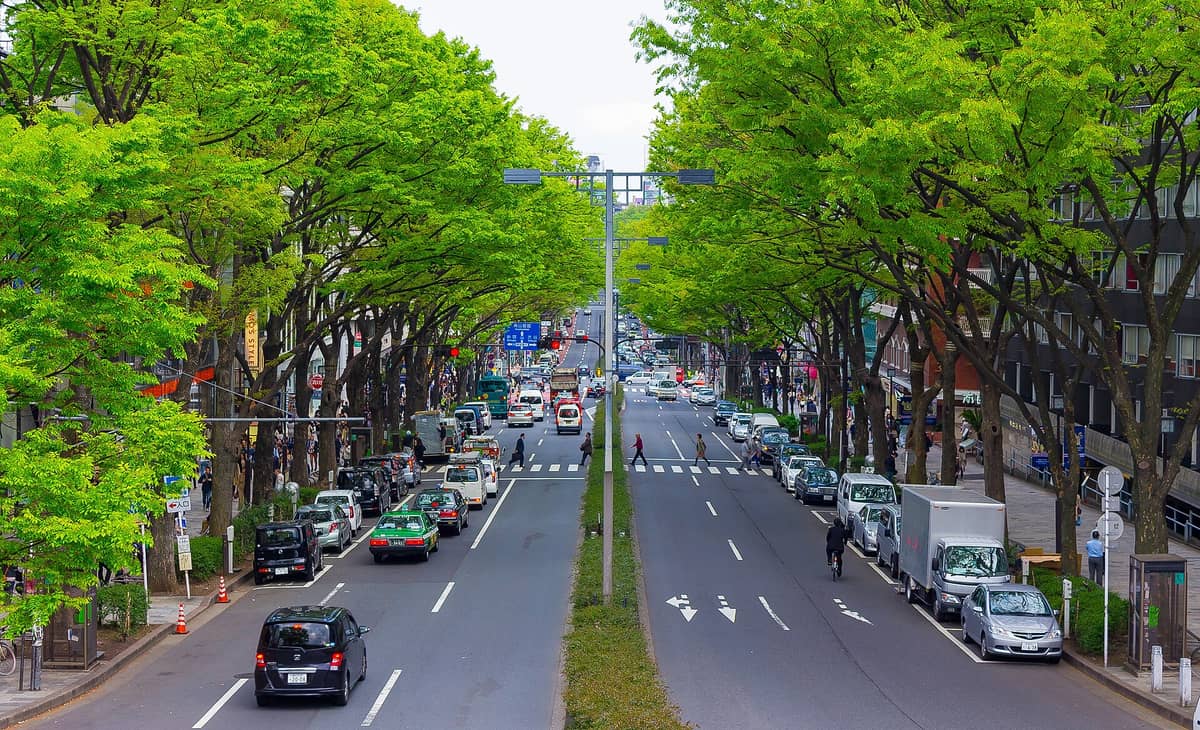
The defining physical feature of Omotesando is its row of zelkova trees (keyaki in Japanese), which arch overhead on both sides of the wide central boulevard. These trees, some decades old, create a canopy that filters light in a way that transforms the street's feel across seasons. In spring, new leaves produce a pale green tunnel; in autumn, the foliage turns amber and gold before dropping, leaving skeletal branches that give the avenue a more austere, architectural quality in winter.
In summer the shade is genuinely useful. Tokyo's July and August temperatures regularly exceed 31°C with high humidity, and walking under the zelkova canopy is noticeably cooler than nearby streets without tree cover. This makes Omotesando more comfortable than many other parts of the city during peak summer heat. Autumn, particularly late October and early November, is when the street looks most photogenic: the warm tones of the keyaki leaves contrast with the glass and stone of the flagship buildings beneath them. For a broader look at the city's best seasonal moments, the Tokyo in autumn guide covers Omotesando among other top locations.
On weekday mornings before 11:00, the avenue is close to peaceful. Delivery trucks unload into the underground bays of the major stores, staff from nearby offices walk purposefully toward Omotesando Station, and the sidewalks are wide enough that you can actually look up at the buildings without navigating foot traffic. This is the best window for architecture photography. By early afternoon, particularly on weekends, the main sidewalks fill steadily and the outdoor terraces of cafés turn over quickly.
Tickets & tours
Hand-picked options from our booking partner. Prices are indicative; availability and final rates are confirmed when you complete your booking.
Tsukiji Fish Market Walking Food Tour
From 40 €Instant confirmationFree cancellationMt.Fuji,Owakudani, Hakone Cruise & Ropeway, Oshino Hakkai 1-Day Trip
From 54 €Instant confirmationFree cancellationTour to Mt. Fuji Area, Oshino Hakkai and Kawaguchi Lake from Tokyo
From 57 €Instant confirmationFree cancellationNikko UNESCO Shrine and Nature View 1-Day Tour from Tokyo
From 78 €Instant confirmationFree cancellation
Architecture as the Primary Attraction
For many serious visitors, the buildings themselves are the reason to come. Omotesando has an unusual concentration of flagship structures designed by internationally prominent architects, most built during the late 1990s through 2010s when luxury brands competed aggressively for presence in Tokyo's premium retail market.
The most discussed example is Omotesando Hills, a mixed-use complex completed in 2006 by Tadao Ando. Built on the site of the former Dojunkai Aoyama Apartments, Ando designed the six-story structure with a spiraling internal ramp that descends three floors below street level, clad in raw concrete in his characteristic style. The exterior is deliberately restrained: long horizontal lines and planted terraces that echo the height and rhythm of the zelkova trees across the street. The Prada flagship by Herzog & de Meuron, visible from the main avenue on Aoyama-dori, features a diamond-patterned glass facade that curves outward, refracting light differently depending on the hour. For a broader exploration of Tokyo's notable buildings, the Tokyo architecture guide is a useful companion.
Other buildings worth pausing at include the GYRE complex, the TOD's flagship by Toyo Ito with its tree-shaped concrete structure, and the Louis Vuitton tower by Jun Aoki. None of these require a purchase to appreciate. Walk slowly on the south-facing sidewalk in the afternoon, when the angled light hits the glass and metal facades at a lower angle, to get the most from the exteriors.
ℹ️ Good to know
Photography of the buildings from the public sidewalk is unrestricted. Interior photography policies vary by store; check before pointing a camera inside any boutique.
The Side Streets: Ura-Harajuku and Cat Street
The main avenue gives a skewed impression of the area if you don't venture into the streets running perpendicular to it. The backstreets between Omotesando and Harajuku, sometimes called Ura-Harajuku, contain a more eclectic and lower-key retail environment: independent designers, vintage clothing, small galleries, and the kind of café that does one thing (often pour-over coffee or a specific sandwich) extremely well.
Cat Street is the most navigable of these backstreets, running roughly parallel to Omotesando a few blocks north. It connects to Shibuya at its southern end and becomes increasingly casual as you head north toward Harajuku. The street surface is pedestrian-friendly, the shop density is high without feeling cramped, and the general atmosphere is less performatively luxurious than the main avenue. It's a good place to eat without paying Omotesando-adjacent prices. From Cat Street you can reach Takeshita Street in under ten minutes on foot, though the tonal shift between the two is considerable.
Eating and Drinking Along the Avenue
Café culture is a serious part of Omotesando's identity. The avenue and its immediate side streets have a high density of well-designed coffee shops, many with outdoor terrace seating shaded by the zelkova trees. On fair-weather weekend mornings, these terraces fill by 10:30 and can hold a short queue through lunch. Coming mid-week, or arriving at opening around 08:00–09:00 if the café operates those hours, eliminates waiting.
Restaurant prices along Omotesando proper are elevated. Most casual lunch options sit in the ¥1,500–¥3,000 per person range without drinks. If your budget is tighter, the ground-floor food hall inside Omotesando Hills has standing counters and takeaway options at more accessible prices. The side streets toward Aoyama have a handful of smaller lunch counters used by local office workers, which tend to serve larger portions at lower prices.
Omotesando sits within one of Tokyo's best café neighborhoods. If a full café-focused itinerary interests you, the Tokyo café guide covers the area in detail alongside other neighborhoods.
Combining Omotesando with Nearby Attractions
Omotesando's geographic position makes it easy to combine with several major attractions in a single day. Meiji Jingu Shrine sits at the northwest end of the avenue, separated only by the outer approach road. The transition from the shrine's cedar-forested precincts to the zelkova-lined commercial boulevard takes under five minutes on foot, and the contrast between the two is worth experiencing deliberately rather than rushing through. Plan for at least 30–45 minutes at the shrine before returning to the avenue.
In the other direction, a ten-minute walk southeast along Aoyama-dori leads toward the gallery district of Minami-Aoyama, with institutions such as the Nezu Shrine accessible via a short subway ride. Closer by, the Ukiyo-e Ota Memorial Museum in Harajuku is a ten-minute walk from the Harajuku end of Omotesando and is one of Tokyo's most focused and well-curated small museums, specializing in woodblock prints.
The neighborhood of Daikanyama and Nakameguro is 15–20 minutes on foot or one stop on the Tokyo Metro Chiyoda Line from Omotesando Station. This is a logical afternoon continuation if you want to move from Omotesando's high-profile retail to a more residential and independent design scene.
Practical Notes and Getting There
Omotesando is a public avenue with no admission charge and no opening hours. It is accessible at any hour, though shops typically open around 11:00 and close by 20:00. The sidewalks are wide, flat, and well-maintained, making the avenue one of Tokyo's more accessible major streets for wheelchair users and those with limited mobility. Most of the large flagship complexes have elevators; smaller independent stores on the side streets vary considerably.
The most direct access is Omotesando Station on the Tokyo Metro Ginza, Chiyoda, and Hanzomon Lines. Exits A1 through A4 all surface directly onto the avenue or immediately adjacent streets. Meiji-jingumae (Harajuku) Station on the Chiyoda and Fukutoshin Lines is better if you plan to start at the Harajuku end. JR Harajuku Station on the Yamanote Line is a 5–10 minute walk from the avenue and is useful if you're arriving from Shinjuku or Shibuya.
⚠️ What to skip
Omotesando Hills and many flagship boutiques are closed on specific public holidays or have reduced hours during the New Year period (roughly December 31 to January 2–3). If visiting during these dates, confirm hours with individual venues before arrival.
Rainy days on Omotesando are manageable: the zelkova canopy provides partial cover, and many of the major complexes have covered entrance areas or are connected through internal atriums. The avenue does not flood and remains fully walkable in light to moderate rain. The sidewalks can be slippery when wet, particularly in autumn when fallen zelkova leaves accumulate.
For visitors who feel Omotesando is too polished or commercially focused: that assessment is not wrong. The street is explicitly oriented around luxury retail and high-end café experiences. People who find that environment interesting rather than alienating will get the most from it. Those seeking traditional Tokyo character or historical depth should allocate more time to Asakusa, Yanaka, or the shrine precincts rather than the commercial avenue itself.
Insider Tips
- Walk the avenue on a Tuesday or Wednesday morning before noon. The weekend foot traffic, while not overwhelming by Tokyo standards, does reduce your ability to photograph buildings or stand still and look up without managing the sidewalk around you.
- The basement levels of Omotesando Hills contain a food market and a series of smaller boutiques that most visitors on a quick pass miss entirely. The spiral ramp descends three floors below street level; following it to the bottom gives you the full architectural experience Tadao Ando intended.
- The block between Omotesando Station exit B2 and the Nezu Museum entrance (a few minutes south on Omotesando-dori) has some of the quietest and best-maintained café terraces on the avenue. Less visible from the main pedestrian flow, they tend to have shorter queues even on weekends.
- Autumn leaf color on the zelkova trees typically peaks in late November and can last into early December depending on the year. This is later than many visitors expect based on general Tokyo autumn guides, which often focus on late October.
- The Aoyama end of Omotesando, past the main cluster of flagship stores, transitions into a gallery and design district that most short-stay visitors skip. The Spiral building on Aoyama-dori regularly hosts free or low-cost design exhibitions accessible from the ground floor without a ticket.
Who Is Omotesando For?
- Architecture enthusiasts who want to compare multiple landmark buildings in a single walkable route
- Fashion-conscious visitors tracking flagship store design as much as the merchandise inside
- Visitors who want a relaxed, café-anchored half-day that pairs naturally with Meiji Shrine or Harajuku
- Photographers seeking a photogenic street with consistent visual interest across seasons
- Travelers with limited mobility who want a flat, wide, well-maintained street for comfortable exploration
Nearby Attractions
Other things to see while in Harajuku & Omotesando:
- Meiji Jingu Shrine
Meiji Jingu is a Shinto shrine set within 70 hectares of forested grounds in Harajuku, dedicated to Emperor Meiji and Empress Shoken. Entry to the main shrine is free, the atmosphere shifts dramatically by time of day, and it remains one of Tokyo's most genuinely calming places to visit year-round.
- Takeshita Street
Takeshita Street (竹下通り) is a roughly 350-meter pedestrian shopping corridor in Harajuku that has defined Tokyo's youth fashion scene since the 1970s. Free to enter and open year-round, it packs crepe stands, second-hand clothing stores, costume jewelry, and some of Japan's most visually intense street fashion into a single impossibly crowded lane.
- Ukiyo-e Ota Memorial Museum of Art
The Ukiyo-e Ota Memorial Museum of Art holds one of Tokyo's most important private collections of Japanese woodblock prints, with over 12,000 works rotated through intimate, carefully curated exhibitions. Tucked just off Omotesando's main boulevard, it offers a rare moment of quiet contemplation in one of the city's most frenetic neighborhoods.
- Yoyogi Park
Yoyogi Park is one of Tokyo's largest and most relaxed green spaces, sitting just steps from Harajuku Station. Free to enter year-round, it draws everyone from joggers and picnickers to festival crowds and amateur musicians, offering a rare pocket of open sky in one of the world's densest cities.