War Memorial Auditorium: Nashville's Beaux-Arts Performance Landmark
Built in 1925 as a tribute to Tennessee's fallen soldiers, War Memorial Auditorium stands in the civic heart of downtown Nashville, one block from the State Capitol. With a crescent-shaped stage renowned for its acoustics and a courtyard bearing the names of Tennesseans killed in World War I, it is one of the most architecturally significant performance spaces in the American South.
Quick Facts
- Location
- 301 6th Avenue North, Downtown Nashville, TN 37243 — directly across from the Tennessee State Capitol
- Getting There
- Walkable from most downtown hotels; accessible by WeGo bus (Music City Central hub nearby) or rideshare drop-off on 6th Ave N
- Time Needed
- 2–3 hours for a ticketed performance; 15–20 minutes to view the exterior and memorial courtyard
- Cost
- Tickets sold per event through TPAC (prices vary); no admission fee to view the exterior and memorial courtyard
- Best for
- Classical music, theatrical performances, architecture enthusiasts, and history-minded travelers
- Official website
- cart.tpac.org/events?k=WarMemorial
What War Memorial Auditorium Actually Is
War Memorial Auditorium is not a museum, not a tourist attraction in the conventional sense, and not open for casual walk-ins. It is a working performance hall, built in 1925, that has hosted everything from the Grand Ole Opry to contemporary theatrical productions. Its primary identity is civic and cultural: a memorial to Tennesseans who gave their lives in World War I that also functions as one of the state's finest acoustic spaces.
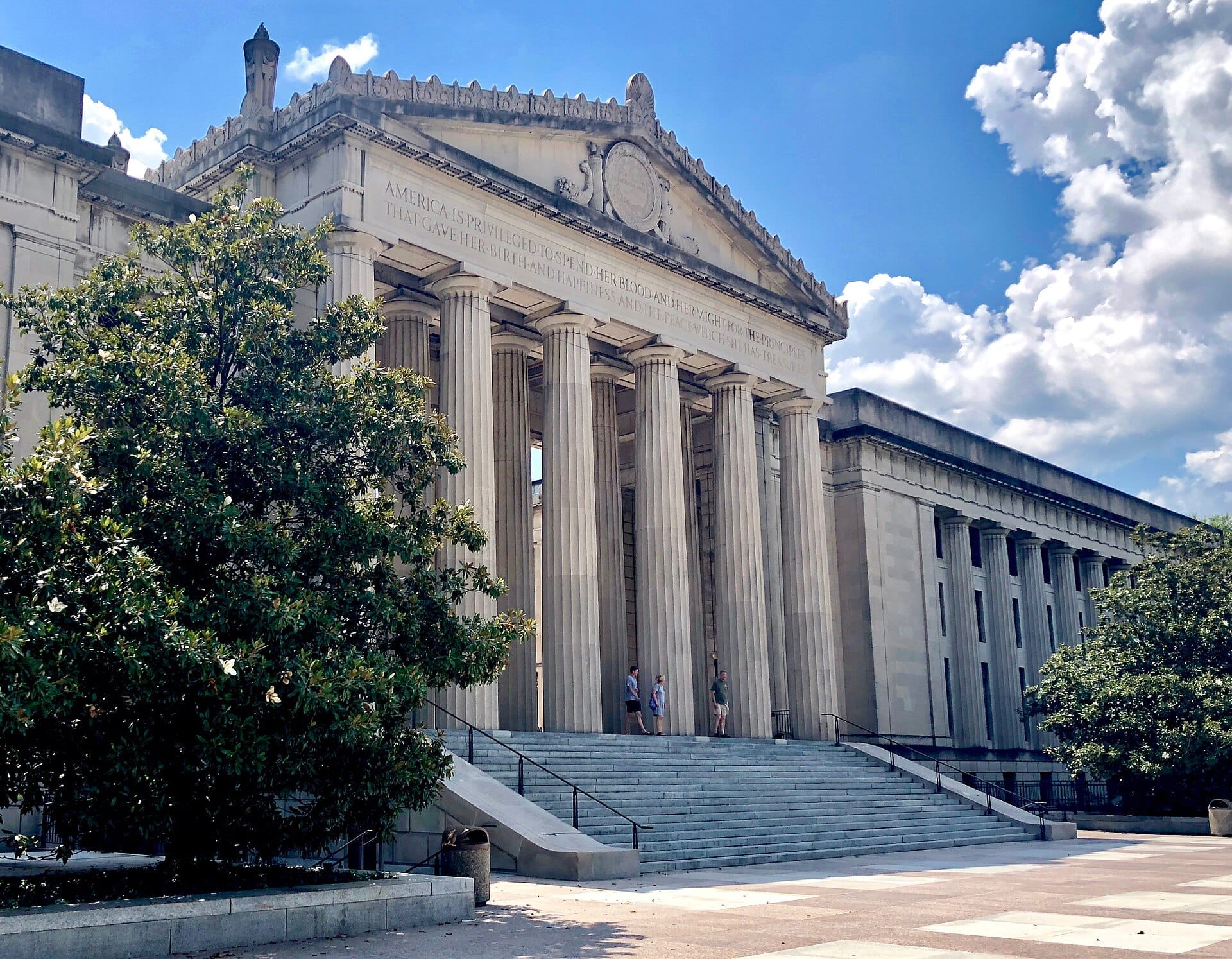
The building sits on a formal plaza along 6th Avenue North, flanked by state government buildings and positioned almost directly below the Tennessee State Capitol on the hill above. From the street, the structure reads immediately as something serious and permanent: a stone-faced Beaux-Arts design with a columned portico, low stairs, and a courtyard that invites quiet reflection before or after an event.
ℹ️ Good to know
The auditorium opens only for scheduled performances and private events. There is no standing exhibition or daily visiting hours. If you want to see the interior, book a ticket through TPAC (Tennessee Performing Arts Center) before your trip.
Architecture and the Memorial Courtyard
Designed by architect Edward Emmett Dougherty and completed in 1925, the building received the highest award from the American Institute of Architects that same year — recognition that reflected how seriously the design was taken at the time. The exterior follows classical Beaux-Arts principles: symmetrical massing, rusticated stone, and a monumental entrance that communicates permanence rather than spectacle.
The memorial courtyard on the building's exterior is worth spending time in even if you have no ticket. Stone tablets list the names of Tennesseans who died in battle, and at the center stands a bronze sculpture titled 'Youth,' created by sculptor Belle Kinney Scholz. The figure has an idealized, resolute quality typical of early 20th-century memorial art. In the early morning, before state office workers arrive for the day, the plaza is nearly empty and the light falls cleanly across the stone surfaces — a genuinely still moment in an otherwise active downtown.
From the exterior plaza, you can also take in the relationship between the auditorium and the Tennessee State Capitol on the ridge above. The two buildings anchor the northern end of downtown's civic precinct, and the visual axis between them is intentional. Photographers working in natural light will find the late afternoon, when the Capitol is backlit and the auditorium facade is in full sun, particularly productive.
Tickets & tours
Live prices and dates from our booking partner. If you book, we may earn a commission at no extra cost to you.
Old Town trolley tour of Nashville
From 54 €Instant confirmationFree cancellationHatch Show Print guided tour
From 21 €Instant confirmationFree cancellationDowntown walking tour of Nashville
From 21 €Instant confirmationFree cancellationNashville Downtown Underground Donut Tour
From 46 €Instant confirmationFree cancellation
Inside the Auditorium: The Performance Space
The interior seats about 2,000 people in a horseshoe configuration that wraps around a crescent-shaped stage measuring 66 feet wide by 52 feet deep. Those dimensions allow for full orchestral setups, theatrical productions, and large dance companies without the stage feeling cluttered. The acoustic design, a product of the era's serious attention to natural sound amplification, means that string instruments carry clearly into the upper balcony without electronic augmentation — something that cannot be said of many venues built in the decades that followed.
The interior aesthetic is formal without being cold. The ceiling is coffered and proportioned to the room, the sight lines are strong from most seating areas, and the balcony overhangs are shallow enough that the upper levels do not feel buried. If you have a choice of seat, the front half of the orchestra level and the first few rows of the lower balcony generally offer the most balanced listening position.
💡 Local tip
Arrive at least 20 minutes before curtain. The lobby is modest in size and fills quickly. Use the time to look at the architectural details in the entrance hall, which are often overlooked in the pre-show rush.
Historical Significance: The Grand Ole Opry Connection
War Memorial Auditorium occupies a specific and well-documented place in country music history. The Grand Ole Opry, which had already moved venues several times after its 1925 radio debut, made this auditorium its home from 1939 to 1943. Those were formative years for the Opry's national profile, and the auditorium's 2,000-seat capacity allowed the show to grow its live audience substantially.
The auditorium's Opry chapter did not end there. In May 2010, when devastating floodwaters damaged the Grand Ole Opry House in the Opryland district, the show returned temporarily to War Memorial Auditorium while repairs were completed. The building's ability to serve as a credible emergency host for one of American music's most storied events speaks to its enduring acoustic quality and civic stature.
For travelers with a serious interest in Nashville's music heritage, War Memorial Auditorium is best understood alongside a visit to the Ryman Auditorium (the Opry's most famous home, from 1943 to 1974) and the Country Music Hall of Fame, which contextualizes the full arc of the genre's institutional history.
Planning Your Visit: Practical Details
Because the auditorium operates on an event-only schedule, your first step is checking TPAC's calendar. The Tennessee Performing Arts Center programs War Memorial Auditorium alongside its other downtown venues, and the range of events is broad: classical concerts, Broadway touring productions, dance companies, and community events all appear on the schedule across the year. Tickets are priced per event and must be purchased through TPAC's box office or online system.
The building is located at 301 6th Avenue North, a short walk from the main cluster of downtown hotels near Broadway and from the WeGo Public Transit hub at Music City Central. Rideshare drop-off along 6th Avenue North works smoothly on most event nights, though the block can back up during interval and post-show exits for large productions. If you are arriving by car, street parking on the surrounding civic streets is limited on weekday evenings when state government events overlap with performances.
The auditorium is within easy walking distance of several other downtown landmarks worth combining into a single evening or afternoon. The Tennessee State Museum is nearby and free to enter — a useful pairing if you want historical context for the memorial's World War I significance. The Bicentennial Capitol Mall State Park is also a short walk north, offering open space and additional memorial installations.
Accessibility and What to Expect on Event Nights
TPAC provides accessibility services for performances at War Memorial Auditorium, including wheelchair accommodations, captioning, American Sign Language interpretation, and assistive listening technologies. These services are available upon advance request through TPAC's accessibility contact, coordinated in part through the Tennessee Arts Commission's Arts Access program. Visitors requiring specific accommodations should contact TPAC directly before purchasing tickets to confirm availability for a given event.
On event nights, the building and plaza take on a noticeably different character than during the day. The stone courtyard fills with pre-show conversation, the lobby light spills out through the entrance doors, and the surrounding civic precinct, quiet during business hours, becomes briefly animated. The contrast between the formal memorial setting and the social energy of an audience assembling for a performance is one of the more distinctive things about attending an event here.
⚠️ What to skip
There is no bar or full restaurant inside the auditorium. Plan dining before the show. Several restaurants are within a 10-minute walk in the downtown core, though the immediate surroundings on 6th Avenue North are more government-office than dining-district.
Who Might Want to Skip This
Travelers whose Nashville agenda centers entirely on honky-tonks, live country music bars, and the Broadway entertainment corridor will find little reason to prioritize War Memorial Auditorium. It is not part of that scene, geographically or culturally. If your primary interest is in Nashville's commercial music culture rather than its civic and classical performing arts traditions, your time is better spent closer to Lower Broadway.
Similarly, visitors hoping for a self-guided interior tour without a ticket will be disappointed — this is not a space that can be explored independently outside of performance hours. If architectural sightseeing is the goal, the exterior and courtyard are genuinely worth 15 minutes, particularly combined with a walk up to the Tennessee State Capitol grounds. But travelers looking for immersive, open-access cultural spaces should note this limitation honestly before making a detour.
Insider Tips
- Check TPAC's calendar at least two to three weeks before your Nashville visit. Popular productions sell out, and the auditorium does not have a large house relative to demand for major touring shows.
- The memorial courtyard on the 6th Avenue side is one of the quieter outdoor spaces in downtown Nashville during weekday mornings. If you are doing a walking tour of the civic precinct, it makes a natural stopping point between the State Capitol and the Farmers' Market area to the north.
- Parking in the nearby state government garage structures is often available on evenings and weekends at reduced rates, but availability and pricing change — confirm with Metro Nashville Parking before your visit rather than assuming availability.
- The building's original 1925 acoustic design means amplified pop or rock events can occasionally feel over-driven in the space. Classical, choral, and acoustic-leaning performances tend to use the hall's natural properties most effectively.
- Nashville trolley tour routes sometimes include War Memorial Auditorium as a narrated stop. If you are on a first-visit orientation tour of downtown, this is a reasonable way to see the exterior in context without committing a full detour on foot.
Who Is War Memorial Auditorium For?
- Classical music and orchestral performance audiences
- Architecture and history enthusiasts interested in Beaux-Arts civic design
- Travelers combining a downtown Nashville walking tour with a performance evening
- Country music historians tracing the physical locations of the Grand Ole Opry's early years
- Visitors attending TPAC Broadway touring productions or major dance companies
Nearby Attractions
Other things to see while in Downtown Nashville:
- 3rd & Lindsley
Since 1991, 3rd & Lindsley has been the venue where Nashville musicians play when they want to be heard, not just seen. Located half a mile south of Broadway in the SoBro district, it is an intimate, no-frills room that draws touring acts, local legends, and serious audiences in equal measure.
- Acme Feed & Seed
Housed in a landmark 1943 building at the corner of 1st Avenue and Broadway, Acme Feed & Seed is a multi-level bar, restaurant, and music venue with a rooftop overlooking the Cumberland River. It offers a more layered experience than the typical honky-tonk strip, with a rooftop that earns its reputation for views and a ground floor that still delivers the Broadway energy.
- Adventure Science Center
Adventure Science Center is Nashville's premier interactive science museum, offering 44,000 square feet of hands-on exhibits, a 75-foot adventure tower, and a 63-foot dome planetarium. It has served the city since 1945 and remains one of the most engaging family destinations near downtown Nashville.
- Bicentennial Capitol Mall State Park
Bicentennial Capitol Mall State Park is a free, 19-acre outdoor park in downtown Nashville built to commemorate Tennessee's 200th anniversary of statehood. Anchored by a 200-foot granite map of the state, a 95-bell carillon, and the Rivers of Tennessee Fountains, it doubles as one of the most informative and peaceful green spaces in the city center.
Planning a trip? Discover personalized activities with the Nomado app.