Urkiola Natural Park: Limestone Peaks and Forest Trails Above Bilbao
Declared the Basque Country's first natural park in 1989, Urkiola Natural Park covers nearly 6,000 hectares of rugged limestone mountains, beech forests, and deep ravines roughly 40–45 km southeast of Bilbao. Free to enter and accessible by car or bus via Durango, it offers some of the most rewarding day hiking within reach of the city.
Quick Facts
- Location
- Urkiola Pass (Alto de Urkiola), Abadiño, Bizkaia — approx. 40–45 km southeast of Bilbao
- Getting There
- By car: A-8 motorway to Durango, then BI-623 to the pass. By bus: Bizkaibus A-3923 to Durango, then a private Durango–Vitoria bus stopping at Alto de Urkiola
- Time Needed
- Half day (3–4 hours) for a single trail; full day for summit routes or combined walks
- Cost
- Free entry to the park; some guided activities via private operators may charge separately
- Best for
- Hikers, nature photographers, families seeking fresh air, Basque culture enthusiasts
- Official website
- http://www.urkiola.net/
What Urkiola Natural Park Actually Is
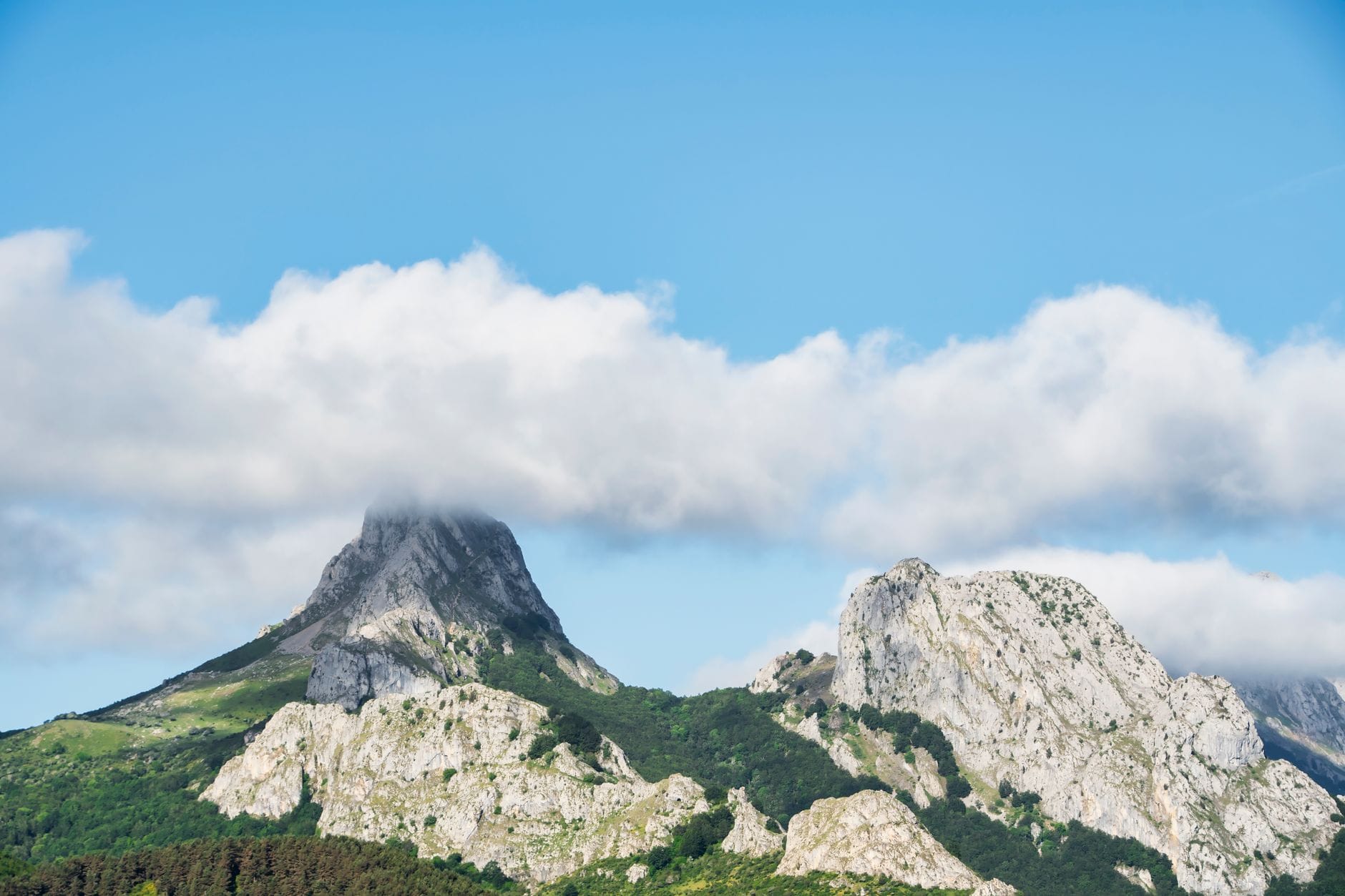
Urkiola Natural Park is a protected mountain area in the provinces of Biscay (Bizkaia) and Álava, spanning municipalities including Abadiño, Dima, Durango, Izurtza, Mañaria, Atxondo, and Aramaio. Declared a natural park on 29 December 1989, it holds the distinction of being the first natural park established in the Basque Autonomous Community. The park covers 5,958 hectares with a perimeter of 83.8 km, a scale that sounds modest until you're standing at the Urkiola pass at around 700 metres and looking up at the limestone walls of Anboto (1,337 m), the park's highest summit, which appears almost vertical from below.
The landscape here is defined by karst geology: pale limestone crags rise sharply above dense beech and oak forests, with deep ravines cutting through the rock in between. The contrast between the green forest floor and the bone-white cliffs above is one of the park's defining visual characteristics, particularly striking in autumn when the beeches turn gold and copper.
For travellers basing themselves in Bilbao, Urkiola offers something the city itself cannot: silence, altitude, and uninterrupted nature. It pairs naturally with a visit to nearby Gorbea Natural Park, the larger protected area to the south, or as a standalone day trip for anyone who finds one or two days of city sightseeing enough.
💡 Local tip
The Toki Alai Interpretation Centre, located at Barrio de Urkiola 8, Abadiño, is the best starting point for any visit. Staff can provide trail maps and up-to-date route conditions. Check locally for current opening hours before you go.
The Mythology Behind the Mountains
Urkiola is not just ecologically significant — it sits at the heart of Basque mythology. Anboto, the park's dominant limestone peak, is traditionally regarded as the home of Mari, the principal deity of pre-Christian Basque religion. Mari is a goddess of storms, weather, and the earth, and Basque folklore holds that she retreats between her cave on Anboto and other mountain sanctuaries across the Basque Country depending on the season. When clouds gather around Anboto's summit — which happens frequently given the Atlantic climate — locals have long said that Mari is at home.
This mythological significance adds a layer of atmosphere that separates Urkiola from a generic nature reserve. The sanctuary of Urkiola, a small chapel near the pass dedicated to Saints Anthony and Thomas, has been a pilgrimage destination for centuries. On weekends and feast days, you may notice Basque families making the short walk up to the sanctuary, a tradition that persists alongside the modern hiking culture. The combination of pre-Christian legend and Catholic pilgrimage is very much a Basque phenomenon.
Tickets & tours
Hand-picked options from our booking partner. Prices are indicative; availability and final rates are confirmed when you complete your booking.
San Juan de Gaztelugatxe guided tour from Bilbao
From 65 €Instant confirmationFree cancellationSan Sebastian, Hondarribia, Hendaye, and Getaria from Bilbao
From 54 €Instant confirmationFree cancellationGaztelugatxe and Mundaka small group guided tour from Bilbao
From 50 €Instant confirmationFree cancellationBilbao walking tour
From 16 €Instant confirmationFree cancellation
The Terrain: What You'll Actually Walk Through
The park's interior is more varied than photographs suggest. At lower elevations, particularly on the north-facing slopes, Atlantic beech forests (hayedos) dominate — tall, cathedral-like stands where the light filters in greenish and cool even on warm days. The forest floor is often carpeted with moss and ferns, and in spring, wildflowers appear in the gaps between the trees. The smell here is unmistakably damp and earthy, typical of the Cantabrian coast's humid oceanic climate.
Higher up, the vegetation thins quickly. Above approximately 1,100 metres, exposed limestone pavement and scrub take over, and the sound of wind replaces the birdsong of the forest. The summit ridges require some scrambling on certain routes, and the exposure can feel significant on windy days. Griffon vultures (buitres leonados) are regularly seen soaring on thermals above the cliffs — scanning the ridgeline before a summit attempt is not unusual.
The BI-623 regional road crosses the park north to south, cresting at the Urkiola pass and providing the main access point for day visitors. Most people begin walks from the pass area, where there is roadside parking and the Toki Alai centre just above the pass. From here, the trail network branches in multiple directions: east toward Anboto, west toward the Alluitz massif, and south along gentler forest paths toward Abadiño village.
Trails and Time of Day
Early morning is the most rewarding time to be in Urkiola. Between roughly 7am and 9am on a clear day, the mist sits in the valleys below the pass, the light is low and warm, and the parking area is almost empty. This is when the park feels genuinely remote rather than recreational. By 10am on weekends, the first family groups and hiking clubs begin arriving from Bilbao and Durango, and by midday the Urkiola pass can feel considerably less peaceful.
The most popular route in the park is the ascent to Anboto, typically approached from the Atxarte gorge on the park's eastern edge. The round trip takes roughly 4 to 5 hours and involves steep, rocky terrain near the summit. It is not a casual stroll — proper footwear is essential and the upper sections require confident movement on uneven rock. In winter, the upper mountain can be snow-covered and requires additional preparation.
For less demanding options, the forest loop trails around the Urkiola pass itself offer 1.5 to 2 hours of walking on well-maintained paths through beech forest, with views up to the limestone cliffs. These are suitable for fit families with older children. Shorter walks toward the sanctuary (ermita) take under 30 minutes from the pass and are flat enough for most visitors.
⚠️ What to skip
Weather in the Basque mountains changes rapidly. Even in summer, cloud can roll in from the Bay of Biscay within the hour and reduce visibility on the upper ridges to near zero. Check the forecast before departing Bilbao, and carry a waterproof layer regardless of the morning conditions.
Getting There from Bilbao
By car, Urkiola is straightforward: take the A-8 motorway east from Bilbao toward Durango (roughly 35–40 minutes), exit at Durango, and follow road BI-623 south up to the Urkiola pass. The road climbs steadily through the valley and the pass appears in around 15 minutes from Durango. Total journey time from central Bilbao is typically 40 to 50 minutes. There is roadside parking near the Toki Alai centre and the sanctuary, though spaces fill quickly on weekend mornings in summer.
Without a car, the journey requires two stages. Bizkaibus line A-3923 connects Bilbao with Durango, then a private bus running between Durango and Vitoria-Gasteiz stops at Alto de Urkiola (the pass). Connections should be checked in advance as frequency is limited, and return timing from the pass is important to confirm before setting out. The train is not a useful option for reaching the park directly.
If you are planning a broader trip around Biscay's natural areas and smaller towns, Urkiola fits well alongside a visit to Guernica or the coast around Mundaka — both reachable the same day with a car.
What to Bring and Practical Considerations
Given the Basque Country's oceanic climate, rain gear is non-negotiable at any time of year. Even in July and August, the relatively drier months, showers can arrive without much warning. Waterproof hiking boots are strongly recommended for any trail beyond the immediate sanctuary area. In the beech forest, paths become slippery when wet, and the limestone rock above treeline can be treacherous in damp conditions.
There are limited food and drink facilities at the pass — a small bar-restaurant typically operates near the Toki Alai centre during peak season, but do not rely on it being open for early-morning departures or outside summer. Carrying water and food is standard practice.
Photographers should note that the park's most dramatic light falls in the early morning and late afternoon. The south-facing limestone walls of Anboto catch the light in late afternoon in a way that turns the rock amber and gold, particularly useful from October to March when the sun is lower. The beech forest is exceptional in late October to early November, when the canopy hits peak autumn colour.
Wheelchair and reduced-mobility access to the park's trails is very limited given the terrain. Those with mobility needs should contact the Toki Alai centre in advance. For accessible natural spaces closer to the city, Doña Casilda Park and Etxebarria Park offer flat, maintained green space within Bilbao itself.
Is Urkiola Worth the Trip?
Urkiola is not a manicured tourist attraction with clear signage, on-site cafes, and a gift shop. It is a working natural park where the trails are real, the weather is real, and the effort required is real. For travellers who enjoy hiking and want to understand the physical landscape that has shaped Basque culture — the mountains, the mist, the mythologised peaks — it delivers something that no museum or city walk can replicate.
For travellers on a short city break focused on the Guggenheim, pintxos bars, and architecture, it is probably not the best use of a day. But if you have a second or third day in Bilbao and have already covered the main urban sights, a morning at Urkiola offers a genuinely different register — clean air, physical effort, and a landscape that has been culturally significant in this region for thousands of years.
For context on how Urkiola fits into a broader Basque Country itinerary, the Basque Country itinerary guide covers how to combine the park with coastal stops and city time effectively.
Insider Tips
- Arrive at the Urkiola pass before 9am on weekends. The parking fills fast and the first hour of trail time, before the hiking clubs arrive from Durango and Bilbao, is noticeably more peaceful.
- The Atxarte gorge approach to Anboto is more scenic and less exposed in bad weather than the direct ridge route from the pass. If clouds are building on the summit, the gorge path gives you the best of the lower park without committing to the exposed upper mountain.
- The small ermita (sanctuary) near the pass is often overlooked by hikers heading straight for the summits. It's worth ten minutes — the combination of the medieval chapel, the surrounding oak trees, and the limestone walls behind it makes for one of the better photographs in the park.
- Ask at Toki Alai about the condition of the Anboto summit route before setting out. Staff have real-time knowledge of conditions on the upper mountain that no app or weather site provides.
- Autumn, specifically mid-October to early November, is the most visually impressive time to visit. The beech forest below the limestone crags at peak colour is genuinely striking, and this is also a quieter period than summer weekends.
Who Is Urkiola Natural Park For?
- Hikers and trail walkers who want serious mountain terrain within day-trip distance of a major city
- Travellers interested in Basque mythology and pre-Christian culture, given Anboto's role in Mari legends
- Nature photographers, especially in autumn for the beech forest colour or early morning mist photography
- Families with older children (10+) seeking a full-day outdoor activity beyond the city
- Anyone who wants a clear contrast to Bilbao's urban attractions and needs a half or full day of fresh air
Nearby Attractions
Combine your visit with:
- Bakio Beach
Stretching nearly a kilometre along the Bizkaia coast, Bakio Beach is the largest and most complete sandy beach within easy reach of Bilbao. With reliable surf, a long promenade, full facilities, and Blue Flag certification, it draws everyone from families to serious wave riders.
- Bermeo
Perched on the rugged Biscay coast about 35 kilometres northeast of Bilbao, Bermeo is one of the Basque Country's oldest and most significant fishing towns. With a harbour still piled with nets, a medieval old quarter dating to 1236, and a front-row seat to one of northern Spain's most dramatic coastlines, it rewards travellers who venture beyond the city.
- Castillo de Butrón
Rising from dense Biscayan woodland just over 20 km from Bilbao, Castillo de Butrón is one of the most visually striking pieces of architecture in the Basque Country. Originally a medieval tower-house, it was radically rebuilt in neo-Gothic style in 1878 and today stands as a classified Historic Monument. Interior access is currently not available to the general public, but the exterior alone makes the short drive worthwhile.
- San Juan de Gaztelugatxe
A 10th-century hermitage perched on a jagged sea islet connected to the mainland by a cobbled stone bridge and 241 steps. San Juan de Gaztelugatxe sits roughly 45 minutes by car from Bilbao and delivers one of the most visually striking landscapes on the entire Atlantic coast of Spain. Free to enter, but requiring advance reservation in peak season.