Bermeo: The Basque Coast's Most Authentic Fishing Port
Perched on the rugged Biscay coast about 35 kilometres northeast of Bilbao, Bermeo is one of the Basque Country's oldest and most significant fishing towns. With a harbour still piled with nets, a medieval old quarter dating to 1236, and a front-row seat to one of northern Spain's most dramatic coastlines, it rewards travellers who venture beyond the city.
Quick Facts
- Location
- Busturialdea comarca, Biscay, Basque Country — approx. 35 km northeast of Bilbao
- Getting There
- Euskotren from Bilbao-Zazpikaleak or Matiko stations (approx. 1 hr); regional buses also available. No metro connection.
- Time Needed
- Half day (3–4 hrs) for the town; full day if combining with Gaztelugatxe or the Urdaibai estuary
- Cost
- Free to enter the town. Individual museums and sites charge their own fees — verify per venue.
- Best for
- Basque culture, coastal scenery, seafood lunches, day trips from Bilbao
- Official website
- www.bermeo.eus
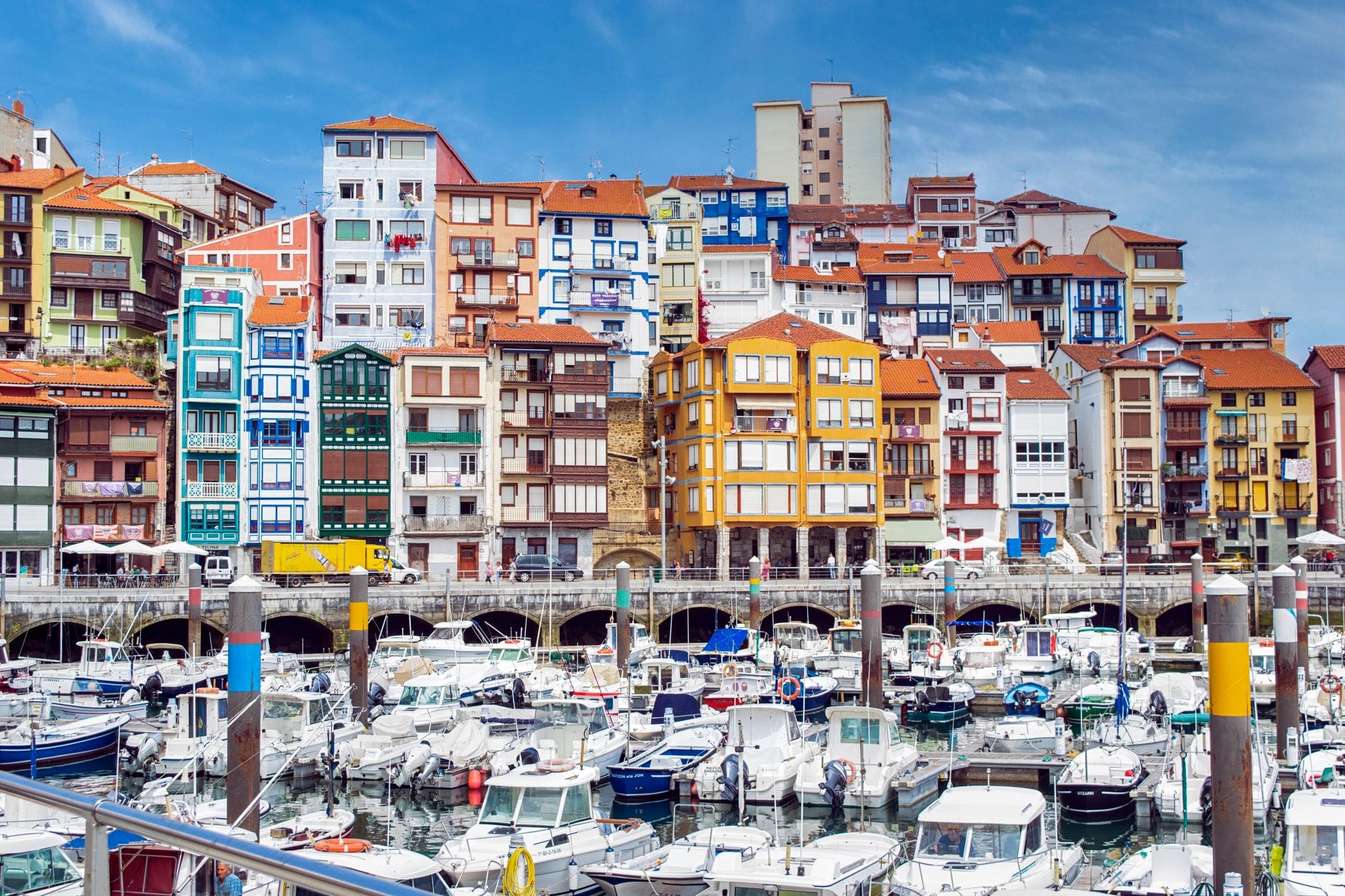
What Bermeo Actually Is
Bermeo is a working fishing town, and that distinction matters. Unlike coastal villages that have quietly pivoted to tourism, Bermeo still operates a serious commercial fishing fleet. On any given morning, the lower port smells of diesel and salt, crates of anchovy and tuna are unloaded under floodlights before most visitors have arrived, and the fish market runs on a schedule that has nothing to do with tourist hours. That authenticity is both the town's greatest draw and its defining character.
Founded in 1236 and historically recognised as one of the principal towns of Biscay, Bermeo carries real historical weight in the Basque context. It was an important commercial and civic centre before Bilbao consolidated power along the Nervión estuary. That history is written into the town's layout: the compact medieval quarter climbs steeply from the port, its narrow lanes lined with stone townhouses, while the 15th-century Ercilla Tower, now home to the Fisherman's Museum, anchors the old quarter physically and symbolically.
💡 Local tip
The Euskotren from Bilbao-Zazpikaleak or Matiko stations is the most straightforward way to reach Bermeo without a car. The journey takes around an hour and runs through the Urdaibai estuary, which is scenic in its own right. Check current timetables with Euskotren before travelling, as schedules vary by season.
The Port: Where the Town Reveals Itself
The harbour is the engine of Bermeo, and it operates on two distinct rhythms. Before 10am, the working port dominates: fishing vessels are being cleaned, nets are spread across the quay, and the fish auction (lonja) may still be finishing. The light at this hour is sharp and low, bouncing hard off the water and the white-and-blue hulls of the fleet. It is excellent for photography, though visitors should stay clear of active unloading areas.
By mid-morning, the pace shifts. The bars along the waterfront open their shutters, and the first pintxos of the day appear on the counters. The port promenade becomes a proper walking circuit, with the old fishing quarter on one side and the open bay on the other. The breakwater offers a clean view back toward the town, with the Torre Ercilla visible above the rooftops and the hills of the Basque interior rising behind.
Bermeo sits within the Urdaibai Biosphere Reserve, a UNESCO-designated estuary ecosystem that begins just south of town. The reserve's proximity means the coastal environment around Bermeo remains largely intact, with seabirds working the harbour mouth and the water genuinely clear on calm days. This ecological context is worth knowing: the fishing here is not just tradition, it is embedded in a protected natural system.
Tickets & tours
Hand-picked options from our booking partner. Prices are indicative; availability and final rates are confirmed when you complete your booking.
Guided Tour of San Juan de Gaztelugatxe, Bermeo, Mundaka and Gernika from Bilbao
From 49 €Instant confirmationFree cancellationSan Juan de Gaztelugatxe and Bermeo walking route
From 35 €Instant confirmationFree cancellationSan Juan de Gaztelugatxe guided tour from Bilbao
From 65 €Instant confirmationFree cancellationSan Sebastian, Hondarribia, Hendaye, and Getaria from Bilbao
From 54 €Instant confirmationFree cancellation
The Old Quarter: Stone Streets and Slow Climbs
Bermeo's medieval core is compact enough to explore thoroughly in 90 minutes, but its steep gradient means comfortable shoes are necessary. The lanes climb sharply from sea level, and some sections are cobbled at angles that become slippery after rain, which is a real consideration given the Atlantic coast's year-round humidity. Visitors with reduced mobility will find significant portions of the old quarter difficult to navigate.
The Ercilla Tower (Torre Ercilla) is the structural centrepiece of the old town. A 15th-century defensive tower that survived the successive fires and raids that reshaped much of Bermeo over the centuries, it now houses the Fisherman's Museum (Arrantzaleen Museoa). The museum traces the history of Basque deep-sea fishing, including the remarkable long-range expeditions to the waters of Newfoundland that Basque fishermen undertook centuries before those routes became widely documented. Opening hours and admission fees for the museum change seasonally, so verify directly with the venue before visiting.
The church of Santa Eufemia, positioned on a promontory above the port, offers one of the better elevated views over the harbour and bay. The walk up is short but steep, and the churchyard itself is quiet in a way the waterfront rarely is, even in summer. Early morning, when mist still sits on the water, the view from here has a quality that midday light cannot replicate.
Bermeo as the Gateway to Gaztelugatxe
Most visitors who come to Bermeo are also considering Gaztelugatxe, the dramatic islet with its hermitage connected to the mainland by a stone causeway and 241 steps. Gaztelugatxe is located about 5 kilometres southwest of Bermeo by road. It gained considerable international attention after appearing in a well-known television series, and visitor numbers have grown significantly as a result. Accessing Gaztelugatxe now requires advance booking through an official reservation system during peak periods — this is not optional, and turning up without a booking in summer will likely mean being turned away.
⚠️ What to skip
Gaztelugatxe reservations are mandatory during high season and must be made in advance through the official Basque Government booking system. Bermeo is the closest town for transport connections, food, and parking, but Gaztelugatxe itself is a separate visit. Do not assume they are walkable from each other without planning.
Combining Bermeo and Gaztelugatxe in a single day is practical by car or by timing bus connections carefully. The logical sequence is to arrive in Bermeo on an early train, spend the morning in the port and old quarter, eat lunch at one of the waterfront restaurants, and then travel to Gaztelugatxe for the late afternoon when light is softer and some crowds have thinned. That said, Gaztelugatxe visit slots are time-specific, so any combined itinerary requires careful coordination.
Eating and Drinking in Bermeo
The seafood in Bermeo is as fresh as it gets on the Basque coast, for the obvious reason that much of it arrived at the port that morning. The town has a concentration of restaurants along the harbour specialising in fish and shellfish: grilled besugo (sea bream), kokotxas (salt cod cheeks), and anchoas (anchovies) prepared in the local style are the things to order. If you are building a wider understanding of how to eat well on this stretch of coast, the Basque food guide provides useful context on the regional approach to seafood and pintxos culture.
The bars in the old quarter and along the port serve pintxos from late morning, and the informal rhythm of a mid-morning txakoli (local white wine) with anchovies at a harbour bar is one of the more pleasurable small rituals Bermeo offers. Prices are noticeably lower than in central Bilbao or San Sebastián, which makes Bermeo an unpretentious and good-value place to eat well.
When to Go and What to Expect
Bermeo's Atlantic climate means rain is possible in any month. The driest and warmest window runs broadly from May through September, with July and August being the busiest months due to Basque domestic tourism and international visitors combining Bermeo with Gaztelugatxe day trips. In summer, the port promenade and the narrow old quarter streets can feel crowded between 11am and 3pm.
May, June, and September offer a more comfortable ratio of decent weather and manageable crowds. October and November bring heavier rain and a noticeably quieter town, but the coast at this time of year has its own character: rough seas on the breakwater, the fishing fleet working harder, and the bars full of locals rather than visitors. For context on planning a wider trip around seasonal patterns, see the guide on the best time to visit Bilbao — the same broad seasonal logic applies to the surrounding coast.
Winter visits are entirely viable if your interest is in atmosphere over beach weather. The town is small enough that you will not need a car once you arrive, and the Euskotren connection back to Bilbao runs reliably. Bring a waterproof layer regardless of season.
ℹ️ Good to know
Bermeo has a municipal area of approximately 34 km² and a population of around 17,000 residents. It is a genuine living town, not a tourist set piece. The fishing industry, the local school, and the weekly market all operate independently of visitor presence, which is precisely what gives the place its texture.
Who Should Skip Bermeo
Bermeo is not the right destination if your visit to the Basque Country is short and entirely urban-focused. On a two-day itinerary centred on Bilbao's architecture and museums, the hour-long train ride each way is a significant time cost that would be better spent in the city. In that scenario, the two days in Bilbao guide offers a tighter structure. Bermeo also requires some tolerance for cobblestones, hills, and a town that does not necessarily perform for visitors — the working harbour is not manicured, and the old quarter has seen better maintenance in some corners.
For travellers with mobility limitations, the combination of steep medieval lanes, cobbled surfaces, and a harbour area with uneven ground makes full exploration challenging. The waterfront promenade is more accessible, but arriving with the expectation of seeing the whole town comfortably may lead to frustration.
Insider Tips
- Arrive on the first or second Euskotren of the morning. The fish market activity and the early harbour light make the port a completely different place before 9am compared to midday, and you will have the old quarter almost entirely to yourself.
- The best elevated view of the harbour and bay is from the churchyard of Santa Eufemia, not from the breakwater. It takes five extra minutes to climb up but the perspective is worth it, especially on clear mornings when the Basque hills are visible inland.
- If you plan to visit Gaztelugatxe the same day, book your access slot before you book your train ticket. The visit slots fill weeks in advance in summer, and the Bermeo connection only makes sense once you have confirmed your Gaztelugatxe time.
- Lunch on the port is excellent value, but the restaurants fill quickly after 1:30pm in summer. Arrive before 1pm or be prepared to wait. Ordering whatever fish came in that morning, rather than a specific dish, consistently produces the best result.
- The weekly market brings local producers into town. If your visit coincides with it, it is worth timing your arrival to walk through before it closes mid-morning.
Who Is Bermeo For?
- Day-trippers from Bilbao wanting genuine Basque coastal culture without a resort atmosphere
- Food-focused travellers seeking fresh seafood at lower prices than in San Sebastián or central Bilbao
- Photographers interested in working harbours, Atlantic light, and medieval street textures
- Travellers combining a Gaztelugatxe visit with a proper base for lunch and exploration
- Anyone interested in Basque maritime history and the deep-sea fishing heritage of the Biscay coast
Nearby Attractions
Combine your visit with:
- Bakio Beach
Stretching nearly a kilometre along the Bizkaia coast, Bakio Beach is the largest and most complete sandy beach within easy reach of Bilbao. With reliable surf, a long promenade, full facilities, and Blue Flag certification, it draws everyone from families to serious wave riders.
- Castillo de Butrón
Rising from dense Biscayan woodland just over 20 km from Bilbao, Castillo de Butrón is one of the most visually striking pieces of architecture in the Basque Country. Originally a medieval tower-house, it was radically rebuilt in neo-Gothic style in 1878 and today stands as a classified Historic Monument. Interior access is currently not available to the general public, but the exterior alone makes the short drive worthwhile.
- San Juan de Gaztelugatxe
A 10th-century hermitage perched on a jagged sea islet connected to the mainland by a cobbled stone bridge and 241 steps. San Juan de Gaztelugatxe sits roughly 45 minutes by car from Bilbao and delivers one of the most visually striking landscapes on the entire Atlantic coast of Spain. Free to enter, but requiring advance reservation in peak season.
- Gorbea Natural Park
Rising to 1,482 metres above the green hills south of Bilbao, Gorbea Natural Park is the largest protected natural area in the Basque Country. Spanning over 20,000 hectares of beech forest, karst terrain, and mountain pasture, it offers a wilderness experience within reach of the city.