Bakio Beach: A Standout Atlantic Stretch on the Basque Coast
Stretching nearly a kilometre along the Bizkaia coast, Bakio Beach is the largest and most complete sandy beach within easy reach of Bilbao. With reliable surf, a long promenade, full facilities, and Blue Flag certification, it draws everyone from families to serious wave riders.
Quick Facts
- Location
- Bakio, Bizkaia — approx. 30–40 min from Bilbao by car or bus
- Getting There
- Bizkaibus line A3518 from Bilbao Termibus (Intermodal station)
- Time Needed
- 2–5 hours, or a full day in summer
- Cost
- Free entry; lifeguard service active 11:00–20:00 in summer
- Best for
- Surfers, families, coastal walkers, beach day-trippers from Bilbao
What Bakio Beach Actually Is
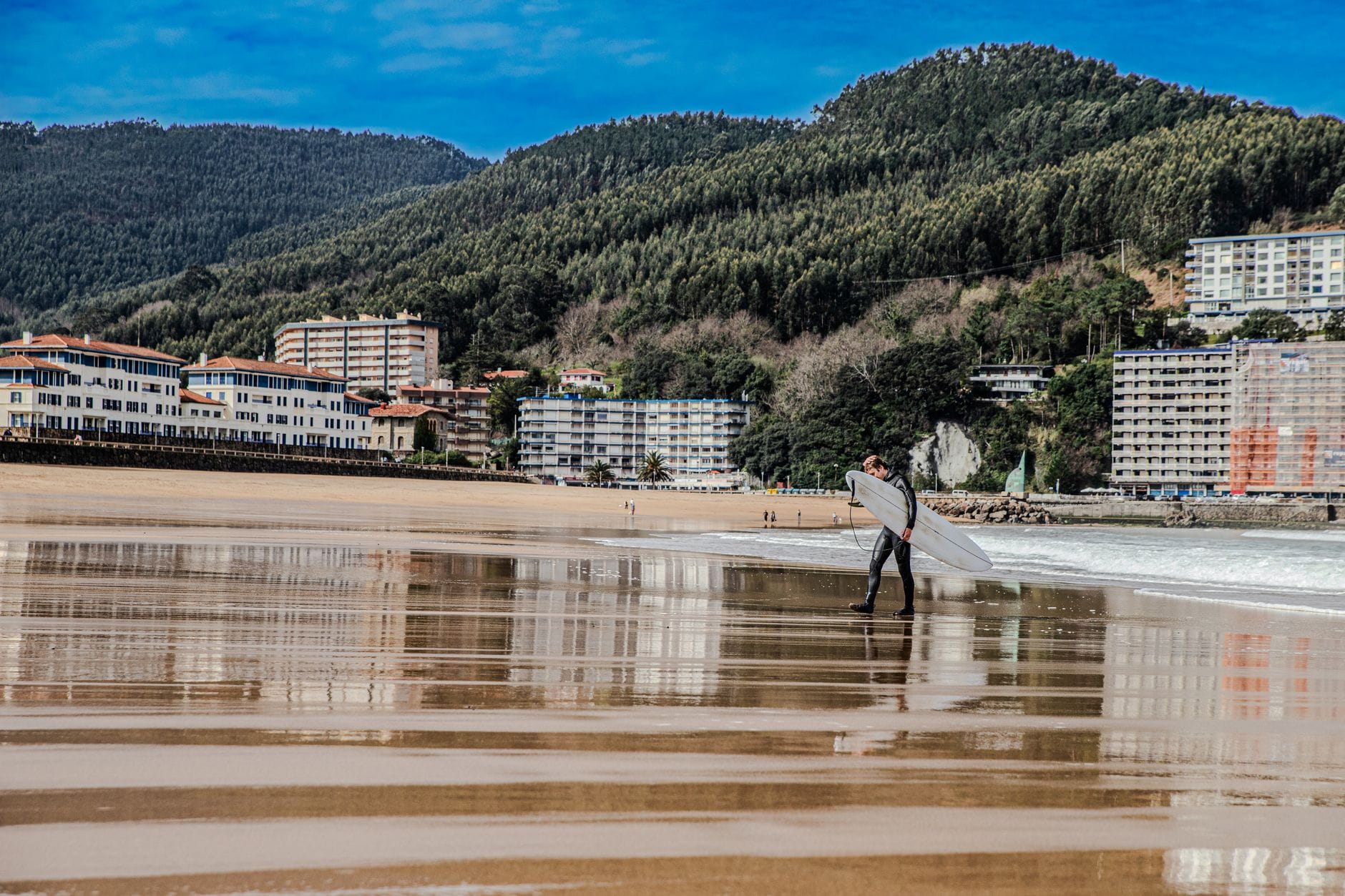
Bakio Beach, known officially as Playa de Bakio (Basque: Bakioko Hondartza), is a broad arc of golden sand on the Cantabrian coast of Bizkaia. At approximately 982 metres long and 130 metres wide, it is the largest beach on the Bizkaia coastline, and one of the few along this coast that combines size, quality surf, full visitor infrastructure, and genuine natural character in a single place.
The beach sits in the small town of Bakio, which is essentially a coastal village that swells considerably in July and August. Outside high summer, Bakio is quiet in the way that Atlantic coast towns tend to be: sea-facing bars with steamed-up windows, a few surf schools running year-round, and a long promenade that locals use more for walking than posing. The pace is noticeably slower than Bilbao, and that contrast is part of the appeal.
For context on how Bakio fits into a wider coastal trip from the city, the Bilbao beaches guide covers the full range of options along the Bizkaia coast, from urban coves to open Atlantic swells.
The Beach Itself: Sand, Sea, and Surf Conditions
The sand at Bakio is fine and pale gold, with a texture that stays relatively cool underfoot even in full sun — a small comfort on August afternoons when the beach reaches near-capacity. The bay curves gently between two rocky headlands, and the Atlantic swell arrives with enough consistency and power to make this one of the region's preferred surf beaches. Waves are moderate on calm days and can become genuinely powerful when Atlantic weather systems push through, which happens even in late spring and early autumn.
The beach holds a Blue Flag designation, awarded annually based on water quality, safety, environmental management, and facilities. It goes further than most: it is the only EMAS-registered beach in Bizkaia. In practical terms, this means the water is tested regularly, the sand is cleaned daily in peak season, and the overall management is unusually systematic for a public beach.
💡 Local tip
The best surf windows at Bakio typically come in autumn and early winter, when Atlantic swells strengthen but crowds thin out. Summer surf tends to be gentler and more suitable for beginners taking lessons with one of the local surf schools.
The beach has a long, paved promenade running parallel to the sand for its full length, lined with cafes and small restaurants. At the western end, rocky outcrops and tidepools reward anyone willing to scramble slightly off the main beach — low tide exposes some interesting terrain here, and the views back along the full curve of the bay are worth it.
Tickets & tours
Hand-picked options from our booking partner. Prices are indicative; availability and final rates are confirmed when you complete your booking.
San Juan de Gaztelugatxe guided tour from Bilbao
From 65 €Instant confirmationFree cancellationSan Sebastian, Hondarribia, Hendaye, and Getaria from Bilbao
From 54 €Instant confirmationFree cancellationGaztelugatxe and Mundaka small group guided tour from Bilbao
From 50 €Instant confirmationFree cancellationBilbao walking tour
From 16 €Instant confirmationFree cancellation
How the Beach Changes Through the Day and Season
In the early morning, before 9 or 10 o'clock, Bakio is essentially a local beach. Dog walkers move along the waterline, surf coaches set up equipment, and the light on the water has a flat, pewter quality typical of the Atlantic Basque coast. The air smells of salt and faintly of the barnacle-covered rocks at the beach's edges. There are almost no tourists at this hour, even in August.
By late morning the character shifts. Families from Bilbao and the surrounding towns arrive with all the trappings of a serious beach day. From roughly midday to 17:00 in July and August, the sand fills quickly, particularly in the central stretch near the main beach access and facilities. The promenade fills with people eating at the terraces, and the surf zone has learners in wetsuits supervised by instructors.
Late afternoon brings a partial clearing as families with young children leave, and the beach regains something of its earlier character. Surfers staying into the evening often have long stretches of the water to themselves. In September and October, the beach is noticeably emptier on weekdays but still draws weekend visitors from Bilbao who prefer the calmer, slightly cooler conditions. Off-season, from November through March, Bakio is almost entirely a local place: quiet, sometimes dramatic under grey skies and large swell, and genuinely beautiful in a way that overcrowded summer beaches cannot replicate.
⚠️ What to skip
The Basque coast receives year-round rainfall due to its humid oceanic climate. Even in summer, overcast days and brief rain showers are common. Bring a light layer regardless of the forecast, and check conditions before making a long day trip.
Getting to Bakio from Bilbao
The most straightforward route by car follows the BI-631 road northwest from Bilbao, passing through Mungia before descending to the coast at Bakio. The drive is 30 to 40 minutes depending on traffic and time of day. Parking in Bakio is available near the beach but can be limited and congested on summer weekends — arriving before 10:00 or after 16:00 on busy days makes a real difference.
By public transport, Bizkaibus line A3518 connects Bilbao's main bus terminal (Termibus, also known as Bilbao Intermodal) with Bakio. The journey takes longer than driving but is a genuine option, particularly for a solo traveller or a couple without heavy beach gear. Check current timetables via Bizkaibus before travelling, as frequencies vary by season.
Bakio pairs well with a visit to nearby Gaztelugatxe, the dramatic rocky islet topped with a hermitage that lies just a few kilometres along the coast. If you are hiring a car for the day, combining both requires only a short detour.
Facilities and Practical Details
Bakio is well-equipped for a full beach day. Facilities include public toilets, showers, a foot-wash station, a tourist information office, a sports area, and a children's play area. The promenade gives easy pedestrian access to the full length of the beach. Lifeguard service runs from 11:00 to 20:00 during summer months, and the beach has noted facilities for visitors with disabilities, though specific details on adapted equipment such as beach wheelchairs should be confirmed locally before relying on them.
- Toilets and changing facilities: available on the beach
- Showers and foot wash: confirmed
- Lifeguard service: 11:00–20:00 in summer
- Children's play area and sports zone
- Tourist information office at the beach
- Multiple cafes and restaurant terraces along the promenade
- Surf schools operating in season
- Disabled access facilities (verify specifics locally)
Entry to the beach is free. There is no admission charge, no peak-hour pricing, and no booking system. The main costs you will encounter are parking (if driving), food and drink at the promenade terraces, and any surf lessons or equipment rental if you want to get in the water.
Bakio in the Context of the Basque Coast
The Bizkaia coastline between Bilbao and the eastern edge of the Basque Country is not a typical Mediterranean beach destination. The water is cooler, the weather more variable, and the landscape more rugged. Bakio sits near the western end of a stretch that includes the surf town of Mundaka, the estuary village of Bermeo, and the protected wetlands of the Urdaibai reserve. This geography matters: the Atlantic swells that give Mundaka its world-famous left-hand wave also feed the surf at Bakio, and the same ecosystem that supports Urdaibai's birdlife shapes the character of this entire coastline.
The Urdaibai Biosphere Reserve begins just east of Bakio and is worth building into a longer coastal itinerary. The estuary, oak forests, and coastal cliffs of Urdaibai offer a counterpoint to time on the beach and are accessible from the same general area.
For anyone planning a broader trip to the coast, Mundaka is about 15 kilometres east and worth the detour, particularly for surfers or anyone who wants to see one of Europe's finest surf breaks from the cliffs above the estuary mouth.
Photography, Timing, and What to Bring
The best light for photographing Bakio arrives in the late afternoon, when low Atlantic sun cuts across the bay from the west and gives the sand and water a warm contrast that the flat midday light completely lacks. The western headland provides an elevated vantage point for shooting the full arc of the beach. The rocky outcrops at low tide are worth photographing up close: barnacled, dark, and textured against the pale sand.
For a day trip, bring: sunscreen (the Atlantic sun is deceptively strong in clear weather despite relatively mild temperatures), a windproof layer (coastal wind is consistent even in summer), water, and cash for the promenade cafes, which do not all accept card payment. A wetsuit is standard for surfers year-round.
ℹ️ Good to know
Bakio is listed on Spain.info and classified as an urban beach with full facilities. For the most current information on seasonal services, check the official Turismo Euskadi page before visiting: https://tourism.euskadi.eus/en/beaches-reservoirs-rivers/bakio-beach/webtur00-content/en/
Insider Tips
- The eastern end of the beach, furthest from the main access point and car park, is consistently quieter than the central stretch even on busy summer weekends. A five-minute walk makes a noticeable difference in crowd density.
- September and early October offer the most balanced conditions at Bakio: the water retains summer warmth, the swell picks up, and Spanish school holidays are over, so the beach population drops sharply. For experienced swimmers and surfers, this is arguably the best window.
- The promenade cafes are fine for a beer or pintxos, but the better eating is inside the village, one or two streets back from the seafront. Prices are lower and the menus more local.
- If you are combining Bakio with Gaztelugatxe, note that Gaztelugatxe now requires an advance reservation through the Basque Government's booking system during high season. Confirm your slot before planning the day around it.
- The BI-3101 coastal road just before Bakio offers several pull-outs with elevated views over the bay. These are easy to miss if you are following navigation straight to the car park — slow down and look for them on the approach from the east.
Who Is Bakio Beach For?
- Surfers and surf learners looking for consistent Atlantic swell within easy reach of Bilbao
- Families wanting a full-facility beach day with children's areas, lifeguards, and promenade services
- Day-trippers from Bilbao wanting a proper coast experience without a long drive
- Travellers combining a beach day with nearby coastal highlights like Gaztelugatxe or Urdaibai
- Off-season visitors who prefer dramatic, quiet Atlantic coastline to crowded summer beaches
Nearby Attractions
Combine your visit with:
- Bermeo
Perched on the rugged Biscay coast about 35 kilometres northeast of Bilbao, Bermeo is one of the Basque Country's oldest and most significant fishing towns. With a harbour still piled with nets, a medieval old quarter dating to 1236, and a front-row seat to one of northern Spain's most dramatic coastlines, it rewards travellers who venture beyond the city.
- Castillo de Butrón
Rising from dense Biscayan woodland just over 20 km from Bilbao, Castillo de Butrón is one of the most visually striking pieces of architecture in the Basque Country. Originally a medieval tower-house, it was radically rebuilt in neo-Gothic style in 1878 and today stands as a classified Historic Monument. Interior access is currently not available to the general public, but the exterior alone makes the short drive worthwhile.
- San Juan de Gaztelugatxe
A 10th-century hermitage perched on a jagged sea islet connected to the mainland by a cobbled stone bridge and 241 steps. San Juan de Gaztelugatxe sits roughly 45 minutes by car from Bilbao and delivers one of the most visually striking landscapes on the entire Atlantic coast of Spain. Free to enter, but requiring advance reservation in peak season.
- Gorbea Natural Park
Rising to 1,482 metres above the green hills south of Bilbao, Gorbea Natural Park is the largest protected natural area in the Basque Country. Spanning over 20,000 hectares of beech forest, karst terrain, and mountain pasture, it offers a wilderness experience within reach of the city.