Mundaka: Basque Fishing Town, World-Class Wave, and Gateway to Urdaibai
Mundaka is a compact fishing town on the Biscay coast, about 38 kilometres from Bilbao, sitting at the mouth of the Urdaibai estuary. It is internationally known among surfers for a powerful, barrelling left-hand wave, but the town itself rewards any traveller with a working harbour, medieval streets, and sweeping views over the Urdaibai Biosphere Reserve.
Quick Facts
- Location
- Mundaka, Bizkaia, Basque Country — approx. 38 km from Bilbao city centre
- Getting There
- Euskotren Urdaibai line from Bilbao Casco Viejo (Zazpikaleak) station — approx. 70 min. Bizkaibus A3515 also serves the route. By car: approx. 45 min.
- Time Needed
- Half day (3–4 hours) is comfortable; combine with Gernika or Bermeo for a full day
- Cost
- Free — town, harbour, viewpoints and surf spot are all publicly accessible
- Best for
- Surfers, nature lovers, coastal walkers, Basque culture seekers, day-trippers from Bilbao
- Official website
- www.mundaka.org
What Mundaka Actually Is
Mundaka is a municipality of roughly 2,000 people on the left bank of the Urdaibai estuary, in the province of Biscay (Bizkaia). It occupies just over four square kilometres of land and sits low above sea level — a narrow tongue of peninsula separating the open Atlantic from one of the most ecologically important wetland systems in northern Spain. In surf culture, the name Mundaka carries serious weight: the break that forms at the river mouth is widely regarded as one of the finest left-hand waves in Europe, drawing professionals and serious amateurs every autumn. But even if you have never touched a surfboard, the town earns a visit on its own terms.
The surrounding territory is the Urdaibai Biosphere Reserve, a UNESCO-designated area of tidal marshes, oak forests, and migratory bird habitat. Mundaka sits at its northern tip, and that geography defines everything: the light here is Atlantic-sharp, the air carries salt and river mud in roughly equal measure, and the view from the church terrace over the sandbanks and estuary is the kind of panorama that stops people mid-sentence.
ℹ️ Good to know
Mundaka is a living town, not a resort. The harbour is working, the bars are local, and the pace is unhurried. Do not expect a curated tourist strip — that is precisely the point.
The Wave: What the Fuss Is About
The Mundaka wave breaks over a sandbar formed at the mouth of the Urdaibai river. Under the right conditions — typically long-period Atlantic swells arriving from the northwest in autumn and winter — it produces a hollow, fast-moving left-hander that can run for several hundred metres. This is not a beginner beach: when it is working properly, Mundaka is a challenging and at times a dangerous wave, suited to experienced surfers who know how to read a heavy barrel.
From the shore, and particularly from the elevated viewpoints at the church and along the harbour wall, the spectacle is worth watching even if you are not in the water. On a good swell day in October or November, you will see surfers paddling hard against the current, jostling for position in a tight take-off zone, and occasionally threading long, fast barrels that curve toward the opposite bank. The sound of a heavy wave detonating on a shallow sandbar carries across the estuary.
The sandbar has been sensitive to dredging activity in the estuary — operations in the mid-2000s temporarily degraded the wave quality, which drew international attention from the surf community and raised broader questions about coastal management inside a biosphere reserve. The wave has since recovered, but it remains a reminder that the break is a natural formation, not a permanent fixture. On flat or small days, the spot looks entirely ordinary.
⚠️ What to skip
The surf here is for experienced surfers only when swells are large. If you are a beginner or intermediate surfer, do not paddle out on a big day. Watch from the viewpoints instead — the show is excellent from dry land.
Tickets & tours
Hand-picked options from our booking partner. Prices are indicative; availability and final rates are confirmed when you complete your booking.
Gaztelugatxe and Mundaka small group guided tour from Bilbao
From 50 €Instant confirmationFree cancellationGaztelugatxe, Mundaka and Gernika from Bilbao
From 105 €Instant confirmationFree cancellationGuided Tour of San Juan de Gaztelugatxe, Bermeo, Mundaka and Gernika from Bilbao
From 49 €Instant confirmationFree cancellationSan Juan de Gaztelugatxe guided tour from Bilbao
From 65 €Instant confirmationFree cancellation
The Town: Harbour, History, and Streetscape
Set aside the surf for a moment and Mundaka reads as a well-preserved Basque fishing town with real historical depth. The municipality is described as a very old anteiglesia — a historic parish administrative unit — and local tradition connects it with the early General Meetings of the Lord of Bizkaia. The official Basque form of the name, Mundaka, was formally adopted in 1982.
The compact old town climbs from the harbour up a modest hill, with narrow streets in the Basque coastal vernacular: stone walls, wrought-iron balconies thick with geraniums in summer, shuttered windows facing the water. The Church of Santa Maria de Mundaka sits at the top, and its terrace is the natural gathering point for anyone who wants an unobstructed look over the estuary, the sandbar, and the Urdaibai marshes stretching south. Early morning, before the day-trippers arrive, this terrace is almost completely quiet. The smell of low tide comes up from the estuary below.
The harbour itself is small and functional. Fishing boats moor alongside the dock, nets occasionally spread out for repair. The port-side cafes open early and serve coffee to people who look like they have been up since before dawn — because many of them have. On weekday mornings, Mundaka feels like a working place rather than a stage set, which is increasingly rare on the Spanish Atlantic coast.
How the Experience Changes by Time of Day and Season
Morning arrivals — catching the Euskotren from Bilbao's Casco Viejo (Zazpikaleak) station — reach Mundaka when the light is still low and angled, casting long shadows across the harbour wall and turning the estuary water a flat pewter colour. The tourist office has not opened yet. The coffee at the harbour bars is good. This is the best time to walk the upper streets without crowds.
By midday in summer, the town absorbs a significant number of visitors arriving by car and the later Euskotren services. The surf viewpoints fill up with people photographing the wave (or the flat water, depending on conditions). The bars along the harbour serve pintxos and cold beer. The atmosphere is lively without being chaotic, but the intimacy of the early morning is gone.
Autumn is the season that Mundaka is built for. From September through November, Atlantic swells begin to arrive with regularity, the summer crowds thin, and the wave starts to show its real shape. The light shifts to a lower, more dramatic angle. The wetlands around Urdaibai come into their own as a stopover for migratory birds. Temperatures remain mild by the standards of northern Europe — typically in the mid-teens Celsius — and rain is a real possibility on any given day. Pack a waterproof layer regardless of the forecast.
Winter visits are quiet, sometimes very quiet, and the wave can be at its most powerful. The town does not shut down, but some seasonal businesses reduce their hours. Spring brings green hills behind the estuary and improving surf consistency. Summer is the warmest and most sociable season but the wave is often small or flat. For surf-focused visitors, autumn is the clear answer. For a relaxed coastal walk and lunch, any season outside of a stormy winter day works well. For broader context on planning a trip to the region, the best time to visit Bilbao guide covers seasonal patterns across the whole province.
Getting There from Bilbao
The most convenient public transport option is the Euskotren regional train, departing from Bilbao's Casco Viejo (Zazpikaleak) station on the Urdaibai line. The journey takes approximately 70 minutes and ends at Mundaka station, a short walk from the harbour. Trains run regularly throughout the day; check current Euskotren timetables before travelling as schedules vary by day and season.
Bizkaibus line A3515 also connects Bilbao with Mundaka via Gernika, offering an alternative for those arriving from different parts of the city. By car, the drive from central Bilbao takes around 45 minutes depending on traffic, following the BI-635 road through Gernika.
Mundaka pairs naturally with nearby Bermeo, a larger fishing port just a few kilometres further along the coast and also on the Euskotren line. Combining both towns in a single day is straightforward and gives a richer picture of the Biscay fishing coast. The route also passes through Gernika, which adds significant historical weight to the day.
💡 Local tip
The Euskotren journey from Bilbao's Casco Viejo (Zazpikaleak) station is itself scenic, particularly as the line follows the Oka river valley into Urdaibai. Sit on the right-hand side facing the direction of travel for the best estuary views as you approach the coast.
Walking the Coast: Santa Catalina and the Estuary Edge
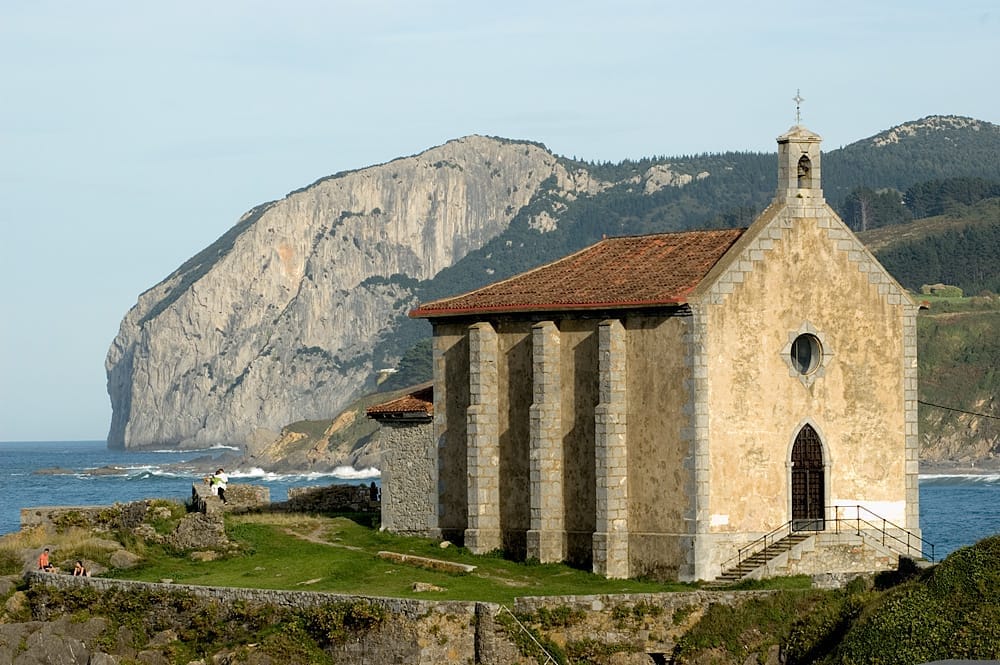
From the town, a footpath leads out toward the Santa Catalina hermitage, perched on a small headland above the surf break. The walk is short, but it climbs over uneven ground with some exposed sections. The hermitage itself is a modest stone structure; the reason to make the effort is the vantage point below it, where you are directly above the take-off zone of the Mundaka wave and can look back across the estuary to the sandbanks and marshes of Urdaibai. When the wave is running, this is one of the best viewing positions in the area.
The coastal path is not suitable for pushchairs or wheelchairs, and can be slippery after rain. Wear shoes with grip. The old town streets are compact and walkable but include some slopes; the narrow lanes between the harbour and the church terrace are manageable on foot for most visitors, though the gradient may be tiring for those with limited mobility.
For those wanting to extend the day into the surrounding biosphere reserve, the Urdaibai Biosphere Reserve offers marked trails through oak woodland and along the estuary edges. Birdwatching is particularly rewarding in the marshes south of Mundaka during the migration seasons of spring and autumn.
Food, Drink, and What to Expect
Mundaka has a handful of bars and restaurants concentrated around the harbour and the lower streets. The food leans on Basque coastal staples: fresh fish, grilled seafood, and pintxos at the bar counters. Prices are reasonable for a coastal destination and notably lower than comparable spots on the San Sebastian coast. On summer weekends, the better-known spots fill up fast, particularly for lunch; arriving early or later in the afternoon avoids the worst of the wait.
Mundaka is a good place to eat simply and well without the performance of a formal dining experience. For travellers who want to understand the wider Basque food culture before arriving, the Basque food guide for Bilbao provides useful context on what to order and what to expect at the bar.
Who Should Skip This Trip
Mundaka is not for everyone and there is no point pretending otherwise. If you have a single day in Bilbao and your priority is art, architecture, or urban culture, the city itself offers more per hour of your time. The Guggenheim, the old town, and the Ensanche district are dense with things to see and do without requiring a 70-minute train journey each way.
Travellers who find small coastal towns repetitive — one harbour looks much like another — will not find Mundaka revelatory unless the surf is running. And if you are visiting in summer on a flat-sea week, the wave will be entirely unremarkable. In that scenario, the nearby beach towns of Lekeitio or the beaches around Getxo may offer more variety for a half-day escape from the city.
Insider Tips
- Check the surf forecast before you go — websites like Windguru or Magicseaweed give reliable swell predictions for Mundaka. A visit during a 2-3 metre northwest swell will be a completely different experience from a flat-water day.
- The Euskotren from Casco Viejo (Zazpikaleak) is the easiest approach, but if you drive, park at the edge of town near the train station rather than trying to reach the harbour by car. The lower streets are narrow and parking is very limited.
- The church terrace opens freely to the public and costs nothing. It is one of the best viewpoints on the entire Biscay coast, with a 180-degree panorama over the estuary. Most visitors walk past without going up.
- If you want a full day out of the trip, combine Mundaka with Gernika (for its historic significance and Tuesday or Monday market) and Bermeo (for a larger working fishing port). All three are on or near the Euskotren Urdaibai line.
- Early October tends to hit the sweet spot: the first solid autumn swells arrive, the summer crowds have thinned, the weather is still mild enough for outdoor lunching, and the estuary light is at its most atmospheric.
Who Is Mundaka For?
- Surfers and surf spectators wanting to see one of Europe's most celebrated left-hand waves
- Nature and birdwatching enthusiasts visiting the Urdaibai Biosphere Reserve
- Basque culture travellers seeking an authentic fishing town away from tourist infrastructure
- Day-trippers from Bilbao wanting coastal scenery without a complicated journey
- Photographers working the Atlantic coast, particularly in autumn and winter light
Nearby Attractions
Combine your visit with:
- Bakio Beach
Stretching nearly a kilometre along the Bizkaia coast, Bakio Beach is the largest and most complete sandy beach within easy reach of Bilbao. With reliable surf, a long promenade, full facilities, and Blue Flag certification, it draws everyone from families to serious wave riders.
- Bermeo
Perched on the rugged Biscay coast about 35 kilometres northeast of Bilbao, Bermeo is one of the Basque Country's oldest and most significant fishing towns. With a harbour still piled with nets, a medieval old quarter dating to 1236, and a front-row seat to one of northern Spain's most dramatic coastlines, it rewards travellers who venture beyond the city.
- Castillo de Butrón
Rising from dense Biscayan woodland just over 20 km from Bilbao, Castillo de Butrón is one of the most visually striking pieces of architecture in the Basque Country. Originally a medieval tower-house, it was radically rebuilt in neo-Gothic style in 1878 and today stands as a classified Historic Monument. Interior access is currently not available to the general public, but the exterior alone makes the short drive worthwhile.
- San Juan de Gaztelugatxe
A 10th-century hermitage perched on a jagged sea islet connected to the mainland by a cobbled stone bridge and 241 steps. San Juan de Gaztelugatxe sits roughly 45 minutes by car from Bilbao and delivers one of the most visually striking landscapes on the entire Atlantic coast of Spain. Free to enter, but requiring advance reservation in peak season.