Lekeitio: The Basque Fishing Village Worth the Drive from Bilbao
Perched on the Biscay coast 53 km northeast of Bilbao, Lekeitio is a working fishing port with a medieval core, a Gothic basilica, and a small island you can walk to at low tide. It rewards visitors who take their time and arrive before the summer afternoon crowds.
Quick Facts
- Location
- Biscay coast, Basque Country — approx. 53 km northeast of Bilbao
- Getting There
- By road via coastal routes; Bizkaibus services also connect Bilbao with Lekeitio
- Time Needed
- Half day to full day
- Cost
- Free to explore; no admission fee
- Best for
- Coastal scenery, Basque architecture, seafood, relaxed beach days
- Official website
- www.lekeitio.eus
What Lekeitio Actually Is
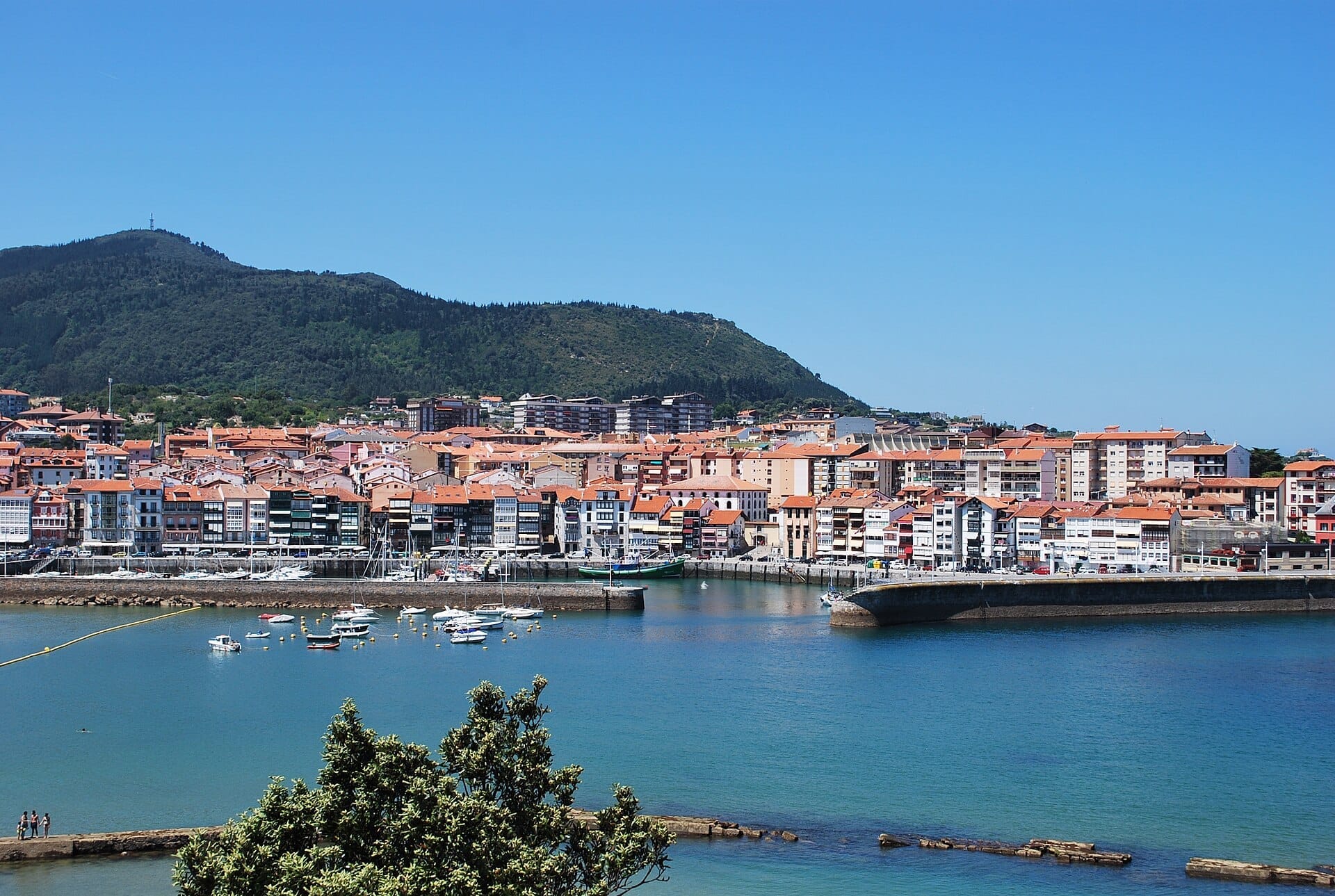
Lekeitio (Spanish: Lequeitio) is a small coastal municipality in the province of Biscay, Basque Country, and it remains a functioning fishing port. Trawlers still share the harbour with leisure boats, and the catch of the day still determines what appears on the menus of the restaurants lining the waterfront. This is not a reconstructed fishing village for tourists. It is an actual one that happens to be exceptionally photogenic.
The town sits where the mouth of the Lea River meets the Bay of Biscay, forming a natural harbour flanked by two beaches. The old quarter climbs the hillside above the port in a tight stack of stone houses, their facades faded to warm ochre and terracotta. From the quayside, the silhouette of the Basílica de la Asunción de Santa María rises above the roofline.
💡 Local tip
Aim to arrive before midday. The harbour light is clearest in the morning, the restaurants are quieter at lunch, and you can time the walk to Isla de San Nicolás around the afternoon low tide — check a local tide table before you go.
The Harbour and Old Quarter
The port is the centre of gravity. In the early morning, the smell of salt water and diesel hangs over the quay as the night's catch is processed and loaded into trucks. By mid-morning, the action quietens and the harbour takes on a more pastoral quality: nets drying on iron railings, older men sitting on bollards, the light reflecting off the green water in long white strips. This is when Lekeitio is at its most itself.
Walk a few streets back from the waterfront into the casco histórico and the scale shifts. The streets narrow to the width of a cart, and the buildings press close overhead. Stone archways connect some of the older structures. The textures here repay close attention: worn cobblestones that have been re-laid many times, iron balconies with box plants, wooden doors bleached by decades of Atlantic weather. There are few tourist shops in this part of town. Most street-level premises are small bakeries, hardware stores, or neighbourhood bars.
Lekeitio fits naturally into a broader Basque Country itinerary, particularly if you are combining coastal and inland stops in Biscay. The town pairs well with a visit to the Urdaibai Biosphere Reserve, which lies to the west along the same coastline.
Tickets & tours
Hand-picked options from our booking partner. Prices are indicative; availability and final rates are confirmed when you complete your booking.
San Juan de Gaztelugatxe guided tour from Bilbao
From 65 €Instant confirmationFree cancellationSan Sebastian, Hondarribia, Hendaye, and Getaria from Bilbao
From 54 €Instant confirmationFree cancellationGaztelugatxe and Mundaka small group guided tour from Bilbao
From 50 €Instant confirmationFree cancellationBilbao walking tour
From 16 €Instant confirmationFree cancellation
The Basílica de la Asunción de Santa María
The basilica is the architectural centrepiece of Lekeitio and one of the finest Gothic religious buildings in the Basque Country. Construction began in the fifteenth century and continued in phases, producing a three-nave interior that feels considerably larger than the exterior suggests. The stone vaulting is intricate but not fussy, and the light entering through the high windows shifts noticeably through the day — soft and diffused in the morning, more direct and dramatic in the early afternoon.
The carved altarpiece inside is the principal artistic highlight: a Flemish-influenced retablo of significant scale and detail, dating to the late fifteenth and early sixteenth centuries. Visitors who take a moment to let their eyes adjust to the interior light will notice the quality of the carving more clearly than those who walk straight through. Check locally for current visiting hours, as these can vary by season and religious calendar.
Isla de San Nicolás: The Tidal Island
At low tide, a narrow causeway of sand and stone emerges between the main beach — Playa de Isuntza — and the small island of San Nicolás, which sits just offshore in the harbour mouth. Walking across is straightforward when the tide is fully out, and the island itself is small enough to circuit quickly. The views back to the town from the island's outer edge, with the basilica tower framing the harbour, are among the most photographed in Lekeitio.
The critical planning detail is the tide. The causeway is submerged at high tide and the crossing becomes dangerous before the water has fully retreated. Check a reliable tide table for Lekeitio before your visit and plan the island walk around low tide. Local tourist offices and the town website can provide guidance. The island has no facilities.
⚠️ What to skip
Do not attempt the crossing to Isla de San Nicolás unless you have confirmed the tide is out and retreating. The causeway floods quickly and the current in the harbour mouth is strong. Give yourself a clear margin on both sides of low tide.
The Beaches
Lekeitio has two beaches. Playa de Isuntza lies on the western side of the harbour mouth, backed by the town and adjacent to the island causeway. It is a medium-sized sandy beach, well-sheltered from northerly swells by the headland, and it fills up quickly on sunny summer weekends when the town draws day-trippers from Bilbao and the wider Basque Country.
Across the harbour mouth, Playa de Carraspio is the quieter alternative: a longer stretch of sand backed by dunes and the eastern headland, with fewer facilities and a more open feel. It is the better choice if Isuntza is crowded, and the elevated paths above it give the clearest views back across the port and Isla de San Nicolás.
For context on how Lekeitio's beaches compare with others along the Biscay coast, the Bilbao beaches guide covers the wider range of options accessible from the city, including beaches at Getxo, Sopelana, and Bakio.
Outside of July and August, both beaches are genuinely uncrowded. On a clear day in May or early June, with the Atlantic light at its sharpest and the town not yet in summer mode, Lekeitio delivers something that the Basque coast in high season rarely offers: a sense of proportion between visitor and place.
Food, Drink, and Practical Walkthrough
The waterfront restaurants specialise in seafood, and the quality is generally high precisely because the supply chain is extremely short. Grilled fish, spider crab, and seafood rice dishes appear on most menus. Prices in Lekeitio are moderate by Basque standards — lower than San Sebastián, broadly comparable with smaller towns on the Bilbao coast. The pintxos bars in the old quarter are worth seeking out; they operate on the standard Basque schedule, which means a busy late-morning service between 11:00 and 13:00 and again in the early evening.
If you want to understand the culture around what you are eating, the Basque food guide covers the broader culinary context, including how to navigate pintxos bars and what to order in a traditional sidrería.
In practical terms, Lekeitio is a compact town. Walking from the bus stop or a car park on the edge of the historic centre to the harbour takes under ten minutes. The main sights — the basilica, the harbour, the beach, the island access point — are all within fifteen minutes of each other on foot. Comfortable shoes with reasonable grip are worth wearing if you plan to walk the old quarter's steeper cobbled lanes or cross the tidal causeway.
When to Visit and Who Should Reconsider
Late spring and early autumn are the most rewarding periods. Temperatures are mild rather than hot, the Atlantic light has a clarity it loses in the height of summer, and the town is not overwhelmed by visitors. July and August bring crowds, particularly on weekends, when the beaches fill and the harbour restaurants have queues. The experience is not ruined, but it is a different experience: louder, more compressed, and less easy to enjoy at a slow pace.
The Basque coast is often wet in winter and autumn, and the BI-638 coastal road can be slow in poor weather. Lekeitio in a November rainstorm, with the harbour empty and the bakeries all open, has its own atmosphere — but visitors should go knowing that some of the outdoor appeal is weather-dependent.
Lekeitio is not the right choice for visitors who want a packed itinerary of ticketed attractions and organised tours. There is no single big-ticket experience here. The town rewards wandering, sitting, eating, and looking. If your travel style requires a clear programme of things to do, the time is probably better spent in Bilbao itself.
ℹ️ Good to know
Getting there by public transport is possible via Bizkaibus services from Bilbao, though journey times are longer than by car and schedules should be confirmed before travel. By car, the coastal route from central Bilbao takes approximately 1 hour and 15 minutes depending on traffic, and is considerably more scenic than the motorway alternative.
Insider Tips
- The best light for photographing the harbour and island together comes from the eastern headland above Playa de Carraspio in the late morning. Most visitors photograph from the beach level; the elevated angle shows the full layout of the port and the basilica tower in a single frame.
- Lekeitio has its own festival calendar, including the Fiesta de San Antolín in early September, which features the unusual goose-pulling tradition (antzar eguna) performed in the harbour. If you happen to be in the Basque Country at that time, the festival is worth timing a visit around — but book any accommodation well in advance.
- The causeway to Isla de San Nicolás is easiest to walk in shoes you do not mind getting slightly sandy. The surface closer to the island edge is sometimes uneven and slippery where seaweed accumulates.
- Parking in the town centre is limited in summer. Arriving before 10:00 or using one of the larger car parks on the edge of the historic core saves significant time.
- The smaller bar-restaurants on the streets running uphill from the waterfront tend to have lower prices and shorter waits than those directly on the harbour front, with food that is often comparable in quality.
Who Is Lekeitio For?
- Travellers who want an authentic Basque coastal town without the tourist density of San Sebastián
- Photographers looking for harbour, Gothic architecture, and tidal island compositions
- Seafood lovers wanting fresh catch close to source
- Day-trippers from Bilbao seeking a coastal half-day with minimal planning
- Visitors interested in medieval Basque history and vernacular architecture
Nearby Attractions
Combine your visit with:
- Bakio Beach
Stretching nearly a kilometre along the Bizkaia coast, Bakio Beach is the largest and most complete sandy beach within easy reach of Bilbao. With reliable surf, a long promenade, full facilities, and Blue Flag certification, it draws everyone from families to serious wave riders.
- Bermeo
Perched on the rugged Biscay coast about 35 kilometres northeast of Bilbao, Bermeo is one of the Basque Country's oldest and most significant fishing towns. With a harbour still piled with nets, a medieval old quarter dating to 1236, and a front-row seat to one of northern Spain's most dramatic coastlines, it rewards travellers who venture beyond the city.
- Castillo de Butrón
Rising from dense Biscayan woodland just over 20 km from Bilbao, Castillo de Butrón is one of the most visually striking pieces of architecture in the Basque Country. Originally a medieval tower-house, it was radically rebuilt in neo-Gothic style in 1878 and today stands as a classified Historic Monument. Interior access is currently not available to the general public, but the exterior alone makes the short drive worthwhile.
- San Juan de Gaztelugatxe
A 10th-century hermitage perched on a jagged sea islet connected to the mainland by a cobbled stone bridge and 241 steps. San Juan de Gaztelugatxe sits roughly 45 minutes by car from Bilbao and delivers one of the most visually striking landscapes on the entire Atlantic coast of Spain. Free to enter, but requiring advance reservation in peak season.