Union Square Greenmarket: New York's Most Storied Farmers Market
Running since 1976, the Union Square Greenmarket operates four days a week, year-round, in the heart of Manhattan, drawing local farmers, artisan food producers, and curious New Yorkers in equal measure. Free to enter and open year-round, it rewards early visitors with the city's best seasonal produce and a rare glimpse of unhurried daily life.
Quick Facts
- Location
- E. 17th St. & Union Square W., Manhattan (north and west plazas of Union Square Park)
- Getting There
- Union Square–14th St station (4, 5, 6, L, N, Q, R, W trains)
- Time Needed
- 45 minutes to 2 hours
- Cost
- Free admission; bring cash or card for purchases
- Best for
- Food lovers, early risers, photographers, locals-curious visitors
- Official website
- grownyc.org/locations/union-square-greenmarket
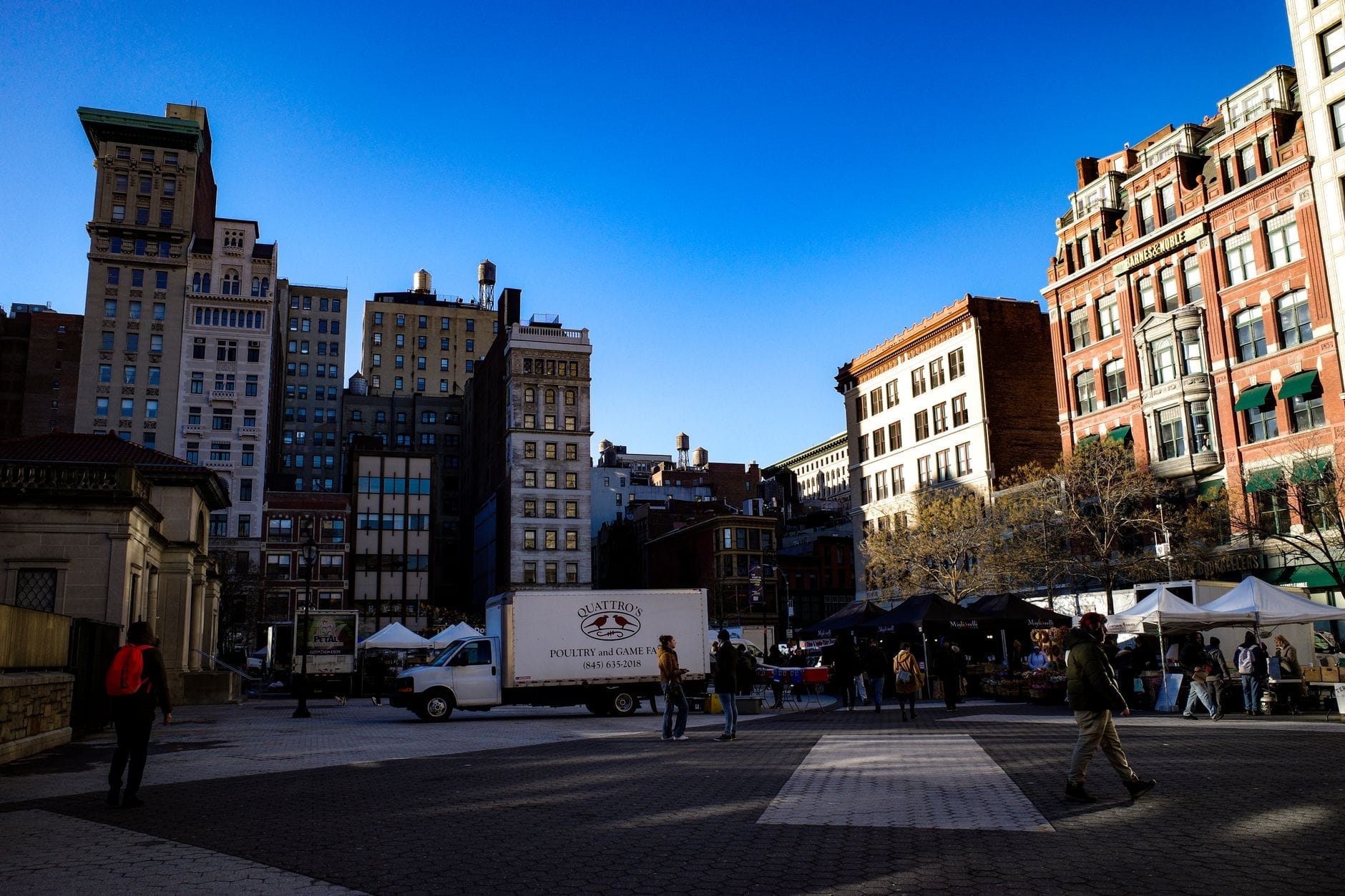
What the Union Square Greenmarket Actually Is
The Union Square Greenmarket is an open-air farmers market operated by GrowNYC, running every Monday, Wednesday, Friday, and Saturday from 8:00 am to 6:00 pm, year-round as of the latest schedule. It occupies the north and west plazas of Union Square Park, stretching along 17th Street between Broadway and Park Avenue South, and down Union Square West between 17th and 15th Streets. There is no entrance fee.
Founded in 1976, it is one of the oldest and largest greenmarkets in New York City. What sets it apart from the dozens of other GrowNYC markets scattered across the five boroughs is scale and consistency: on a busy Saturday, more than 140 regional vendors can be present, selling everything from heritage-breed meats and raw-milk cheeses to cut flowers, cider, seedlings, and handmade bread.
The market does not exist in isolation. Union Square itself is one of Manhattan's most layered public spaces, sitting at the crossroads of the Flatiron District, Greenwich Village, and the Lower East Side. For a broader sense of the neighborhood, the Midtown Manhattan neighborhood guide covers the surrounding area in detail.
💡 Local tip
Arrive before 10:00 am on Saturdays for the widest selection. Popular vendors — especially the mushroom, cheese, and bread stalls — often sell out of their best items by early afternoon.
How the Experience Changes by Time of Day
At 8:00 am on a weekday, the market has a working quality to it. Restaurant cooks wheel wire carts between stalls, negotiating bulk prices on greens and root vegetables. The light is low and angled, the air smells of cold soil and baked goods, and the crowd is mostly regulars who move quickly and know exactly where they're headed.
By 10:00 am the energy shifts. Office workers stop for coffee and pastries. Tourists start to outnumber neighborhood shoppers. This is the window where the market is both active and accessible, with stalls fully stocked and vendors willing to talk about their farms, their methods, and the specific apple variety they've brought that week.
Midday on Saturdays is the peak: loudest, most crowded, and hardest to navigate with a bag. The paths between stalls narrow as the crowd thickens. If you have mobility concerns or are easily overwhelmed by crowds, a weekday morning is a genuinely different experience, and almost always less congested.
Late afternoon, especially in winter when the market closes at 6:00 pm and darkness falls early, carries a quieter, slightly melancholy atmosphere. Vendors begin packing down, prices sometimes drop on perishables, and the park itself empties of its midday chess players and skaters. This version of the market suits people who prefer to browse without pressure.
Tickets & tours
Hand-picked options from our booking partner. Prices are indicative; availability and final rates are confirmed when you complete your booking.
Statue of Liberty, Ellis Island, and Brooklyn Bridge Happy Hour Cruise
From 49 €Instant confirmationFree cancellationSpirit of New York Dinner Cruise
From 161 €Instant confirmationFree cancellationNew York City Highlights bike tour
From 70 €Instant confirmationFree cancellationNew York Statue of Liberty and Ellis Island tour by ferry
From 55 €Instant confirmation
Historical and Cultural Context
The Union Square Greenmarket opened in 1976 under the umbrella of what would become GrowNYC, a nonprofit that now manages dozens of markets across the city. Its founding came during a period when New York City was struggling financially and large portions of the agricultural infrastructure connecting the region's farms to urban consumers had eroded. The market was conceived partly as a civic experiment: could a direct-to-consumer farmers market in the heart of Manhattan help sustain small regional farms while improving food access for urban residents?
Nearly five decades later, the answer has been unambiguous. The Greenmarket has become a defining institution of the city's food culture, attracting chefs who helped shape the farm-to-table movement in American cooking. Figures associated with some of New York's most influential restaurants have been regular shoppers here, and the seasonal rhythms of the market's produce have directly influenced menus across Manhattan.
Union Square Park itself has been a site of political assembly and public life since the 19th century. Today the square hosts the Greenmarket on the north and west sides, while the central park area is used for skateboarding, chess, protests, and seasonal events. It is a genuinely civic space in a way that few Manhattan parks are. If you want to understand the city's food scene more broadly, the New York City food guide places the Greenmarket within a wider culinary map.
What You'll Find: A Practical Walkthrough
The market's layout follows the shape of the plaza. The 17th Street side tends to concentrate produce vendors, with tables piled with seasonal vegetables and fruit. In late summer and early fall, this is where the tomatoes, corn, and stone fruit appear in volume. In winter, the same stalls pivot to storage crops: celeriac, parsnips, dried beans, winter squash, and multiple varieties of apple and pear.
The Union Square West stretch tends to carry more specialty vendors: honey, preserves, mushrooms, artisan cheeses, eggs, and meat. Baked goods are spread throughout, but the bread vendors specifically draw long lines, particularly those selling naturally leavened loaves. The flower stalls are concentrated toward the southern end of the west side and are worth pausing at even if you're not buying.
Payment varies by vendor. Most accept credit and debit cards, and many accept EBT (food stamps). Cash remains useful for smaller purchases or vendors with card minimums. GrowNYC also operates a Health Bucks program at the market that allows SNAP recipients to receive additional market currency.
ℹ️ Good to know
GrowNYC's Health Bucks program provides bonus purchasing power for SNAP/EBT users at the Greenmarket. Check the GrowNYC website for current program details, as availability and amounts can change.
Seasonal Highlights: What Changes Month to Month
One of the Greenmarket's genuine strengths is that it rewards repeat visits. The market on a January Saturday, with around 60 vendors selling cured meats, root vegetables, cider, and greenhouse greens, is a completely different place from the late-September version, when the stalls overflow with the largest variety of the year.
- Spring (March–May): ramps, fiddlehead ferns, early radishes, seedlings for home gardens, and maple syrup.
- Summer (June–August): tomatoes, sweet corn, peaches, cucumbers, summer squash, basil, cut flowers in abundance.
- Fall (September–November): the market's peak variety, with heirloom tomatoes, hard squash, apple season in full force, and late-season greens.
- Winter (December–February): reduced vendor count but strong offerings of stored produce, meats, cheeses, eggs, baked goods, and dried goods.
Weather affects the experience significantly in winter. The market runs regardless of conditions, but vendors dress for it and so should you. In heavy rain or snow, some smaller vendors skip the day, so the selection can shrink noticeably. Check GrowNYC's social channels before heading out in poor weather.
⚠️ What to skip
The market operates rain or shine, but very severe weather can reduce vendor attendance without advance notice. A quick check of GrowNYC's website or social media on the morning of your visit is worth the 30 seconds it takes.
Getting There, Photography, and Practical Notes
Union Square station (14th Street) serves the 4, 5, 6, L, N, Q, R, and W trains, making this one of the best-connected spots in the entire subway system. From Midtown, the 4, 5, or 6 from Grand Central takes roughly ten minutes. From Brooklyn, the L train from Williamsburg runs directly to 14th Street. Exit toward 17th Street to arrive at the north end of the market.
For photography, early morning light in spring and fall is particularly strong, and the market's textural variety — stacked root vegetables, baskets of mushrooms, rows of flower stems — makes for strong close-up work. Vendors are generally accustomed to being photographed but it is courteous to ask before photographing people directly. Mid-Saturday afternoon is the hardest time to shoot due to crowd density.
The market sits within walking distance of several other worthwhile stops. The High Line begins a few blocks to the west, and the Chelsea Market is a ten-minute walk up 9th Avenue for anyone wanting to continue a food-focused morning.
Accessibility: the market occupies open plazas with paved surfaces. Union Square Park is generally wheelchair-accessible, though the density of market stalls on busy days can make navigation through the market itself more challenging. Weekday mornings offer significantly more space to move.
Who Might Want to Skip This
The Union Square Greenmarket is not an attraction in the traditional sightseeing sense. There is nothing to "see" in the way of a landmark or museum exhibit. Travelers with a packed itinerary of major sights who are short on time will probably find it more efficient to skip unless food markets genuinely interest them.
Similarly, visitors primarily interested in shopping for souvenirs or fashion will find little here. The market is a place to buy food and talk to the people who grew or made it. For shopping of a different kind, the New York City shopping guide points toward better options.
If you visit on a midweek afternoon in winter expecting the full Saturday experience, you may be underwhelmed. Vendor numbers are significantly lower on Mondays, Wednesdays, and Fridays than on Saturdays, and lower still in the coldest months. Temper expectations accordingly.
Insider Tips
- Saturday mornings between 8:00 and 9:30 am are when restaurant buyers shop. This is when the most unusual and limited items, heritage variety produce, specialty mushrooms, unusual greens, are still available before they're bought in bulk.
- The bread lines move faster than they look. Join the queue and use the wait time to scan the full stall; many vendors have multiple products that first-time visitors miss by ordering too quickly.
- In fall, ask mushroom vendors what came in that week rather than defaulting to what's on display. Farms often bring varieties in limited quantities that don't make it to the main table.
- The market's free, but the park's chess tables on the south side cost a small fee to rent. If you want to sit nearby after shopping, the steps on the north side of the park are reliably free and offer a view down into the square.
- GrowNYC's website lists the specific vendors attending each market day. Checking it before you go lets you plan around specific farms rather than hoping your preferred vendor will be present.
Who Is Union Square & Greenmarket For?
- Food-focused travelers who want to engage with the region's agricultural producers directly
- Early risers looking for a calm, local-feeling start to the day before major attractions open
- Photographers interested in texture, color, and candid market scenes
- Travelers on a tight budget who want a free, high-quality experience with the option to spend on excellent food
- Anyone visiting in fall who wants to experience peak New York produce season in one concentrated location
Nearby Attractions
Other things to see while in Midtown Manhattan:
- Broadway Theater District
The Broadway Theater District in Midtown Manhattan is the center of American live theater, home to 41 official Broadway houses spanning nearly a century of performance history. Whether you're booking months in advance or hunting same-day discount tickets, this guide covers everything from curtain times to architectural details.
- Bryant Park
Tucked behind the New York Public Library on Sixth Avenue, Bryant Park is an 8-acre public park that holds its own against the surrounding skyscrapers. Free to enter year-round, it shifts character dramatically by season, from a winter ice rink to a summer outdoor cinema — and remains one of the most functional and well-managed public spaces in New York City.
- Carnegie Hall
Carnegie Hall has anchored Midtown Manhattan's cultural life since 1891. With three auditoriums ranging from 268 to 2,790 seats, it hosts everything from orchestral premieres to intimate recitals. This guide covers the halls, the history, and exactly how to make the most of a visit.
- Chrysler Building
Completed in 1930 and briefly the tallest building on earth, the Chrysler Building remains the finest example of Art Deco architecture in New York City. Visitors generally can't go inside beyond the main lobby, but the experience of standing beneath its gleaming stainless steel crown is genuinely unforgettable.