Tsuruhashi Korea Town: Osaka's Korean Quarter Worth Knowing
Tsuruhashi Korea Town, officially known as Osaka Ikuno Korea Town or Miyuki-dori Korea Town, is one of Japan's best-known koreatowns. Spread across the backstreets of Ikuno-ku, it offers Korean food, imported goods, and a layered history that most visitors to Osaka never discover.
Quick Facts
- Location
- Around Momodani 3-chome, Ikuno-ku, Osaka City (Osaka 544-0222)
- Getting There
- JR Tsuruhashi Station or JR Momodani Station (10-15 min walk); Osaka Metro Sennichimae Line, Tsuruhashi Station (about 10 min walk)
- Time Needed
- 1.5 to 3 hours depending on how much you eat and shop
- Cost
- Free to enter; pay per shop or restaurant (prices in JPY)
- Best for
- Food lovers, cultural explorers, shoppers hunting Korean ingredients and cosmetics
- Official website
- osaka-koreatown.com
What Is Tsuruhashi Korea Town?
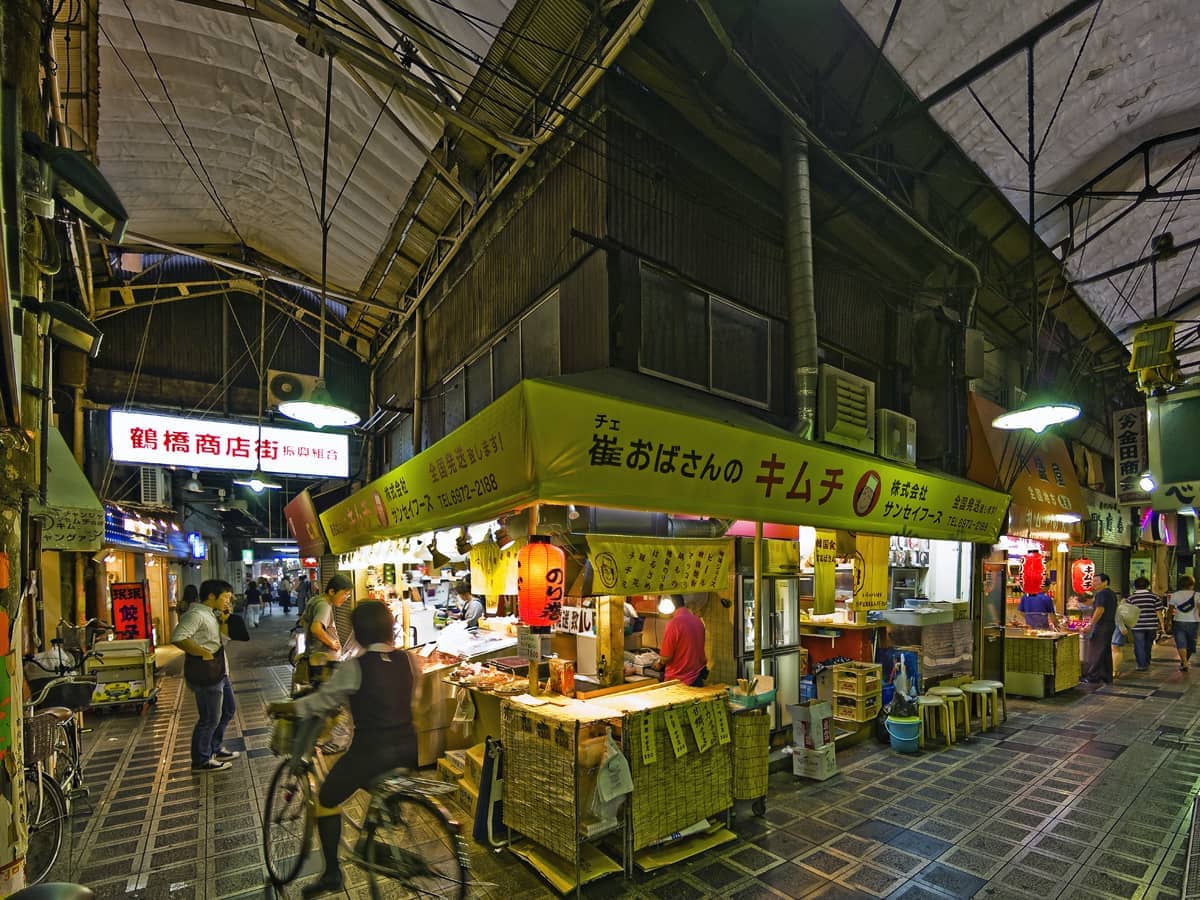
Osaka Ikuno Korea Town, anchored by Miyuki-dori shopping street in the Ikuno ward, is routinely described as the largest koreatown in Japan. It is not a theme park or a curated tourist zone. It is a working neighborhood with many shops, restaurants, and food stalls lining covered arcades and side alleys. The majority of businesses are run by members of the Korean-Japanese community, and the product range reflects that: raw kimchi sold by weight, gochujang pastes in industrial tubs, K-beauty cosmetics, Korean pop merchandise, and yakiniku restaurants with charcoal grills at the table.
The district centers on the Miyuki-dori arcade and its adjacent streets, roughly in the Momodani 3-chome to 5-chome area. These are open streets and covered arcades, not a gated attraction. You can walk through at any hour, though most shops operate from around 10:00 to 18:00, with restaurants often open a little later. There are no tickets and no entry fees. Bring cash, since smaller vendors may not accept cards.
💡 Local tip
Bring cash. Smaller stalls and family-run shops may prefer cash, so having some yen on hand is useful.
History and Cultural Significance
The Korean presence in Ikuno-ku and the surrounding Tsuruhashi area has deep roots in 20th-century Japanese history. Large-scale Korean migration to Japan, much of it connected to the colonial period and subsequent labor mobilization during the Second World War, created stable communities in industrial Osaka. Ikuno-ku developed one of the highest concentrations of ethnic Koreans in the country, a demographic reality that shaped its commercial character over decades.
The post-war period saw the consolidation of markets and yakiniku restaurants that catered to the community. Yakiniku itself, the Japanese-style grilled meat format that is now ubiquitous across Japan, is widely credited to Korean-Japanese cooks in exactly this kind of neighborhood. Tsuruhashi is sometimes called the birthplace of Japanese yakiniku culture, a claim that reflects the area's strong influence on the cuisine.
Over time, the area shifted from a primarily community-facing market to one that also attracts Japanese visitors seeking Korean food and goods. More recently, the Hallyu wave, the global spread of Korean pop culture through music, drama, and beauty trends, has brought younger visitors who arrive specifically for K-pop merchandise and Korean skincare products. The result is a layered commercial landscape where a grandmother buying kimchi ingredients shares the same narrow arcade with teenagers hunting for idol photo cards.
Tickets & tours
Hand-picked options from our booking partner. Prices are indicative; availability and final rates are confirmed when you complete your booking.
Himeji Castle Town Guided Bike Tour with Lunch
From 75 €Instant confirmationFree cancellationKyoto tea and kimono ceremony in a traditional machiya townhouse
From 72 €Instant confirmationFree cancellationKobe: Mt. Rokko Night View, Kitano Ijinkan, Arima Onsen Full Day Tour
From 47 €Instant confirmationFree cancellationOsaka local food tour in Dotonbori and Shinsekai
From 51 €Instant confirmationFree cancellation
What the Experience Actually Feels Like
The sensory transition happens quickly once you leave the station approach. The smell hits first: fermented chili, sesame oil, and the faint char of grilling meat, sometimes all at once. Covered arcades keep out the rain but also concentrate the aromas. The floors are typically tiled or concrete, worn smooth by decades of foot traffic. Signage alternates between Japanese and Korean script, sometimes on the same banner.
On weekday mornings around 10:00 to 11:00, the area is calm enough to browse without pressure. Shopkeepers arrange their displays, kimchi tubs are restocked, and a few regulars stop for an early bowl of something hot. By early afternoon on weekends, the arcades are crowded enough that you walk in single file past the narrower stalls. The food vendors do not rush you but space is genuinely tight.
The yakiniku alleys off the main arcade are a separate mood entirely: low-lit, smoky, with the hiss of meat on tabletop grills audible from the street. Lunch service at these spots tends to start around 11:30. For a solo traveler, a seat at the counter of a small yakiniku place here is one of the more memorable meals available in Osaka at a reasonable price. Expect to pay anywhere from a few hundred to several thousand yen depending on what cuts you order.
If you are also exploring the broader food culture of the city, the Osaka food guide covers the full range, from street snacks to sit-down restaurants, and gives useful context for how Korean cuisine fits into the city's larger eating culture.
How the Atmosphere Changes Through the Day
Morning, roughly 10:00 to 12:00, is the best time for shopping without crowds. Shopkeepers are more likely to engage in brief conversation, and the produce and food goods, especially fresh kimchi and prepared side dishes, are at their freshest. The light inside the covered arcades is flat but cool, and the pace is unhurried.
Midday to early afternoon on weekends brings the heaviest foot traffic. Younger visitors cluster around the K-pop shops toward the inner section of the arcade. Older shoppers move through the food stalls with market baskets. The combination works, but navigating with a stroller or wheelchair would require patience, particularly in narrower side alleys. The main arcade is step-free at street level, but individual shop access, including steps up to entryways and narrow aisles inside, varies significantly by store.
By late afternoon, around 17:00, the shopping street begins to wind down. Some food stalls close when their products sell out, which in the case of made-to-order items can happen before official closing time. Restaurants in the yakiniku alleys continue into the evening, though many smaller shops along the main arcade will be shut by around 18:00.
⚠️ What to skip
Some food stalls and specialty vendors sell out before closing time, especially on weekends. If you have something specific in mind, like freshly made pajeon or a particular cut of meat, aim to arrive before 15:00.
What to Buy and Eat
The food offer divides broadly into things you eat on the spot and things you take home. For eating on the spot: yakiniku in the alley restaurants, tteokbokki (spiced rice cakes) from street stalls, pajeon (Korean savory pancakes), and sundubu jjigae (soft tofu stew) from small diners. Portion sizes at street stalls tend to be generous by Japanese standards, and prices are noticeably more affordable than comparable options in central Osaka.
For take-home goods, the range includes: kimchi sold by the gram or in pre-packaged containers, gochujang and doenjang pastes, dried seaweed, Korean noodles and instant ramens not available at standard supermarkets, and Korean rice wine (makgeolli and soju). Some shops specialize in Korean preserved foods and fermented goods that are difficult to source anywhere else in Osaka.
The cosmetics and K-beauty section has expanded considerably in recent years. Several shops stock Korean skincare lines, sheet masks, and makeup that can be cheaper here than at dedicated cosmetics retailers in central shopping districts. These shops tend to be busiest on weekend afternoons and are quieter in the morning.
Tsuruhashi is worth comparing with Kuromon Ichiba Market when planning a food-focused day. Kuromon skews toward seafood and Japanese produce; Tsuruhashi is its Korean-focused counterpart. They serve different purposes and together give a fuller picture of Osaka's market culture.
Getting There
The most straightforward approach is via JR Tsuruhashi Station on the JR Loop Line, followed by a 10 to 15 minute walk to the Korea Town area. Alternatively, JR Momodani Station is a similar walking distance. Both stations are on the JR Osaka Loop Line, which connects to major hubs including Tennoji and Osaka Station without requiring a transfer.
Tsuruhashi Station is also served by the Osaka Metro Sennichimae Line and the Kintetsu Osaka Line, which makes it accessible from a wide range of starting points across the city.
For general navigation across Osaka, including the subway map and IC card options, the getting around Osaka guide has practical detail on routes and transit passes that can save money if you plan multiple stops in a day.
ℹ️ Good to know
Note that the Korea Town shopping streets (Miyuki-dori area) are about 10-15 minutes on foot from Tsuruhashi Station. There is also a nearby market area around Tsuruhashi Station that sells fresh produce, meat, and Korean goods — a different but related experience worth a brief detour on the way.
Who Should Skip This
Tsuruhashi Korea Town is genuinely interesting but not for everyone. If Korean food and culture hold no particular interest for you, the area offers less than central Osaka's main attractions. It is not a scenic district and has no major architectural monuments. The streets are functional, not picturesque: covered arcades, low commercial signage, stacked goods on folding tables.
Visitors who prefer highly curated, aesthetically polished spaces may find the market atmosphere overwhelming rather than charming. It can also feel cramped on busy weekend afternoons, which is a real consideration for anyone with mobility difficulties or a dislike of tight spaces. Travelers with limited time in Osaka who have not yet covered the central districts should probably prioritize those first.
If you are building a broader itinerary, the things to do in Osaka overview puts Tsuruhashi in useful context alongside the city's other major and minor draws, helping you decide where it fits in a limited schedule.
Insider Tips
- The covered market corridor immediately around Tsuruhashi Station (separate from the Miyuki-dori Korea Town arcade) specializes in raw meat and fresh produce and is worth a quick walk through even if you don't buy anything. It gives a sense of the neighborhood before the tourist-facing section begins.
- Weekday mornings between 10:00 and noon offer the most relaxed shopping experience. Stall holders have more time to explain products, and the fresh kimchi selection is at its peak before afternoon shoppers thin it out.
- If you want to eat yakiniku, look for small restaurants in the alleys off the main arcade rather than the larger, more visible spots on the main street. The smaller places are often family-run, use charcoal rather than gas, and offer better value per gram of meat.
- Several shops sell individual pieces of Korean street food, including tteokbokki and hotteok (sweet Korean pancakes), for a few hundred yen. These are perfect for eating while walking and give you a way to try multiple things without committing to a full restaurant meal.
- Korea Town is a realistic half-day pairing with Tsuruhashi's adjacent market area and the Tennoji district to the south. Plan the food shopping for the morning, then head toward Tennoji for the afternoon to balance market time with a different kind of Osaka experience.
Who Is Tsuruhashi Korea Town For?
- Food travelers who want to eat their way through Japanese-Korean cuisine without flying to Seoul
- Shoppers looking for Korean ingredients, fermented goods, or K-beauty products at competitive prices
- Cultural explorers interested in the Korean-Japanese community and its post-war history in Osaka
- Travelers who have covered the central Osaka highlights and want something off the standard circuit
- Anyone building a market-focused day in Osaka, pairing Tsuruhashi with other food districts
Nearby Attractions
Combine your visit with:
- Expo '70 Commemorative Park
Built on the grounds of the 1970 Japan World Exposition, Expo '70 Commemorative Park (万博記念公園) in Suita City is one of greater Osaka's largest open spaces. It combines parkland, a traditional Japanese garden, a museum dedicated to the original expo, and the striking Tower of the Sun — an icon of 20th-century Japanese design that still stops visitors in their tracks.
- Kema Sakuranomiya Park
Kema Sakuranomiya Park stretches for several kilometers along the Okawa River in central Osaka, lined with roughly 4,800 cherry trees that draw enormous crowds each spring. It is free to enter, open around the clock, and easily reached from multiple train lines. Outside of cherry blossom season, the park is a quiet, flat riverside corridor used primarily by joggers and cyclists.
- Minoh Falls
Minoh Falls (箕面大滝) sits inside Meiji-no-Mori Minoh Quasi-National Park, north of Osaka city. The trail from Hankyu Minoh Station follows a wooded river gorge for roughly 40 to 45 minutes before delivering you to the falls. Admission is free, and the park and falls area are open 24 hours with no staffed gate.
- Mint Museum Osaka (Japan Mint)
Tucked inside the grounds of Japan Mint's Osaka headquarters in Kita-ku, the Mint Museum offers a free, unhurried look at the full sweep of Japanese coinage history, from ancient cast coins to contemporary commemorative medals. It is one of Osaka's more quietly rewarding museums, and one of the few major attractions in the city that costs nothing to enter.