Treasure Island, San Francisco: Skyline Views, Hidden History, and a Neighborhood in Transition
Built from dredged bay sediment in 1936-1937 for a world's fair, Treasure Island offers some of the most dramatic unobstructed views of the San Francisco skyline available anywhere in the Bay Area. Entry is free, the Treasure Island Museum charges nothing, and the whole island takes about two to three hours to explore at a relaxed pace.
Quick Facts
- Location
- San Francisco Bay, between San Francisco and Oakland, CA 94130
- Getting There
- Muni bus from downtown San Francisco via the Bay Bridge; also accessible by car, taxi, or rideshare
- Time Needed
- 2-3 hours for a full visit including the museum and waterfront walk
- Cost
- Free to access; Treasure Island Museum is free (donations welcome)
- Best for
- Skyline photography, history enthusiasts, calm waterfront walks away from tourist crowds
- Official website
- www.treasureislandsf.com
What Treasure Island Actually Is
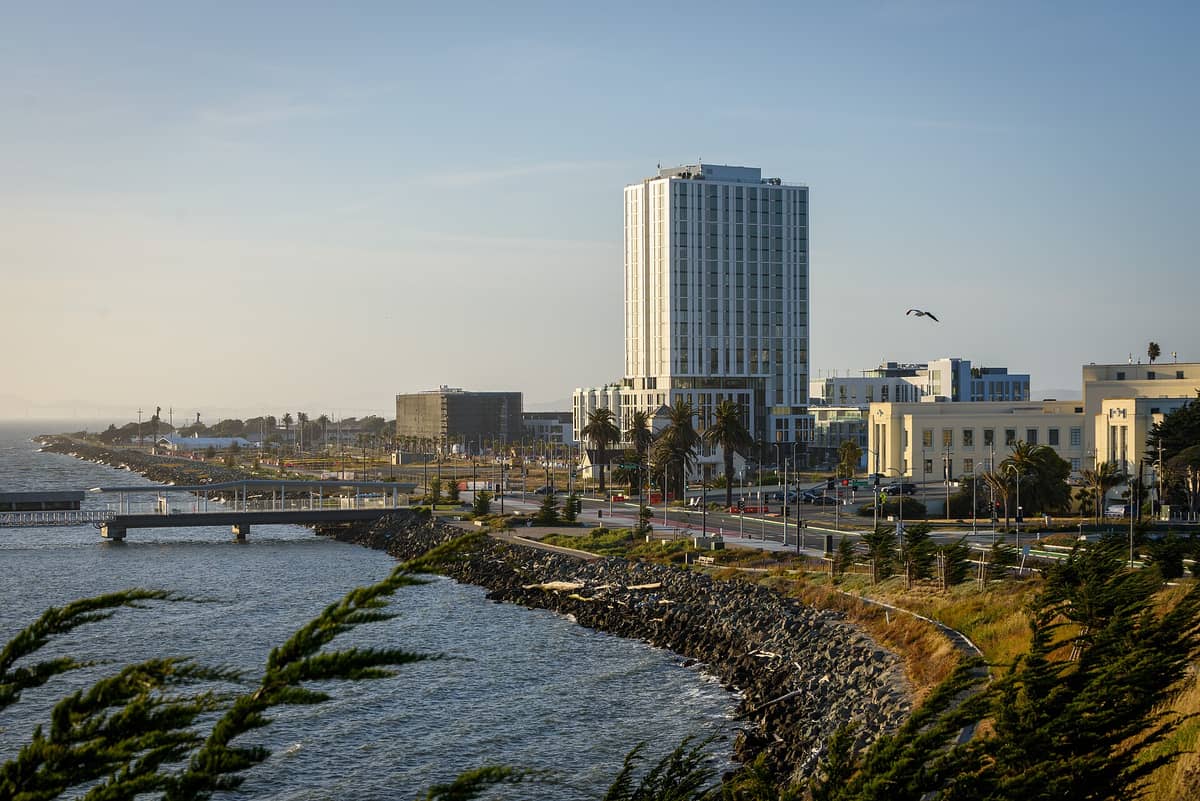
Treasure Island is a man-made island sitting in the middle of San Francisco Bay, connected to the natural Yerba Buena Island and visible from both shores of the Bay Bridge. It was constructed between 1936 and 1937 using sand dredged from the bay floor, built specifically to host the 1939 Golden Gate International Exposition. That world's fair drew roughly 17 million visitors over two seasons, celebrating the completion of both the Golden Gate Bridge and the Bay Bridge. When the exposition ended, the U.S. Navy took over the island, using it as a naval station for the next five decades. The Navy decommissioned Naval Station Treasure Island in 1997, and since then the island has been slowly transitioning into a mixed-use residential and commercial neighborhood managed under a 405-acre redevelopment plan that includes portions of adjacent Yerba Buena Island.
The result is a place that feels genuinely unlike anywhere else in San Francisco: wide, flat, wind-swept streets lined with art deco naval buildings, a sparse residential population, construction cranes on the horizon, and some of the clearest sightlines to the San Francisco skyline you will find anywhere in the Bay Area. It is not polished. The redevelopment is ongoing and visible. But for a certain kind of traveler, that unfinished quality is exactly what makes it interesting.
ℹ️ Good to know
There is no admission fee to visit Treasure Island itself. The island is a public neighborhood within the City and County of San Francisco, with public roads accessible by car, rideshare, and Muni bus at all hours, though standard Bay Bridge tolls apply to vehicles.
The Views: What You Actually See and When
The western shoreline of Treasure Island faces the San Francisco skyline directly. From the waterfront promenade along that side, the Financial District towers appear close enough to feel cinematic, framed by the lower deck of the Bay Bridge on the left. At midday on a clear autumn day, the light hits the city face-on and the reflections off glass office towers are sharp. This is the shot most photographers come for. Bring a wide-angle lens if you have one; the panorama from north to south takes in the entire eastern face of San Francisco from the Ferry Building waterfront up through SoMa.
Golden hour is different. In the late afternoon, the sun drops behind the city and the skyline goes into silhouette against a warm western sky. The Bay Bridge lights up well before full dark, and by blue hour the combination of bridge lights, city glow, and water reflection makes the western promenade one of the better night photography spots in the Bay Area. Bring a tripod. The wind off the bay is persistent and noticeable, even on days when the rest of San Francisco feels calm.
San Francisco's summer fog pattern matters here. From June through August, a marine layer typically rolls in through the Golden Gate in the afternoon, often obscuring the skyline by 3 or 4 pm. September and October, statistically the warmest and clearest months in San Francisco, produce the most reliable conditions for sharp skyline views. Winter visits can be rewarding on clear days between storms, but arrive prepared for cold bay wind and the possibility of low cloud.
For context on when fog is least likely to interfere with your visit, the best time to visit San Francisco guide breaks down seasonal weather patterns across the city.
Tickets & tours
Hand-picked options from our booking partner. Prices are indicative; availability and final rates are confirmed when you complete your booking.
Sonoma and Napa Valley wine tour from San Francisco
From 127 €Instant confirmationFree cancellationGo City | San Francisco Explorer Pass
From 76 €Instant confirmationFree cancellationMuir Woods and Sausalito guided tour with transportation
From 82 €Instant confirmationFree cancellationSan Francisco CityPASS
From 77 €Instant confirmationFree cancellation
The Treasure Island Museum: Free and Worth Your Time
Historic Building One, at 39 Treasure Island Road, houses the Treasure Island Museum, a free institution dedicated to the island's layered history. The museum covers three major periods: the 1939 Golden Gate International Exposition, the subsequent naval history through World War II and the Cold War, and the island's current redevelopment. The exposition material is particularly strong. The 1939 fair was a deliberate act of civic optimism at the tail end of the Great Depression, and the museum's collection of exposition posters, promotional materials, and scale models conveys the ambition of the project clearly.
Museum exhibits are typically open Monday through Friday from 9:00 a.m. to 5:00 p.m. and Saturday through Sunday from 12:00 p.m. to 7:00 p.m.; the museum is closed on holidays. No ticket is required. The building itself is worth noting: it is one of the original art deco structures from the exposition era, and the architecture alone gives you a sense of the scale and visual language the 1939 fair aimed for. The interior is not large, and most visitors spend 45 minutes to an hour moving through the exhibits.
💡 Local tip
The museum's weekend hours (12:00–19:00) make it easy to combine with late-afternoon skyline photography on the western promenade. Arrive at the museum around 13:00, explore for an hour, then walk to the waterfront in time for the best light.
Getting There and Getting Around the Island
Treasure Island is accessible from San Francisco via the Bay Bridge. By car or rideshare, take the Treasure Island / Yerba Buena Island exit off I‑80 on the Bay Bridge, which deposits you onto the island directly. Muni buses also serve the island from downtown San Francisco; verify current route numbers and schedules with SFMTA before your trip, as service details change. The ride from downtown is short, roughly 15 minutes under normal traffic conditions.
Once on the island, the terrain is flat. The entire western shoreline promenade is walkable without any significant incline, which makes Treasure Island more accessible for visitors who find San Francisco's steep hills difficult. The distances between the museum, the waterfront, and the island's small cluster of food and drink businesses are all manageable on foot.
If you are combining this visit with other waterfront and bay-area attractions, the guide to getting around San Francisco covers transit options across the city in detail.
The Atmosphere: What the Island Feels Like Day to Day
On weekday mornings, Treasure Island is quiet to the point of feeling remote. The wide streets with their low-rise naval-era buildings and sparse traffic create a stillness that is genuinely unusual for a place technically within San Francisco city limits. The smell of salt water and diesel from bay traffic is constant along the waterfront. Seabirds are present in numbers. The Bay Bridge hums audibly when you are close to the eastern shore.
Weekends bring more visitors, mostly people who have come specifically for the views and photographers with serious equipment on the western promenade. The island's small number of food businesses sees activity, and the general atmosphere is relaxed without being crowded. Even on a busy Sunday afternoon, Treasure Island never feels packed. It is simply too large and too spread out for crowds to accumulate in the way they do at Pier 39 or Fisherman's Wharf.
Treasure Island is one of those San Francisco spots that doesn't feature in most standard itineraries, which means it functions as a genuine alternative to more visited waterfront areas. If you are building a day around the bay and waterfront, consider pairing it with a visit to the Ferry Building Marketplace on the San Francisco side, or the Bay Bridge viewing spots for a different angle on the same crossing.
Honest Assessment: Limitations and Who Should Adjust Expectations
Treasure Island is not a fully realized destination. Active redevelopment means construction is visible throughout the island, and some areas feel unfinished or transitional. The food and drink options are limited; do not plan an elaborate lunch stop here without checking what is currently open. The island has no large retail or entertainment anchor, and visitors expecting a polished attraction will likely be underwhelmed.
The wind is a consistent factor that most visitors underestimate. Even on a warm San Francisco day by local standards, the exposed waterfront promenade can feel significantly colder than the city itself. A windproof layer is not optional; it is practical clothing for the western shoreline at any time of year. In winter, full rain gear may be appropriate if weather is unsettled.
Visitors looking for a comprehensive cultural or culinary experience will find their time better spent in neighborhoods like the Mission District, North Beach, or the Embarcadero. Treasure Island rewards a specific kind of curiosity: for unusual urban history, for photographic opportunity, for the experience of standing in the middle of one of the most recognizable bays in the world and seeing the city as few visitors do.
For a fuller picture of where Treasure Island fits within a San Francisco trip, the first-time visitor guide to San Francisco provides a practical framework for prioritizing your time across the city.
Insider Tips
- The northwest corner of the western promenade gives the widest unobstructed angle on the skyline. Walk past the main viewing area toward the water treatment facility fencing before setting up a tripod.
- Weekday mornings before 10:00 are the calmest time to visit. The island's working residents are out, the construction crews are active but not obstructive, and the light from the east hits the Bay Bridge from behind you, illuminating the San Francisco skyline evenly.
- The Treasure Island Museum's staff are well-informed about both the exposition history and the current redevelopment plans. If you have specific questions about the island's past or future, asking at the front desk often leads to a more detailed conversation than the exhibit text alone.
- Bring snacks and water. Food options on the island are sparse and not guaranteed to be open. Treat the island like a park visit in terms of self-sufficiency, not like a neighborhood commercial strip.
- For sunset photography, the optimal position is on the western promenade roughly midway along the shore, where the Bay Bridge and the skyline appear together in the same frame without either element dominating.
Who Is Treasure Island For?
- Photographers seeking skyline shots that avoid the tourist-heavy Embarcadero angles
- History enthusiasts interested in the 1939 Golden Gate International Exposition and mid-century naval history
- Visitors wanting a calm, flat waterfront walk away from the crowds at Fisherman's Wharf and Pier 39
- Travelers on tight budgets, as the entire visit including the museum costs nothing
- Anyone curious about large-scale urban redevelopment and how a city converts a former military installation into a neighborhood
Nearby Attractions
Combine your visit with:
- 16th Avenue Tiled Steps
The 16th Avenue Tiled Steps Project is a community-made mosaic staircase of 163 steps stretching through San Francisco's Golden Gate Heights neighborhood (a sub-area of the Inner Sunset), depicting a journey from the ocean floor to the night sky. It's free, photogenic, and connects to one of the city's best lesser-known hilltop viewpoints.
- Angel Island State Park
Angel Island State Park sits in the middle of San Francisco Bay, offering miles of hiking trails, layers of military and immigration history, and 360-degree views of the city skyline, Marin headlands, and beyond. Getting there requires a ferry, which is part of the appeal — the island feels removed from city life, even though San Francisco is visible the entire time.
- Asian Art Museum of San Francisco
One of the largest Asian art collections in the Western world, housed in a transformed Beaux-Arts landmark at Civic Center. From ancient Chinese bronzes to contemporary Southeast Asian installations, the museum rewards careful visitors who know what to look for.
- UC Berkeley Campus
The University of California, Berkeley sits on a hillside above San Francisco Bay, offering free access to striking Beaux-Arts architecture, landmark museums, and open green spaces. A short BART ride from San Francisco, it rewards curious visitors with history, intellectual energy, and some of the best campus scenery in the country.