Toohey Forest Park: A 260-Hectare Urban Bushland Reserve
Toohey Forest Park is a 260-hectare eucalypt forest reserve sitting inside Brisbane's southern suburbs, Toohey Forest Park is a 260-hectare eucalypt forest reserve in Brisbane's southern suburbs, offering walking tracks, resident wildlife, and access 24 hours a day. It is one of the few places in the city where you can step off a suburban street and feel genuinely surrounded by native bush within minutes.
Quick Facts
- Location
- 600 Toohey Road, Nathan QLD 4111 (southern Brisbane suburbs)
- Getting There
- Drive via Toohey Road, Tarragindi (two car parks on site); no direct bus stop at the main entrance — check Translink for nearest stops
- Time Needed
- 1–3 hours depending on trail length chosen
- Cost
- Free entry; no tickets required
- Best for
- Trail walkers, mountain bikers, birdwatchers, families with dogs
What Toohey Forest Park Actually Is
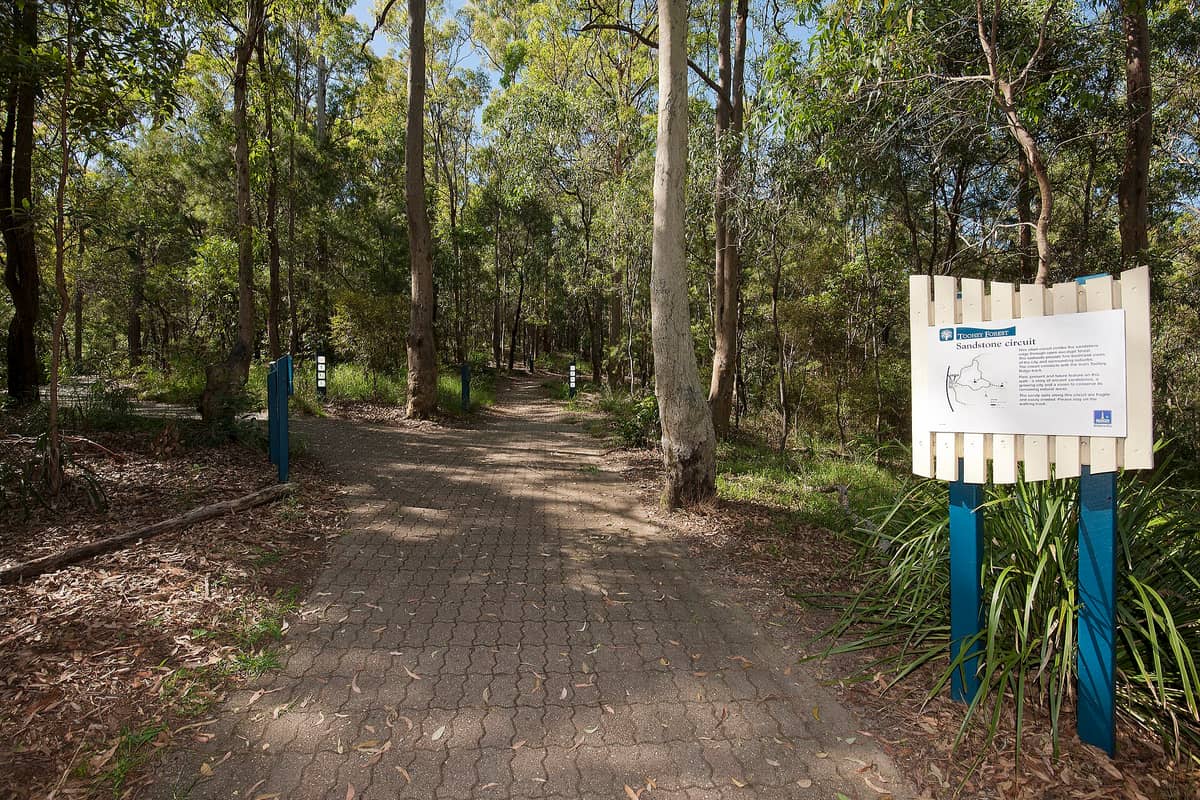
Toohey Forest Park is a 260-hectare bushland reserve managed by Brisbane City Council in Brisbane's southern suburbs. It is not a manicured garden or a theme-park nature experience. It is genuine dry sclerophyll forest — with a variety of eucalypt species — that happens to sit about 10 minutes from the Brisbane CBD. That contradiction is the point: you are in the middle of one of Australia's fastest-growing cities, and yet the canopy closes overhead and the traffic noise fades.
The park's network of walking tracks and shared-use trails covers terrain that ranges from flat fire-management paths to short, rocky ridgelines. The park's network of walking tracks and shared trails covers terrain that ranges from flat fire-management paths to short, rocky ridgelines. Mountain bikers may use designated bikeways, so walkers should expect to hear the occasional bike approaching. The Mayne Estate and Toohey picnic areas provide tables, shelters, and toilets for those who want a base to return to. Dogs are welcome on leash throughout the reserve, which makes it popular with local dog owners on weekend mornings.
ℹ️ Good to know
The park itself is open 24 hours, but the Mayne Estate and Toohey picnic areas have set hours: 6 am to 7 pm daily. Plan accordingly if you need toilet access or a sheltered picnic spot.
The History Behind the Trees
Brisbane is situated on the traditional lands of the Turrbal and Jagera peoples, and the forest at Toohey has a long relationship with Country that predates European settlement by thousands of years. The Commonwealth acquired the first section of the park in 1919 for a proposed post-World War I Soldiers Settlement. During the 1930s Brisbane City Council bought more parts of the Mount Galway property, and in 1946 the purchases were completed and the forest declared parkland. That formal protection came at a time when Brisbane's southern suburbs were beginning to expand rapidly, and the declaration effectively froze a substantial patch of native bush in place.
The result is a forest that has had several decades to mature without clearing for development. Older eucalypts in the reserve have developed the scribbled bark markings and hollow limbs that only come with age — and those hollows are precisely what make the park ecologically significant. Hollow-dependent species, including several species of native bats and arboreal possums, rely on old-growth cavities that simply do not exist in young plantations or suburban street trees.
Tickets & tours
Live prices and dates from our booking partner. If you book, we may earn a commission at no extra cost to you.
Tweed River and rainforest lunch cruise
From 61 €Instant confirmationFree cancellationEvening rainforest and glow worm tour
From 61 €Instant confirmationFree cancellationGuided rainforest tour on Tamborine Mountain and produce tastings
From 140 €Instant confirmationFree cancellationLuggage Storage in Brisbane
From 5 €Instant confirmationFree cancellation
Wildlife: What You're Likely to See (and When)
Early morning is the most productive time for wildlife. Arrive at one of the car parks by 6:30 am and walk quietly into the forest interior, and you stand a reasonable chance of encountering eastern grey kangaroos grazing on grass patches near the trail edges. They are most active in the hour after dawn and again in the late afternoon, and they tend to tolerate human presence as long as you move slowly and avoid approaching them directly.
Birds are the park's main draw for naturalists. Sulphur-crested cockatoos announce their presence loudly before you see them. Rainbow lorikeets, kookaburras, and various honeyeater species are consistent visitors throughout the day. Patient observers sitting quietly near the denser scrub sections in the early morning may also spot smaller bush birds including fairy-wrens and thornbills working through low vegetation. The noise profile of the forest shifts noticeably between 6 am and 9 am, when bird activity peaks, and the quieter midday period when it drops.
Reptiles are present but rarely seen without deliberate effort. Blue-tongue lizards are occasionally spotted on warm rock outcrops in spring and autumn, when temperatures are mild enough for basking but not oppressively hot. During summer, snakes are active in the undergrowth — not a reason to avoid the park, but a reason to stay on marked trails and watch where you place your hands and feet.
⚠️ What to skip
Summer visits (December–February) bring Brisbane's highest temperatures and humidity. Trails with limited shade can become uncomfortable by mid-morning. Bring more water than you think you need, and consider finishing your walk before 9 am.
The Trail Network: A Practical Walkthrough
Toohey Forest Park has multiple entry points accessible from surrounding streets, but the two main car parks off Toohey Road are the most convenient starting points. From either car park, signed walking tracks and designated bikeways branch into the forest interior. Track conditions vary, and some sections may be uneven or steep. Choose a track suited to your ability and wear appropriate footwear.
The forest connects to Mount Gravatt Outlook Reserve via walking tracks and the Griffith University Intercampus Link. Reaching the lookout on foot from Toohey Forest is possible via the track network. The lookout itself has car access for those who want to drive directly to the view rather than walk to it.
Mountain biking within the reserve is permitted only on designated bikeways. Check the official track map before riding and be considerate of other trail users. For those interested in exploring Brisbane's broader trail network, the covers trails ranging from urban riverside paths to full-day escarpment routes. For those interested in exploring Brisbane's broader trail network, the Brisbane hikes and walks guide covers trails ranging from urban riverside paths to full-day escarpment routes.
How the Experience Changes Through the Day
At 6 am on a weekday, Toohey Forest Park is quiet in the human sense but loud with birds. The light filters through the eucalypt canopy in that low, angled way particular to early morning, casting long shadows across the leaf-litter floor. The air smells of eucalyptus oil, damp earth, and — in warmer months — the faint sweetness of flowering scribbly gum blossoms. Joggers with headphones are the primary human presence at this hour.
By 8 am on weekends, the car parks begin to fill. Dog walkers arrive in numbers, the picnic areas see families setting up for morning tea, and the trail nearest the car parks becomes a social route as much as a nature walk. The deeper sections of the forest remain noticeably less trafficked even at peak times — the park is large enough that five minutes of walking away from the main access points reduces the crowd density substantially.
Midday in summer is the one time the park earns a genuine caution. The canopy provides partial shade, but many trail sections run through open patches where the full Queensland sun is unobstructed. Without a breeze, the heat becomes significant by 11 am in December and January. Midday visits in winter (June to August) are different entirely: Midday visits in winter (June to August) can be more pleasant for walking than hot summer days, though conditions vary., making it genuinely pleasant to walk for two or three hours without much preparation beyond sun protection.
If you are planning a broader day in Brisbane's southern region, Toohey Forest pairs reasonably well with a late-morning visit to the Lone Pine Koala Sanctuary, which is located roughly 20 minutes away by car and offers a very different kind of wildlife encounter — structured and close-up rather than incidental and wild.
Photography and What to Expect From the Light
The forest interior does not photograph well in harsh midday light. The high contrast between direct sunlight falling through gaps in the canopy and deep shadow beneath the trees makes exposure difficult, and the colours appear washed out in direct sun. The best photographic light for forest interiors occurs in the hour after sunrise and the hour before sunset, when the low-angle light creates warmth and depth in the eucalypt trunks and bark textures.
Wildlife photography requires patience and quiet movement. The kangaroos near the trail edges in early morning are accessible but shy. A telephoto lens helps; sudden movements do not. Bird photography in dense bush is challenging under any conditions, and most visitors will come away with atmospheric landscape shots rather than wildlife portraits unless they dedicate specific time and equipment to it.
Who Should Reconsider This Visit
Toohey Forest Park is not the right choice for visitors seeking a polished, interpretive experience with information boards, guided tours, and structured facilities. There is no visitor centre, no audio guide, and no coffee van at the trailhead. If you want context for Brisbane's native wildlife in a controlled environment, Walkabout Creek Discovery Centre or the Daisy Hill Koala Centre will serve that need better.
Visitors with limited mobility should note that the council's official page does not identify specific wheelchair-accessible routes within the reserve. The fire trails are wider and more level than the narrow walking tracks, but surface conditions vary. Those who need confirmed accessibility information should contact Brisbane City Council before visiting. The park is also not particularly suited to visitors who expect to see guaranteed wildlife on a short visit — it is a real forest, and wildlife encounters are never certain.
For a free, nature-based experience that also fits into a broader Brisbane itinerary, consider pairing Toohey Forest with an afternoon at the Brisbane Botanic Gardens at Mount Coot-tha, which offers a more structured botanical environment with accessible paths, or exploring some of the free things to do in Brisbane that don't require a car.
Insider Tips
- The forest has multiple entry points accessible from surrounding residential streets, not just the main Toohey Road car parks. The forest has multiple entry points accessible from surrounding streets, not just the main Toohey Road car parks. Check local parking restrictions before leaving your car, and use the official track map to choose an entry point.
- Bring a printed or downloaded offline map of the trail network before you arrive. Mobile signal inside the denser sections of the forest is unreliable, and the trails branch frequently enough that it is easy to lose your sense of direction without a reference point.
- The Toohey picnic area closes at 7 pm. If you plan an evening walk in summer to avoid the heat, note that picnic-area facilities may be closed. The forest itself remains open, but facilities do not.
- Scribbly gum trees — identifiable by the distinctive zig-zag scribble marks on their pale bark — are widespread in the park. The marks are made by the larvae of a species of scribbly gum moth tunnelling just beneath the bark surface. Looking for these trees gives children (and curious adults) something specific to find while walking.
- After rain, the track surfaces become slippery, particularly on the rocky ridgeline sections and shaded clay paths. Wait 24 hours after significant rainfall before walking narrow trails, or wear footwear with aggressive grip.
Who Is Toohey Forest Park For?
- Brisbane residents and visitors who want a genuine bushland walk without driving to the ranges
- Dog owners looking for a substantial leash-on nature walk close to the southern suburbs
- Birdwatchers and naturalists willing to visit early for wildlife encounters
- Mountain bikers seeking accessible urban trail riding with some technical variation
- Families with older children who can handle uneven terrain on a longer loop
Nearby Attractions
Combine your visit with:
- Boondall Wetlands
Stretching across 1,150 hectares of tidal flats, mangroves, and melaleuca forest north of the CBD, Boondall Wetlands is Brisbane's largest urban nature reserve. Free to enter, it rewards early-morning visitors with dense birdlife, quiet boardwalks, and a genuine sense of distance from the city.
- D'Aguilar National Park
D'Aguilar National Park stretches across roughly 40,000 hectares of subtropical rainforest, eucalypt woodland, and rocky ridgelines just northwest of Brisbane. It offers serious hiking trails, abundant wildlife, and genuine quiet, all within an hour of the city centre.
- Daisy Hill Koala Centre
Daisy Hill Koala Centre offers one of the most low-key, genuine koala encounters near Brisbane, completely free of charge. Set inside Daisy Hill Conservation Park, this small but thoughtfully designed centre combines educational exhibits with resident koalas in an outdoor enclosure, alongside wild koalas living in the surrounding eucalypt forest. It rewards patient visitors who arrive without expectations of a zoo-style show.
- Lone Pine Koala Sanctuary
Opened in 1927, Lone Pine Koala Sanctuary in Fig Tree Pocket is the world's first and largest koala sanctuary, home to koalas alongside kangaroos, platypuses, and native birds. It's the most direct way to get close to Australian wildlife without leaving the Brisbane area, though knowing when and how to visit makes a real difference to the experience.
Planning a trip? Discover personalized activities with the Nomado app.