Boondall Wetlands: Brisbane's Coastal Wetland Reserve
Stretching across 1,150 hectares of tidal flats, mangroves, and melaleuca forest north of the CBD, Boondall Wetlands is Brisbane's largest urban nature reserve. Free to enter, it rewards early-morning visitors with dense birdlife, quiet boardwalks, and a genuine sense of distance from the city.
Quick Facts
- Location
- 31 Paperbark Drive, Boondall QLD 4034 (approx. 15 km north of Brisbane CBD)
- Getting There
- Train to Boondall Station Train to Boondall Station, then walk to the Environment Centre to the Environment Centre
- Time Needed
- 1.5 to 3 hours depending on trail choice
- Cost
- Free general entry; Environment Centre free. Some activities may incur a fee — verify with Brisbane City Council
- Best for
- Birdwatchers, families with young children, walkers seeking a genuine nature escape close to the city
What Boondall Wetlands Actually Is
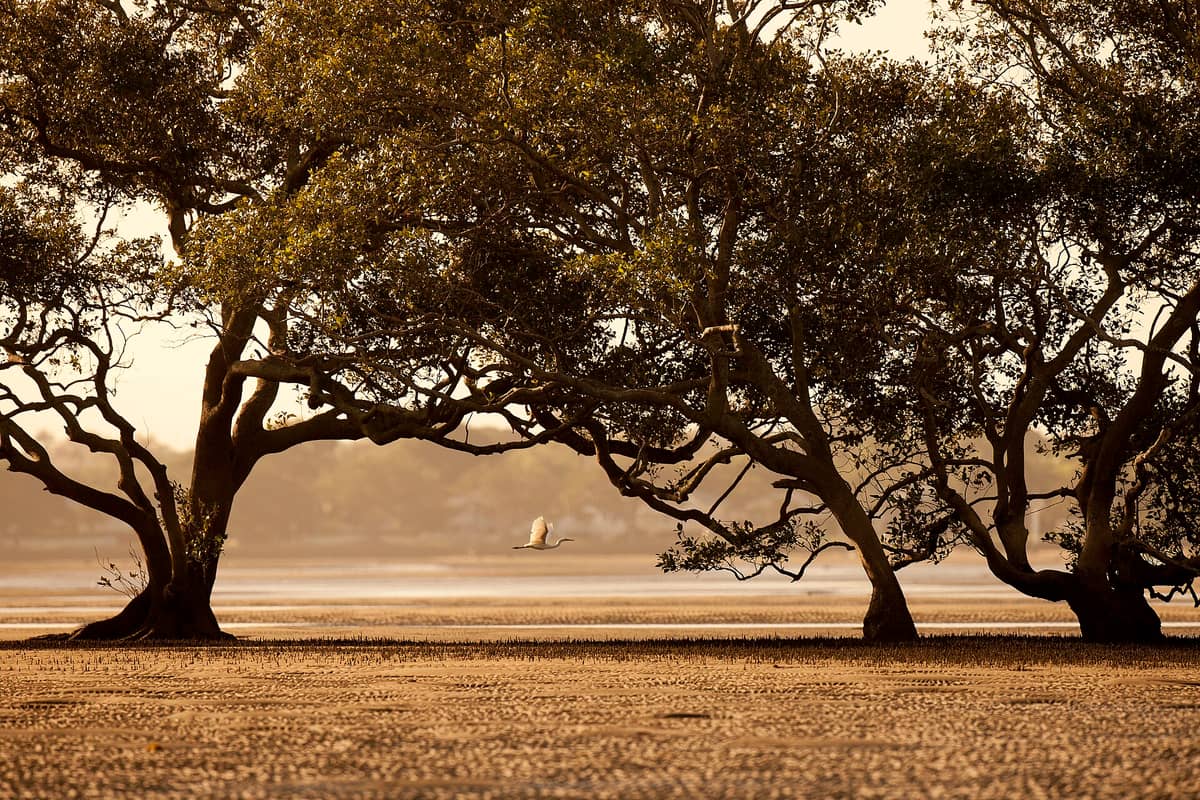
Boondall Wetlands is a 1,150-hectare coastal nature reserve on Moreton Bay, about 15 kilometres north of Brisbane's CBD. The reserve protects a mosaic of habitat types: tidal mudflats, mangrove forests, saltmarsh, paperbark (melaleuca) woodland, and freshwater wetlands. Brisbane City Council acquired the land from the 1960s onward, and it was formally gazetted as a reserve in 1990. It sits within the broader Moreton Bay Ramsar wetland system, a designation that reflects its international significance as habitat for migratory shorebirds.
Unlike many nature attractions that require effort to reach, Boondall is accessible by train and completely free to enter. That combination is rare. The trade-off is that this is not a manicured park with interpretive signs at every turn. It rewards visitors who arrive with a little preparation and patience.
💡 Local tip
The reserve opens at 6 am — worth noting because the best birdwatching happens in the first hour after dawn, well before the car park fills on weekends.
The Landscape: What You Are Walking Through
The dominant vegetation types each create a distinct sensory environment. In the paperbark woodland, the air smells faintly of eucalyptus and the ground is spongy underfoot from years of leaf litter. The pale, peeling bark of the melaleuca trees gives the forest an almost ghostly appearance in low morning light. These woodlands hold koalas occasionally, though sightings are not reliable enough to count on.
Closer to the bay, the mangroves take over. The exposed root systems of grey mangroves and the pneumatophores (pencil-like breathing roots) of other species make the ground visually complex. At low tide, the mudflats between mangrove stands become feeding grounds for wading birds. The smell is organic and saline, distinctly coastal. At high tide, much of that activity retreats and the scene becomes quieter.
The saltmarsh areas in between are often overlooked but support their own specialist fauna, including crabs and small fish in tidal channels. The boardwalk sections allow access across these zones without disturbing vegetation or soil.
ℹ️ Good to know
Tide timing significantly affects what you see near the mudflats. Low tide in the morning gives the best shorebird activity. A quick search for Moreton Bay tide times before your visit is worthwhile.
Tickets & tours
Live prices and dates from our booking partner. If you book, we may earn a commission at no extra cost to you.
Luggage Storage in Brisbane
From 5 €Instant confirmationFree cancellationBrisbane's dark stories true crime tour
From 21 €Instant confirmationFree cancellationFull-day Mount Tamborine winery tour from Brisbane with lunch
From 140 €Instant confirmationFree cancellationNorth Stradbroke Island small groups day tour
From 79 €Instant confirmationFree cancellation
Birdwatching: The Main Draw
Boondall Wetlands sits on the East Asian–Australasian Flyway, one of the world's major migratory bird routes. During the austral spring and summer (roughly September to April), migratory shorebirds arrive from breeding grounds in Siberia, Alaska, and northern China. Bar-tailed godwits, red-necked stints, and sharp-tailed sandpipers are among the species recorded regularly. These birds have often flown tens of thousands of kilometres non-stop before reaching Moreton Bay, and the wetlands provide critical refuelling habitat.
Year-round residents include royal spoonbills, eastern great egrets, pied cormorants, and various species of kingfisher. The buff-banded rail is present but secretive. Whistling kites and brahminy kites are often visible over the treeline. Serious birders should bring binoculars rated at least 8x42 — the mudflats are wide, and many waders are small.
For context on the wider wildlife accessible around Brisbane, the Brisbane wildlife guide covers other key sites including Lone Pine and Walkabout Creek, which offer more controlled viewing conditions for families.
💡 Local tip
The eBird Australia database has historical checklists submitted by birders at Boondall. Reviewing recent sightings before your visit tells you exactly what species have been active in the past week.
The Environment Centre and Walking Trails
The Boondall Wetlands Environment Centre is the logical starting point for any visit. It is open Tuesday to Friday, 9 am to 4 pm, and Saturday to Sunday, 9 am to noon. It is closed on Mondays. The centre provides maps, displays on local ecology, and staff who can advise on trail conditions and recent wildlife activity. Entry is free. The building has automatic doors, accessible toilets, and pram-friendly access.
Several walking trails radiate from the centre. The boardwalk trails near the centre are flat and suitable for prams and wheelchairs. Longer trails through paperbark woodland and toward the bay require more time and are on uneven natural surfaces. Distances are modest by bush-walking standards, but the terrain can be muddy after rain, and sections near the mangroves may become waterlogged at high tide.
Boondall Wetlands fits naturally into a broader exploration of Brisbane's green spaces. The Brisbane hikes and walks guide covers trail options across the city, from riverfront paths to forest circuits.
⚠️ What to skip
Insect repellent is essential from spring through autumn. Mosquitoes are active near the wetlands and can be persistent, especially in the morning and late afternoon. Long sleeves help.
How the Experience Changes Through the Day
Arriving at opening time (6 am) on a weekday puts you in near-solitude. The light at this hour is soft and angled, useful for photography, and the birds are most active before the heat builds. On weekend mornings, the car park fills steadily from around 7:30 am, and the more accessible boardwalk sections see families with young children and joggers.
By mid-morning on warm days, much of the birdlife retreats to shade or the water. The paperbark woodland is more pleasant than the exposed mudflats in this heat. Midday visits in summer (December to February) can be genuinely uncomfortable — temperatures regularly reach 30°C and humidity is high. If a summer midday visit is unavoidable, focus on the shaded woodland trails and carry at least one litre of water per person.
The reserve closes at 7 pm. Visiting in the hour before closing on a calm, dry day in autumn or winter (April to August) offers pleasant light and cooler temperatures. The crowd volume at this hour drops sharply after about 4 pm on weekdays.
Getting There and Practical Logistics
By car, access the main car park via Stanworth Road. The Environment Centre is addressed at 31 Paperbark Drive, Boondall QLD 4034, but GPS navigation to Stanworth Road is more reliable for reaching the main entrance. Parking is free.
By public transport, take a train to Boondall Station, then walk to the Environment Centre.
For broader transport planning across Brisbane, getting around Brisbane covers the Translink network, Go Card use, and ferry connections.
There is no on-site café or food vendor. The nearest services are in the surrounding Boondall suburb. Bring water, snacks, and sunscreen regardless of the season.
Who Should Consider Skipping This
Boondall Wetlands is not the right choice for visitors on a short itinerary who want guaranteed wildlife encounters in a curated setting. The wetlands are genuinely wild, which means birds are present in abundance on some days and scarce on others. Visitors who need clear signage, facilities, or a narrative structure to their experience may find it disorienting.
If you want koalas, reptiles, and native animals in a controlled, close-up setting, Lone Pine Koala Sanctuary or Walkabout Creek Discovery Centre are more reliable options and better suited to younger children or visitors with limited time.
The reserve also has no shade shelters, limited seating, and no water fountains on the trails beyond the centre. Visitors with limited mobility should call the Environment Centre before visiting to confirm which sections are currently accessible.
Insider Tips
- Check the Brisbane tide charts before you go — a low tide that coincides with early morning (roughly 6 to 8 am) is the single biggest factor in the quality of your shorebird experience on the mudflats.
- The Environment Centre staff are knowledgeable and often know exactly where a specific species has been sighted that week. A two-minute conversation at the front desk can save you an hour of searching.
- Weekday visits, particularly Tuesday to Thursday mornings, are noticeably quieter than weekend visits. You are unlikely to share a boardwalk section with more than a handful of people.
- A waterproof layer is worth carrying even in fine weather. The ground near the mangroves can be wet underfoot, and Brisbane's weather can shift quickly in the warmer months.
- If you visit between September and March, bring a field guide or install the Merlin Bird ID app before arrival. The migratory shorebird species on the mudflats look similar to one another and distinguishing them is part of the appeal for many visitors.
Who Is Boondall Wetlands For?
- Birdwatchers and wildlife photographers, particularly those interested in migratory shorebirds
- Families with young children who want to explore a real nature environment without a long drive
- Budget-conscious visitors looking for a free, half-day nature experience close to Brisbane
- Visitors interested in coastal ecology, mangrove systems, or the Moreton Bay Ramsar wetlands
- Locals seeking a quiet weekday morning walk away from urban noise
Nearby Attractions
Combine your visit with:
- D'Aguilar National Park
D'Aguilar National Park stretches across roughly 40,000 hectares of subtropical rainforest, eucalypt woodland, and rocky ridgelines just northwest of Brisbane. It offers serious hiking trails, abundant wildlife, and genuine quiet, all within an hour of the city centre.
- Daisy Hill Koala Centre
Daisy Hill Koala Centre offers one of the most low-key, genuine koala encounters near Brisbane, completely free of charge. Set inside Daisy Hill Conservation Park, this small but thoughtfully designed centre combines educational exhibits with resident koalas in an outdoor enclosure, alongside wild koalas living in the surrounding eucalypt forest. It rewards patient visitors who arrive without expectations of a zoo-style show.
- Lone Pine Koala Sanctuary
Opened in 1927, Lone Pine Koala Sanctuary in Fig Tree Pocket is the world's first and largest koala sanctuary, home to koalas alongside kangaroos, platypuses, and native birds. It's the most direct way to get close to Australian wildlife without leaving the Brisbane area, though knowing when and how to visit makes a real difference to the experience.
- Shorncliffe Pier
Standing on Moreton Bay since 1882, Shorncliffe Pier is one of Brisbane's most evocative heritage structures. The 350-metre timber walkway stretches out over the water at the quiet suburb of Shorncliffe, rewarding visitors with open bay views, cooling sea breezes, and a peaceful escape from the city's centre.
Planning a trip? Discover personalized activities with the Nomado app.