Shorncliffe Pier: Brisbane's Historic Bayside Walk
Standing on Moreton Bay since 1882, Shorncliffe Pier is one of Brisbane's most evocative heritage structures. The 350-metre timber walkway stretches out over the water at the quiet suburb of Shorncliffe, rewarding visitors with open bay views, cooling sea breezes, and a peaceful escape from the city's centre.
Quick Facts
- Location
- Park Parade, Shorncliffe QLD 4017 (approx. 18 km north of Brisbane CBD)
- Getting There
- Shorncliffe train line (Citytrain) — Shorncliffe Station is a short walk from the foreshore
- Time Needed
- 30–60 minutes for the pier; 2–3 hours if combining with the Shorncliffe Heritage Trail
- Cost
- Free to enter
- Best for
- Sunrise walks, heritage sightseeing, photography, families, and bayside picnics
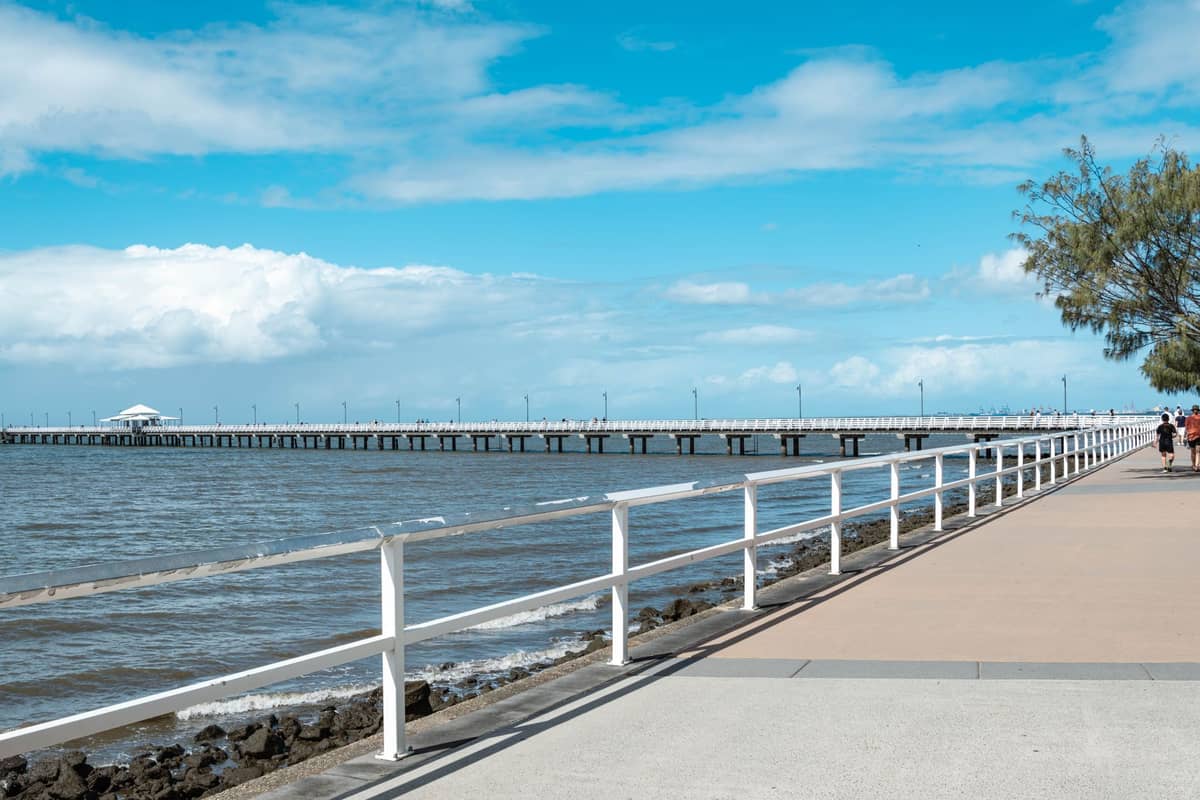
What Shorncliffe Pier Actually Is
Shorncliffe Pier, also historically known as Sandgate Pier, is a 350-metre timber jetty extending into Moreton Bay from the suburb of Shorncliffe, roughly 18 kilometres north of Brisbane's CBD. Originally built in 1882 by the Sandgate Pier Company, the pier served as a tourist attraction and a transport hub for passengers and cargo travelling to Sandgate from Brisbane. It is one of the few surviving structures of its kind in South East Queensland, and unlike many heritage sites that survive only as plaques and foundations, this one you can actually walk on.
The pier underwent a significant renewal. The restored structure retains its timber character while upgrading its structural integrity, so what visitors walk today reflects the original layout without feeling like a museum replica.
ℹ️ Good to know
The pier has been closed in the past for maintenance works. Before making a dedicated trip, check Brisbane City Council's website or local notices for any temporary closures.
The Experience: Walking Out Over the Bay
The walk itself is straightforward and unhurried. From the foreshore park at the end of Park Parade, the pier begins modestly before the land falls away and you are genuinely over the water. The timber underfoot has the particular sound of a proper jetty, a hollow knock with each step, that concrete boardwalks never reproduce. Salt is in the air from the moment you leave the park, and by the midpoint of the pier, the shore feels comfortably distant.
At the pier's end, the views open across Bramble Bay. On clear days, the bay and its shoreline are visible. Pelicans and cormorants are regulars at the railing, often standing close enough to study. Fishers line the sides on most days, particularly on weekends, casting into the deeper channel water beneath.
The character of the pier shifts noticeably with the light. Early morning, typically before 8 am, brings a stillness that is hard to find closer to the city. The bay glows flat and pale, the light coming low from the east over the water, and the number of visitors is minimal. By mid-morning on weekends, families and joggers arrive from the foreshore walking path, and the pier becomes social rather than contemplative. Late afternoon light hits the water at an angle that rewards photography, though the sun is behind you if you are facing northeast toward the bay.
Tickets & tours
Live prices and dates from our booking partner. If you book, we may earn a commission at no extra cost to you.
Luggage Storage in Brisbane
From 5 €Instant confirmationFree cancellationBrisbane's dark stories true crime tour
From 21 €Instant confirmationFree cancellationFull-day Mount Tamborine winery tour from Brisbane with lunch
From 140 €Instant confirmationFree cancellationNorth Stradbroke Island small groups day tour
From 79 €Instant confirmationFree cancellation
Historical and Cultural Context
The pier's 1882 origins place it in the earliest decades of organised leisure in colonial Queensland. Shorncliffe and neighbouring Sandgate were Brisbane's first bayside holiday destinations, accessible by rail from 1882 onward. Wealthy and middle-class Brisbane families came here to escape the summer heat in an era before air conditioning, and the pier was the arrival point for many of them travelling by bay steamer.
F. D. G. Stanley, the designer, was Queensland's Colonial Architect and responsible for numerous public buildings across the state during the late nineteenth century. His involvement in the pier reflects how seriously the government took public recreation infrastructure in that period. The original 259-metre structure was later extended by 91 metres, giving the current configuration.
The pier sits within the broader Shorncliffe Heritage Trail, a 4.9-kilometre walking route that connects several significant sites in the area. For anyone interested in Brisbane's colonial history beyond the CBD, the trail places the pier within a richer narrative. The Brisbane heritage and history guide covers other significant sites across the city for context.
Getting There and Getting Around the Area
The most straightforward approach is by train. The Shorncliffe line runs directly from Brisbane's CBD, and Shorncliffe Station is the terminus, a short walk from the foreshore and the pier. Sandgate Station is one stop before Shorncliffe. Translink's go card or contactless payment applies on this route. Check Translink's current timetables for exact journey times before travelling, as off-peak and weekend services run less frequently than weekday services.
By car, Shorncliffe is accessible via the Gateway Motorway and local roads heading northeast of Brisbane. Street parking is available along the foreshore precinct, though weekend demand can be high on sunny days, particularly near the beach and café strip in Sandgate.
For those building a broader day trip, Sandgate township is a 10–15 minute walk from the pier along the foreshore. It has cafés, a small beach, and the kind of low-key suburb feel that contrasts noticeably with the inner-city energy of precincts like South Bank or New Farm. If you are planning a full day of exploration, the Heritage Trail links multiple sites in a single walk.
Photography Tips and Practical Notes
The pier photographs best in two windows: the hour after sunrise and the hour before sunset. At sunrise, the eastern orientation of the bay means the light arrives directly in front of you as you walk toward the water's end, producing a clean, well-lit foreground. Sunset is more atmospheric, with warm sidelight across the timber planking and the silhouettes of any birds or fishers on the railing.
A wide-angle lens or the ultra-wide setting on a smartphone is useful for capturing the full length of the pier from the shore end. If you want a shot without other people, early weekday mornings are the most reliable window. Weekend mornings after 9 am can be surprisingly crowded for a suburban pier.
💡 Local tip
Bring sun protection regardless of season. The pier offers no shade once you leave the shore, and the bay reflects UV effectively. A hat, sunscreen, and water are practical basics, especially between October and March.
Accessibility notes: Brisbane City Council has indicated that parts of the broader Shorncliffe Heritage Trail may not be fully accessible to people with limited mobility. The pier itself has a flat, boarded surface, but the specific accessibility provisions at the pier entry and along its length are not confirmed in official sources. Contact the council directly if mobility access is a significant consideration.
Honest Assessment: Is It Worth the Trip?
Shorncliffe Pier is not a place where things happen. There are no food stalls, no tour operators, no ticketed attraction at the end. It is a pier. If that sounds underwhelming, it probably will be. Visitors expecting the activation of South Bank Parklands or the harbour energy of Howard Smith Wharves will find it quiet to the point of emptiness outside peak weekend hours.
For visitors with limited time in Brisbane, the pier alone probably does not justify a 40-minute train ride from the CBD. Where it earns its place is as an ingredient in a broader bayside day, combined with Sandgate's café strip, a walk along the foreshore, and perhaps the Heritage Trail itself. Alternatively, it fits naturally into itineraries focused on Brisbane's history. Those planning around Brisbane walks and trails will find the surrounding area rewards a slower pace.
That said, for anyone staying in Brisbane for several days and looking for something that does not feel curated for tourists, Shorncliffe Pier delivers. It is used by locals, it has genuine history, and the bay views from its end are among the cleaner, more open vantage points accessible by public transport from Brisbane.
For an overview of how Shorncliffe fits into a longer Brisbane itinerary, the 3 days in Brisbane guide outlines how to balance the city's inner-urban draws with its quieter bayside suburbs.
Insider Tips
- Arrive before 7:30 am on a weekday for a genuinely uncrowded experience. The pier at this hour is mostly fishers and the occasional dog walker, and the light on the bay is at its best.
- The Sandgate café strip, roughly a 12-minute walk along the foreshore from the pier, has a cluster of independent cafés that open early. It makes a practical breakfast stop before or after the pier walk.
- Low tide reveals mudflats and wading birds along the shore edge near the pier's base. If birdwatching is of interest, a low tide morning visit is more rewarding than high tide.
- The Heritage Trail brochure, available from Brisbane City Council's website, provides walking directions and historical context for the pier and surrounding sites. Downloading it before your visit saves time on-site.
- If travelling by train, sit on the right-hand side of the carriage heading north from the city. The line passes through bayside suburbs and the glimpses of the bay through the windows make the journey itself feel worthwhile.
Who Is Shorncliffe Pier For?
- History and heritage enthusiasts wanting to connect with colonial-era Brisbane beyond the CBD
- Photographers seeking an early-morning bay shot with genuine character
- Families looking for a free, low-pressure outdoor activity with open space nearby
- Locals and visitors wanting a half-day bayside escape without leaving Brisbane by car
- Slow travellers building a self-guided Heritage Trail walk through Shorncliffe and Sandgate
Nearby Attractions
Combine your visit with:
- Boondall Wetlands
Stretching across 1,150 hectares of tidal flats, mangroves, and melaleuca forest north of the CBD, Boondall Wetlands is Brisbane's largest urban nature reserve. Free to enter, it rewards early-morning visitors with dense birdlife, quiet boardwalks, and a genuine sense of distance from the city.
- D'Aguilar National Park
D'Aguilar National Park stretches across roughly 40,000 hectares of subtropical rainforest, eucalypt woodland, and rocky ridgelines just northwest of Brisbane. It offers serious hiking trails, abundant wildlife, and genuine quiet, all within an hour of the city centre.
- Daisy Hill Koala Centre
Daisy Hill Koala Centre offers one of the most low-key, genuine koala encounters near Brisbane, completely free of charge. Set inside Daisy Hill Conservation Park, this small but thoughtfully designed centre combines educational exhibits with resident koalas in an outdoor enclosure, alongside wild koalas living in the surrounding eucalypt forest. It rewards patient visitors who arrive without expectations of a zoo-style show.
- Lone Pine Koala Sanctuary
Opened in 1927, Lone Pine Koala Sanctuary in Fig Tree Pocket is the world's first and largest koala sanctuary, home to koalas alongside kangaroos, platypuses, and native birds. It's the most direct way to get close to Australian wildlife without leaving the Brisbane area, though knowing when and how to visit makes a real difference to the experience.
Planning a trip? Discover personalized activities with the Nomado app.