Lone Pine Koala Sanctuary: Brisbane's Iconic Wildlife Experience
Opened in 1927, Lone Pine Koala Sanctuary in Fig Tree Pocket is the world's first and largest koala sanctuary, home to koalas alongside kangaroos, platypuses, and native birds. It's the most direct way to get close to Australian wildlife without leaving the Brisbane area, though knowing when and how to visit makes a real difference to the experience.
Quick Facts
- Location
- 708 Jesmond Road, Fig Tree Pocket, QLD 4069 — approx. 12 km from Brisbane CBD
- Getting There
- Bus routes 430 or 445 from the city; free on-site parking if driving
- Time Needed
- 2.5 to 4 hours
- Cost
- Paid entry; children under 3 free. Check lonepinekoalasanctuary.com for current pricing
- Best for
- Families, wildlife lovers, first-time visitors to Australia
- Official website
- lonepinekoalasanctuary.com
What Lone Pine Actually Is
Lone Pine Koala Sanctuary is not a zoo in the conventional sense. Founded in 1927 by Claude Reid with just two koalas named Jack and Jill, it is the world's first koala sanctuary and is home to koalas alongside a broad range of native Australian wildlife. The property sits along a curve of the Brisbane River at Fig Tree Pocket, about 12 kilometres southwest of the CBD, surrounded by suburban bushland that gives the grounds a quieter, more rural feel than you might expect this close to a capital city.
The sanctuary's core purpose has always been conservation and education rather than pure entertainment. Many of the animals here are rescues or part of managed breeding programs. That context matters when you're deciding how to spend your time: this place rewards curiosity and a willingness to read the interpretation panels, not just point a camera at a koala and move on.
💡 Local tip
Arrive by 9:30 a.m. on weekdays if you want to photograph koalas in good light and before the school groups arrive. Koalas are most active in the early morning before the heat of the day sets in.
The Koalas: What to Expect Up Close
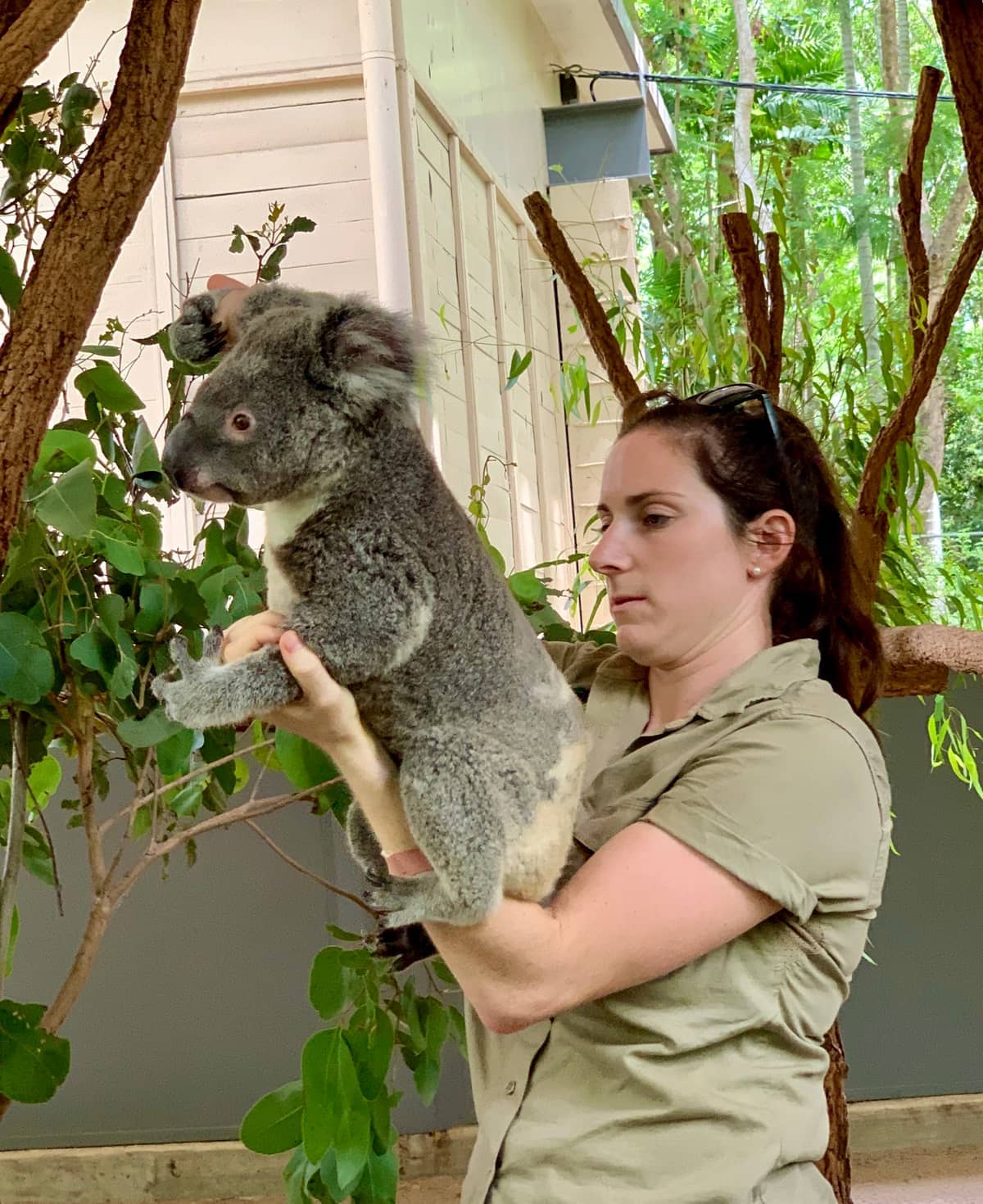
The koala enclosures form the centrepiece of the visit. The animals rest in large eucalyptus trees within open, walk-through areas, and on most days you can get within a few metres of them without any barrier. Koalas sleep up to 22 hours a day because their diet of eucalyptus leaves is low in nutrition and requires enormous digestive energy, so do not expect much action. What you do get is a chance to observe them at genuinely close range: the texture of their grey fur, the leathery black nose, the way their claws grip bark.
Koala holding is no longer available; the sanctuary ceased koala-hold experiences from 1 July 2024. If you're unsure, the sanctuary's staff are willing to explain their welfare protocols. Alternatively, simply watching keepers during scheduled feeding sessions gives you plenty of proximity without physical contact.
The smell in the koala areas is distinctive: a faint medicinal eucalyptus scent from the foliage, mixed with the slightly earthy smell of the enclosures. It's not unpleasant, but it is memorable. Early mornings carry it more strongly when dew is still on the leaves.
Tickets & tours
Live prices and dates from our booking partner. If you book, we may earn a commission at no extra cost to you.
Luggage Storage in Brisbane
From 5 €Instant confirmationFree cancellationBrisbane's dark stories true crime tour
From 21 €Instant confirmationFree cancellationFull-day Mount Tamborine winery tour from Brisbane with lunch
From 140 €Instant confirmationFree cancellationNorth Stradbroke Island small groups day tour
From 79 €Instant confirmationFree cancellation
Beyond Koalas: The Rest of the Sanctuary
A large, open kangaroo and wallaby area allows completely free interaction. You can buy feed from dispensers near the entrance to this section and hand-feed grey kangaroos that approach without hesitation. Some are completely indifferent to visitors and will eat from your palm while staring off into the middle distance. This area can get muddy after rain, and the kangaroos are larger than many visitors expect, so supervise small children closely.
The sanctuary also keeps wombats, Tasmanian devils, echidnas, dingoes, and a platypus. The platypus tank is worth the queue. Platypuses are notoriously difficult to see in the wild, and watching one hunt in a glass-fronted freshwater tank, navigating with its bill and webbed feet, is genuinely unusual. The lighting in the platypus area is kept dim to simulate natural river conditions, so your eyes need a moment to adjust.
The birds of prey flight show runs on a schedule posted at the entrance and is worth fitting around your visit. Wedge-tailed eagles and other raptors fly at low altitude over the audience. It is loud, fast, and well-explained by the handlers. Check the daily schedule board near the main entrance as soon as you arrive to plan your route through the grounds accordingly.
For context on other wildlife encounters around Brisbane, the Brisbane wildlife guide covers a range of options from day trips to local reserves.
Getting There and Navigating the Site
The address is 708 Jesmond Road, Fig Tree Pocket. Driving is the easiest option: there is free on-site parking, and the journey from the CBD takes roughly 20 to 25 minutes outside peak hour. By public transport, Brisbane City Council bus Route 430 departs from Ann Street and Route 445 from Wickham Terrace; both serve the sanctuary. Check Translink for current timetables before you go, as frequency varies by day and time.
An alternative approach worth considering is the Mirimar Cruise, a scenic boat trip along the Brisbane River from Southbank Pontoon that docks at the sanctuary. The journey takes about 75 minutes each way and adds a river perspective to the outing. Check current cruise availability and schedules directly with the operator, as these services run seasonally and can vary.
The grounds are moderately hilly with a mix of paved paths and unpaved sections. Accessible routes exist, but the sanctuary itself notes that some slopes and unpaved areas may not suit unassisted wheelchair users. Manual wheelchairs are available to hire for A$6, accessible toilets are on-site, and Companion Card holders' support persons receive free entry. Wear comfortable shoes regardless.
⚠️ What to skip
Last entry is 4:00 p.m. and the sanctuary closes at 5:00 p.m.
When to Visit and What Affects the Experience
Weekday mornings between 9:00 a.m. and 11:00 a.m. give you the most comfortable experience. School groups arrive mid-morning and weekend crowds peak between 10:30 a.m. and 2:00 p.m. By early afternoon in summer, the temperature in the open kangaroo paddock can be intense; shade is limited in parts of the grounds, so a hat and sunscreen are practical necessities from September through to April.
Queensland's summer (December to February) brings high humidity and the occasional afternoon thunderstorm. Most enclosures have some shelter, but walking between them in heavy rain is unpleasant and some shows may be suspended. The cooler months from May to September offer the most comfortable conditions for a full day outdoors.
For a broader look at how Brisbane's seasons affect sightseeing, the best time to visit Brisbane guide breaks down the tradeoffs month by month.
Honest Assessment: Is It Worth Your Time?
For first-time visitors to Australia, Lone Pine Koala Sanctuary is one of the most efficient ways to see a wide variety of native fauna in a single location. The conservation context gives it more substance than a commercial wildlife park, and spending time observing koalas up close offers a distinctive experience.
For travellers who have already visited similar wildlife sanctuaries in Sydney or the Gold Coast, the experience may feel familiar. The sanctuary is also not particularly central, which means it works best as a dedicated half-day or full-day outing rather than a quick stop between other activities.
The admission price is higher than many Brisbane attractions, which can feel steep if wildlife is not a priority for your trip. Families with children, however, may find that the kangaroo feeding area alone justifies the visit. Children under 3 enter free.
If you are travelling with children and want to combine this with other family-friendly options, the Brisbane with kids guide and the Walkabout Creek Discovery Centre are useful references for planning a fuller day.
Photography Tips
Morning light between 9:00 a.m. and 10:30 a.m. is best for photographing koalas. By midday, harsh overhead sun creates flat, unflattering light and the animals are often tucked into higher branches away from the heat. A 50mm to 85mm lens equivalent on a mirrorless or phone camera is sufficient for the koala enclosures given how close you can get.
The platypus tank requires patience and a steady hand: use burst mode and expect to take a number of frames before you get a sharp image of the animal mid-movement. Flash photography is discouraged in the low-light enclosures. For the birds of prey show, position yourself toward the front on the side the birds approach from, which the handler usually indicates at the start.
Insider Tips
- Check the daily schedule board at the main entrance as soon as you arrive and work your way through the grounds backwards from the last show time. Most visitors start at the koalas and run out of energy before reaching the platypus and Tasmanian devil areas.
- The feed is inexpensive and the kangaroos will approach you within seconds.
- The sanctuary is large enough that many visitors miss the smaller enclosures near the rear of the property, including the echidna and reptile displays. Allow at least 30 extra minutes if you want to cover the full site.
- If you are travelling by bus and want a scenic return, some visitors walk from the sanctuary down to the river and take the CityCat or ferry at a nearby stop, though this requires checking current timetables and the walk is not signposted.
- Children under 3 enter free, and the kangaroo paddock in particular is at the right height and pace for toddlers. Bring a change of clothes if your child is very young: kangaroo feed is messy and the ground can be muddy after rain.
Who Is Lone Pine Koala Sanctuary For?
- First-time visitors to Australia wanting a concentrated native wildlife experience
- Families with children aged 3 to 12, particularly for the kangaroo feeding area
- Travellers who want to see a platypus, which is almost impossible to spot in the wild
- Anyone with a half-day free on a weekday when crowds are thinner
- Photography enthusiasts focused on Australian fauna
Nearby Attractions
Combine your visit with:
- Boondall Wetlands
Stretching across 1,150 hectares of tidal flats, mangroves, and melaleuca forest north of the CBD, Boondall Wetlands is Brisbane's largest urban nature reserve. Free to enter, it rewards early-morning visitors with dense birdlife, quiet boardwalks, and a genuine sense of distance from the city.
- D'Aguilar National Park
D'Aguilar National Park stretches across roughly 40,000 hectares of subtropical rainforest, eucalypt woodland, and rocky ridgelines just northwest of Brisbane. It offers serious hiking trails, abundant wildlife, and genuine quiet, all within an hour of the city centre.
- Daisy Hill Koala Centre
Daisy Hill Koala Centre offers one of the most low-key, genuine koala encounters near Brisbane, completely free of charge. Set inside Daisy Hill Conservation Park, this small but thoughtfully designed centre combines educational exhibits with resident koalas in an outdoor enclosure, alongside wild koalas living in the surrounding eucalypt forest. It rewards patient visitors who arrive without expectations of a zoo-style show.
- Shorncliffe Pier
Standing on Moreton Bay since 1882, Shorncliffe Pier is one of Brisbane's most evocative heritage structures. The 350-metre timber walkway stretches out over the water at the quiet suburb of Shorncliffe, rewarding visitors with open bay views, cooling sea breezes, and a peaceful escape from the city's centre.
Planning a trip? Discover personalized activities with the Nomado app.