Daisy Hill Koala Centre: See Wild Koalas for Free, No Crowds Required
Daisy Hill Koala Centre offers one of the most low-key, genuine koala encounters near Brisbane, completely free of charge. Set inside Daisy Hill Conservation Park, this small but thoughtfully designed centre combines educational exhibits with resident koalas in an outdoor enclosure, alongside wild koalas living in the surrounding eucalypt forest. It rewards patient visitors who arrive without expectations of a zoo-style show.
Quick Facts
- Location
- 253 Daisy Hill Road, Daisy Hill QLD 4127 — approx. 25 km south of Brisbane CBD
- Getting There
- By car: Pacific Motorway exit 24, right onto Winnetts Road, left onto Daisy Hill Road. Parking on site. No direct public transit to the door.
- Time Needed
- 1 to 2 hours for the centre; add time if you plan to walk the conservation park trails
- Cost
- Free admission. No booking required for general visits.
- Best for
- Families with young children, wildlife enthusiasts, visitors who want a genuine nature experience without theme-park crowds
- Official website
- parks.qld.gov.au/parks/daisy-hill-koala-centre
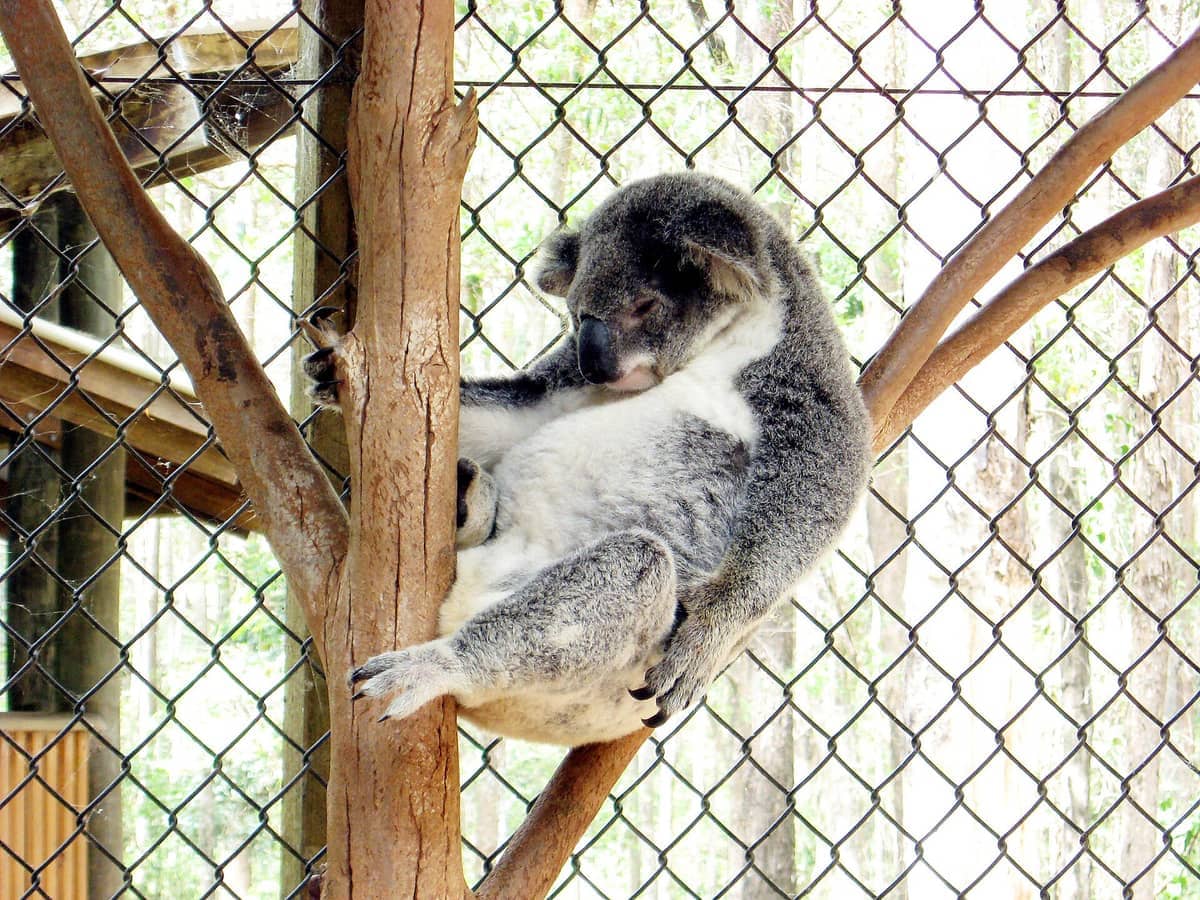
What Daisy Hill Koala Centre Actually Is
The Daisy Hill Koala Centre is a free, Queensland Parks and Wildlife Service-managed visitor facility within Daisy Hill Conservation Park, operating since 1995. It is not a place where you hold a koala for a photo. What it is, is a small interpretive centre with indoor exhibits about koala ecology and conservation, plus a large outdoor enclosure where visitors can view resident koalas, set against genuine eucalypt bushland where wild koalas also live.
That distinction matters. Wild koalas inhabit the surrounding conservation park and may or may not be visible on any given visit; the centre also has resident koalas in an outdoor enclosure. On quiet mornings, it is entirely possible to spot one wedged in the fork of a scribbly gum or tallowwood just metres from the boardwalk. On other days, you might scan the canopy for twenty minutes and find nothing. That variability is the point: this is a wildlife experience, not a performance.
💡 Local tip
Arrive early in the morning, as close to the 10am opening as possible. Koalas are most active in the cooler hours and are more likely to be moving between trees or feeding then. By early afternoon, most will have settled high in the canopy and become very difficult to spot.
Inside the Centre: What to Expect
The centre is compact and deliberately low-key. Indoor interpretive displays cover koala biology, diet, behaviour, and the specific conservation pressures facing south-east Queensland populations: habitat loss, road strikes, dog attacks, and the spread of chlamydia among koala communities. The information is pitched accessibly for families but detailed enough to be genuinely informative for adults.
The building itself is modest, and that is not a criticism. There are also free daily public talks at 11am and 2pm. Rangers can answer questions and provide information about the koalas and conservation.
Toilets are on site, including wheelchair-accessible facilities. The centre has wheelchair access, which may require assistance, and a ramped boardwalk provides access to the entrance.
Tickets & tours
Live prices and dates from our booking partner. If you book, we may earn a commission at no extra cost to you.
Luggage Storage in Brisbane
From 5 €Instant confirmationFree cancellationBrisbane's dark stories true crime tour
From 21 €Instant confirmationFree cancellationFull-day Mount Tamborine winery tour from Brisbane with lunch
From 140 €Instant confirmationFree cancellationNorth Stradbroke Island small groups day tour
From 79 €Instant confirmationFree cancellation
Outdoors: The Boardwalk and Conservation Park
The real draw is stepping outside. A ramped boardwalk leads to the centre, and the treetop tower lets visitors look for koalas in the surrounding forest. Boardwalks also provide viewing access to koalas in the centre’s outdoor enclosure. The air carries the distinctive scent of dry eucalyptus, particularly sharp on warm days. Cicadas are loud through summer. On cooler winter mornings, the park is quiet enough that you can hear branches creak and leaves shift when something moves.
Daisy Hill Conservation Park covers roughly 443 hectares of open eucalypt forest and is one of the few remaining koala habitats in south-east Queensland where wild populations persist in an urban-fringe environment. The park also supports eastern grey kangaroos, wallabies, echidnas, and a wide range of bird species including kookaburras, rainbow lorikeets, and sulphur-crested cockatoos. Even on a visit where koalas prove elusive, the broader wildlife experience is worthwhile.
If you want to extend your visit into a longer walk, the conservation park has additional trails. For those who enjoy structured wildlife walks closer to Brisbane, the Walkabout Creek Discovery Centre in The Gap is another Queensland Parks facility worth combining into a wildlife-focused day, though the two sites are on opposite sides of the city.
How the Experience Changes Through the Day
Mornings between 10am and noon are the most productive window for wildlife spotting. The air is cooler, the park is quieter, and koalas that fed or moved overnight may still be visible lower in the canopy. School groups occasionally visit mid-week mornings, which can make the centre itself feel busier, though the park grounds absorb crowds quickly.
Midday visits in summer can be genuinely hot. The conservation park offers limited shade on open sections of path, so sun protection and water are practical necessities, not optional extras. By early afternoon, koalas retreat high into the canopy and become extremely difficult to identify among the dense foliage. If you are arriving after noon, calibrate your expectations accordingly and focus on the indoor exhibits and any ranger-led information.
The centre is open daily from 10am to 4pm and is closed on Good Friday, Christmas Day, and New Year’s Day.
⚠️ What to skip
This is not a guaranteed sighting of wild koalas in the park. Wild koalas can be difficult to spot, particularly in the heat of the day or after strong winds when they stay high in the trees. The centre also has resident koalas in an outdoor enclosure. Visitors expecting a zoo-style experience will likely be disappointed.
Getting There: The Honest Transport Picture
Daisy Hill is roughly 25 kilometres south of the Brisbane CBD, and a car is the practical choice for most visitors. Follow current navigation directions to 253 Daisy Hill Road. The drive from the CBD typically takes around 30 to 40 minutes depending on traffic. On-site parking is available. and free.
Public transport does not provide a convenient direct connection to the centre's entrance. Translink buses serve the broader Daisy Hill suburb, but the walk from the nearest stop to the centre entrance involves a stretch along Daisy Hill Road that is not particularly pedestrian-friendly. Check the Translink journey planner for the most current routing, but plan on a car or rideshare if public transport is not your preference.
For visitors without a car who are also interested in koalas, Lone Pine Koala Sanctuary in Fig Tree Pocket is more accessible by public transit and ferry, though it charges admission and offers a very different experience: a curated wildlife park rather than a conservation park setting.
Photography at Daisy Hill
Photographing wild koalas is harder than photographing captive ones, which is worth knowing before you arrive with a phone camera expecting frame-filling results. A compact zoom or telephoto lens makes a significant difference; koalas spotted in the canopy are often 10 to 20 metres above ground. In morning light, the dappled conditions through the eucalyptus canopy can be beautiful, with soft shadows and golden tones that work well for landscape-style wildlife shots.
If you do find a koala close to the boardwalk, move slowly and speak quietly. Koalas are generally tolerant of calm human presence but will shift position and climb higher if approached too quickly or too closely. Maintain a respectful distance and resist any temptation to throw objects or shake branches to make them move.
Context: Why This Place Exists
The centre opened in 1995 as part of a broader effort to protect and rehabilitate koala populations in south-east Queensland, a region where urbanisation has placed significant pressure on koala habitat. Queensland's south-east corner holds one of Australia's most significant wild koala populations, but the species faces serious threats in this region: the koala was listed as endangered under the federal Environment Protection and Biodiversity Conservation Act in this part of the country. Daisy Hill Conservation Park represents one of the urban-fringe remnants where a self-sustaining population continues to survive.
Understanding this context changes what a visit feels like. You are not simply passing time at a pleasant park. You are visiting a place that carries real conservation significance for one of Australia's most recognisable animals. For broader Brisbane wildlife context, the Brisbane wildlife guide covers other spots around the city where native animals can be observed in natural settings.
Who Should Skip This
Visitors who want a guaranteed, close-up, hands-on koala experience should look elsewhere. This centre will not deliver that. Similarly, travellers with very limited time in Brisbane who need to maximise sightseeing efficiency may find the 25-kilometre drive each way a significant commitment for what is, on a bad day, a pleasant bush walk and a small indoor exhibit.
If your priority is ticking wildlife off a list rather than experiencing it in context, there are more predictable options. But if you have time, a car, and an interest in genuine nature, Daisy Hill is worth the trip. Pair it with other south-east corridor stops or consult the day trips from Brisbane guide to build a fuller itinerary around the area.
Insider Tips
- Ask staff about the centre’s resident koalas and the daily public talks before heading outside; the talks are at 11am and 2pm.
- Bring binoculars. Koalas in the canopy are often identifiable only as a grey lump in the fork of a branch until you get magnification on them. Even a basic pair makes a significant difference to your spotting success.
- Visit on a weekday rather than a weekend morning if you want the park to yourself. Weekend family visits pick up after about 10:30am and the boardwalk becomes notably busier.
- Wear closed shoes. The boardwalks are sealed, but if you venture onto unpaved park trails you will be walking through dry leaf litter and sometimes sandy soil. Thongs and sandals are uncomfortable on the rougher sections.
- Check the Queensland Parks website before your visit on any long weekend or public holiday; the centre is closed on Good Friday, Christmas Day, and New Year's Day, so a visit on those dates will not include the centre.
Who Is Daisy Hill Koala Centre For?
- Families with primary-school-age children who want a wildlife experience that feels real rather than staged
- Wildlife photographers willing to work for their shots in a natural setting
- Visitors who have already seen Lone Pine Koala Sanctuary and want to compare the wild koala experience
- Brisbane locals looking for a free half-day nature escape without a long drive
- Travellers interested in Australian conservation challenges as much as the animals themselves
Nearby Attractions
Combine your visit with:
- Boondall Wetlands
Stretching across 1,150 hectares of tidal flats, mangroves, and melaleuca forest north of the CBD, Boondall Wetlands is Brisbane's largest urban nature reserve. Free to enter, it rewards early-morning visitors with dense birdlife, quiet boardwalks, and a genuine sense of distance from the city.
- D'Aguilar National Park
D'Aguilar National Park stretches across roughly 40,000 hectares of subtropical rainforest, eucalypt woodland, and rocky ridgelines just northwest of Brisbane. It offers serious hiking trails, abundant wildlife, and genuine quiet, all within an hour of the city centre.
- Lone Pine Koala Sanctuary
Opened in 1927, Lone Pine Koala Sanctuary in Fig Tree Pocket is the world's first and largest koala sanctuary, home to koalas alongside kangaroos, platypuses, and native birds. It's the most direct way to get close to Australian wildlife without leaving the Brisbane area, though knowing when and how to visit makes a real difference to the experience.
- Shorncliffe Pier
Standing on Moreton Bay since 1882, Shorncliffe Pier is one of Brisbane's most evocative heritage structures. The 350-metre timber walkway stretches out over the water at the quiet suburb of Shorncliffe, rewarding visitors with open bay views, cooling sea breezes, and a peaceful escape from the city's centre.
Planning a trip? Discover personalized activities with the Nomado app.