Walkabout Creek Discovery Centre: Brisbane's Best Native Wildlife Experience
Walkabout Creek Discovery Centre brings together Queensland's most elusive native animals in a setting that borders real bushland. From platypuses to freshwater crocodiles, it offers a genuine wildlife encounter at a fraction of the cost and crowds of larger attractions.
Quick Facts
- Location
- 60 Mount Nebo Road, Enoggera Reservoir, Brisbane (~12 km from CBD)
- Getting There
- Bus route 385 to The Gap park 'n' ride, then ~500 m walk or ride
- Time Needed
- 2–3 hours for Wildlife Centre; half-day if adding reservoir walk
- Cost
- Wildlife Centre: Adult A$8.90, Child A$4.25, Family A$22.90. Wildlife Discovery Show: Adult A$17.30, Family A$46.55
- Best for
- Families, wildlife photographers, nature lovers on a budget
- Official website
- parks.qld.gov.au/parks/walkabout-creek-discovery-centre
What Is Walkabout Creek Discovery Centre?
Walkabout Creek Discovery Centre is a Queensland Parks and Wildlife Service facility where visitors can discover wildlife from Queensland’s national parks. Unlike large commercial zoos, it operates on a smaller, more focused scale, centering on native wildlife. Think platypuses in a purpose-built nocturnal tank, freshwater crocodiles, carpet pythons, water dragons, and echidnas in naturalistic enclosures. Unlike large commercial zoos, it operates on a smaller, more focused scale, centering on animals that are either difficult to observe in the wild or genuinely threatened. Think platypuses in a purpose-built nocturnal tank, freshwater crocodiles, carpet pythons, water dragons, and echidnas in naturalistic enclosures.
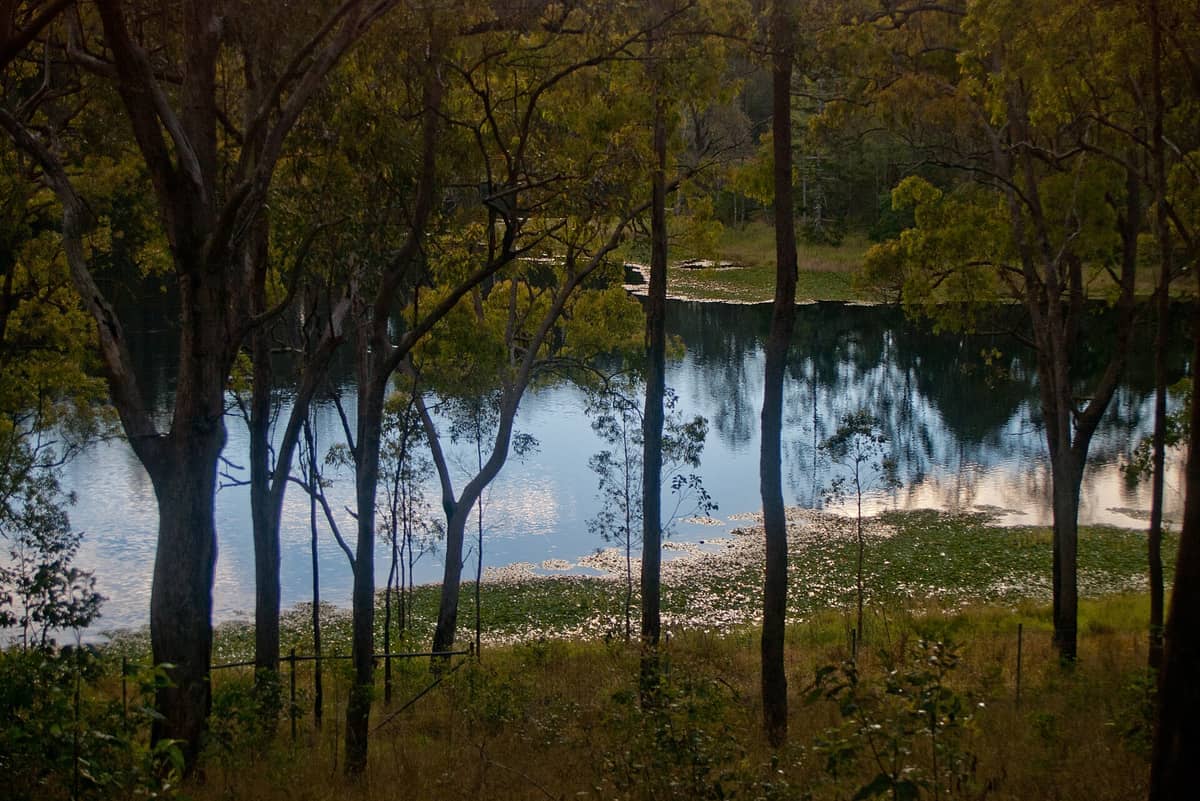
The centre sits at the edge of D'Aguilar National Park, roughly 12 km northwest of the Brisbane CBD. That location matters: you arrive via winding bush roads, and by the time you reach the car park, the city feels genuinely distant. The surrounding Enoggera Reservoir bushland is part of the experience, not just a backdrop.
For context on how this fits into Brisbane's broader wildlife offering, the Brisbane wildlife guide compares it with other options across the region, including Lone Pine Koala Sanctuary and Daisy Hill Koala Centre.
💡 Local tip
Admission prices are updated annually on 1 July. Always check the official Queensland Parks website before visiting to confirm current rates.
What You Actually See and Experience
The Wildlife Centre is the main draw. Inside, the star attraction for most visitors is the platypus enclosure, a darkened room housing a custom-built tank that mimics the low-light conditions platypuses prefer. You watch them swim from behind glass, their duck-like bills probing the water. It is one of the few places in Queensland where you can reliably observe a platypus, an animal notoriously difficult to spot in the wild even when you know exactly where to look.
Beyond the platypus tank, the enclosures feel carefully considered rather than rushed together. Water dragons bask on logs at mid-morning. Freshwater crocodiles lie almost entirely still in shallow water, close enough to study the texture of their scales. Native frogs occupy humidity-controlled terrariums. The indoor section is compact enough to cover in 45 minutes, but families with curious children tend to linger significantly longer.
Outside, the reservoir precinct opens daily from 6:00 am to 6:00 pm and provides walking trails through genuine eucalypt bushland. Kookaburras are reliably loud in the early morning, and wallabies are sometimes spotted along the trail edges, particularly in the quieter hours before the centre opens. The difference between the managed wildlife centre and the unmanaged bushland immediately around it is instructive and part of what gives Walkabout Creek its character.
ℹ️ Good to know
The Wildlife Discovery Show runs at set times and costs more than standard entry. It includes keeper-led presentations with live animals and is worth the extra cost if you're visiting with children or want more interpretive depth.
Tickets & tours
Live prices and dates from our booking partner. If you book, we may earn a commission at no extra cost to you.
Luggage Storage in Brisbane
From 5 €Instant confirmationFree cancellationBrisbane's dark stories true crime tour
From 21 €Instant confirmationFree cancellationFull-day Mount Tamborine winery tour from Brisbane with lunch
From 140 €Instant confirmationFree cancellationNorth Stradbroke Island small groups day tour
From 79 €Instant confirmationFree cancellation
How the Experience Changes Through the Day
Arriving close to opening time at 9:00 am gives you the best chance of seeing animals active before the heat of the day sets in. The platypus enclosure is best experienced with fewer people in the room, and early morning weekday visits are noticeably quieter than weekend afternoons. On warm days, many of the reptile species become less active after midday, retreating to shaded spots where they are harder to observe well.
By 11:00 am on weekends, school holiday crowds can make the indoor enclosures feel tight. The centre is small, and that intimacy is usually an asset, but it does mean that a busy Saturday afternoon in January is a different experience from a quiet Tuesday morning in June. If you have flexibility, aim for weekday mornings during school terms.
The reservoir trails outside peak in the early morning for birdwatching. Pack insect repellent regardless of season, as the bush setting brings the usual Queensland flying insects. In summer, the combination of humidity and insects makes the outdoor areas less comfortable from late morning onward.
⚠️ What to skip
The centre is closed on Christmas Day and Anzac Day. Plan accordingly if your trip falls near either date.
Getting There: What the Bus Option Actually Involves
Driving is the most practical option for most visitors. Follow Waterworks Road out of the inner suburbs, which transitions into Mount Nebo Road as you climb into the hills. Parking on site is available but described as limited, so arriving early helps. The drive from the CBD takes roughly 20 to 30 minutes depending on traffic and time of day.
By public transport, the Translink route 385 bus runs from the city to The Gap park 'n' ride. From there, it is approximately 500 metres to the centre on foot or by bike. If you are combining this with a broader day out in the area, the guide to getting around Brisbane covers Translink's Go Card and ticketing system in detail.
Rideshare apps including Uber operate in Brisbane and can cover the route from the city, though the suburban-to-rural transition means availability and pricing should be checked in advance, particularly for the return journey. This is not a destination where you should assume a quick ride home will materialize.
Cultural and Ecological Context
Walkabout Creek sits on the traditional lands of the Turrbal and Jagera peoples, whose connection to this Country predates European settlement by thousands of years. The D'Aguilar National Park surrounding the site protects a significant stretch of eucalypt and mixed forest that provides habitat for many of the species the centre focuses on. The reservoir itself was created as part of Brisbane's water supply infrastructure, and the land around it remains a working catchment area.
The platypus is listed as Near Threatened by the IUCN by the Australian Government under the Environment Protection and Biodiversity Conservation Act, and the centre's captive population plays a role in research and public education. Understanding that context shifts the visit from simple entertainment to something more meaningful: these are animals under genuine pressure in the wild, and the centre makes that reality accessible without being preachy about it.
If the ecology of the surrounding national park interests you, D'Aguilar National Park has its own trail network that pairs well with a Walkabout Creek visit, particularly for half-day or full-day nature itineraries.
Photography Tips and Practical Considerations
The platypus enclosure presents real challenges for photography. The space is deliberately kept dark to mimic the animal's preferred conditions, which means most smartphone cameras will struggle without proper night mode settings. A camera with good low-light performance and a wide aperture lens gives significantly better results. Flash photography is not appropriate in this setting and is unlikely to be welcome.
The outdoor enclosures and reservoir trails photograph well in the soft morning light. Bring a zoom lens or equivalent if bird photography is a goal, as the birds around the reservoir are not always close to the trails. Water dragons near the outdoor areas tend to hold position long enough for unhurried shots.
Accessibility is worth noting honestly: the access paths are described as wheelchair accessible, but official guidance states that assistance may be needed in places. The bush trails adjacent to the reservoir are natural-surface paths and are not fully accessible. Visitors with mobility considerations should check the Queensland Parks website for current access details before making the trip.
💡 Local tip
Wear closed-toe shoes even if you plan only to visit the wildlife centre. The surrounding grounds and optional trails involve uneven surfaces, and thongs or sandals are noticeably uncomfortable by the end of a longer visit.
Is It Worth the Trip?
At under A$9 for adult entry to the Wildlife Centre, Walkabout Creek represents genuine value compared to larger wildlife attractions in the region. It will not satisfy visitors looking for a comprehensive zoo experience with dozens of species. The range of animals is deliberately focused rather than encyclopedic, and if you arrive expecting something on the scale of a major wildlife park, you will come away underwhelmed.
But for what it does offer, particularly the platypus viewing, it is difficult to match. These animals are notoriously shy in the wild, often visible only briefly at dawn or dusk in the right rivers, and even then you need to know exactly where to look. Walkabout Creek makes the encounter reliable. That alone justifies the trip for many visitors.
Families planning a broader nature day out might consider pairing Walkabout Creek with a stop at Mount Coot-tha Lookout on the way back into the city, or exploring the Brisbane Botanic Gardens at Mount Coot-tha, which is roughly on the same route from the western suburbs toward the CBD.
Visitors who are short on time, focused on urban experiences, or planning to visit Lone Pine Koala Sanctuary may find it difficult to justify fitting Walkabout Creek into the same trip. The 12 km distance from the CBD is manageable but not trivial, and the centre works best when it has enough time around it to breathe.
Insider Tips
- Book the Wildlife Discovery Show in advance if visiting on a weekend or during school holidays. Spots fill up, and the keeper presentations add interpretive value that standard entry alone does not provide.
- The platypus tank requires your eyes to adjust to the dark. Give yourself a few minutes before trying to locate the animal, and avoid checking your phone screen in the enclosure as it disrupts your night vision and everyone else's.
- The Enoggera Reservoir trails open at 6:00 am, well before The Enoggera Reservoir trails open at 6:00 am, well before the Wildlife Centre itself. Early-morning walkers occasionally spot wallabies and a broader range of birds than those who arrive at opening time for the Wildlife Centre. Early-morning walkers occasionally spot wallabies and a broader range of birds than those who arrive at opening time for the centre.
- Prices increase annually on 1 July. If your visit falls just before or after that date, double-check the current rates on the Queensland Parks website to avoid any surprise at the entry desk.
- Parking is limited, so if you are driving on a busy weekend morning, arriving by 9:00 am when the centre opens gives you the best chance of a spot close to the entrance.
Who Is Walkabout Creek Discovery Centre For?
- Families with children who want reliable, up-close wildlife encounters without a full zoo-scale budget
- Platypus enthusiasts and wildlife photographers looking for one of Queensland's most dependable viewing opportunities
- Nature travellers who want to combine a wildlife centre visit with adjacent bushland walking
- Budget-conscious visitors seeking a genuine natural experience at low cost
- Visitors with half a day to spare who want to leave the city briefly without committing to a full day trip
Nearby Attractions
Combine your visit with:
- Boondall Wetlands
Stretching across 1,150 hectares of tidal flats, mangroves, and melaleuca forest north of the CBD, Boondall Wetlands is Brisbane's largest urban nature reserve. Free to enter, it rewards early-morning visitors with dense birdlife, quiet boardwalks, and a genuine sense of distance from the city.
- D'Aguilar National Park
D'Aguilar National Park stretches across roughly 40,000 hectares of subtropical rainforest, eucalypt woodland, and rocky ridgelines just northwest of Brisbane. It offers serious hiking trails, abundant wildlife, and genuine quiet, all within an hour of the city centre.
- Daisy Hill Koala Centre
Daisy Hill Koala Centre offers one of the most low-key, genuine koala encounters near Brisbane, completely free of charge. Set inside Daisy Hill Conservation Park, this small but thoughtfully designed centre combines educational exhibits with resident koalas in an outdoor enclosure, alongside wild koalas living in the surrounding eucalypt forest. It rewards patient visitors who arrive without expectations of a zoo-style show.
- Lone Pine Koala Sanctuary
Opened in 1927, Lone Pine Koala Sanctuary in Fig Tree Pocket is the world's first and largest koala sanctuary, home to koalas alongside kangaroos, platypuses, and native birds. It's the most direct way to get close to Australian wildlife without leaving the Brisbane area, though knowing when and how to visit makes a real difference to the experience.
Planning a trip? Discover personalized activities with the Nomado app.