Brisbane Botanic Gardens Mt Coot-tha: What to See, When to Go, and How to Make the Most of It
The Brisbane Botanic Gardens Mt Coot-tha spread across 56 hectares at the foot of one of Brisbane's most recognisable landmarks. With free admission, a tropical dome, a Japanese garden, and shaded walking paths that change character dramatically depending on the hour, this is one of the city's most rewarding green spaces for visitors who take the time to explore beyond the car park.
Quick Facts
- Location
- 152 Mount Coot-tha Road, Mount Coot-tha QLD 4066
- Getting There
- Bus stops 17 and 19 nearby; Toowong Station approx. 40-min walk
- Time Needed
- 2–3 hours for a thorough visit; 1 hour for a focused walk
- Cost
- Free entry; some facilities may have separate charges
- Best for
- Families, nature lovers, photography, quiet morning walks
What the Gardens Actually Are
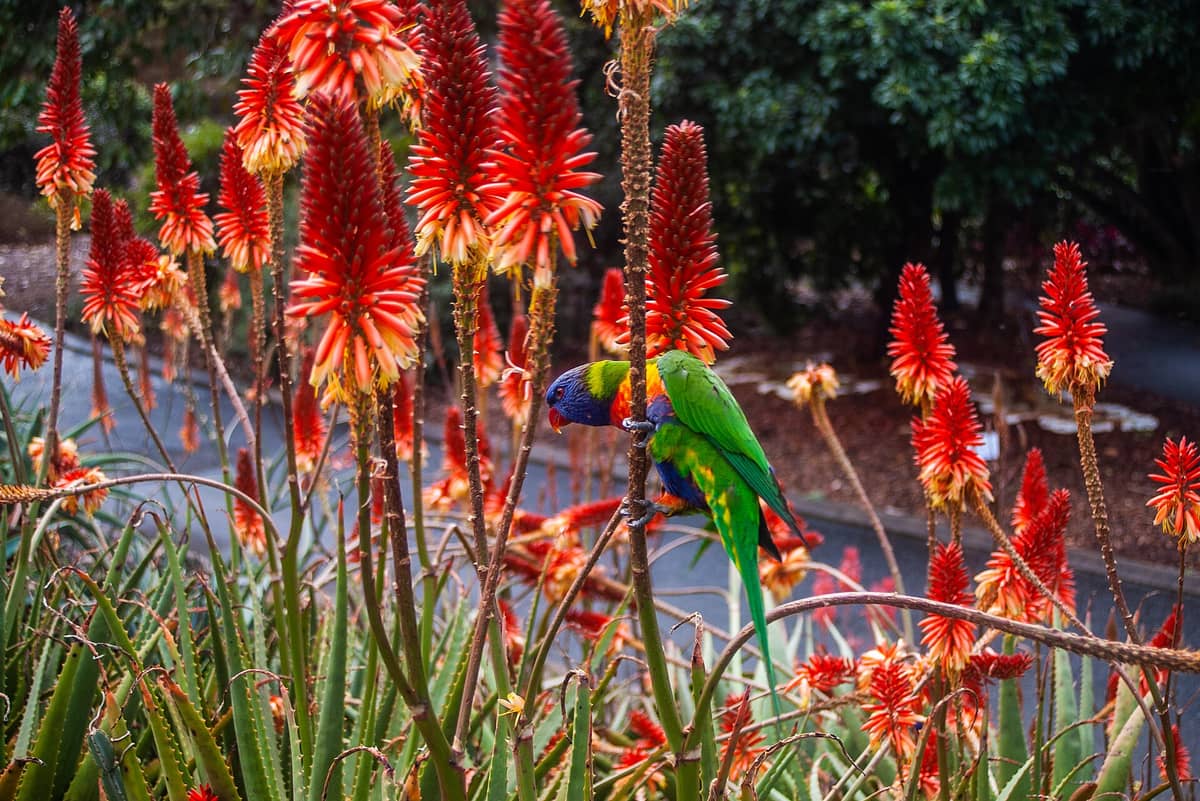
The Brisbane Botanic Gardens Mt Coot-tha is a 56-hectare public garden officially opened in 1976. It sits at the base of Mount Coot-tha, about 6 kilometres west of the Brisbane CBD, and functions both as a living plant collection and as everyday green space for the surrounding suburbs. It is not a manicured formal garden in the English tradition, nor is it a wild bushland reserve. It occupies an interesting middle ground: cultivated enough to have labelled plant collections and themed zones, but large and varied enough that you can find genuinely quiet corners even on a busy weekend afternoon.
The gardens sit on the traditional Country of the Turrbal and Jagera peoples, and that context is worth holding in mind as you walk through a landscape that, in parts, still retains something of its original subtropical character. The collection spans themed areas including a tropical display house, Japanese garden, arid zone garden, bonsai house, and extensive lake and wetland sections. Free parking is available on site, which makes this one of the more accessible major green spaces in the city.
💡 Local tip
Opening hours shift with the season: 8 am to 6 pm from September through March, and 8 am to 5 pm from April through August. Arriving at opening time on a weekday gives you the best chance of having paths largely to yourself.
How the Experience Changes by Time of Day
Early mornings are the most atmospheric time to visit. Before 9 am, particularly in the cooler months between May and September, the gardens carry a quiet that feels at odds with how close they are to a city of over a million people. The air smells of damp mulch and eucalyptus, and the light comes in low and golden through the tree canopy along the main lake path. Bird calls dominate. You are likely to share the paths only with dog walkers (dogs are not permitted in the gardens, but the car park and surrounding areas are active early) and serious joggers using the perimeter tracks.
By mid-morning on weekends, families with young children arrive in earnest and the lawn areas near the central lake fill up with picnic blankets. The atmosphere becomes noticeably more social and lively, without ever feeling crowded in the way a city park might. Weekday mid-mornings are quieter and suit anyone who wants to move at a slower pace through the plant collections. Early afternoons in summer can be uncomfortably hot: temperatures around 30°C combined with humidity make extended walking less pleasant, and the tropical dome can feel oppressive rather than impressive in that heat.
The last hour before closing, particularly in autumn and winter, produces some of the best light for photography. Long shadows across the Japanese garden's raked gravel, and the warm tone the late sun casts across the lily pond, are worth timing a visit around.
Tickets & tours
Live prices and dates from our booking partner. If you book, we may earn a commission at no extra cost to you.
Luggage Storage in Brisbane
From 5 €Instant confirmationFree cancellationBrisbane's dark stories true crime tour
From 21 €Instant confirmationFree cancellationFull-day Mount Tamborine winery tour from Brisbane with lunch
From 140 €Instant confirmationFree cancellationEscape Tour self-guided, interactive city challenge in Brisbane
From 30 €Instant confirmation
Highlights Worth Seeking Out
The Tropical Display Dome is the single most distinctive feature in the gardens. It houses a concentrated collection of tropical and subtropical plants in a climate-controlled environment, including ferns, orchids, and species that would not survive Brisbane's occasional winter nights outdoors. The dome itself is architecturally modest from the outside, but inside the density of growth and the controlled humidity make it feel genuinely immersive. It is a useful stop even on a hot day, because the internal climate is managed, and a good fallback on a grey winter morning.
The Japanese Garden is a formal garden designed in a traditional Japanese style, with a timber pavilion, stone lanterns, a koi pond, and carefully shaped plantings. It is one of the most photographed sections of the grounds and can feel slightly overpopulated on weekend mornings as a result. If you want it relatively clear, aim for a weekday before 10 am. The Nepalese Peace Pagoda is not in these gardens — it stands at South Bank. For a related stop in the city, see the Nepalese Peace Pagoda in South Bank Parklands.
The main lake is the geographic and social heart of the gardens. A path circles it and is comfortable for pushchairs and wheelchairs over most of its length. Water birds are a constant presence: you will hear ducks before you see them, and depending on the season, you may encounter nesting activity in the reed margins. The bonsai house near the main entrance is easy to overlook but is genuinely impressive on closer inspection, with specimens that represent decades of cultivation.
The arid zone garden, set away from the main pedestrian flow, gives a clear picture of how dramatically Australian flora can vary across climatic zones. Cycads, spinifex grasses, and drought-adapted eucalypts sit in stark contrast to the lushness of the tropical dome a short walk away. It is less trafficked than the central lake area, which makes it worth a visit purely for the chance to move at your own pace.
Getting There and Getting Around
The most practical way to reach the gardens is by car. Free parking is available on site, including wheelchair-accessible spaces, and the drive from the CBD takes roughly 15 minutes outside peak hours. By public transport, bus routes serving stop 19 on Mount Coot-tha Road provide reasonable access; check Translink for current route numbers and frequency, as schedules change. Toowong Station on the Ipswich and Springfield rail lines is the nearest train station, but the walk is substantial, which makes it a realistic option only on a mild day.
Within the grounds, most of the main paths are paved and suitable for wheelchairs and pushchairs. A dedicated mobility map produced by Brisbane City Council identifies pathway gradients, accessible toilets, and accessible parking. For visitors planning a broader day around this part of the city, the Mount Coot-tha Lookout is a short drive up the hill from the gardens and offers panoramic views across Brisbane, making for a natural pairing in a half-day itinerary.
ℹ️ Good to know
The gardens are at 152 Mount Coot-tha Road, Mount Coot-tha QLD 4066. Wheelchair-accessible spaces are available in the main car park. The council's mobility map is available on the Brisbane City Council website.
Practical Considerations and Honest Assessments
The gardens are genuinely free to enter, which puts them in a different category from many attractions of comparable quality. There is a cafe on site for refreshments, and picnicking on the lawns is common and permitted. Bring water if you plan to walk extensively, particularly between November and March when temperatures and humidity are at their highest. Sunscreen and a hat are not optional during summer months.
Photography is unrestricted in the public areas of the gardens, and the variety of environments within a relatively compact space makes this a productive location for anyone with a camera. The Japanese Garden and the tropical dome both suit close-up work. The lake and its surroundings work well in early morning or late afternoon light. A wide-angle lens captures the dome's interior effectively; a telephoto is useful for birds on the lake.
Who might not enjoy this? Visitors arriving purely for a dramatic wow factor or a single standout feature may find the gardens slightly diffuse in their appeal. The impact here is cumulative: it builds across an hour or two of unhurried walking rather than arriving in a single moment. Travellers on a very tight itinerary who are weighing this against, say, the Gallery of Modern Art or the South Bank Parklands should know that the gardens reward a slower pace and a genuine interest in plants or natural spaces.
Summer afternoon thunderstorms are common in Brisbane between November and March and can develop quickly. If you are visiting in the warmer months, check the Bureau of Meteorology forecast before you go and try to be back at your car or shelter before 3 pm if storms are predicted. Lightning in an open garden is a serious risk.
⚠️ What to skip
Summer afternoon storms can arrive suddenly between November and March. Plan to finish your garden walk before early afternoon if thunderstorms are forecast.
Fitting the Gardens Into a Broader Brisbane Visit
The gardens pair naturally with other attractions in the Mount Coot-tha area. After walking the grounds, the drive up to the Mount Coot-tha Lookout takes under ten minutes and adds a completely different perspective on the city. The Sir Thomas Brisbane Planetarium is located within the botanic gardens precinct and offers ticketed shows for visitors interested in astronomy. It is worth checking the planetarium's session schedule in advance, as shows run at set times rather than continuously.
For visitors building a nature-focused day, the gardens work well as a morning stop before heading elsewhere in the region. The walking tracks on Mount Coot-tha begin close to the gardens and offer a more physically demanding alternative for those who want to combine green space with genuine exercise. The two complement each other without overlapping.
Insider Tips
- The Japanese Garden is quietest on weekday mornings before 10 am. If you want the koi pond without phone cameras in the foreground, Tuesday to Thursday mornings are your best option.
- The tropical dome is a worthwhile stop even on an overcast winter day when the rest of the gardens look a little muted. The internal warmth and density of the plantings make it feel like a different climate zone entirely.
- Free parking fills up on weekend mornings by around 9:30 am in peak periods. If the main car park is full, there is additional street parking along Mount Coot-tha Road, but the walk back in summer heat is not trivial.
- The planetarium is a separate ticketed attraction located within the gardens precinct. Check the session schedule on the Brisbane City Council website before you arrive — it is easy to arrive and find the next show is two hours away.
- The path around the main lake is suitable for pushchairs over most of its length, but a short section near the southern end has an uneven surface that may require care. The mobility map on the council website marks this accurately.
Who Is Brisbane Botanic Gardens Mount Coot-tha For?
- Families with young children looking for free outdoor space with genuine variety
- Photographers interested in botanical subjects, water birds, and landscape light
- Visitors wanting a quiet, low-key morning before a busier afternoon itinerary
- Travellers with an interest in subtropical and tropical plant collections
- Anyone pairing a garden visit with the Mount Coot-tha Lookout or planetarium
Nearby Attractions
Other things to see while in Mount Coot-tha:
- Mount Coot-tha Lookout
Standing 226 metres above sea level, Mount Coot-tha Lookout delivers an unbroken sweep of Brisbane's skyline, river bends, and Moreton Bay beyond. It is free, open around the clock, and rewards visitors differently depending on whether you arrive at dawn, dusk, or deep into the night.
- Mount Coot-tha Bushwalking Trails
Mt Coot-tha Reserve sits just 15 minutes from Brisbane's CBD yet feels a world away, with more than 1,600 hectares of eucalypt forest, seasonal waterfalls, and over 18.5 km of graded trails. Entry is free, the terrain suits everyone from casual walkers to serious hikers, and the birdlife alone is worth the trip.
- Sir Thomas Brisbane Planetarium
Tucked inside the Brisbane Botanic Gardens at Mt Coot-tha, the Sir Thomas Brisbane Planetarium is the only public planetarium in Queensland. With a 12.5-metre projection dome, affordable Cosmic Skydome shows, and free general admission, it earns a place on any Brisbane itinerary that reaches beyond the typical.
Planning a trip? Discover personalized activities with the Nomado app.