Tokyo Camii: Japan's Largest Mosque in the Heart of Shibuya
Tokyo Camii and Diyanet Turkish Culture Center is Japan's largest mosque, a serene Ottoman-style sanctuary in Shibuya's residential backstreets. Open daily with free admission, it offers a rare window into Islamic architecture, Turkish culture, and quiet contemplation amid one of the world's most frenetic cities.
Quick Facts
- Location
- 1-19 Oyamacho, Shibuya-ku, Tokyo 151-0065
- Getting There
- Yoyogi-Uehara Station (Odakyu Line / Tokyo Metro Chiyoda Line), about 5-min walk from Exit A3
- Time Needed
- 45 minutes to 1.5 hours
- Cost
- Free admission
- Best for
- Architecture lovers, cultural travelers, Muslim visitors, quiet seekers
- Official website
- tokyocamii.org
What Is Tokyo Camii?
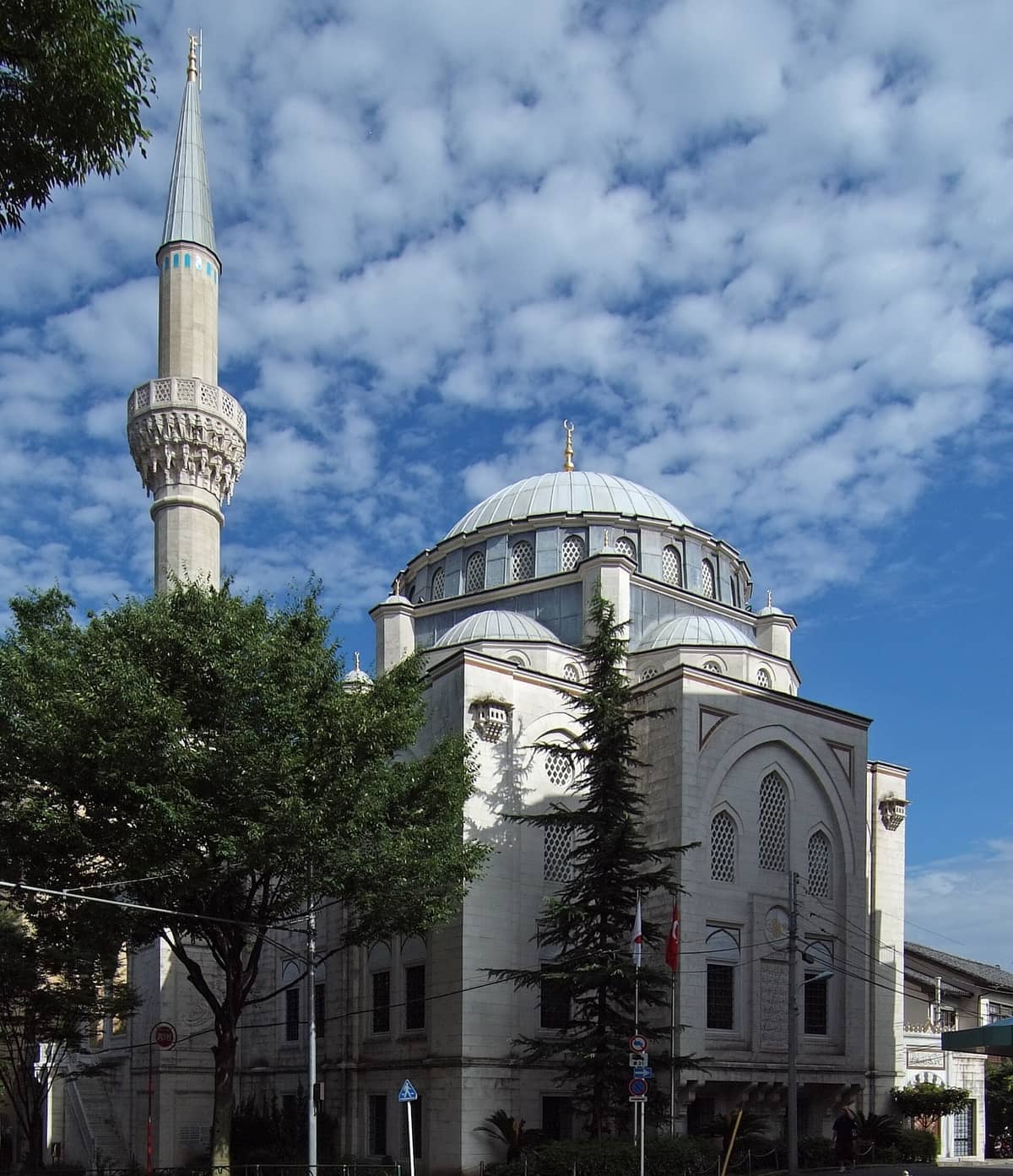
Tokyo Camii, formally known as the Tokyo Camii and Diyanet Turkish Culture Center, is Japan's largest mosque. It sits on a quiet residential street in Oyamacho, Shibuya, about five minutes from Yoyogi-Uehara Station. The contrast it creates with its surroundings is immediate and striking: a full Ottoman dome and twin minarets rising above low-slung Japanese apartment buildings, the pale stone exterior glowing against Tokyo's grey rooftops.
The complex serves dual purposes. The upper floors function as an active mosque with a main prayer hall and a women-only prayer space. The ground floor operates as a Turkish cultural center, welcoming non-Muslim visitors for free, with informational displays, Turkish tea service, and regular guided tours in Japanese. The building is open to the public every day of the year, making it one of Tokyo's most accessible and genuinely unusual cultural experiences.
ℹ️ Good to know
Guided tours (in Japanese) are available on Saturdays, Sundays, and public holidays at 14:30. Confirm the current schedule at tokyocamii.org before visiting, as times can change.
The Architecture: Ottoman Craft in a Tokyo Neighborhood
The current building opened in 2000, designed by Turkish architects and constructed using materials and craftsmen sourced from Turkey. The style is classical Ottoman, drawing direct inspiration from 16th-century imperial mosques in Istanbul. The exterior features Bursa stone cladding, intricate geometric tilework, and calligraphic inscriptions carved above the entrance arch. The twin minarets, while scaled for the urban plot, are structurally faithful to the form.
Inside the main prayer hall, the dome rises approximately 18 meters above the carpeted floor. Hand-painted arabesques in deep blue, terracotta, and gold cover the ceiling panels. The mihrab, indicating the direction of Mecca, is framed in carved white marble. Stained glass filters light into the hall in amber and green tones in the late morning, shifting to a cooler hue by mid-afternoon. Visitors permitted to observe the hall from designated areas will notice the space changes personality entirely depending on cloud cover and the hour.
For travelers interested in Tokyo's architectural range, the mosque makes a thought-provoking contrast to the city's modernist landmarks. If you're planning a broader tour of the city's design heritage, the Tokyo architecture guide covers everything from Meiji-era brick buildings to contemporary glass towers.
Tickets & tours
Hand-picked options from our booking partner. Prices are indicative; availability and final rates are confirmed when you complete your booking.
Tour to Mt. Fuji Area, Oshino Hakkai and Kawaguchi Lake from Tokyo
From 57 €Instant confirmationFree cancellationNikko UNESCO Shrine and Nature View 1-Day Tour from Tokyo
From 78 €Instant confirmationFree cancellationYanaka: historical walking tour in Tokyo's old town
From 40 €Instant confirmationFree cancellationMeiji Shrine, Imperial Palace, Asakusa and Tokyo Skytree Entry
From 34 €Instant confirmationFree cancellation
Visiting Hours and When to Go
General visiting hours are daily 10:00 to 18:00. Fridays are an important exception: because of the congregational Jumu'ah prayer, general public visits are only permitted from 14:30 onwards on Fridays. Arriving in the morning on a weekday or Saturday typically means a quieter experience, with fewer visitors in the cultural center and a better chance of unhurried observation in the hall.
Mid-morning on a weekday is the calmest window. The light entering the dome is strongest between 10:00 and 11:30, which also makes it the best window for interior photography. By early afternoon on weekends, small guided tour groups begin arriving and the ground floor can feel noticeably busier. Even then, the scale of the prayer hall absorbs people well, and the atmosphere remains respectful and subdued.
⚠️ What to skip
Prayer times are observed five times daily. During prayers, the hall is reserved for worshippers. Non-Muslim visitors should expect restricted access during these windows, which shift throughout the year. Check current prayer times before planning your visit if you specifically want to observe the interior.
Practical Walkthrough: What to Expect on Arrival
You enter through the cultural center on the ground floor. Staff at the entrance are accustomed to international visitors and will explain the layout. Shoes must be removed before entering the prayer area on the upper floors; a shelf and bags are provided at the entrance. Women visiting the main prayer space should bring a headscarf, or one may be available on loan at the door.
The ground floor itself is worth spending time in. Display panels explain the basics of Islamic practice and the history of the Muslim community in Japan, which is small but has deep roots in this part of Shibuya. Turkish tea is sometimes offered to visitors. The cultural center also stocks Turkish publications and occasionally hosts events tied to the Turkish and broader Muslim calendar.
Accessibility requires some planning. The internal layout involves stairs between floors, with the prayer hall on the second floor and the women's area on the third. There is no confirmed step-free route to the upper floors in official sources. Visitors with mobility limitations should contact the mosque directly via the official website before visiting.
Historical Context: Islam and Turkey in Tokyo
A mosque has occupied this site since 1938, when the first Tokyo Camii was built to serve Central Asian and Tatar Muslim refugees who had settled in Japan after fleeing Soviet-era repression. That original wooden structure eventually deteriorated beyond repair. The Turkish government, through its Diyanet (Directorate of Religious Affairs), funded and oversaw the construction of the current building, which opened in 2000. The connection to Turkey is integral, not decorative: the mosque is operated under the auspices of the Turkish state, and the cultural center reflects that relationship through its programming and staff.
This history places Tokyo Camii within a broader pattern of religious and cultural diversity that most visitors to Tokyo don't often encounter. The Shibuya area's international character is well established, but this corner of Oyamacho feels apart from the commercial energy of the ward's more famous districts. For a different kind of spiritual architecture in the city, Meiji Jingu Shrine in neighboring Harajuku offers a Shinto counterpoint, and the best temples and shrines in Tokyo guide covers the wider range.
Photography and Sensory Notes
Photography is generally permitted in non-prayer areas. The interior of the prayer hall, when accessible, is one of the most photogenic spaces in Tokyo: the dome's painted surface, the carpet's deep red geometry, and the quality of filtered natural light create conditions that phone cameras handle surprisingly well. A wide-angle lens captures the full arch of the dome; a standard lens works better for the tilework detail around the mihrab.
The soundscape is part of the experience. The call to prayer (adhan) sounds from the minarets at each of the five prayer times. Inside the cultural center between prayers, the room is genuinely quiet, a quality Tokyo rarely offers. The smell of the space is faintly of wood, carpet, and occasionally incense, distinct from the cedar and smoke of Tokyo's Shinto and Buddhist sites.
💡 Local tip
The exterior is best photographed from the narrow street directly in front of the entrance gate. Arrive before 10:30 on a clear weekday morning for light on the facade without the shadow of surrounding buildings. The minarets catch direct sun earlier than the main entrance arch.
Getting There and the Surrounding Area
Yoyogi-Uehara Station is served by two lines: the Odakyu Line (connecting directly to Shinjuku in about five minutes) and the Tokyo Metro Chiyoda Line (running through Omotesando and central Tokyo). Exit A3 brings you onto the street closest to the mosque, which is visible within about five minutes of walking. The neighborhood is quiet and residential, with small cafes and a few food shops nearby.
Yoyogi-Uehara is a comfortable base for combining Tokyo Camii with nearby attractions. Yoyogi Park is about 15 minutes on foot to the northeast, and the Shinjuku Gyoen gardens are accessible by a short train ride back toward Shinjuku. For travelers working through Shibuya ward more broadly, the Shibuya neighborhood guide outlines what else is within reach.
Insider Tips
- Arrive on a Tuesday or Wednesday morning for the quietest experience. Weekend afternoons see the most visitors, particularly after the 14:30 guided tour.
- If you want to observe the prayer hall interior, time your visit for mid-morning between the Fajr (pre-dawn) and Dhuhr (midday) prayer windows, when the space is typically open to respectful observation.
- The cultural center occasionally serves Turkish tea and light refreshments to visitors at no charge. It depends on staffing and the day, but it is worth asking when you arrive.
- Combine the visit with a walk along the residential streets of Oyamacho toward Yoyogi Park. This stretch of Shibuya is largely unknown to tourists and offers a very different read on the ward than its commercial center.
- Check the official website for Ramadan programming. During the holy month, the mosque organizes community iftars and events that are occasionally open to non-Muslim visitors interested in observing.
Who Is Tokyo Camii (Tokyo Mosque) For?
- Architecture enthusiasts who want to see Ottoman craft executed to a high standard outside Turkey
- Travelers seeking genuine quiet and contemplation in central Tokyo
- Muslim visitors looking for prayer facilities in the city
- Cultural travelers interested in Japan's minority religious communities and their histories
- Photographers looking for interior light conditions unlike anything else in Tokyo
Nearby Attractions
Combine your visit with:
- Akasaka Palace (State Guest House)
The State Guest House, Akasaka Palace is Japan's principal diplomatic residence and one of the few Western-style palaces in Asia open to the public. Built in neo-baroque style for the Crown Prince in the early 20th century, it now receives heads of state and, on select days, ordinary visitors. The combination of ornate gilded interiors, formal French gardens, and a Japanese-style annex makes it one of the most architecturally unusual stops in Tokyo.
- Edo-Tokyo Open Air Architectural Museum
Spread across the grounds of Koganei Park, the Edo-Tokyo Open-Air Architectural Museum rescues and reassembles more than 30 historic structures spanning the Edo period through the early 20th century. From a dismantled farmhouse to a reconstruction of a Showa-era Tokyo streetscape, it is one of the most thoughtful and undervisited cultural sites in the metropolitan area.
- Enoshima
A small island off the Shonan coast of Kanagawa Prefecture, Enoshima packs a surprising amount into a short walk: a three-part Shinto shrine, ancient sea caves, a hilltop botanical garden, a lighthouse observation tower, and seafood stalls lining a stone-paved shopping street. It works as a half-day excursion or a full day if you combine it with nearby Kamakura.
- Gotokuji Temple
Gotokuji Temple in Setagaya is a working Soto Zen Buddhist temple that happens to be one of the claimed birthplaces of the maneki-neko, Japan's iconic beckoning cat. Hundreds of white ceramic cats line the shelves of a dedicated shrine, creating one of Tokyo's most quietly striking visual spectacles. Entry is free, crowds are manageable, and the surrounding grounds offer genuine calm.