Tiritiri Matangi Island: Auckland's Open Wildlife Sanctuary in the Hauraki Gulf
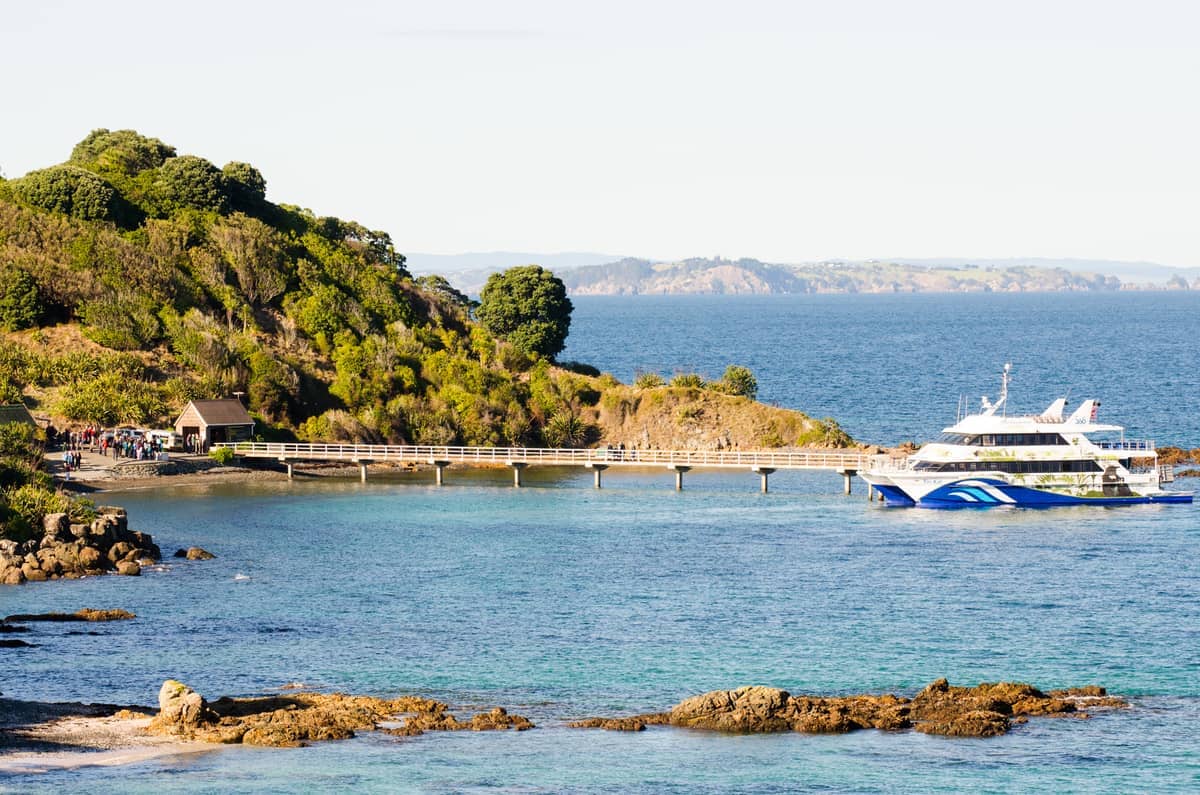
Tiritiri Matangi Island is a 220-hectare open sanctuary in the Hauraki Gulf where decades of restoration have brought rare and endangered New Zealand birds back from the brink. Accessible by ferry from Auckland's Viaduct Harbour or Gulf Harbour, it offers one of the most remarkable wildlife encounters in the country — no cage, no enclosure, just birds moving freely through regenerating forest.
Quick Facts
- Location
- Hauraki Gulf, approx. 4 km off the Whangaparāoa Peninsula, Auckland
- Getting There
- Ferry with Explore Group from Viaduct Harbour (approx. 80 min) or Gulf Harbour (shorter crossing); operates Wednesday–Sunday, timetable varies seasonally
- Time Needed
- Full day — the island visit is tied to the ferry timetable
- Cost
- Ferry fare required; confirm current prices with Explore Group before booking
- Best for
- Birdwatchers, families, nature lovers, conservation enthusiasts
What Is Tiritiri Matangi?
Tiritiri Matangi Scientific Reserve is a 220-hectare island in the Hauraki Gulf, roughly 4 km off the tip of the Whangaparāoa Peninsula north of Auckland. Its Māori name, translated by the Department of Conservation (DOC) as 'looking to the wind' or 'wind tossing about,' gives a hint of its character: exposed, breezy, and open. The island is managed by DOC as an open sanctuary, meaning the public is actively welcomed to walk through it and encounter wildlife that would be almost impossible to find elsewhere in New Zealand.
What makes Tiritiri Matangi exceptional is not just what lives here but what it took to get these species back. The island represents one of New Zealand's most celebrated conservation success stories — a model replicated in restoration projects around the country and referenced internationally. For anyone with an interest in New Zealand's ecological history, it sits alongside Rangitoto Island and the broader Hauraki Gulf island network as a place with genuine depth beyond the scenery.
ℹ️ Good to know
The ferry operates Wednesday to Sunday, with timetables that vary seasonally. Your time on the island is determined by the departure schedule, so check the Explore Group website and book in advance — ferries fill up, especially on weekends and school holidays.
The Restoration Story Behind the Island
Māori occupation of Tiritiri Matangi dates to at least the 14th century, and the island carries considerable ancestral significance. European settlement brought the familiar pattern of land clearing for farming, which stripped most of the native bush by the mid-20th century. A lighthouse built in 1864 and first lit in 1865 still stands and remains one of the island's most recognisable landmarks.
The transformation began in 1984, when a coordinated effort between DOC, the Supporters of Tiritiri Matangi (a volunteer group that continues to be essential to the island's operation), and the wider community began replanting native species. Over subsequent years, predator eradication cleared rats and mustelids from the island, creating conditions where birds that had been pushed to the margins of survival in New Zealand could be reintroduced. The result is an island where, today, you can hear a density of birdsong that feels almost disorienting after the relative quiet of mainland Auckland.
This is not a zoo or a theme park. The animals are wild, the tracks are natural, and the experience depends on the season, the time of day, and a degree of patience. That unpredictability is part of the appeal.
Tickets & tours
Live prices and dates from our booking partner. If you book, we may earn a commission at no extra cost to you.
Luggage Storage in Auckland
From 5 €Instant confirmationFree cancellationNew Zealand West Coast discovery tour
From 100 €Instant confirmationFree cancellation13,000ft skydiving experience in Auckland
From 195 €Instant confirmationFree cancellationDiscover Auckland City Tour
From 88 €Instant confirmationFree cancellation
The Wildlife: What You Are Likely to See
The island is home to several species of national significance. The takahē — a large, flightless rail once thought extinct and rediscovered in Fiordland in 1948 — can often be spotted grazing near the visitor centre or along the main tracks. These birds have almost no fear of humans, which means close encounters are genuinely possible. The saddleback (tīeke), with its chestnut saddle and sharp call, moves through the canopy with enough frequency that most visitors will see or hear one.
Little spotted kiwi are present on the island but nocturnal, so daytime visitors will not see them in the wild. North Island robins (toutouwai) are perhaps the most approachable birds on the island; they follow walkers along tracks, apparently interested in insects disturbed by footfall. Kōkako, fernbird, whitehead (pōpokotea), rifleman (tītipounamu), and red-crowned kākāriki are among the other species regularly encountered. Tuatara — the ancient reptile that survived the extinction of the dinosaurs and is found naturally only in New Zealand — can sometimes be spotted near rocky areas, particularly on warmer days when they bask.
💡 Local tip
Arrive on the early ferry if possible. Bird activity is highest in the first hours after the island opens to visitors, especially in the cooler months. By mid-afternoon, many species retreat into deeper cover.
Navigating the Island: Tracks and Terrain
The island has a network of well-maintained tracks suitable for most fitness levels, though the terrain does involve some inclines. The main ridge track leads to the 1864 Tiritiri Matangi Lighthouse near the island’s southern end and offers clear views across the Hauraki Gulf on calm days. The lighthouse is operational and managed by Maritime New Zealand. It is the oldest lighthouse still in operation in New Zealand and is listed as a heritage structure.
The tracks range from short loop walks near the visitor centre to longer routes that traverse the full length of the island. Most visitors comfortably cover the main routes in three to four hours, leaving time to sit, observe, and eat lunch at one of the picnic spots near Hobbs Beach at the island's southern end. The beach is the recommended landing point for private boats and kayaks and provides a pleasant break from the bush interior.
Guided walks are offered by volunteer guides who know the island's history and ecology in considerable detail. If you are visiting for the first time, joining a guided walk at least for part of the day is worth doing — the guides know where specific species are likely to be found on any given day. This kind of local knowledge significantly improves encounters compared to walking alone. For a sense of how Tiritiri Matangi fits into the wider gulf, the Hauraki Gulf Islands guide provides useful context on the other accessible islands.
⚠️ What to skip
Footwear matters. Some tracks become slippery after rain, and the terrain near the lighthouse involves uneven ground. Closed-toe shoes with grip are strongly recommended. Sandals are not suitable for anything beyond the area immediately around the visitor centre.
Getting There and Practical Logistics
Ferries to Tiritiri Matangi are operated by Explore Group and depart from two points: Auckland's Viaduct Harbour in the city centre, and Gulf Harbour on the Whangaparāoa Peninsula. The crossing from Viaduct Harbour takes approximately 80 minutes; Gulf Harbour is significantly shorter. Services operate Wednesday through Sunday, though the exact timetable varies by season. Always confirm current departure times directly with Explore Group and book in advance.
If you are staying in central Auckland, the Viaduct Harbour departure is the most straightforward option. The Wynyard Quarter and the waterfront area surrounding the ferry terminal have cafés where you can grab breakfast before boarding. Ticket prices should be confirmed with the operator before travel — the ferry fare is the principal cost, as there is no separate entry charge for the island itself.
Visitors arriving by private boat or kayak should use Hobbs Beach as the landing point. DOC's biosecurity rules apply to all visitors regardless of how they arrive: check, clean, and seal your gear to avoid bringing pests, soil, or seeds ashore. These are not bureaucratic formalities — biosecurity is the foundation on which the entire restoration depends.
Accessibility information for specific tracks has not been confirmed in DOC's publicly available material for this page. If mobility is a concern, contact DOC directly before booking to understand which areas of the island can be reached comfortably.
What to Bring and How to Photograph Wildlife
Pack layers. The island sits in open water and the wind can be strong even on otherwise fine days — a light windproof layer makes a significant difference to comfort. Sunscreen and a hat are essential in summer, as parts of the main track are exposed. Bring enough water and a packed lunch for a full day.
For photography, the birds on Tiritiri Matangi are unusually cooperative by international standards. North Island robins in particular will approach to within a metre or two. A mid-range zoom lens (70–200mm equivalent) is more than adequate for most encounters; the challenge is less about focal length and more about light in the forest interior. A camera that handles low light reasonably well will serve you better than one dependent on bright conditions. Do not use flash near wildlife.
Mobile phone cameras perform well in the open grassland areas near the lighthouse and at Hobbs Beach. The dense canopy sections of the track are more challenging, but the forest mood in those areas makes for compelling compositions even without sharp bird shots.
Honest Assessment: Who This Is For and Who Might Be Disappointed
Tiritiri Matangi is not a day trip you slot in casually. The ferry schedule, the travel time, and the full-day commitment mean it requires planning. If your Auckland itinerary is tight, consider whether a closer experience — such as a morning on Rangitoto's summit track or a day on Waiheke Island — might better fit your timeline.
Visitors hoping for guaranteed kiwi sightings in the wild will be disappointed — daytime kiwi encounters do not happen here. Visitors who want a beach day with swimming as the focus will also find this is not the right destination; Hobbs Beach is pleasant but the island's draw is ecological, not recreational.
For families with children who have genuine curiosity about animals, for birdwatchers at any level of experience, for anyone who wants to understand what New Zealand's forests sounded like before the introduction of predators, and for travellers willing to give a full day to something genuinely rare — this island consistently delivers. The birdsong alone, at volume and variety almost never heard on the mainland, tends to leave a lasting impression.
Insider Tips
- Book the earliest available ferry departure. Bird activity peaks in the morning, and you will have time to cover more of the island before the afternoon wind picks up.
- Volunteer guides board the ferry from Auckland and begin orienting visitors during the crossing — introduce yourself and ask where they saw specific species most recently before you disembark.
- The grass areas near the visitor centre and the path toward the lighthouse are where takahē are most reliably spotted. Do not spend all your time in the forest interior looking for them.
- Bring a small torch (flashlight) even on day visits. The lighthouse area and some track sections have interpretive displays that are easier to read in partial shade.
- Ferry bookings fill up weeks in advance during summer and school holidays. If your Auckland travel dates are fixed, book the ferry before you book anything else on your itinerary.
Who Is Tiritiri Matangi Island For?
- Birdwatchers wanting to see species like takahē, saddleback, and North Island robin in genuinely wild conditions
- Families with children old enough to walk 3–4 hours and interested in wildlife and nature
- Conservation-minded travellers curious about New Zealand's predator-free restoration model
- Photographers looking for approachable endemic wildlife in natural settings
- Visitors who want a structured day trip from Auckland that goes well beyond a city experience
Nearby Attractions
Combine your visit with:
- Auckland Botanic Gardens
Spread across 64 hectares in Manurewa, the Auckland Botanic Gardens offer free entry every day of the year, with themed garden collections, 10 hectares of native forest, and a visitor centre on site. It sits south of the city centre and rewards a longer visit than most people initially plan for.
- Auckland Zoo
Auckland Zoo has been part of the city's fabric since 1922, sitting in the Western Springs precinct with a collection that spans native New Zealand wildlife and international species. This guide covers everything from ticket prices and transit options to the best time of day to arrive and which exhibits deliver the most.
- Bastion Point (Takaparawhau)
Takaparawhau, known widely as Bastion Point, is a grassy headland in Ōrākei where Māori history, colonial conflict, and sweeping Waitematā Harbour views converge. It costs nothing to visit, carries centuries of significance, and rewards visitors who take time to understand what they are standing on.
- Bethells Beach (Te Henga)
Bethells Beach, officially Te Henga (Bethells Beach), is a raw, dramatic stretch of black-sand coastline about 45 minutes west of central Auckland. With rolling dunes, a freshwater lagoon, strong surf, and zero phone coverage, it delivers a genuine wilderness experience rare for a city of 1.6 million people.
Planning a trip? Discover personalized activities with the Nomado app.