The Rock Restaurant Zanzibar: Dining on the Indian Ocean, Tide by Tide
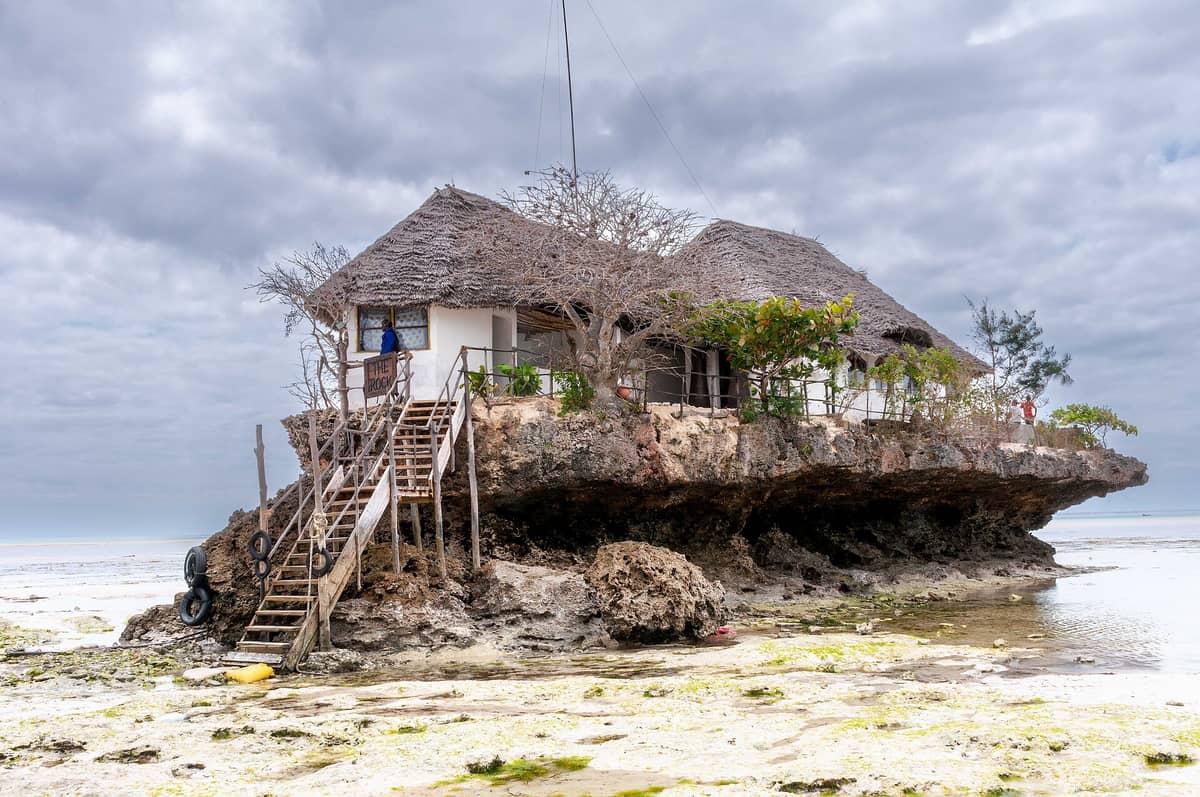
The Rock Restaurant Zanzibar sits on a small coral rock about 50 metres offshore at Pingwe, on the southeastern peninsula of Unguja. Reached by wading at low tide or by boat at high tide, it serves fresh seafood against open ocean views. This guide covers reservations, tide logistics, what the food is actually like, and whether the experience justifies the price.
Quick Facts
- Location
- Pingwe, Michamvi Peninsula, Unguja (Zanzibar), Tanzania
- Getting There
- Private transfer or taxi from Stone Town (approx. 1.5 hrs) or from east-coast beaches. No public dala-dala route runs directly to Pingwe; arrange transport in advance.
- Time Needed
- 2 to 3 hours for a full meal sitting
- Cost
- US$10 per-person non-refundable booking deposit (deducted from bill). Meal prices vary by menu item. Dining by reservation only.
- Best for
- Special-occasion dining, seafood lovers, sunset views, couples, photography
- Official website
- www.therockrestaurantzanzibar.com
What The Rock Restaurant Actually Is
The Rock Restaurant Zanzibar is a small seafood restaurant built on top of a natural coral rock formation roughly 50 metres offshore at Pingwe, on the Michamvi Peninsula in southeastern Unguja. The structure is compact, the kitchen even more so, yet the restaurant manages to serve a full menu of grilled seafood, curries, and local dishes across multiple sittings per day. It opened in 2010 and has since become one of the most photographed restaurants in Africa, a status that shapes the experience in ways worth understanding before you book.
Five daily sittings are offered: 12:00, 14:00, 16:00, 18:00, and 20:00. Each sitting is a fixed window, not an open reservation. The restaurant is small, which means tables are genuinely limited, and the 18:00 and 20:00 sittings, which catch the late afternoon light and post-sunset hours, tend to fill earliest.
💡 Local tip
Book directly through the official website at therockrestaurantzanzibar.com. A US$10 per-person non-refundable deposit is required at booking and is deducted from your final bill. Booking well in advance — especially for evening sittings during peak season — is strongly advised.
Getting There: The Tide Is Part of the Experience
Reaching The Rock is not like walking into an ordinary restaurant. At low tide, you wade across a shallow section of the Indian Ocean, sandals in hand, the warm water rarely above knee height. The sandy approach is wide and firm, and At low tide, you wade across a shallow section of the Indian Ocean, sandals in hand. At high tide, the water rises around the rock entirely, and the restaurant uses a boat to ferry guests across. At high tide, the water rises around the rock entirely, and the restaurant dispatches a small wooden boat to ferry guests across.
Checking the tide for your reservation time is not optional — it affects what you wear, how you arrive, and how much time to budget. Zanzibar's tidal variation is significant. Tide tables are freely available online; search for Michamvi or Chwaka Bay tide predictions for the relevant date. The restaurant is experienced with this and will generally advise upon booking, but doing your own check removes any uncertainty.
⚠️ What to skip
Wear footwear you can remove easily and clothes that won't suffer if they get briefly wet at the hem. At high tide, the boat transfer is short but the rock can be slippery near the waterline. The approach involves uneven surfaces, and the sources reviewed do not confirm step-free or wheelchair-accessible facilities — contact the restaurant directly if this is a concern.
There is no direct public dala-dala route to Pingwe. Most visitors arrive by private taxi or a vehicle arranged through their accommodation. From Stone Town, expect around 90 minutes by road. From east-coast beaches like Paje or Jambiani, the drive is considerably shorter, often under 30 minutes depending on your starting point. Arrange return transport in advance as the Michamvi Peninsula has limited options for flagging down vehicles, particularly after dark.
Tickets & tours
Live prices and dates from our booking partner. If you book, we may earn a commission at no extra cost to you.
Zanzibar catamaran and snorkelling tour to Mnemba Marine Park
From 114 €Instant confirmationFree cancellationNyerere National Park two-day safari with two game drives
From 866 €Instant confirmationFree cancellationSerengeti National Park private three-day safari from Zanzibar
From 2.144 €Instant confirmationFree cancellationZanzibar north coast sunset dhow cruise
From 42 €Instant confirmationFree cancellation
The Setting: What You See from the Rock
Once you are seated, the view is the first thing that registers. The Indian Ocean extends in every direction, broken only by the thin dark line of the reef in the distance and the occasional silhouette of a dhow. The water around the rock shifts colour through the day: a pale milky turquoise in the midday glare, deepening to cobalt in the late afternoon, and fading to silver and rose at sunset. The horizon is uninterrupted.
Tables are arranged on a small terrace that wraps partially around the rock, plus a tight interior dining area. The interior is cooler during peak midday heat and offers shade, but most guests request terrace seating. At the 16:00 and 18:00 sittings, the light softens in the west and the temperature drops noticeably, making those hours the most comfortable and the most photogenic. The 12:00 and 14:00 sittings are bright and hot; bring sunscreen and consider a hat if you are sensitive to direct sun.
The soundscape is almost entirely natural: the slap and drag of small waves against the rock below, wind through the open sides of the terrace, and whatever conversation your table is having. There is no live music during regular service. The smell is salt air, warm rock, and whatever the kitchen is grilling — often prawns or whole fish over charcoal.
The Food: What to Expect on the Plate
The menu leans heavily on seafood, which makes geographic sense given the kitchen's location. Grilled prawns, octopus, lobster, and fresh catch of the day appear consistently, prepared with Swahili spice influences — coconut, tamarind, cardamom — that reflect the islands' culinary history as a crossroads of Indian Ocean trade. Non-seafood options exist, but The Rock's identity is built around what comes out of the water around it.
The quality is generally considered good by the standards of the location, though realistic expectations matter. This is not a Michelin-starred kitchen; it is a small restaurant serving a significant volume of covers daily on top of a coral rock in the tropics. For a broader sense of what to eat across the island, see the Zanzibar food guide, which covers everything from street food at Forodhani Gardens to coastal Swahili cooking.
Prices are at the higher end for Zanzibar, which is to be expected. The experience commands a premium, and the deposit system is designed partly to manage no-shows that would otherwise leave a tiny restaurant with empty seats it cannot fill at short notice. Budget accordingly and treat the meal as a special-occasion expense rather than everyday dining.
ℹ️ Good to know
If you are visiting Zanzibar's southeast coast, The Rock pairs naturally with a morning or afternoon at nearby beaches. Jambiani and Paje are within easy reach, and combining beach time with an evening reservation here is a common itinerary.
Photography: What Actually Works Here
The exterior shot — the rock rising from a glassy sea, restaurant perched on top — is best captured from the beach at Pingwe during the 14:00 to 16:00 window when the sun is still high enough to illuminate the structure fully but not directly overhead. At low tide, you can wade partway out and shoot back toward the rock with the beach and treeline in the background.
From the terrace itself, wide-angle shots of the ocean are the easiest win. Shooting toward the horizon at the 16:00 or 18:00 sitting produces the kind of colours that photograph well without any editing. Avoid visiting specifically for a sunset shot without checking the direction: the sun sets in the west, and The Rock faces east toward open ocean, so the sky behind you is where the colour happens, not in front. The light falling on the water from the west, however, is genuinely remarkable during the golden hour.
Honest Assessment: Is It Worth It?
The Rock Restaurant Zanzibar is one of those places where the concept and the setting are so striking that the food almost becomes secondary. That is both its strength and its limitation. If you are visiting Zanzibar and the idea of sitting over the Indian Ocean eating grilled seafood appeals to you, the experience will likely exceed your expectations simply because the physical reality of the place is genuinely unusual. There are very few restaurants in the world that require a tidal crossing to reach.
If you are a serious food traveler whose primary interest is culinary quality above all else, manage your expectations. The setting will impress; the kitchen does solid work within real constraints. Those looking to understand Zanzibar's food culture more broadly will learn more from an afternoon at Darajani Market or an evening at Forodhani Gardens than from a meal here. But those are different kinds of experiences, and they are not competing for the same moment in your trip.
Who should skip it: travelers on tight budgets, anyone who finds heavily Instagrammed locations inherently less enjoyable, and those with significant mobility limitations given the uneven approach and boat transfer. It is also worth skipping if you are visiting during the main rainy season and weather is unstable — dining on an open terrace over choppy water in heavy rain is not the experience the photographs suggest.
For those planning a longer itinerary around the island, both the Zanzibar in 3 days guide and the one week in Zanzibar guide include the southeast coast as a natural base for combining The Rock with Jozani Forest and the beaches nearby.
Practical Logistics at a Glance
- Reservations: Book directly at therockrestaurantzanzibar.com. Required for all visits.
- Sittings: 12:00, 14:00, 16:00, 18:00, 20:00, and 20:30 daily; the 20:30 seating features live rock music.
- Deposit: US$10 per person, non-refundable, deducted from the bill. Verified February 2025.
- Tides: Check tide conditions for your sitting time before you travel. The restaurant's access method — wading or boat — depends on this.
- Getting there: Private taxi or arranged transfer. No direct public transport to Pingwe.
- Dress: Casual is acceptable; smart casual is appropriate for evening sittings. Expect to remove shoes for the crossing.
- Accessibility: Uneven surfaces and a potential boat transfer mean this is not straightforward for guests with significant mobility needs. Contact the restaurant directly.
Insider Tips
- The 16:00 sitting offers the best balance of light, temperature, and atmosphere. It is not a sunset sitting — the sun sets in the west while the restaurant faces east — but the quality of afternoon light on the water at this hour is excellent, and the heat has dropped enough to make the terrace comfortable.
- Check the tide table independently before you travel, not just on the day. If you are booking months ahead, tide data for your date is still available from any standard marine tide forecaster; search for Chwaka Bay, Zanzibar.
- Arrive at Pingwe beach 15 to 20 minutes before your sitting time. The crossing, whether by foot or boat, takes a few minutes, and arriving rushed adds unnecessary stress to what should be a relaxed meal.
- If you are staying on the east coast rather than Stone Town, The Rock is far more accessible logistically. Jambiani and Paje are well under 30 minutes away, making it realistic as a standalone dinner without a long transfer in each direction.
- Photographs of the exterior look best from the beach at low tide, not from the terrace itself. If you want the signature shot of the rock in the water, plan to arrive early and shoot from the shore before you wade across.
Who Is The Rock Restaurant For?
- Couples celebrating a special occasion or anniversary
- Travelers on the southeast coast who want a memorable lunch or dinner without returning to Stone Town
- Photography-minded visitors who want the iconic exterior shot and ocean terrace views
- Seafood lovers wanting fresh Indian Ocean catch prepared with Swahili spice influences
- Anyone whose Zanzibar trip only has room for one splurge dining experience
Nearby Attractions
Combine your visit with:
- Bwejuu Beach
Bwejuu Beach sits on Unguja's southeast coast, about 50 km from Stone Town, and delivers something increasingly rare on Zanzibar: a long stretch of sand without the resort crowds. The water is calm, the village is small, and the pace is slow. It suits travelers who want a beach day that feels like an escape rather than a performance.
- Cheetah's Rock Wildlife Sanctuary
Cheetah's Rock Wildlife Sanctuary is a small, guided wildlife experience on Unguja where visitors walk alongside rescued cheetahs, interact with servals, and meet a rotating cast of African species in semi-natural enclosures. It is expensive, deliberately exclusive, and unlike anything else on the island.
- Chumbe Island Coral Park
Chumbe Island Coral Park sits off Zanzibar's southwest coast and protects one of the Indian Ocean's most intact coral reef ecosystems. Reaching it requires advance planning, a boat transfer, and a genuine interest in marine conservation — but for the right traveler, nothing on the island compares.
- Kidichi Spice Farm & Persian Baths
A few kilometers inland from Zanzibar's northern coast road, the Kidichi Persian Baths preserve a rare piece of Omani sultanate architecture, complete with decorative plasterwork and domed ceilings. Paired with a working spice farm, this site offers a quieter, more considered alternative to the busier spice tours closer to Stone Town.
Planning a trip? Discover personalized activities with the Nomado app.