Technisches Museum Wien: Vienna's Grand Museum of Science and Technology
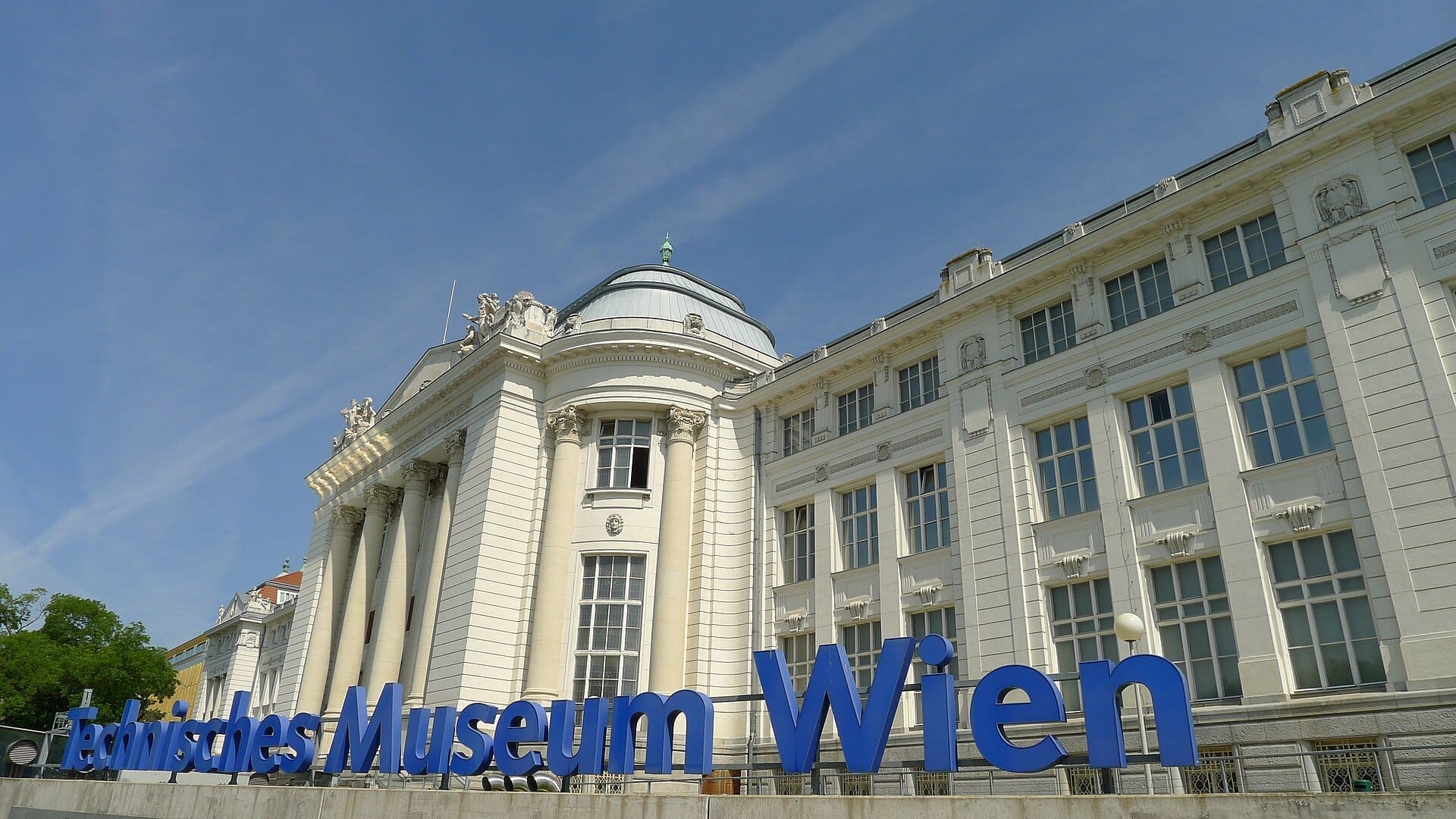
The Technisches Museum Wien (Vienna Museum of Science and Technology) is one of Central Europe's largest and most comprehensive science and industry museums, housed in a monumental early-20th-century building near Schönbrunn. With 22,000 m² of exhibition space covering everything from Habsburg-era machinery to interactive energy experiments, it rewards curious visitors of almost any age.
Quick Facts
- Location
- Mariahilfer Straße 212, 1140 Vienna (Schönbrunn area)
- Getting There
- 10-min walk from Schönbrunn (U4); trams 52 & 60 to Penzinger Straße or Winckelmannstraße
- Time Needed
- 3–5 hours; a full day for families or enthusiasts
- Cost
- €18 adults; free for visitors under 19
- Best for
- Families with children, science and engineering enthusiasts, rainy-day visitors
- Official website
- www.technischesmuseum.at
What the Technisches Museum Wien Actually Is
The Technisches Museum Wien is Austria's national museum of science, technology, and industry. It opened in 1918, though its foundation stone was laid in 1909, making it a product of the late Habsburg drive to celebrate industrial progress. The building itself is a solid, austere early-modernist structure, far less ornate than the Ringstraße palaces a few kilometers to the east, which signals its purpose: this is a place built for machinery and ideas, not imperial ceremony.
The scale is genuinely impressive. The museum's exhibition area covers approximately 22,000 m², spread across multiple floors and wings. The collection ranges from full-size steam locomotives and aircraft to a recreated underground mine, from early telecommunications equipment to interactive rooms dedicated to physics and energy. For visitors who associate science museums with modest, slightly dusty rooms of labeled artifacts, the TMW resets expectations quickly.
ℹ️ Good to know
Opening hours: Mon–Fri 09:00–18:00; Sat, Sun, and public holidays 10:00–18:00. The cash desk closes at 17:30, so plan accordingly. Tickets: €18 for adults; free for visitors under 19.
Arriving: The Approach and First Impression
The walk from Schönbrunn U4 station takes roughly ten minutes along a quiet residential stretch of the 14th district. On a weekday morning you will mostly share this route with school groups and locals. The museum's main entrance is set back from Mariahilfer Straße behind a courtyard, which tends to be quiet even when the galleries inside are moderately busy. If you arrive by tram (lines 52 or 60 to Penzinger Straße or Winckelmannstraße), the museum appears quickly from either direction along this slower, ground-level route.
The lobby is functional and clearly organized. Signage is in both German and English throughout the museum, which makes independent navigation manageable even without prior research. Pick up a floor plan at the entrance — the building's layout is not immediately intuitive, and the plan helps orient you between the older heritage sections and the more recently renovated interactive zones.
If you are combining this visit with nearby Schönbrunn, note that the palace and its grounds will consume the better part of a morning on their own. The TMW deserves a separate half-day. For a planned route, see the 3 days in Vienna itinerary, which accounts for this area of the city.
Tickets & tours
Hand-picked options from our booking partner. Prices are indicative; availability and final rates are confirmed when you complete your booking.
Wiener Melange coffeehouse experience
From 34 €Instant confirmationFree cancellationSelf-guided digital scavenger hunt in Wiener Neustadt
From 13 €Instant confirmationVienna KunstHausWien Museum Hundertwasser tickets
From 15 €Instant confirmationFree cancellationImperial Vienna 72-hour hop-on hop-off bus
From 55 €Instant confirmationFree cancellation
Inside: What You Will Actually See
The permanent collection is organized thematically rather than chronologically, which works in its favor. The heavy industry section on the ground floor is the most immediately dramatic: full-scale locomotives, a historic aircraft suspended from the ceiling, and mining equipment create a sense of physical weight and industrial history that photographs rarely capture. Standing next to an early 20th-century steam engine, you get a visceral sense of the engineering ambition that defined Austria's industrial era.
One of the museum's most distinctive features is the Schaubergwerk, a reconstructed show mine in the basement. Visitors can descend into tunnels that replicate the experience of early underground mining, complete with timber supports, narrow passages, and period tools. Note that this section is the one area not fully accessible by wheelchair; the rest of the museum is reachable via special elevators.
The upper floors shift toward applied sciences, telecommunications, and energy. Some of these sections have been renovated with interactive stations: hands-on experiments with electricity, sound, and optics that hold younger visitors' attention well. The interactivity level is solid without being the museum's primary identity — it never feels like a children's science center trying to entertain rather than educate.
The musical instruments and early recording technology section is worth more time than most visitors give it. Austria's cultural history in music collides here with the engineering story of how sound was first captured and reproduced, and the objects on display are unusually well-preserved. It is a quiet corner of the museum that rarely crowds even on busy afternoons.
How the Experience Changes by Time of Day
Weekday mornings are reliably the quietest window. School groups typically arrive mid-morning and cluster in the interactive sections, so if you want uninterrupted access to the ground-floor heavy machinery halls, arriving at opening (09:00 on weekdays) gives you the galleries almost to yourself. The industrial lighting in these sections works in your favor early in the day — the high ceilings and natural light from the upper windows create a clean, unhurried atmosphere.
Weekend afternoons, particularly on rainy Saturdays, bring the largest crowds. Families with young children dominate the interactive floors, and the café on the ground floor can have a wait. If you visit on a weekend, prioritize the mine section and the large-object halls early, and save the upper-floor stations for later when some families have moved on.
💡 Local tip
The museum is one of the better wet-weather options in Vienna's western districts. If a rainy afternoon opens up unexpectedly, you can walk or tram in from Schönbrunn or Westbahnhof without planning ahead — it handles impromptu visits well.
Historical and Cultural Context
The museum's 1909 foundation came at a moment when the Habsburg Empire was actively promoting industrialization and technical education as instruments of modernization. Vienna was already a center of scientific culture — the University of Vienna, the Academy of Sciences, and numerous technical institutes all contributed to a city that prided itself on intellectual life as much as artistic life.
The TMW was conceived to serve a dual purpose: to archive the technical achievements of the empire and to inspire the next generation of engineers and scientists. That foundational ambition still shapes the collection. Unlike some national science museums that have pivoted almost entirely to entertainment, the TMW retains a serious archival character. Many objects here are not replicas but genuine artifacts of Austrian and Central European industrial history.
Understanding Vienna's Habsburg-era context deepens the visit considerably. The museum sits within a city whose imperial ambitions expressed themselves in engineering and infrastructure as much as in art. The Vienna Habsburg imperial history guide provides useful background on how this era of institution-building shaped the city's cultural landscape.
Practical Details: Getting There, Accessibility, and Photography
The most convenient approach is the U4 metro line to Schönbrunn, followed by a ten-minute walk west. Trams 52 and 60, both accessible from Westbahnhof, stop directly adjacent to the museum at Penzinger Straße and Winckelmannstraße respectively. Bus 10A stops at Linzer Straße/Johnstraße, also within easy walking distance. There is no on-site parking listed for visitors, and the surrounding streets have resident-permit restrictions, so public transport is the practical default.
Accessibility is a genuine strength here. The museum is certified barrier-free, with wheelchair elevators reaching all areas except the show mine. Rental wheelchairs are available on-site, and the museum offers specialized tours for visitors with disabilities or special needs on request. Sign-language interpretation for hearing-impaired visitors can be arranged by reservation at +43 1 899 98-3001. For a city where accessibility in older cultural institutions can be inconsistent, the TMW sets a high standard.
Photography is generally permitted throughout the galleries without flash. The large-object halls on the ground floor offer the most photogenic subjects: locomotives and suspended aircraft against high industrial ceilings. Wide-angle lenses work better than telephoto in these spaces. The show mine section is too dim for reliable results without a camera that handles low light well.
💡 Local tip
If you hold a Vienna City Card or are considering the Vienna Pass, check whether the TMW is included or discounted under your pass before paying full price at the door. Verify current pass terms at the point of purchase, as inclusions change periodically.
Who Should Consider Skipping It
Visitors with only one or two days in Vienna and a primary interest in art, music, or Habsburg history will likely find the TMW less central to their priorities than the Kunsthistorisches Museum, the Belvedere, or the Hofburg. The museum is in the 14th district, somewhat removed from the historic first district, so getting there and back costs time that short-stay visitors may not want to spend.
Travelers focused on Vienna's art collections should prioritize the Kunsthistorisches Museum or the Upper Belvedere first. The TMW rewards visitors who have either a specific interest in science and industry history or a family with children who need hands-on engagement.
The museum is also less suited to visitors looking for a quick 90-minute cultural stop. The scale of the collection is not punishing, but it does reward unhurried exploration. Rushing through it produces a scattered impression that undersells what the place actually offers.
Insider Tips
- Arrive at 09:00 on a weekday if you want the ground-floor locomotive and aircraft halls to yourself before school groups arrive around mid-morning.
- The Schaubergwerk (show mine) in the basement is one of the more unusual experiences in any Vienna museum — give it time and expect narrow passages. It is genuinely atmospheric rather than a tourist simulacrum.
- The musical instruments and early sound recording section on the upper floors is consistently under-visited, even on busy days. It deserves 20–30 minutes and rewards visitors with any interest in audio or musical history.
- The museum café is decent but can be crowded on weekend afternoons. The surrounding streets near Schönbrunn have several bakeries and cafés that offer a less pressured alternative for a mid-visit break.
- Visitors under 19 enter free, which makes the TMW one of the most accessible family museum options in Vienna in terms of cost. A family with three children pays only the adult admissions.
Who Is Technisches Museum Wien (Technical Museum) For?
- Families with school-age children who want engaged, hands-on content alongside genuine historical artifacts
- Science, engineering, and industrial history enthusiasts who want depth rather than surface-level displays
- Visitors caught by rain in the western districts with a half-day to spend productively
- Travelers pairing the museum with a Schönbrunn visit over a full day in the 13th and 14th districts
- Accessibility-focused travelers who need a major cultural institution with reliable barrier-free infrastructure
Nearby Attractions
Other things to see while in Schönbrunn & Hietzing (13th District):
- Imperial Carriage Museum (Kaiserliche Wagenburg)
Housed within the grounds of Schönbrunn Palace, the Imperial Carriage Museum preserves around 170 vehicles once used by Habsburg emperors and empresses. From gilded coronation coaches to simple children's sleighs, the collection offers a concrete, often surprising window into court life across four centuries of Austrian imperial history.
- Lainzer Tiergarten
Covering 24.5 square kilometres on Vienna's western fringe, the Lainzer Tiergarten is a walled nature reserve where wild boar roam ancient oak forests and the Habsburg Hermesvilla rises unexpectedly from the trees. Entry is free, the crowds are thin, and the silence is genuine.
- Palmenhaus Schönbrunn
Built for Emperor Franz Joseph in 1882, the Palmenhaus Schönbrunn is one of Europe's largest and most architecturally striking glasshouses. Stretching 111 metres across the Schönbrunn Palace Gardens, it shelters tropical and subtropical plants beneath nearly 5,000 square metres of glass. Whether you visit in summer heat or winter chill, the interior world it contains feels genuinely removed from the city outside.
- Schönbrunn Gloriette
Perched on the ridge above Schönbrunn Palace, the Gloriette is a triumphal colonnade built in 1775 that offers the widest, most unobstructed panorama over central Vienna. You earn the view with a climb up 76 steps, and the reward is a rooftop terrace that stretches the full width of the structure. It is the visual anchor of the entire Schönbrunn estate.