Teatru Manoel: Inside Valletta's 300-Year-Old Baroque Theatre
Built in 1731 by a Knights Hospitaller Grand Master, Teatru Manoel is Europe's third-oldest working theatre and the oldest in the Commonwealth. Guided tours of the intimate oval auditorium, gilded boxes, and backstage corridors offer one of Valletta's most rewarding cultural experiences.
Quick Facts
- Location
- Old Theatre Street, Valletta, VLT 1426, Malta
- Getting There
- 6-minute walk from Valletta bus terminal; near St. Paul's Anglican Church
- Time Needed
- 45–75 minutes for a guided tour
- Cost
- €10 per person (standard tour); group bookings via bookings.mt@teatrumanoel.mt
- Best for
- History lovers, architecture enthusiasts, performing arts fans
- Official website
- teatrumanoel.mt
What Teatru Manoel Actually Is
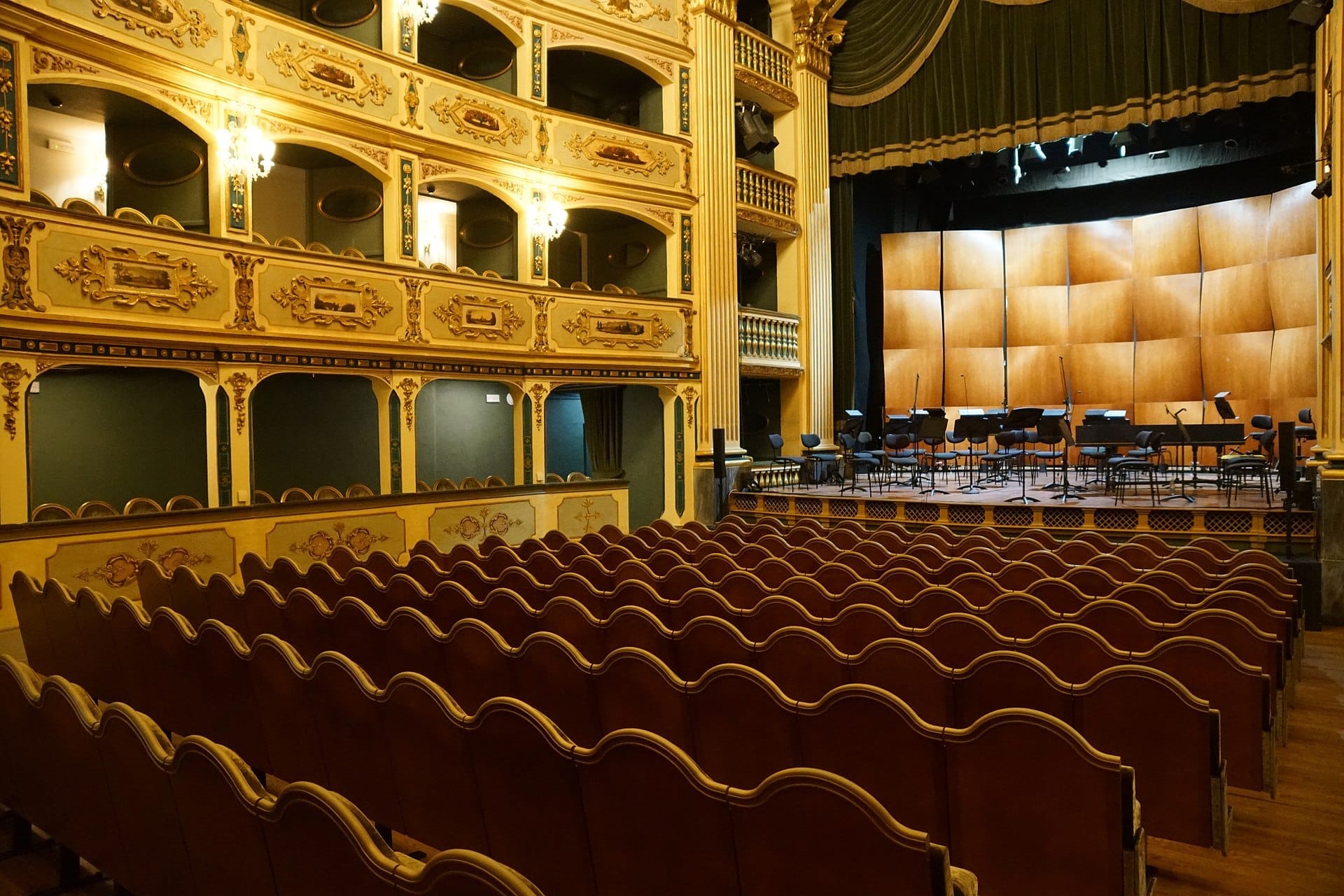
Teatru Manoel is a working Baroque theatre on Old Theatre Street in Valletta, still staging opera, drama, and dance after nearly three centuries of continuous use. It holds the distinction of being Europe's third-oldest working theatre and the oldest in the Commonwealth, facts that are easy to repeat but take on real weight once you step inside the oval auditorium and look up at the tiers of gilded boxes curving overhead. This is not a preserved relic. Rehearsals happen here. Productions sell out. The building is simultaneously a living cultural institution and one of the most architecturally striking interiors in Malta.
Visiting Teatru Manoel fits naturally into a broader exploration of Valletta's compact historic core, which packs an extraordinary density of Baroque and fortification architecture into less than one square kilometre. The theatre sits roughly in the middle of the peninsula, a short walk from the city's major monuments.
ℹ️ Good to know
Tours enter via the stage door at No. 81, Old Mint Street (Triq Zekka), around the corner from the main Old Theatre Street facade. Don't wait at the front entrance — go around.
Three Centuries of History in One Room
The theatre was commissioned by Fra António Manoel de Vilhena, Grand Master of the Knights of St. John, and completed in 1731. The founding motto, inscribed in Latin, translates roughly as 'for the honest entertainment of the people', which tells you something about how the Knights understood their civic role: culture was part of governance. The first play staged here was Merope, and productions in Italian and eventually Maltese followed across the subsequent centuries.
The building survived WWII bombing campaigns that destroyed much of Valletta's surrounding fabric, though not without damage. Post-war restoration work and later renovations in the late twentieth and early twenty-first centuries brought the interior back to something close to its original appearance while integrating modern technical equipment into the stage house. The result is an interior that reads convincingly as eighteenth-century but functions as a contemporary performance venue.
Understanding the Knights who built this theatre adds real depth to the visit. The Knights of Malta reshaped the entire island's built environment, and Teatru Manoel stands as one of the few surviving examples of their patronage of civil rather than military or religious architecture.
Tickets & tours
Hand-picked options from our booking partner. Prices are indicative; availability and final rates are confirmed when you complete your booking.
City Sightseeing hop-on hop-off bus tour of Gozo
From 20 €Instant confirmationFree cancellationThe Malta Experience Audio-Visual Show and La Sacra Infermeria Tour
From 20 €Instant confirmationFree cancellationLuggage Storage in Malta
From 6 €Instant confirmationFree cancellation6-day heritage and attractions pass in Malta
From 80 €Instant confirmationFree cancellation
The Guided Tour Experience
Tours are relatively short, typically running 45 to 75 minutes, and are led by knowledgeable guides who move the group through the auditorium, backstage corridors, dressing rooms, and sometimes the fly tower above the stage. The auditorium itself is the highlight: 534 seats arranged in an oval, with four tiers of private boxes finished in red and gold. The scale is more intimate than most visitors expect. You can see the entire space from almost any seat, which explains why the acoustics have always been praised.
Backstage, the guide typically explains how the original wooden stage machinery worked and points out where modern rigging systems have been grafted onto centuries-old structure. The smell of aged timber and stage paint is noticeable in the wings, the kind of detail that photographs do not capture. If a production is in technical rehearsal, parts of the backstage may be closed off, which is worth knowing before you book.
⚠️ What to skip
Teatru Manoel is a working theatre, so tours can be cancelled or rescheduled at short notice due to rehearsals. Check the official site before visiting and consider booking in advance, especially during the main performance season (September to June).
Tour Times and How to Plan Your Visit
During the winter season, running 1 September to 19 June, guided tours depart Monday to Friday at 11:00 and 15:00. On Saturdays, tours run at 10:30, 11:30, and 12:30. During the summer season, 20 June to 31 August, weekday tours shift to 10:30 and 12:00. The theatre is closed to visitors on Sundays. Admission is €10 per person for the standard tour. Group bookings should be arranged via email at bookings.mt@teatrumanoel.mt. The box office can be reached by phone at +356 2124 6389, Monday to Friday 10:00 to 17:00 during the main season, and Saturdays 10:00 to 13:00.
The morning tour slots tend to draw smaller groups than the afternoon session in winter, which can mean a more conversational experience with the guide. If you have any flexibility, the 11:00 slot on a Tuesday or Wednesday is typically the quietest. Saturday mornings attract a mix of tourists and locals, which gives the visit a slightly different energy.
💡 Local tip
If you want to experience the theatre as it was intended to be used, check the performance calendar on the official website. Attending an opera or chamber concert here costs more than a tour but delivers something no daytime visit can replicate.
Architecture and Sensory Details
The facade on Old Theatre Street is relatively understated for a Baroque building, a narrow three-bay elevation that gives little indication of what lies behind it. The real architecture is interior. Once you are standing in the stalls looking up at the horseshoe of boxes, the proportions make sense: the theatre was designed for an audience that wanted to see and be seen, with sightlines from box to box as important as sightlines to the stage.
The gilding on the box fronts catches the house lights warmly. The ceiling above the auditorium is painted and retains its original decorative programme, though heavily restored. Underfoot in the foyer, the floor tiles have the worn, uneven quality of genuine age rather than renovation. Acoustically, the unoccupied theatre has a slight live reverb, and even during a quiet tour the space rewards anyone who stops to simply listen to it.
Valletta as a whole rewards visitors who look at buildings rather than just walking past them. The things to do in Valletta extend well beyond the major monuments, and Teatru Manoel is one of the interiors that justifies the city's UNESCO World Heritage designation on its own terms.
Honest Assessment: Is It Worth Your Time?
For travellers interested in history, architecture, or performing arts, the answer is yes without qualification. The theatre is genuinely extraordinary, and the tour is informative without being padded. For travellers who find indoor cultural sites less engaging than beaches or outdoor landscapes, this is a harder sell. The experience is contained, intellectual, and entirely interior. There is no view, no dramatic outdoor setting, and no hands-on element.
Accessibility for visitors with mobility limitations is not explicitly detailed in official sources. As a Grade I listed building, modifications to the historic fabric are limited, so visitors with mobility concerns should contact the theatre directly before booking to confirm current arrangements.
If you are building a full day in Valletta, Teatru Manoel pairs logically with St. John's Co-Cathedral and the Grand Master's Palace, both within walking distance, to create a coherent arc through the city's Knights-era built heritage.
Insider Tips
- Enter via the stage door on Old Mint Street, not the main facade on Old Theatre Street. First-time visitors regularly miss the entrance and wait at the wrong door.
- If you are visiting Malta between September and June, check the Teatru Manoel performance calendar before finalising your dates. Attending a live production here, particularly an opera, is a different experience from the daytime tour and one of the more memorable things you can do in Valletta.
- The 11:00 weekday tour in winter typically has the smallest group size. Avoid Saturday mornings if you want a quieter, more personal guide interaction.
- Photography is generally permitted during tours, but ask your guide at the start. The auditorium with house lights up is the most photogenic shot; it is worth lingering a moment before the group moves backstage.
- The box office opens at 10:00 on weekdays during the main season. If you have not pre-booked and are walking in, arrive a few minutes before tour time to confirm availability, especially during peak spring months.
Who Is Teatru Manoel For?
- Travellers interested in Baroque architecture and Knights of Malta history
- Performing arts enthusiasts who want to see a genuinely historic working venue
- Visitors on a Valletta day who want to balance outdoor monuments with one meaningful interior
- Couples or small groups looking for an unhurried, intellectually engaging experience
- Photographers seeking interior architectural subjects beyond the cathedral circuit
Nearby Attractions
Other things to see while in Valletta:
- Basilica of Our Lady of Mount Carmel
The Basilica of Our Lady of Mount Carmel anchors Valletta's skyline with a 42-metre oval dome visible from across Marsamxett Harbour. Originally built in 1570 by the architect of Valletta himself, bombed flat in World War II, and rebuilt over two decades, this is a church with a remarkable story behind its serene facade.
- Casa Rocca Piccola
Casa Rocca Piccola is a 16th-century aristocratic palace on Valletta's Republic Street, home to the de Piro family for roughly 350 years and still occupied today. Guided tours take visitors through 50 furnished rooms stacked with Maltese silver, antique furniture, lace collections, and paintings, before descending into a genuine WWII air-raid shelter carved beneath the building.
- City Gate & Renzo Piano Parliament
The City Gate and Parliament House form Valletta's most architecturally charged entrance. Designed by Renzo Piano and completed between 2011 and 2015, this project replaced a clumsy 1960s gateway and derelict opera ruins with something genuinely bold. Entry to the public spaces is free and open around the clock.
- Fort St. Elmo & National War Museum
Standing at the tip of the Sciberras Peninsula, Fort St. Elmo has guarded Valletta's twin harbours for over five centuries. Inside, the National War Museum takes visitors from Bronze Age Malta through to the WWII siege that earned the island its George Cross, with artefacts that are genuinely difficult to find anywhere else in the Mediterranean.