Tai O Fishing Village: Hong Kong's Stilt-House Settlement on the Edge of Lantau
Tai O Fishing Village sits on the western tip of Lantau Island, where tidal creeks divide the land and locals have built their homes on stilts above the water for generations. It is one of the few places in Hong Kong where you can watch salted fish dry in the open air, hear the creak of wooden walkways, and feel genuinely far from the city.
Quick Facts
- Location
- Western Lantau Island, Hong Kong
- Getting There
- Bus 11 or 21 from Tung Chung MTR station (approx. 45 min); or ferry from Tuen Mun
- Time Needed
- 2.5 to 4 hours
- Cost
- Free to enter; boat tours and food are extra
- Best for
- Culture seekers, photographers, day-trippers wanting something beyond urban Hong Kong
What Tai O Actually Is
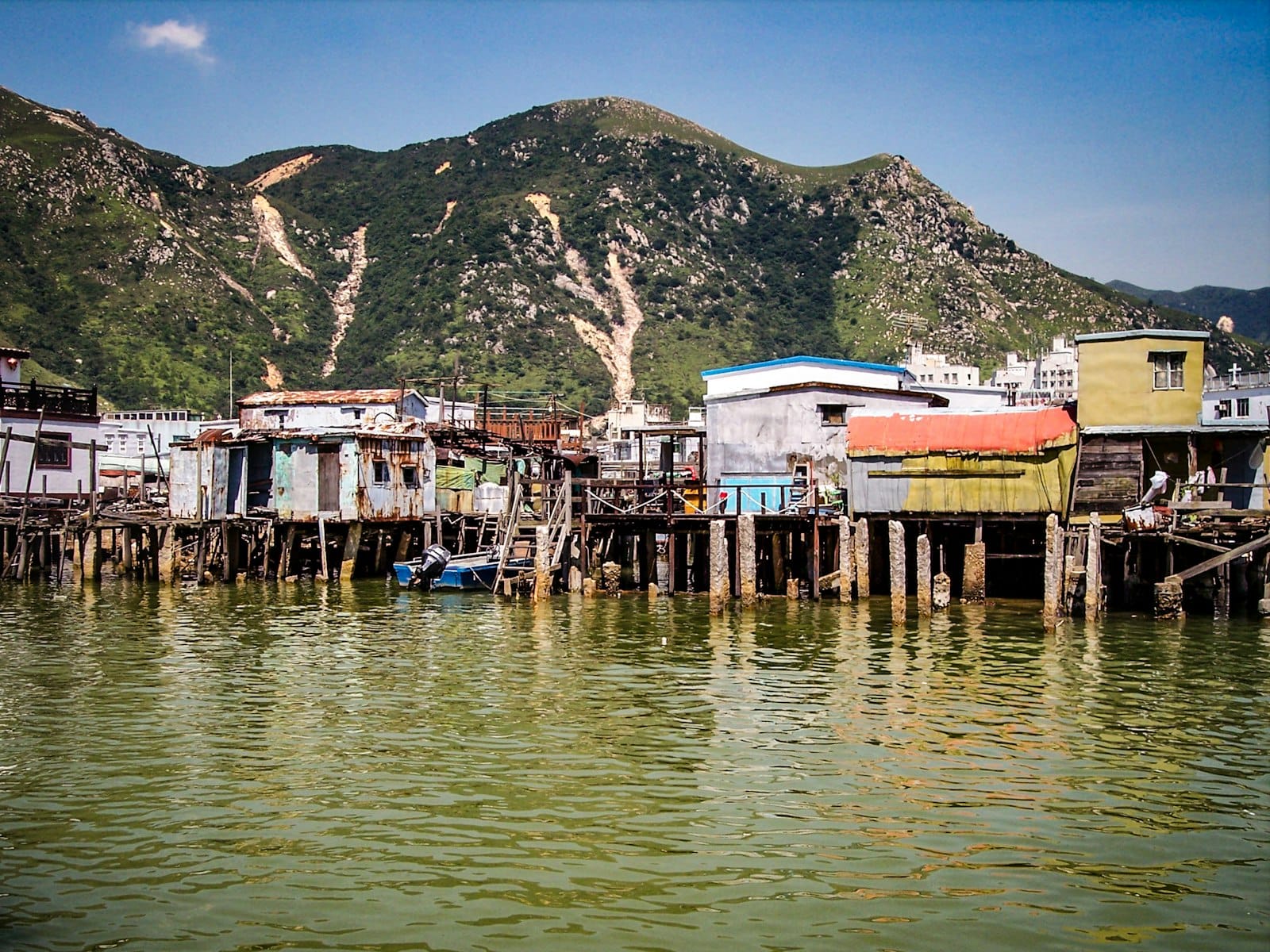
Tai O Fishing Village is a living community on the western edge of Lantau Island, where a network of tidal channels separates two sections of land. The older part of the village sits on a low-lying spit, and from it, rows of stilt houses extend out over the creek on wooden and corrugated-metal legs. These are not reconstructions or heritage props. People live in them, hang their laundry on the railings, and park their fishing skiffs beneath the floorboards.
The village has existed as a fishing settlement for several hundred years, historically home to the Tanka boat people, a group who traditionally lived on water and resisted assimilation into mainstream Cantonese society. Their influence is still visible in the food, the dialect, and the particular way the community organizes itself around the tidal rhythm. Tai O was once Hong Kong's most productive source of salted fish and shrimp paste, and both remain central to the local economy and identity.
ℹ️ Good to know
The village is free to walk through. No tickets, no entrance gates. You simply arrive and explore.
Arriving and Getting Oriented
Most visitors arrive by bus from Tung Chung, near the Ngong Ping 360 cable car terminus. The bus winds through the forested interior of Lantau before dropping steeply into the valley where Tai O sits. The transition is abrupt: one moment you are in a semi-rural mountain landscape, and then suddenly there are market stalls, the smell of fermented shrimp, and the sound of Cantonese opera playing from a radio somewhere.
A bar ferry crosses the main creek at the village center, connecting the market area to the stilt-house district. The crossing takes about thirty seconds and costs only a few Hong Kong dollars. It runs on demand throughout the day.
Once across, the stilt-house lanes branch in several directions. The best approach is to walk without a fixed plan, following the main elevated walkways and then doubling back through the narrower passages. The whole navigable area is compact enough that getting seriously lost is not a concern.
Tickets & tours
Live prices and dates from our booking partner. If you book, we may earn a commission at no extra cost to you.
Hong Kong audio guide with TravelMate app
From 8 €Instant confirmationHong Kong Tour with Peak Tram, harbour cruise and dim sum dinner
From 85 €Instant confirmationFree cancellationHong Kong night tour with Peak Tram and Symphony of Lights
From 63 €Instant confirmationFree cancellationLantau Cable Car and Big Buddha Guided Tour with Lunch in Hong Kong
From 85 €Instant confirmationFree cancellation
The Stilt Houses: What You See Up Close
The stilt-house structures range from old wooden cabins with weathered grey timber and rusting corrugated roofs to newer concrete-and-tile additions built on the same pile foundations. Some are clearly inhabited full-time, with potted plants on the walkways, drying racks of fish and squid hanging above the water, and household items stored in open-air shelters underneath. Others appear to serve more as storage or workshop space.
The walkways between houses are narrow, sometimes only wide enough for two people passing sideways. They flex slightly underfoot. At low tide, the creek beneath drops away to reveal mudflats, exposed rocks, and the occasional small boat stranded at an angle. At high tide, the water comes up close and the whole district takes on a different quality, the reflections of the houses shimmering below your feet.
⚠️ What to skip
These are private residences. Do not peer through windows or photograph people without a gesture of acknowledgment. The community tolerates visitors well, but common courtesy is expected.
The Market Street and Local Food
The main market street runs parallel to the creek on the landward side. Stalls sell dried seafood of every kind: fish, cuttlefish, shrimp, sea cucumber, and various species of shellfish, all laid out in flat baskets or hanging on lines. The smell is intense and specific, a combination of brine, dried protein, and something faintly sweet from the fermentation. If you have not encountered shrimp paste before, this is where you will understand why it polarizes people.
Several restaurants and snack stalls operate along the same stretch. The local specialties worth trying include stewed fish balls, taro waffles, and preserved egg desserts. Shrimp paste fried rice appears on most restaurant menus and, done well, is more subtle than the smell of the raw ingredient suggests. Prices are reasonable by Hong Kong standards, and portions are sized for a snack rather than a sit-down meal.
Boat Tours and the Pink Dolphin Possibility
Small wooden motorboats offer tours through the creek network and out into the open waters around Tai O. The main draw is the chance to spot Chinese white dolphins, locally called pink dolphins because of their distinctive coloring, which inhabit the Pearl River estuary nearby. Tours typically last around 30 to 40 minutes and depart when enough passengers have gathered, usually from the waterfront near the ferry.
Dolphin sightings are not guaranteed. The population in this area has declined over recent decades due to boat traffic, land reclamation, and pollution from the Pearl River delta. On a good day, the tours are genuinely remarkable. On a typical day, you may see fins at a distance. Go for the scenery and the experience of the water approach to the stilt houses, and treat any dolphin encounter as a bonus rather than a certainty.
💡 Local tip
For the best light and fewer crowds, aim to arrive by 9:30am on a weekday. By early afternoon on weekends, the main walkways become genuinely congested.
Timing, Crowds, and Practical Details
Weekday mornings are the quietest time to visit. The market stalls open early, the light is soft, and the ratio of residents to tourists tilts in the direction of the actual village. By midday on weekends, particularly during public holidays and the period between October and March when the weather is coolest and clearest, the main walkways can become slow-moving queues. The experience degrades quickly under those conditions.
Summer visits are possible but bring humidity and, occasionally, typhoon risk. The upside is that summer weekday crowds are thinner, and the surrounding hills are a deep, saturated green. Bring water, sunscreen, and footwear with some grip, as the wooden walkways can be slippery after rain.
Many visitors combine Tai O with a morning visit to the Tian Tan Buddha and the Po Lin Monastery nearby, making Lantau a full day rather than a half-day. Bus 21 connects Ngong Ping to Tai O directly, which allows this route without retracing to Tung Chung.
Who Will Not Enjoy Tai O
Visitors who need polished infrastructure, English-language signage throughout, or guaranteed wheelchair access will find Tai O frustrating. The walkways are uneven, some sections have low railings or none at all, and the village has not been manicured for tourism in the way that comparable heritage sites in other cities have. This is part of its appeal for many visitors, but it is worth stating plainly.
Those expecting a dramatic visual spectacle in the manner of a skyline or major landmark may also come away underwhelmed. Tai O rewards curiosity and patience. If you walk slowly, look carefully at the textures and details, and engage with the food, the experience accumulates into something memorable. If you arrive expecting a quick photo stop and leave, you will probably wonder what the fuss was about.
For context on how Tai O fits into the wider picture of what Hong Kong offers, the guide to whether Hong Kong is worth visiting addresses the city's range honestly.
Insider Tips
- Take The ferry across the main creek both ways rather than using the nearby footbridge, it costs almost nothing and the view from the water is different from anything you get on foot.
- The Tai O Heritage Hotel occupies the former marine police station on the hill overlooking the village. Even if you are not staying, the terrace is open to visitors for drinks and offers one of the cleaner elevated views of the stilt-house district.
- Shrimp paste sold in sealed jars from the market stalls makes an excellent and genuinely local souvenir. It travels well if properly sealed and is the kind of ingredient that most visitors would not find easily at home.
- The walk along the seawall on the western edge of the village, past the small Kwan Tai Temple and toward the open coast, is almost never mentioned in standard guides. It takes about fifteen minutes and ends at a stretch of open shore with clear views toward the Pearl River estuary.
- If you plan to take a boat tour, arrive before 10am. Boats fill up quickly after that, especially on weekends, and the later tours coincide with choppier afternoon winds.
Who Is Tai O Fishing Village For?
- Travelers who want to see a side of Hong Kong that predates the skyscrapers and has not been heavily reconstructed
- Food explorers interested in preserved and fermented seafood traditions specific to Cantonese fishing communities
- Photographers looking for textured, layered scenes: wood grain, rust, reflected water, and working boats
- Anyone combining a full Lantau day trip with the Big Buddha and Ngong Ping
- Visitors traveling with older children who can handle uneven terrain and benefit from seeing a genuinely different way of living
Nearby Attractions
Other things to see while in Lantau Island:
- Tian Tan Buddha (Big Buddha)
The Tian Tan Buddha is a 34-metre bronze statue perched at 482 metres on Lantau Island, overlooking the South China Sea and surrounded by forested peaks. Getting there is half the experience, whether by cable car or mountain trail, and the statue itself rewards those who climb its 268 steps with panoramic views that stretch to the horizon on clear days.
- Po Lin Monastery
Po Lin Monastery sits at the base of Lantau's Big Buddha where monks maintain a Buddhist temple complex established in 1906. The main hall houses three bronze Buddha statues, incense fills the courtyards, and a vegetarian restaurant serves temple meals. Most visitors pass through briefly en route to the Big Buddha stairs.
- Ngong Ping Village
Ngong Ping Village sits at the base of the Big Buddha on Lantau Island where a manufactured tourist complex offers souvenir shops, snack stands, and cultural attractions. Built as a tourist complex by the cable car operator, it's designed to extend visitor time between the cable car station and Po Lin Monastery. Architecture mimics traditional Chinese village style but everything dates from the 2000s.
- Ngong Ping 360 Cable Car
The Ngong Ping 360 cable car carries passengers 5.7 kilometres over Lantau Island's forested peaks and North Lantau coastline to Ngong Ping village, with the Tian Tan Buddha waiting at journey's end. Whether you choose a standard cabin or upgrade to a crystal-floor gondola, the 25-minute ride delivers some of Hong Kong's most rewarding aerial scenery.
- Citygate Outlets
A definitive guide to Citygate Outlets on Lantau Island. Learn what to expect, how discounts really work, best times to visit, and whether this Hong Kong outlet mall deserves a spot on your itinerary.
- Hong Kong Disneyland
Hong Kong Disneyland is a compact but well-executed theme park on Lantau Island, blending classic Disney storytelling with touches of local culture. It suits families with young children and Disney fans, though seasoned theme park travelers should calibrate expectations accordingly.
- Mui Wo
Mui Wo sits on Lantau Island's eastern shore where Hong Kong slows to a different rhythm. Known locally as Silver Mine Bay, this coastal village offers a window into the territory's quieter side: a broad sandy beach, waterfall hikes through forested valleys, and seafood joints where ferry commuters outnumber tourists.
Planning a trip? Discover personalized activities with the Nomado app.