Po Lin Monastery: Buddhist Temple Below the Big Buddha
Po Lin Monastery sits at the base of Lantau's Big Buddha where monks maintain a Buddhist temple complex established in 1906. The main hall houses three bronze Buddha statues, incense fills the courtyards, and a vegetarian restaurant serves temple meals. Most visitors pass through briefly en route to the Big Buddha stairs.
Quick Facts
- Location
- Ngong Ping, Lantau Island (below Big Buddha)
- Getting There
- Ngong Ping 360 cable car or bus 23X from Tung Chung
- Time Needed
- 30-45 minutes
- Cost
- Free entry (vegetarian meals HK$60-100)
- Best for
- Buddhist temple atmosphere, vegetarian lunch
Quick Snapshot
Po Lin Monastery sits at the base of Lantau's Big Buddha where monks maintain a Buddhist temple complex established in 1906. The main hall houses three bronze Buddha statues, incense fills the courtyards, and a vegetarian restaurant serves temple meals. Most visitors pass through briefly en route to the Big Buddha stairs.
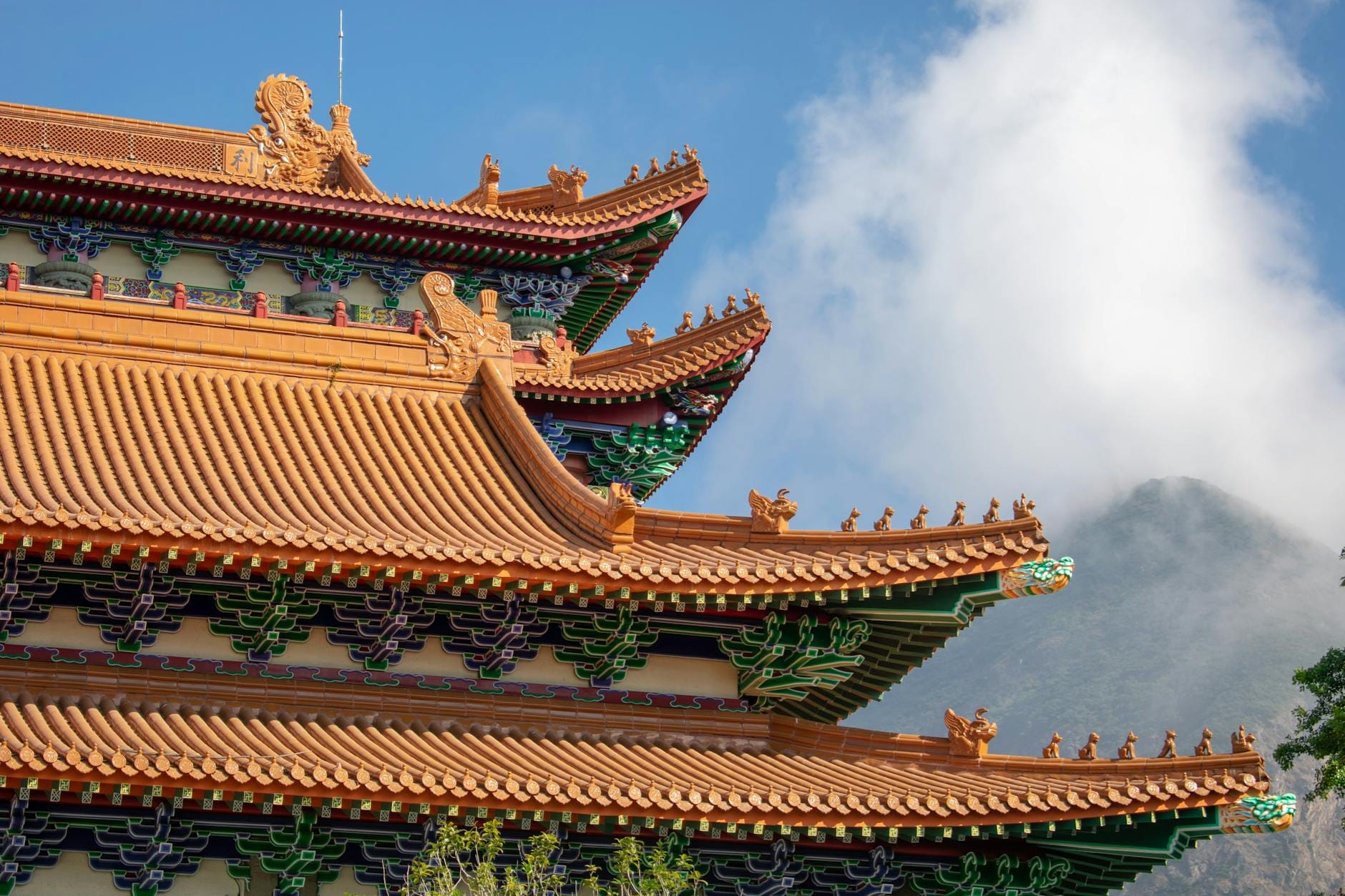
The temple complex consists of the main Buddha hall, side shrines, residential quarters for monks, ornamental gardens, and the monastery's vegetarian restaurant. Architecture follows traditional Chinese Buddhist style with red columns, curved rooflines, and decorative carvings. The monastery operates as an active religious site, not a museum, with monks living and practicing on-site.
Budget 30 to 45 minutes if you're visiting the main halls and walking the grounds. Add 45-60 minutes if eating at the vegetarian restaurant. Entry is free. The monastery is open daily, 10 am to 5:30 pm. Access requires the Ngong Ping 360 cable car from Tung Chung or bus 23X, both delivering you to Ngong Ping plateau where the monastery sits adjacent to the Big Buddha approach.
Po Lin Monastery works if you want to see an active Buddhist temple, experience incense atmosphere, or try vegetarian temple cuisine. It's a natural complement to visiting the Big Buddha, adding cultural and religious context to the statue pilgrimage. For broader area information, see .
What's Inside Po Lin Monastery?
The main Buddha hall dominates the central courtyard. Inside, three large bronze Buddha statues sit on raised platforms representing past, present, and future Buddhas. Worshippers burn incense, place offerings of fruit and flowers, and pray before the altars. Visitors can enter respectfully but should remain quiet and avoid obstructing worshippers.
Incense coils hang from the ceiling in several halls, similar to Man Mo Temple but in Buddhist rather than Taoist context. The smoke creates atmospheric haze and strong fragrance. People with respiratory sensitivities should be aware the incense density can be intense.
Side shrines house additional Buddha and bodhisattva statues. Some feature Guanyin (Goddess of Mercy), others contain protective deities or historical Buddhist figures. Plaques and inscriptions are primarily in Chinese without English translation.
Gardens and courtyards separate the temple buildings. Ornamental ponds, potted plants, and stone pathways create transitional spaces. These areas are less crowded than the main halls and offer spots to sit and observe monastery life.
Monks' residential quarters occupy the perimeter buildings. These are private areas closed to visitors. You'll see monks moving between buildings, conducting daily activities, or tending to temple maintenance.
Tickets & tours
Live prices and dates from our booking partner. If you book, we may earn a commission at no extra cost to you.
Lantau guided tour with visit to Po Lin Monastery
From 118 €Instant confirmationFree cancellationHong Kong audio guide with TravelMate app
From 8 €Instant confirmationHong Kong Tour with Peak Tram, harbour cruise and dim sum dinner
From 85 €Instant confirmationFree cancellationHong Kong night tour with Peak Tram and Symphony of Lights
From 63 €Instant confirmationFree cancellation
Should You Eat at the Vegetarian Restaurant?
Po Lin's vegetarian restaurant serves Buddhist temple cuisine using no meat, eggs, onions, or garlic (the latter two are prohibited in strict Buddhist practice). Set meals cost HK$60-100 and include multiple vegetable dishes, rice, soup, and dessert.
The food is simple, well-prepared, and filling. Dishes often include mock meat made from tofu and gluten, stir-fried vegetables, braised mushrooms, and steamed greens. Flavor is mild by Hong Kong standards but satisfying, especially after the cable car journey.
Dining happens in a large communal hall with shared tables. The atmosphere is cafeteria-style but not unpleasant. Service moves quickly during peak lunch hours (noon-2 PM). You order at a counter, receive a number, collect your tray when called.
The restaurant works well if you need lunch during a Ngong Ping visit and want authentic temple food. It's significantly cheaper than Ngong Ping Village's tourist restaurants and offers cultural experience beyond mere calories.
Vegetarians and vegans benefit from clearly defined plant-based menus without hidden animal products. Non-vegetarians curious about Buddhist cuisine should try at least once during a Hong Kong visit.
When Should You Visit Po Lin Monastery?
Early morning between 9 AM and 10:30 AM offers the quietest temple experience. Tour groups haven't arrived in force, and you can observe morning rituals and monks' activities with minimal crowd interference.
Midday from 11 AM to 2 PM brings peak tourist crowds as cable car arrivals concentrate during these hours. The main Buddha hall becomes packed, photography angles disappear, and the contemplative atmosphere diminishes. However, this is also when the vegetarian restaurant operates at full capacity if you're planning lunch.
Late afternoon after 4 PM sees crowds thin as visitors return to Tung Chung. The monastery remains open, temples are accessible, and the light softens for better photography. However, the restaurant may close early or have limited offerings.
Weekdays are marginally better than weekends, but Ngong Ping is a major tourist destination regardless of day. The difference is less pronounced than at urban Hong Kong attractions.
How Do You Get to Po Lin Monastery?
Ngong Ping 360 cable car from Tung Chung delivers you directly to Ngong Ping plateau. Walk through Ngong Ping Village for five minutes, and the monastery appears ahead before the Big Buddha stairs. This is the most common access route.
Bus 23X from Tung Chung MTR provides an alternative. The bus takes 50 minutes via mountain roads and costs around HK$27 on Sundays and holidays (cheaper weekdays). The bus stops near the monastery entrance, actually closer than the cable car station.
Taxis from Tung Chung cost HK$150-200 and take 30-40 minutes. Drivers know the route well. Taxis drop you at the public parking area near the monastery.
Most visitors combine Po Lin Monastery with the Big Buddha in a single trip. Walk through the monastery first, then climb the Buddha stairs, or reverse the order depending on your energy levels and timing.
Common Mistakes and How to Avoid Them
- Rushing through to reach the Big Buddha without exploring the monastery. The temple complex offers cultural and religious context that enhances understanding of the Buddha statue. Allocate 30-45 minutes to walk the halls and courtyards.
- Photographing monks without permission. This is an active monastery where monks live and practice. Respect privacy by not photographing individuals without asking. Temple architecture and statues are fine to shoot.
- Entering temple halls wearing hats or sunglasses. Remove hats and sunglasses before entering the main Buddha hall as a sign of respect. Modest clothing (shoulders and knees covered) is appropriate though not strictly enforced.
- Skipping the vegetarian restaurant if you arrive hungry. Ngong Ping Village's tourist restaurants are more expensive and less authentic. The monastery's vegetarian meals offer better value and cultural experience.
How Does Po Lin Monastery Fit Into a Lantau Day?
Most visitors structure Ngong Ping visits around the Big Buddha with Po Lin Monastery as a complementary stop. Take the morning cable car, walk through Ngong Ping Village in 10-15 minutes, visit Po Lin Monastery for 30-45 minutes, then climb the Big Buddha stairs. Eat lunch at the monastery's vegetarian restaurant, then descend the cable car or continue to Tai O via bus 21.
If combining with Tai O fishing village, visit Po Lin and the Big Buddha in the morning, then catch bus 21 to Tai O around 1-2 PM. Explore Tai O for two to three hours, return to Tung Chung via bus 11, completing a full Lantau loop without backtracking.
For travelers interested primarily in temples and religious sites, Po Lin Monastery deserves more time than typical tourist itineraries allocate. Spend 60-90 minutes walking all halls, observing worship practices, and sitting in garden areas for a deeper temple experience.
Who Should Visit Po Lin Monastery?
Travelers interested in Buddhism or Chinese religious practices benefit from observing an active monastery where monks live and worship. The temple provides context beyond tourist attractions.
Vegetarians and vegans should try the monastery's restaurant for authentic Buddhist vegetarian cuisine. The meals demonstrate religious dietary practices while providing satisfying, affordable food.
Visitors to the Big Buddha should allocate time for Po Lin Monastery as part of the same trip. The two sites are adjacent, and the monastery adds cultural depth to the Buddha statue pilgrimage.
Photographers seeking temple atmosphere, incense scenes, and traditional Chinese Buddhist architecture will find Po Lin more photogenic and less crowded than many urban Hong Kong temples.
Who Should Skip This?
Travelers who've already visited multiple Chinese Buddhist temples may find Po Lin offers limited novelty. The architecture and religious practices follow standard patterns seen throughout East Asia.
Visitors on extremely tight Lantau schedules who must choose between Po Lin Monastery and Tai O fishing village should prioritize Tai O. The fishing village offers more distinctive local flavor, while the monastery is culturally significant but less unique.
People sensitive to incense smoke should minimize time in the main Buddha hall where smoke concentration is highest. The outdoor courtyards and gardens are more comfortable.
Travelers seeking dramatic mountain scenery or nature experiences should focus on Lantau's hiking trails (Lantau Peak, Sunset Peak) rather than spending extended time at Po Lin. The monastery sits on a developed plateau, not in wilderness.
Insider Tips
- Arrive between 9 AM and 10:30 AM to observe morning temple activities before tour groups flood in. The atmosphere is more contemplative early.
- Try the vegetarian restaurant for authentic Buddhist temple cuisine at HK$60-100 per set meal. Better value and cultural experience than Ngong Ping Village tourist restaurants.
- Remove hats and sunglasses before entering the main Buddha hall. Modest clothing (shoulders and knees covered) shows respect though enforcement is lenient.
- Walk all halls and courtyards, not just the main Buddha hall. Side shrines and gardens offer quieter spaces to observe monastery life.
- Combine with the Big Buddha in a single visit. The monastery is directly below the Buddha stairs, making the pairing natural and efficient.
Who Is Po Lin Monastery For?
- Buddhist temple experience
- Vegetarian temple cuisine
- Incense atmosphere
- Big Buddha complement
- Temple photography
Nearby Attractions
Other things to see while in Lantau Island:
- Citygate Outlets
A definitive guide to Citygate Outlets on Lantau Island. Learn what to expect, how discounts really work, best times to visit, and whether this Hong Kong outlet mall deserves a spot on your itinerary.
- Hong Kong Disneyland
Hong Kong Disneyland is a compact but well-executed theme park on Lantau Island, blending classic Disney storytelling with touches of local culture. It suits families with young children and Disney fans, though seasoned theme park travelers should calibrate expectations accordingly.
- Mui Wo
Mui Wo sits on Lantau Island's eastern shore where Hong Kong slows to a different rhythm. Known locally as Silver Mine Bay, this coastal village offers a window into the territory's quieter side: a broad sandy beach, waterfall hikes through forested valleys, and seafood joints where ferry commuters outnumber tourists.
- Ngong Ping 360 Cable Car
The Ngong Ping 360 cable car carries passengers 5.7 kilometres over Lantau Island's forested peaks and North Lantau coastline to Ngong Ping village, with the Tian Tan Buddha waiting at journey's end. Whether you choose a standard cabin or upgrade to a crystal-floor gondola, the 25-minute ride delivers some of Hong Kong's most rewarding aerial scenery.
Planning a trip? Discover personalized activities with the Nomado app.