Ngong Ping Village: Theme Park at Big Buddha Base
Ngong Ping Village sits at the base of the Big Buddha on Lantau Island where a manufactured tourist complex offers souvenir shops, snack stands, and cultural attractions. Built as a tourist complex by the cable car operator, it's designed to extend visitor time between the cable car station and Po Lin Monastery. Architecture mimics traditional Chinese village style but everything dates from the 2000s.
Quick Facts
- Location
- Ngong Ping, Lantau Island (cable car terminus)
- Getting There
- Ngong Ping 360 cable car from Tung Chung
- Time Needed
- 30 min-1 hour (or skip entirely)
- Cost
- Free entry (attractions charge separately)
- Best for
- Restrooms, food breaks, paid cultural shows
Quick Snapshot
Ngong Ping Village sits at the base of the Big Buddha on Lantau Island where a manufactured tourist complex offers souvenir shops, snack stands, and cultural attractions. Built as a tourist complex by the cable car operator, it's designed to extend visitor time between the cable car station and Po Lin Monastery. Architecture mimics traditional Chinese village style but everything dates from the 2000s.
The village consists of roughly 30 shops and restaurants arranged along a pedestrian street running 200 meters from the Ngong Ping 360 cable car terminus toward the Big Buddha stairs. Most retail focuses on tourist souvenirs: tea sets, jade jewelry, Buddha figurines, Hong Kong magnets. Several paid attractions operate within the complex: Walking with Buddha, Monkey's Tale Theatre, and a 4D cinema.
Budget 30 minutes if you're stopping for food or restrooms, or skip it entirely and walk straight to the Big Buddha. Entry to the village is free. Paid attractions cost HK$55-75 each or bundled with cable car tickets. The village operates during cable car hours.
Ngong Ping Village works if you need a meal, a restroom break, or want to browse souvenirs before or after visiting the Big Buddha. The paid cultural attractions offer light entertainment for families. Most visitors spend 20 to 30 minutes walking through, then continue to Po Lin Monastery or the Buddha statue. For broader Lantau context, see .
What's Actually in Ngong Ping Village?
The main pedestrian street runs from the cable car exit plaza toward the Big Buddha approach. Buildings follow ersatz traditional Chinese architecture with curved rooflines and red columns, but construction is modern and commercial. The street is paved, climate-controlled indoors where applicable, and entirely designed for tourist foot traffic.
Retail shops dominate: tea vendors selling oolong and pu-erh with tasting tables, jewelry stores with jade and pearl displays, souvenir stands with Hong Kong-branded merchandise. Pricing skews tourist-level, higher than equivalent items in urban Hong Kong markets. Some shops offer decent quality tea if you're genuinely shopping, but most inventory is mass-produced tourist goods.
Food options include Starbucks, Subway, Chinese vegetarian restaurants (continuing Po Lin Monastery's Buddhist tradition), and casual noodle shops. Vegetarian set meals typically cost HK$60-100. The food is adequate and convenient, especially if you've skipped breakfast before the cable car ride. Nothing is memorable, but it's functional.
Paid attractions require separate tickets: Walking with Buddha (multimedia exhibition about Siddhartha's life), Monkey's Tale Theatre (animatronic show), and a 4D cinema. These run 15 to 30 minutes each and target families with children. Adults without kids generally find them skippable. If purchased as a bundle with Ngong Ping 360 tickets, the added cost is modest.
Tickets & tours
Live prices and dates from our booking partner. If you book, we may earn a commission at no extra cost to you.
Hong Kong audio guide with TravelMate app
From 8 €Instant confirmationHong Kong Tour with Peak Tram, harbour cruise and dim sum dinner
From 85 €Instant confirmationFree cancellationHong Kong night tour with Peak Tram and Symphony of Lights
From 63 €Instant confirmationFree cancellationLantau Cable Car and Big Buddha Guided Tour with Lunch in Hong Kong
From 85 €Instant confirmationFree cancellation
Do You Need to Spend Time in Ngong Ping Village?
No. You can exit the cable car station, walk straight through the village in five minutes, and reach the Big Buddha approach without stopping. The village is a pass-through zone, not a required stop.
However, practical reasons to pause: restrooms (clean and well-maintained near the cable car exit), food if you're hungry or thirsty, or shade if you're waiting for companions. The village serves as a staging area with facilities that Ngong Ping plateau otherwise lacks.
If you've purchased a bundled ticket that includes the paid attractions, decide based on your interest in light cultural shows and whether you have children. The Walking with Buddha exhibit has decent production value. The Monkey's Tale and 4D cinema are less compelling for adults.
Souvenir shopping depends entirely on whether you want Buddha statues, tea, or Hong Kong-branded merchandise. Quality varies by shop. Tea vendors occasionally offer legitimate product at inflated prices. Jade and jewelry stores sell to tourists with limited knowledge of market pricing.
When Is Ngong Ping Village Most Crowded?
Crowds mirror cable car arrival patterns. Peak congestion runs 11 AM to 3 PM on weekends and public holidays when cable cars discharge maximum capacity. The pedestrian street becomes packed, shops overflow with browsers, and restaurant wait times extend.
Weekday mornings between 10 AM and 11:30 AM see lighter foot traffic. Arriving on the first cable cars of the day gives you a nearly empty village before tour groups arrive.
Late afternoons after 4 PM thin out as visitors return to the cable car station for the descent before closing time. However, shops start closing early, limiting your options if you're shopping or seeking food.
Mainland Chinese holidays (Golden Week in October, Lunar New Year) bring extreme congestion. Cable car queues extend for hours, the village feels overcrowded, and restaurant service slows. Avoid these dates unless you have no choice.
How Do You Get to Ngong Ping Village?
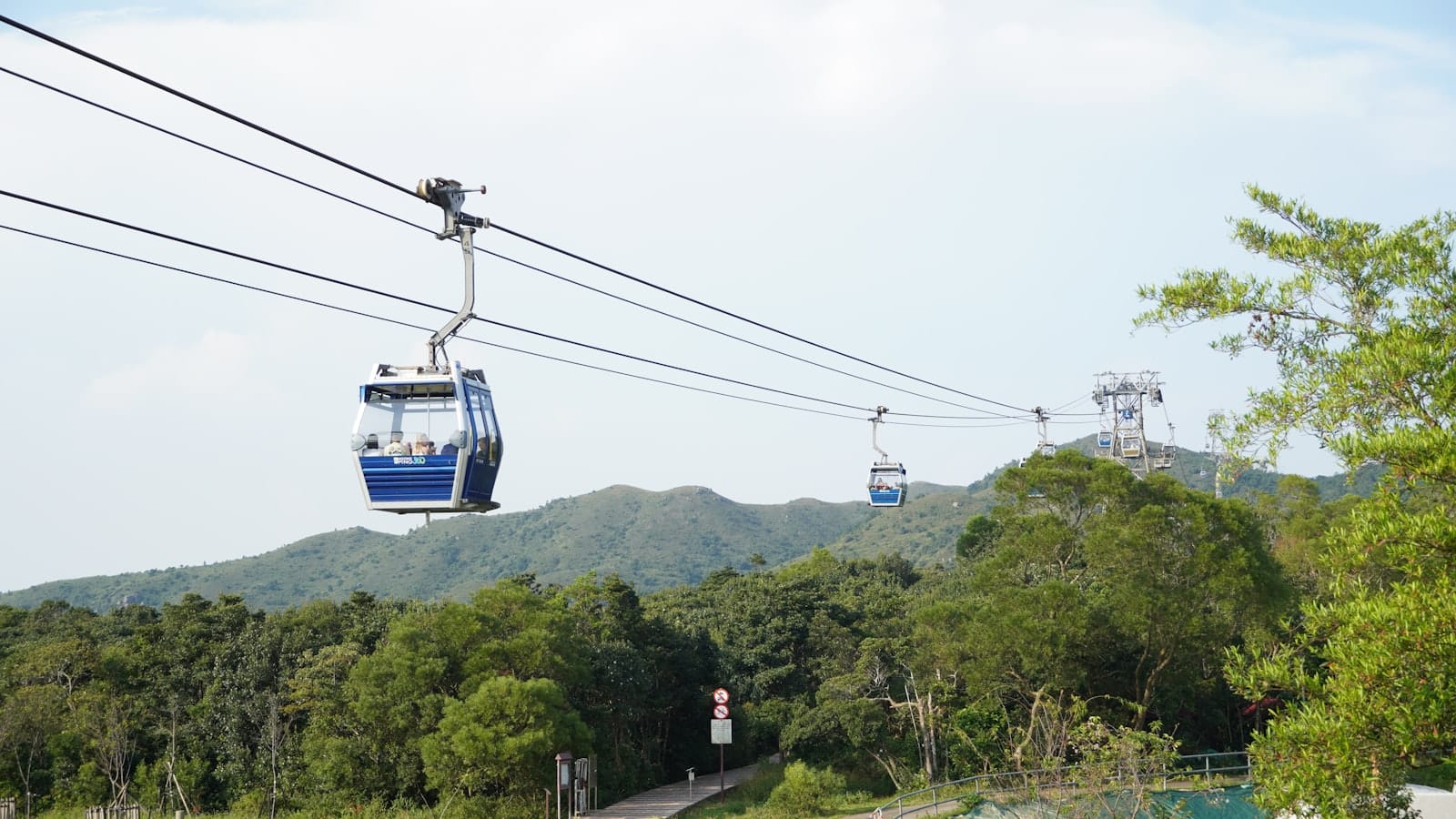
Ngong Ping 360 cable car from Tung Chung is the primary access. The cable car ride takes 25 minutes and delivers you directly into the village. Cable car tickets are available for standard and crystal-floor cabins at varying prices. Advance booking online reduces wait times, especially weekends.
Bus 21 from Tung Chung MTR provides an alternative. The bus serves the Ngong Ping area via a winding mountain road. The bus drops you near Po Lin Monastery, requiring a short walk through the village to reach the cable car station if you're doing a one-way cable car route.
Taxis from Tung Chung run roughly HK$150-200 to Ngong Ping. The ride takes 30 to 40 minutes depending on traffic. Most drivers are familiar with the route. Taxis drop you at the public bus terminus near Po Lin Monastery.
Combining Ngong Ping with Tai O village via bus 21 creates a Lantau loop. Budget at least four to five hours total for both destinations. Alternatively, pair with in Tung Chung for shopping after descending the cable car.
Common Mistakes and How to Avoid Them
- Treating the village as the main attraction. The Big Buddha and Po Lin Monastery are the actual draws. Ngong Ping Village is a commercial add-on. Allocate your time accordingly.
- Buying cable car tickets without advance booking on weekends. Walk-up lines can exceed 90 minutes during peak times. Online tickets with reserved time slots skip most queuing.
- Expecting authentic village atmosphere. This is a theme park-style development from 2006, not a historic village. Adjust expectations to commercial tourist zone.
- Overpaying for souvenirs without comparison shopping. Identical Buddha figurines and tea sets sell for less in Hong Kong's urban markets. Buy here only if convenience outweighs price.
How Does Ngong Ping Village Fit Into a Lantau Day?
Most visitors structure Lantau trips around the Big Buddha. Take the morning cable car to Ngong Ping, walk through the village in 10-15 minutes, climb the Big Buddha stairs, visit Po Lin Monastery, then return through the village for lunch or restrooms before descending the cable car.
If you're combining Ngong Ping with Tai O fishing village, take the cable car up in the morning, visit the Big Buddha, then catch bus 21 to Tai O. Skip detailed village browsing to preserve time. Return to Tung Chung via bus 11 from Tai O, completing a loop without backtracking.
For families with children, allocating 60 to 90 minutes in the village allows time for the paid attractions and a meal. This buffers the day's pacing if kids need breaks between cable car and Big Buddha stairs.
Who Should Visit Ngong Ping Village?
Families with children who have purchased bundled tickets including the paid attractions will find the Walking with Buddha and Monkey's Tale shows entertaining enough for kids under 12.
Travelers needing a meal or restroom facilities before or after the Big Buddha can use the village's infrastructure without guilt. It serves a practical function even if you skip the retail.
Souvenir shoppers specifically seeking Buddhist-themed merchandise, tea, or Hong Kong gifts benefit from the concentrated retail selection, though prices exceed urban alternatives.
Who Should Skip This?
Travelers prioritizing authentic Hong Kong cultural experiences should minimize time here. The village is manufactured tourism infrastructure, not genuine heritage.
Visitors on tight Lantau schedules should walk straight through to maximize time at the Big Buddha, Po Lin Monastery, and Tai O if you're attempting a multi-stop day.
Budget-conscious travelers avoiding tourist pricing can skip the retail and dining entirely. Bring water and snacks from Tung Chung instead.
Solo travelers without children will find the paid attractions underwhelming. The shows target family audiences and offer limited value for adults traveling independently.
Insider Tips
- Walk straight through to the Big Buddha if you're on a schedule. The village is optional infrastructure, not a required attraction.
- Book Ngong Ping 360 cable car tickets online with time slots to skip walk-up queues, especially weekends and holidays.
- Use restrooms near the cable car exit before climbing the Big Buddha stairs. They're cleaner and less crowded than facilities near the statue.
- If shopping for tea, compare quality and pricing against urban Hong Kong tea shops. Village markup is significant.
- Arrive on the first cable car of the day (around 10 AM) for an empty village and Big Buddha before tour groups flood in.
Who Is Ngong Ping Village For?
- Restroom breaks
- Meal stops between cable car and Big Buddha
- Families with young children (paid attractions)
- Souvenir shopping (at tourist prices)
- Tea purchases (if quality-checked)
Nearby Attractions
Other things to see while in Lantau Island:
- Citygate Outlets
A definitive guide to Citygate Outlets on Lantau Island. Learn what to expect, how discounts really work, best times to visit, and whether this Hong Kong outlet mall deserves a spot on your itinerary.
- Hong Kong Disneyland
Hong Kong Disneyland is a compact but well-executed theme park on Lantau Island, blending classic Disney storytelling with touches of local culture. It suits families with young children and Disney fans, though seasoned theme park travelers should calibrate expectations accordingly.
- Mui Wo
Mui Wo sits on Lantau Island's eastern shore where Hong Kong slows to a different rhythm. Known locally as Silver Mine Bay, this coastal village offers a window into the territory's quieter side: a broad sandy beach, waterfall hikes through forested valleys, and seafood joints where ferry commuters outnumber tourists.
- Ngong Ping 360 Cable Car
The Ngong Ping 360 cable car carries passengers 5.7 kilometres over Lantau Island's forested peaks and North Lantau coastline to Ngong Ping village, with the Tian Tan Buddha waiting at journey's end. Whether you choose a standard cabin or upgrade to a crystal-floor gondola, the 25-minute ride delivers some of Hong Kong's most rewarding aerial scenery.
Planning a trip? Discover personalized activities with the Nomado app.