Stratford Festival: Canada's Greatest Stage, Two Hours from Toronto
The Stratford Festival is one of North America's most acclaimed repertory theatre companies, staging Shakespeare and contemporary productions across four venues in Stratford, Ontario from April to November. For Toronto visitors looking beyond the city, it makes a rewarding day trip or overnight escape into small-town Ontario.
Quick Facts
- Location
- 55 Queen Street, Stratford, ON N5A 6V2 — approx. 150 km west-southwest of Toronto
- Getting There
- Via Highway 401/8 by car (approx. 1.5–2 hrs); VIA Rail and dedicated Stratford Direct buses also serve Stratford from Toronto's Union Station
- Time Needed
- Half day minimum for a single performance; full day or overnight to explore the town and catch multiple shows
- Cost
- Ticket prices vary by production, date, and seat; check the official site for current season pricing in CAD
- Best for
- Theatre lovers, literary travellers, couples, cultural day-trippers from Toronto
- Official website
- www.stratfordfestival.ca
What the Stratford Festival Actually Is
The Stratford Festival is a repertory theatre company that began staging productions in Stratford, Ontario in 1953. Legally incorporated on October 31, 1952, it was founded by journalist Tom Patterson with a vision to bring serious theatre to a small city built around a river and a railway. What began as a summer Shakespeare festival under a canvas tent has grown into a four-theatre operation running from April to November, with a season that regularly includes Shakespeare, classical drama, contemporary plays, and musicals.
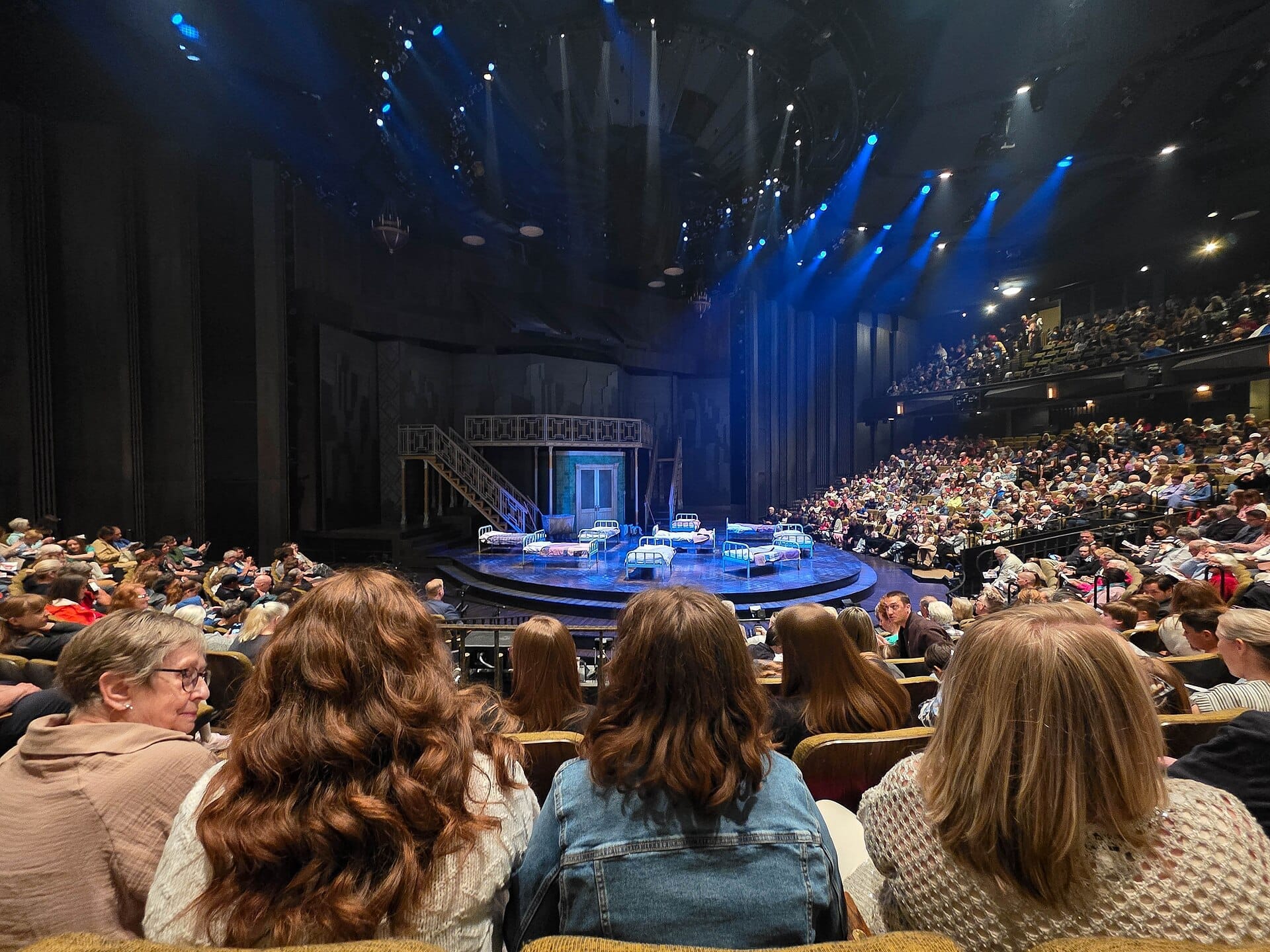
Its four venues — the Festival Theatre, Avon Theatre, Tom Patterson Theatre, and Studio Theatre — each offer a distinct theatrical experience. The approximately 600-seat Tom Patterson Theatre, named for the festival's founder, features a thrust stage and steeply angled seating that puts audience members close to the action on three sides. The Festival Theatre, by contrast, is a grander house with a commanding presence on the riverbank. Walking between venues on an afternoon in Stratford, with swans on the Avon River and century-old storefronts lining the streets, makes the theatre-going feel embedded in place rather than just parachuted in.
💡 Local tip
Book tickets well in advance for summer weekends. Popular productions, especially Shakespeare mainstays and high-profile contemporary works, can sell out months ahead. Mid-week performances in late spring or early fall typically have better availability and smaller crowds.
The Setting: Why Stratford Itself Matters
Stratford, Ontario sits in the flat agricultural landscape of southwestern Ontario, about 150 kilometres southwest of Toronto's downtown core. Driving there on the 401 and then cutting north on Highway 8, the city arrives almost unexpectedly: a compact, well-preserved Victorian streetscape centered on the Avon River, with the Festival Theatre's copper roof visible from the main approach. The town has shaped itself around the festival over decades. Restaurants, inns, and galleries have multiplied to serve the summer audience, giving Stratford a density of good food and accommodation unusual for a city of roughly 34,000 people.
The Avon River park, which connects several of the venue sites, is worth an hour before or after a performance. In summer, the light on the water in early evening, just before a 7:30 pm curtain, has a particular quality that regular festival-goers describe as part of the ritual. The swans are not incidental — the city deliberately maintains a colony as a nod to Stratford-upon-Avon in England, the connection being entirely deliberate and slightly theatrical in itself.
Stratford pairs naturally with a broader exploration of Ontario's small cities and landscapes. It sits within reach of other day-trip destinations covered in the day trips from Toronto guide, making it easy to combine with other southwestern Ontario stops if you have a car.
Tickets & tours
Live prices and dates from our booking partner. If you book, we may earn a commission at no extra cost to you.
Toronto Old Town: Dark Side Exploration Game and Tour
From 12 €Instant confirmationFree cancellationLEGOLAND Discovery Centre Toronto tickets
From 16 €Instant confirmationFree cancellationToronto 'Little Canada' entrance tickets
From 27 €Instant confirmationFree cancellationNiagara Falls evening tour with boat, dinner and Illumination Tower
From 77 €Instant confirmationFree cancellation
The Season and What's On
The festival season runs April through November, with the full program typically spanning 12 to 14 productions across the four theatres. Shakespeare productions remain the anchor of the season, but the Stratford Festival has long since established itself as a venue for ambitious contemporary theatre and large-scale musicals. In any given year, you might find a Chekhov alongside a Sondheim alongside a new Canadian play. The repertory structure means multiple productions rotate through the schedule, so a visitor spending several days can see entirely different works each evening.
Spring performances in April and May tend to draw smaller, more theatre-focused audiences. Summer, particularly July and August, is the peak season: the town fills with visitors, restaurants are busier, and the festival atmosphere is at its most charged. September and October offer a different appeal: autumn light, fewer tourists, and the same quality of production. Many experienced festivalgoers prefer this window precisely because it combines good theatre with a calmer town.
ℹ️ Good to know
The festival offers a range of accessibility services across its venues, including wheelchair seating and assistive listening options. Venue-specific details are available on the official website, and it is worth contacting the festival directly to confirm arrangements for the specific theatre you plan to attend.
Getting There from Toronto
The most straightforward option is driving. From downtown Toronto, the route via Highway 401 West and then Highway 8 North takes roughly 1.5 to 2 hours depending on traffic. Leaving Toronto after morning rush hour and arriving in time for lunch before a matinee is a common pattern for day-trippers. Parking is available in and around Stratford's downtown core, with several lots within easy walking distance of the main venues.
VIA Rail operates train service between Toronto's Union Station and Stratford on some routes, and regional coach services also connect the two cities. Travel times by rail are longer than driving and schedules are limited, so if you plan to catch an evening performance and return the same night, check times carefully before booking. Many visitors find an overnight stay in Stratford more relaxed, allowing time for a pre-show dinner and a morning walk before the drive back.
If this is your first visit to Toronto before heading to Stratford, it helps to understand the city's transport network. The getting around Toronto guide covers Union Station connections and regional rail in more detail.
Planning Your Visit: Practical Walkthrough
Ticket prices vary by production, seat location, date, and any available discounts. There is no single fixed price: premium seats at the Festival Theatre for a flagship Shakespeare production cost considerably more than bench seating at the Studio Theatre for an experimental work. The official website's booking system shows current pricing once you select a production and date. Students, seniors, and groups typically have access to discounted rates; preview performances earlier in the run are usually priced lower than peak-season dates.
Performances generally fall into matinee and evening slots, though specific times vary by production and day. Evening performances commonly start at 7:30 pm, while matinees often begin around 2:00 pm. These times are confirmed in the season schedule on the official site. Arriving 30 to 45 minutes before curtain gives you time to collect tickets, find seats, and orient yourself in the venue, particularly in the Tom Patterson Theatre where the thrust stage configuration can be disorienting on a first visit.
Dress is smart casual for most performances, though the festival draws visitors across the full spectrum from jeans to evening wear. There is no formal dress code enforced at the door. What matters more is comfortable seating endurance: some productions run close to three hours with an intermission, so knowing what you are booking before you arrive helps.
⚠️ What to skip
If you are planning a same-day return to Toronto after an evening performance, factor in an 8:00 pm start and a running time that may extend past 10:30 pm. Add the two-hour drive and you will be arriving back in Toronto well past midnight. An overnight stay is worth serious consideration.
Historical Context and Cultural Weight
The Stratford Festival's founding story is genuinely unusual. Tom Patterson, a local journalist with no theatrical background to speak of, persuaded the city of Stratford to back a Shakespeare festival in 1952 and recruited the British director Tyrone Guthrie to lead it. The first season in 1953 took place under a canvas tent with Alec Guinness in the title role of Richard III, drawing audiences from across North America. The tent became a permanent thrust-stage theatre, a design that Guthrie and architect Tanya Moiseiwitsch developed specifically for the site and which has influenced theatre architecture internationally.
Since then, the festival has trained or launched the careers of a significant number of major Canadian and international actors. The institutional weight it carries in Canadian cultural life is hard to overstate, and its repertory model — rehearsing and rotating multiple productions simultaneously with a resident company — remains relatively rare in North American theatre. For visitors who follow theatre closely, seeing work at Stratford carries a specific context that goes beyond seeing a good show.
Toronto's own theatre scene, which includes venues like the Royal Alexandra Theatre and the Four Seasons Centre for the Performing Arts, forms part of the same broader Ontario performing arts landscape. A trip to Stratford and a night at one of Toronto's major venues in the same visit covers impressive range.
Who Should Skip This Attraction
The Stratford Festival requires a substantial time investment relative to most Toronto-area attractions. If you have only two or three days in Ontario and no particular interest in theatre, the 3–4 hours of round-trip travel plus performance time is hard to justify against what Toronto itself offers. This is not a scenic landscape you can briefly pass through; it is a theatre destination where the value is concentrated in the performance experience. Visitors who find themselves obligated rather than genuinely curious about the work on stage are likely to feel the distance more than the reward.
Travellers looking for outdoor or waterfront experiences closer to Toronto will find more convenient options along the Toronto waterfront or on the Toronto Islands without the logistics of a cross-province drive.
Insider Tips
- Preview performances, held early in each production's run, are priced lower and often feature sharper, more energized acting as the cast locks in choices under real audience conditions. Check the schedule for preview dates before assuming opening night is the premium experience.
- The Tom Patterson Theatre's thrust stage means there is no bad seat in terms of proximity, but sight lines vary significantly by angle. If the script has a lot of action on one side of the stage, certain seats will miss it. Ask the box office about stage orientation when booking, especially for productions you are unfamiliar with.
- Many Stratford restaurants operate on festival hours, opening for lunch around 11:30 am and offering prix-fixe pre-theatre menus timed to evening curtains. Reserve a table when you book your ticket, not the week before. Summer Saturday dinner slots disappear fast.
- The Avon River walk connecting the Festival Theatre to the Tom Patterson Theatre takes about 10 minutes on foot and is a pleasant way to move between venues. In June, the gardens along this stretch are well maintained and significantly less crowded before noon.
- The Studio Theatre tends to host the riskiest programming in any given season: new plays, experimental forms, and works that would not fill the larger houses. If you are a regular theatre-goer and want to see what the festival is doing at its edges rather than its center, this is where to look.
Who Is Stratford Festival For?
- Theatre enthusiasts who follow Shakespeare or contemporary repertory work
- Couples looking for a cultural overnight trip from Toronto
- Visitors with a literary or arts background who want institutional context alongside good performance
- Travellers building a multi-day southwestern Ontario itinerary by car
- Anyone seeking a high-quality live performance experience outside a major city setting
Nearby Attractions
Combine your visit with:
- Aga Khan Museum
The Aga Khan Museum in Toronto is one of North America's only institutions dedicated to the arts of Muslim civilizations. Housed in a purpose-built building designed by architect Fumihiko Maki, it holds over 1,200 masterpieces spanning 14 centuries. Whether you spend 90 minutes or a full afternoon, the experience rewards curiosity at every turn.
- The Village at Black Creek (Black Creek Pioneer Village)
The Village at Black Creek is a fully realized open-air living history museum in northwest Toronto, where around 40 restored historic buildings, heritage breed livestock, and costumed interpreters recreate rural Ontario life from the 1800s. Operated by the Toronto and Region Conservation Authority, it offers a rare, tactile experience of pre-industrial Canada that few urban attractions can match.
- Blue Mountain & Collingwood
Perched on the Niagara Escarpment above Georgian Bay, Blue Mountain and Collingwood form Ontario's most accessible four-season resort destination. Whether you come for winter skiing, summer hiking, or a weekend in the pedestrian village, the area rewards visitors who plan around the season.
- Canada's Wonderland
Canada's Wonderland is the country's largest amusement park, located in Vaughan just north of Toronto. With 18 roller coasters, more than 200 attractions, and a 20-acre water park, it's a full-day commitment that rewards planning. Here's how to make the most of it.
Planning a trip? Discover personalized activities with the Nomado app.