Blue Mountain & Collingwood: The Complete Day Trip Guide from Toronto
Perched on the Niagara Escarpment above Georgian Bay, Blue Mountain and Collingwood form Ontario's most accessible four-season resort destination. Whether you come for winter skiing, summer hiking, or a weekend in the pedestrian village, the area rewards visitors who plan around the season.
Quick Facts
- Location
- 190 Gord Canning Drive, The Blue Mountains, Ontario (approx. 2.5 hours from Toronto)
- Getting There
- Best reached by car via Hwy 400 N to Hwy 26; limited bus service available from Wasaga Beach and some seasonal routes
- Time Needed
- Full day minimum; overnight strongly recommended in winter or for multiple activities
- Cost
- No general admission; per-activity pricing in CAD (ski passes, attraction day tickets, ropes courses). Check bluemountain.ca for current rates
- Best for
- Winter skiing, fall foliage hikes, summer adventure activities, couples weekends, family trips
- Official website
- www.bluemountain.ca
What Blue Mountain & Collingwood Actually Is
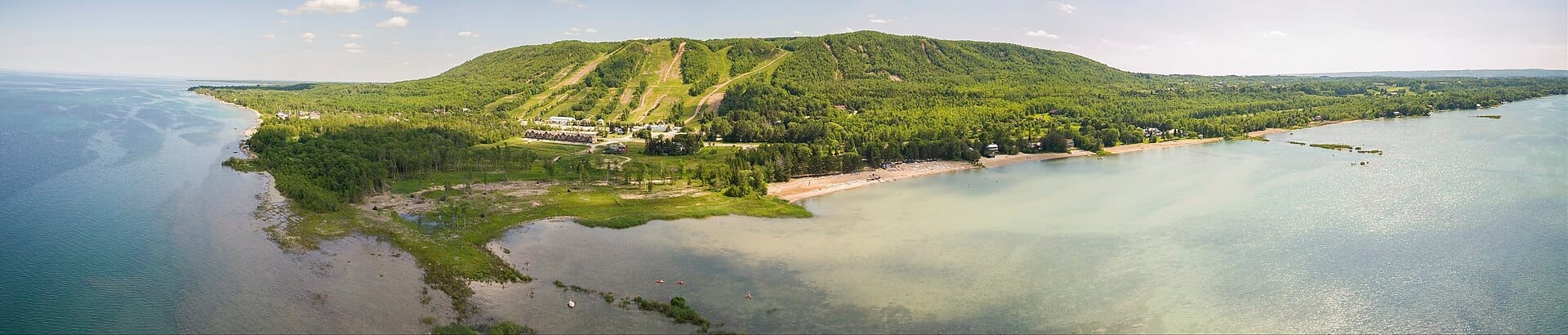
Blue Mountain Resort sits on the Niagara Escarpment, a UNESCO World Biosphere Reserve ridge that rises sharply above the southern shore of Georgian Bay. The resort itself covers 360 acres of skiable terrain with a vertical drop of 720 feet (219.5 metres), making it the largest ski area in Ontario by both metrics. But to frame this as just a ski resort is to miss the point. The municipality of The Blue Mountains, incorporated in 1998, and the adjacent town of Collingwood together form a year-round tourism corridor roughly 150 kilometres north of Toronto.
At the base of the slopes sits Blue Mountain Village, a purpose-built pedestrian enclave of hotels, restaurants, and retail shops arranged around a central plaza. The village runs activities across all four seasons: skiing and snowboarding from roughly November through April, and mountain coasters, ropes courses, hiking, and paddling from late spring through early fall. Collingwood, a former shipbuilding town about 10 kilometres east, adds a more genuine small-city texture to the area, with heritage storefronts on Hurontario Street and working marinas along the bay.
ℹ️ Good to know
There is no single gate admission for the Blue Mountain and Collingwood area. You pay per activity or attraction. Prices are set in Canadian dollars and change seasonally. Always verify current rates at bluemountain.ca before booking.
Getting Here from Toronto: What the Drive Actually Looks Like
The standard route from Toronto takes you north on Highway 400, then west along Highway 26 toward Collingwood and The Blue Mountains. On a clear weekday, the drive runs about 2.5 hours. On Friday afternoons and long weekend Saturdays, expect an additional 30 to 60 minutes of traffic around Barrie and on the approach to Collingwood. Planning to leave Toronto before 7:00 a.m. or after 8:00 p.m. on those days makes a measurable difference.
A private car is by far the most practical option. The ski and hiking areas are spread across several access points, and without a car you are largely confined to the village footprint. Some year-round bus service is available, including from Wasaga Beach, but public transit from Toronto to the resort itself is not a reliable or direct service. Rideshare is possible but expensive over that distance.
If you are combining this with other Ontario escapes, the area fits naturally into a broader Georgian Bay loop or a weekend that also includes the Collingwood caves at Scenic Caves Nature Adventures. For context on how to plan the full trip from the city, the day trips from Toronto guide covers distance, drive times, and seasonal timing across the region.
⚠️ What to skip
In winter, the Highway 400 corridor can close or slow dramatically during snowstorms. Check Ontario 511 road conditions before departure and carry an ice scraper, warm layers, and emergency supplies in the car. Winter tires are strongly advised.
Tickets & tours
Live prices and dates from our booking partner. If you book, we may earn a commission at no extra cost to you.
Toronto Blue Jays Baseball Game Tickets at Rogers Center
From 37 €Instant confirmationToronto Old Town: Dark Side Exploration Game and Tour
From 12 €Instant confirmationFree cancellationLEGOLAND Discovery Centre Toronto tickets
From 16 €Instant confirmationFree cancellationToronto 'Little Canada' entrance tickets
From 27 €Instant confirmationFree cancellation
Winter: The Main Event on the Escarpment
Blue Mountain Resort's ski season typically runs from late November through mid-April, though exact opening and closing dates depend on snowfall and snowmaking conditions. The resort operates snowmaking infrastructure across most of its terrain, which helps maintain coverage even in mild winters, but a natural snowfall week transforms the place in ways that groomed runs alone cannot replicate. The smell of pine under fresh snow, the sound of chairlift cables, and the sharp cold coming off Georgian Bay are all noticeably more pronounced after a proper dump.
The mountain has 42 runs spread across four distinct faces. Beginners and families cluster on the south-facing slopes closest to the village, where the terrain is gentler and ski school operations are concentrated. Intermediate and advanced skiers find more character on the north-facing runs, which hold cold snow longer and offer slightly more pitch. The vertical drop of 220 metres is modest by Whistler or Tremblant standards, but it is entirely adequate for a two-day trip from Toronto, and the lift lines on weekdays are genuinely short.
On a Saturday morning in January, the village plaza fills up fast. Skiers in full gear carry coffee cups from the resort cafes, rental shops run their morning rush, and the gondola queue builds by around 9:00 a.m. Arriving before 8:30 a.m. and getting your first runs in before 10:00 a.m. makes a substantial difference to the experience. By mid-afternoon, many families have come off the hill and the upper runs quiet down considerably.
Spring, Summer, and Fall: Beyond the Slopes
The shoulder seasons here are genuinely underrated. Late May through June brings wildflowers along the Niagara Escarpment trails, cool temperatures, and almost no crowds. The Bruce Trail passes through this region, and the sections above Collingwood offer views over Georgian Bay that reward the climb. Late September and October deliver the kind of fall colour that justifies the drive on its own: the escarpment ridge turns amber and deep red, and the cooler air from the bay keeps temperatures comfortable for long walks.
Summer at Blue Mountain Village is a different kind of busy. The resort operates Ontario’s only mountain coaster, ropes courses, a climbing wall, and various other paid activities. The village fills with families and groups on Saturday afternoons, and the outdoor plaza hosts live music events on summer evenings. If you are after quiet nature rather than organized activity, step beyond the resort perimeter: the hiking trails on the escarpment above the village are free, uncrowded by mid-morning, and offer the best views of the area.
For travellers comparing seasonal timing for this trip versus Toronto itself, the best time to visit Toronto guide provides useful context on how Ontario seasons affect travel planning across the province.
Collingwood: The Town That Makes This More Than a Resort Trip
Collingwood sits about 10 kilometres east of the resort village and is worth at least half a day of your itinerary. The town was built on shipbuilding and grain transport, and the remnants of that history show up in the heritage brick storefronts along Hurontario Street and in the waterfront area. Today it functions as a small service town with a genuine local economy: independent cafes, a farmers market in season, hardware stores alongside boutique shops, and a lakeside trail along Georgian Bay.
The Collingwood waterfront is calm in the mornings, when local dog walkers and joggers use the trail system along the bay. By mid-morning in summer, kayak and paddleboard rentals operate from the marina area. The water here is part of Georgian Bay, which is technically a distinct body of water from Lake Huron despite being connected. The bay can turn choppy in the afternoon as onshore winds build, so water activity earlier in the day is more comfortable.
Accommodation in Collingwood town centre tends to be significantly less expensive than in the resort village, which is worth noting if you are planning an overnight trip. The tradeoff is a short drive or shuttle ride to the mountain each morning.
Practical Walkthrough: What a Full Day Looks Like
Leave Toronto before 7:30 a.m. to beat Barrie traffic. Arrive at Blue Mountain Village around 10:00 a.m., park in the main lot off Gord Canning Drive, and walk into the village. In winter, head directly to the gondola or lift ticketing before the midday crowd builds. In summer, the mountain coaster typically has shorter waits before noon. The village plaza is compact enough to cover in 20 minutes of walking, so orient yourself quickly and pick your priority activity.
After lunch at the village, drive or walk toward Collingwood for the afternoon. The 10-kilometre stretch along Highway 26 passes apple orchards and farm stands in autumn, which are worth stopping at. Spend the late afternoon at the Collingwood waterfront or along Hurontario Street, then consider dinner in town before the return drive to Toronto. Sunday traffic heading south on Highway 400 builds from around 4:00 p.m.; leaving by 3:30 p.m. or after 7:00 p.m. avoids the worst of it.
If you are building a longer Ontario itinerary that includes Niagara Falls, the Muskokas, or Prince Edward County, see the day trips from Toronto overview for comparative drive times and seasonal recommendations.
Accessibility and Who Should Reconsider This Trip
Blue Mountain Village is paved and relatively flat, making it navigable with a wheelchair or stroller. The resort's accessibility features for specific activities vary: some lifts and adapted ski programs are available, but you should contact the resort directly at bluemountain.ca to confirm current provisions before arrival. Hotels within the village range from full-service to condo-style units with varying accessibility configurations.
Travellers who do not drive and are hoping for a low-cost day trip should reconsider their expectations. Without a car, reaching the mountain from Toronto requires a combination of GO Transit to Barrie and then onward transit that is neither direct nor frequent. The per-activity pricing model also means that a family day at the resort adds up quickly. If budget is a constraint and winter skiing is the primary goal, the costs here are comparable to other Ontario ski areas but higher than most urban Toronto activities.
Similarly, travellers expecting dramatic alpine scenery on the scale of the Rockies will find the Niagara Escarpment beautiful but modest. The vertical drop of 220 metres is the honest number: this is Ontario terrain, not British Columbia terrain. That said, for anyone based in Toronto who wants a genuine mountain atmosphere within a single tank of gas, it delivers consistently.
Insider Tips
- Book ski tickets online in advance, not at the window. The resort consistently offers discounts for pre-purchased lift tickets, and the savings are meaningful over a two-day trip.
- The north-facing runs at Blue Mountain hold snow significantly longer into the afternoon than the south-facing slopes. If you are skiing late in the season or on a warm spring day, prioritise north-side terrain in the morning before it softens.
- Collingwood's farmers market runs on Saturdays in season near the downtown core. Picking up local cheese, cider, and apple butter on your way home turns the return drive into something worth stopping for.
- Mid-week visits in shoulder seasons, particularly October, offer the most uncrowded trail access and the best fall colour on the escarpment. The Bruce Trail sections above the village are almost empty on a Tuesday morning in early October.
- If you are staying overnight and want to avoid resort village pricing for dinner, drive into Collingwood town centre. The per-head cost at independent restaurants on Hurontario Street is noticeably lower than equivalent meals in the village plaza.
Who Is Blue Mountain & Collingwood For?
- Toronto families wanting a ski weekend within a two-hour drive
- Couples looking for a four-season outdoor escape with resort amenities
- Hikers and cyclists targeting Niagara Escarpment trails in spring or fall
- Groups of friends combining winter skiing with village dining and nightlife
- Travellers building a Georgian Bay road trip over several days
Nearby Attractions
Combine your visit with:
- Aga Khan Museum
The Aga Khan Museum in Toronto is one of North America's only institutions dedicated to the arts of Muslim civilizations. Housed in a purpose-built building designed by architect Fumihiko Maki, it holds over 1,200 masterpieces spanning 14 centuries. Whether you spend 90 minutes or a full afternoon, the experience rewards curiosity at every turn.
- The Village at Black Creek (Black Creek Pioneer Village)
The Village at Black Creek is a fully realized open-air living history museum in northwest Toronto, where around 40 restored historic buildings, heritage breed livestock, and costumed interpreters recreate rural Ontario life from the 1800s. Operated by the Toronto and Region Conservation Authority, it offers a rare, tactile experience of pre-industrial Canada that few urban attractions can match.
- Canada's Wonderland
Canada's Wonderland is the country's largest amusement park, located in Vaughan just north of Toronto. With 18 roller coasters, more than 200 attractions, and a 20-acre water park, it's a full-day commitment that rewards planning. Here's how to make the most of it.
- Edwards Gardens & Toronto Botanical Garden
A free public garden in North York where a mid-century estate landscape meets a working botanical institution. Edwards Gardens combines formal rose beds, rock gardens, and a quiet ravine creek with the programming and horticultural expertise of the Toronto Botanical Garden next door.
Planning a trip? Discover personalized activities with the Nomado app.