Edwards Gardens & Toronto Botanical Garden: A Complete Visitor Guide
A free public garden in North York where a mid-century estate landscape meets a working botanical institution. Edwards Gardens combines formal rose beds, rock gardens, and a quiet ravine creek with the programming and horticultural expertise of the Toronto Botanical Garden next door.
Quick Facts
- Location
- 755 Lawrence Avenue East, North York, Toronto (at Lawrence Ave E & Leslie St)
- Getting There
- TTC Bus routes serve Lawrence Ave E and Leslie St; no direct subway stop — check TTC trip planner for current routes
- Time Needed
- 1.5 to 3 hours for a relaxed visit; longer if you join a tour or program
- Cost
- Free admission. Parking on-site: $4/hour, max $16/day (CAD). TBG building open Mon–Sun 9 a.m.–4:30 p.m.
- Best for
- Garden enthusiasts, photographers, families with young children, and anyone wanting a peaceful green escape within the city
- Official website
- torontobotanicalgarden.ca
What Edwards Gardens Actually Is
Edwards Gardens and the Toronto Botanical Garden share a boundary in North York but are technically two distinct entities that most visitors experience as one continuous green space. Edwards Gardens is the publicly owned park component, a roughly 14-hectare former private estate acquired by the City of Toronto in 1955 and opened to the public in 1957. The Toronto Botanical Garden manages approximately 1.6 hectares within it, running education programs and maintaining demonstration gardens on its own grounds. In practice, you move between the two without ceremony.
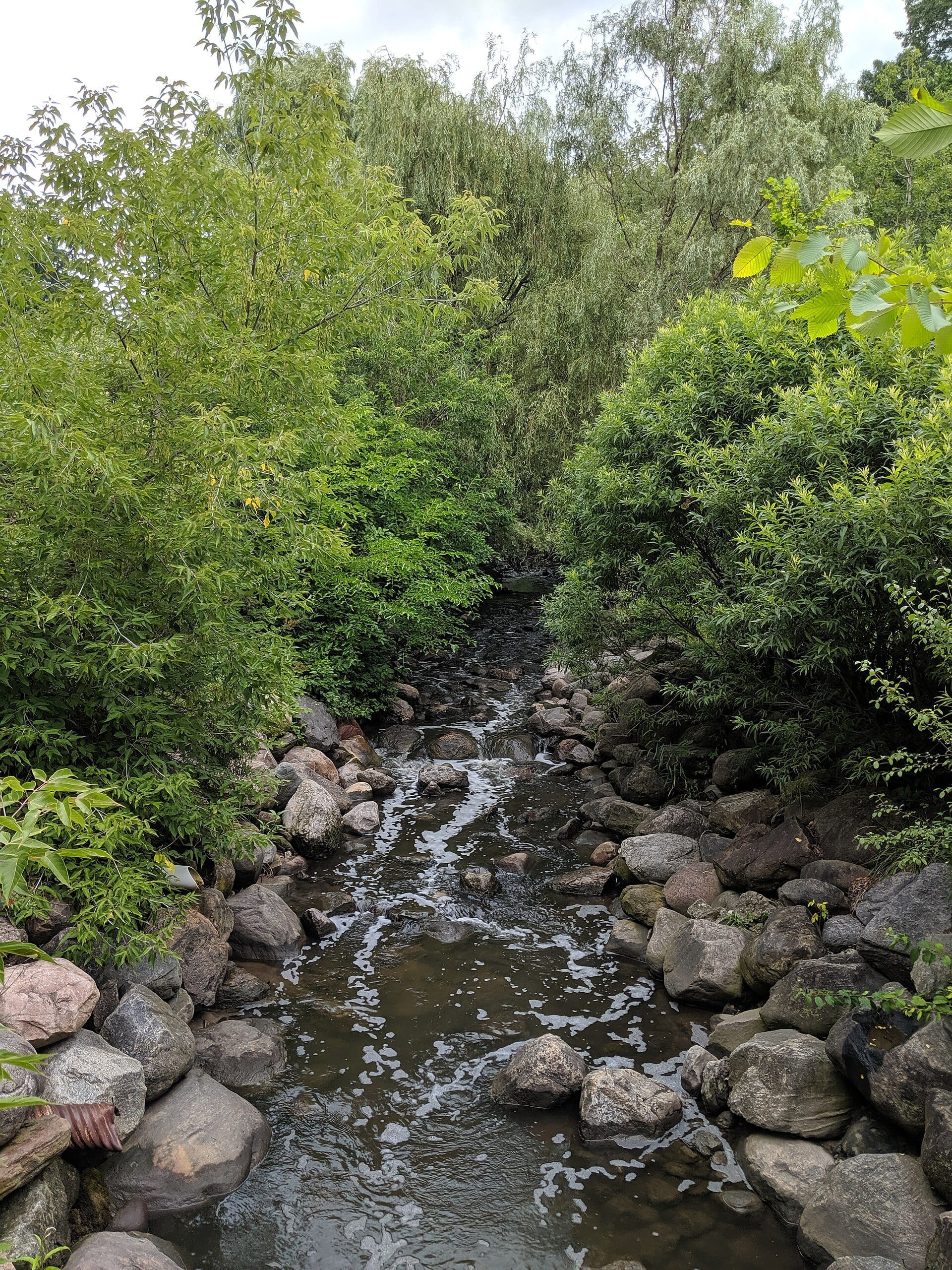
The estate owes its shape to Rupert Edwards, who purchased the land in 1944 and developed it as a private garden before the City took ownership. The bones of that original landscape are still visible today: terraced beds, a rock garden, ornamental bridges, and Wilket Creek running through the lower ravine section. The formality of the upper gardens gives way to a naturalistic ravine as you descend, which is one of the site's most appealing qualities.
ℹ️ Good to know
The outdoor gardens are open daily from dawn to dusk and admission is free. The Toronto Botanical Garden building (with its library, gift shop, and program spaces) is open Monday to Sunday, 9:00 a.m. to 4:30 p.m. — though hours may shift seasonally, so check torontobotanicalgarden.ca before visiting.
The Experience: Moving Through the Gardens
Entering from the Lawrence Avenue East parking lot, the first thing you notice is the relative quiet. The noise of Lawrence Avenue fades quickly once you pass the main gate. The upper section of the park is manicured and deliberate: curved pathways lined with perennial borders, a prominent rock garden built with rough-cut stone, and formal beds that in peak summer hold roses in dense, fragrant blocks. In June and July, the rose gardens are the sensory centrepiece of the visit. The scent, especially on a warm morning before the midday heat, is noticeable from several metres away.
The terrain drops gradually toward Wilket Creek at the ravine floor. The path surfaces change here from paved walkways to packed earth and gravel, and the planting shifts from cultivated beds to shade trees, ferns, and creek-side vegetation. The sound of the water carries up the slope on quieter days. This lower section connects to the broader Wilket Creek Park trail network, so you can walk further north or south if you want more distance.
The Toronto Botanical Garden section, positioned near the main entrance, contains more specialized demonstration gardens: themed areas covering shade plants, culinary herbs, water features, and seasonal displays. These gardens are smaller in scale but denser in botanical interest. Interpretive signage throughout helps identify plants, which makes this section genuinely useful for gardeners wanting to see how particular species perform in Toronto's climate.
Tickets & tours
Live prices and dates from our booking partner. If you book, we may earn a commission at no extra cost to you.
Toronto Old Town: Dark Side Exploration Game and Tour
From 12 €Instant confirmationFree cancellationLEGOLAND Discovery Centre Toronto tickets
From 16 €Instant confirmationFree cancellationToronto 'Little Canada' entrance tickets
From 27 €Instant confirmationFree cancellationNiagara Falls evening tour with boat, dinner and Illumination Tower
From 77 €Instant confirmationFree cancellation
How the Experience Changes by Time of Day and Season
Early morning, particularly on weekdays, is when the gardens are at their best. The light is soft, the formal beds are undisturbed, and the only other visitors tend to be dog walkers and the occasional serious photographer. The dew on the rose petals and the sounds of birds in the ravine canopy are details that simply disappear once crowds arrive.
By late morning on weekends between May and September, families with strollers, couples, and school groups begin to fill the upper pathways. The gardens handle this traffic reasonably well given the layout, but popular spots near the ornamental bridges and the rock garden can become congested for photography. If your primary goal is quiet contemplation or unobstructed photographs, aim for a weekday visit before 10 a.m.
Seasonally, the gardens are worth visiting in almost every month, though each period has different strengths. Spring, from late April through May, brings tulip displays and the first flush of perennials. Summer is the peak of colour and fragrance, with roses dominant in June and July and mixed perennials carrying through August. Autumn shifts the palette to warm tones in the ravine, and the formal gardens take on a quieter, more structural character as plantings are cut back. Winter is the least visited period, but the ravine retains interest with snow on the creek and the bare architecture of the rock garden visible without foliage obscuring it.
💡 Local tip
Peak rose season in the formal beds typically falls in late June. If roses are your primary reason for visiting, plan around that window. After mid-July, the display begins to fade.
Historical and Cultural Context
The site sits within Toronto's ravine system, the interconnected network of valleys carved by glacial meltwater that runs through the city. This geography is one reason the gardens feel so removed from the surrounding suburban streetscape: the ravine creates a physical and acoustic buffer that flat parkland cannot replicate. For context on how Toronto's ravines work as a connected system across the city, the wider trail network offers routes that extend far beyond this single site.
The Toronto Botanical Garden, as the institutional partner on the site, has roots going back to the Garden Club of Toronto and has operated formal programming here for decades. Today it functions as an educational and horticultural centre with classes, workshops, and a reference library. It is part of a broader tradition of botanical institutions in Toronto that includes the Allan Gardens Conservatory in the downtown core, though the two serve quite different audiences and offer very different physical experiences.
The estate's history as private property gives the garden an unusual spatial quality for a public park. The terracing and the rock garden in particular reflect the design sensibilities of a mid-century private commission rather than the more open, recreational layout typical of City of Toronto parks built from scratch. That formality is what makes Edwards Gardens feel distinctive, but it also means the space rewards slower, more deliberate walking rather than the kind of active use you would associate with a large public park.
Getting There and Practical Logistics
The gardens are located at the intersection of Lawrence Avenue East and Leslie Street in North York, which is not walking distance from any subway station. TTC bus routes serve Lawrence Avenue East and Leslie Street, and the TTC trip planner is the most reliable way to confirm current route numbers and schedules. Visitors arriving by car will find on-site parking at $4 per hour, with a daily maximum of $16 CAD. On busy weekend afternoons in summer, the parking lot can fill up, so arriving before 10 a.m. or taking transit avoids that frustration.
For visitors structuring a broader Toronto itinerary, the gardens pair naturally with a walk into the Wilket Creek trail system heading south, which eventually connects to the Don Valley trail network. If you are planning a longer day of green spaces, the best parks in Toronto guide outlines how to combine Edwards Gardens with other destinations across the city.
Footwear matters more here than at a typical urban park. The ravine path surfaces are uneven in places, and after rain the lower trail near Wilket Creek can be muddy. Sturdy walking shoes or trail runners are more practical than sandals or dress shoes. There are washroom facilities on site near the main entrance. The gardens are stroller-accessible in the upper, paved sections, but the lower ravine paths require more care with a stroller.
⚠️ What to skip
After heavy rain, the lower ravine trail alongside Wilket Creek can flood or become very muddy. If you want to access the lower section, check conditions before heading down, especially in spring.
Photography Notes
Edwards Gardens is one of the more photogenic green spaces in Toronto, with strong compositional variety across the formal upper beds, the stone bridges, the rock garden, and the ravine below. The ornamental bridges over the creek are probably the most photographed features on the site. Early morning light from the east hits the formal beds well, and the ravine section has good filtered light through most of the day due to the tree canopy.
Macro photography of flowers in the rose beds and the TBG demonstration gardens can be excellent in June and July. For landscape shots that show the full depth of the ravine, the viewpoints along the upper path looking down toward the creek offer good framing. The site is also popular for portrait sessions, particularly for couples and families, which means popular spots can have competing photographers on weekend mornings. If you are looking for comparison with other photogenic green spaces, Toronto's best viewpoints covers a wider range of options across the city.
Who Will Enjoy This, and Who Might Not
Visitors with a specific interest in plants and garden design will get the most from this site. The combination of estate-style formal gardens and the Toronto Botanical Garden's educational programming creates something that goes beyond a simple green space. Families with children who enjoy open outdoor spaces will find the upper gardens safe and manageable, and the creek in the ravine holds obvious appeal for younger visitors.
Travelers looking for a high-energy or landmark experience should recalibrate their expectations. Edwards Gardens does not have the scale or drama of High Park, nor does it offer the kind of iconic Toronto backdrop many visitors are seeking. It is a neighbourhood-scale garden with genuine horticultural merit, and it rewards visitors who come for that specifically. If you are working through a tight two- or three-day itinerary and must prioritize, this site is better suited to visitors with a half-day to spare rather than those trying to cover the city's main landmarks.
For visitors using public transit and without a car, the lack of a nearby subway station adds some logistical friction. If you are spending several days in Toronto and want to plan green spaces efficiently, the Toronto ravines hiking guide is worth reading before you plan your route, as it contextualizes how this site fits within the larger trail system.
Insider Tips
- The rock garden in the upper section of Edwards Gardens is most impressive in mid to late spring when alpine and rock-garden perennials are in flower. By summer, much of it becomes foliage-dominant. Time a visit to catch both the rock garden in bloom and the roses in the formal beds by targeting late May to early June.
- The Toronto Botanical Garden holds regular free events including garden walks and talks, often on weekday mornings. Check their events calendar before visiting — joining a guided walk with a horticulturalist adds considerably more depth to the experience than wandering alone.
- If you park on-site and want to avoid the maximum parking fee, note that the $16 daily cap means a full day is cost-capped. But on busy summer weekends, arriving after 11 a.m. risks finding the lot full. Either arrive early or use TTC.
- The ravine trail at the bottom of the garden connects northward through Wilket Creek Park. If you continue north on foot for about 15 to 20 minutes, you reach a much quieter section of the ravine that almost no casual visitors explore, with dense canopy and creek-side vegetation that feels genuinely removed from the city.
- Portrait and engagement photographers book the ornamental bridges heavily on weekend mornings in spring and early summer. If you want clear shots of those features, a weekday visit before 9 a.m. is the practical solution.
Who Is Edwards Gardens & Toronto Botanical Garden For?
- Garden enthusiasts and horticulture lovers who want to see well-maintained formal beds alongside educational demonstration plantings
- Photographers, especially those focused on macro, botanical, and landscape work in a compact, varied setting
- Families with young children who want a safe, free outdoor space with paved paths and creek access nearby
- Visitors with a half-day to spare who want a genuine break from Toronto's urban density without leaving the city
- Anyone following the Toronto ravine trail network who wants a scenic starting or ending point with on-site parking
Nearby Attractions
Combine your visit with:
- Aga Khan Museum
The Aga Khan Museum in Toronto is one of North America's only institutions dedicated to the arts of Muslim civilizations. Housed in a purpose-built building designed by architect Fumihiko Maki, it holds over 1,200 masterpieces spanning 14 centuries. Whether you spend 90 minutes or a full afternoon, the experience rewards curiosity at every turn.
- The Village at Black Creek (Black Creek Pioneer Village)
The Village at Black Creek is a fully realized open-air living history museum in northwest Toronto, where around 40 restored historic buildings, heritage breed livestock, and costumed interpreters recreate rural Ontario life from the 1800s. Operated by the Toronto and Region Conservation Authority, it offers a rare, tactile experience of pre-industrial Canada that few urban attractions can match.
- Blue Mountain & Collingwood
Perched on the Niagara Escarpment above Georgian Bay, Blue Mountain and Collingwood form Ontario's most accessible four-season resort destination. Whether you come for winter skiing, summer hiking, or a weekend in the pedestrian village, the area rewards visitors who plan around the season.
- Canada's Wonderland
Canada's Wonderland is the country's largest amusement park, located in Vaughan just north of Toronto. With 18 roller coasters, more than 200 attractions, and a 20-acre water park, it's a full-day commitment that rewards planning. Here's how to make the most of it.
Planning a trip? Discover personalized activities with the Nomado app.