The Village at Black Creek: Toronto's Living Window into 19th-Century Ontario
The Village at Black Creek is a fully realized open-air living history museum in northwest Toronto, where around 40 restored historic buildings, heritage breed livestock, and costumed interpreters recreate rural Ontario life from the 1800s. Operated by the Toronto and Region Conservation Authority, it offers a rare, tactile experience of pre-industrial Canada that few urban attractions can match.
Quick Facts
- Location
- 1000 Murray Ross Parkway, York University Heights, Toronto, ON M3J 2P3
- Getting There
- Pioneer Village Station (TTC Line 1), approx. 15-minute walk
- Time Needed
- 2.5 to 4 hours for a full visit
- Cost
- Ticketed admission; prices vary by age and event. Check blackcreek.ca for current CAD rates.
- Best for
- Families with children, history enthusiasts, photographers, school groups
- Official website
- blackcreek.ca
What Is The Village at Black Creek?
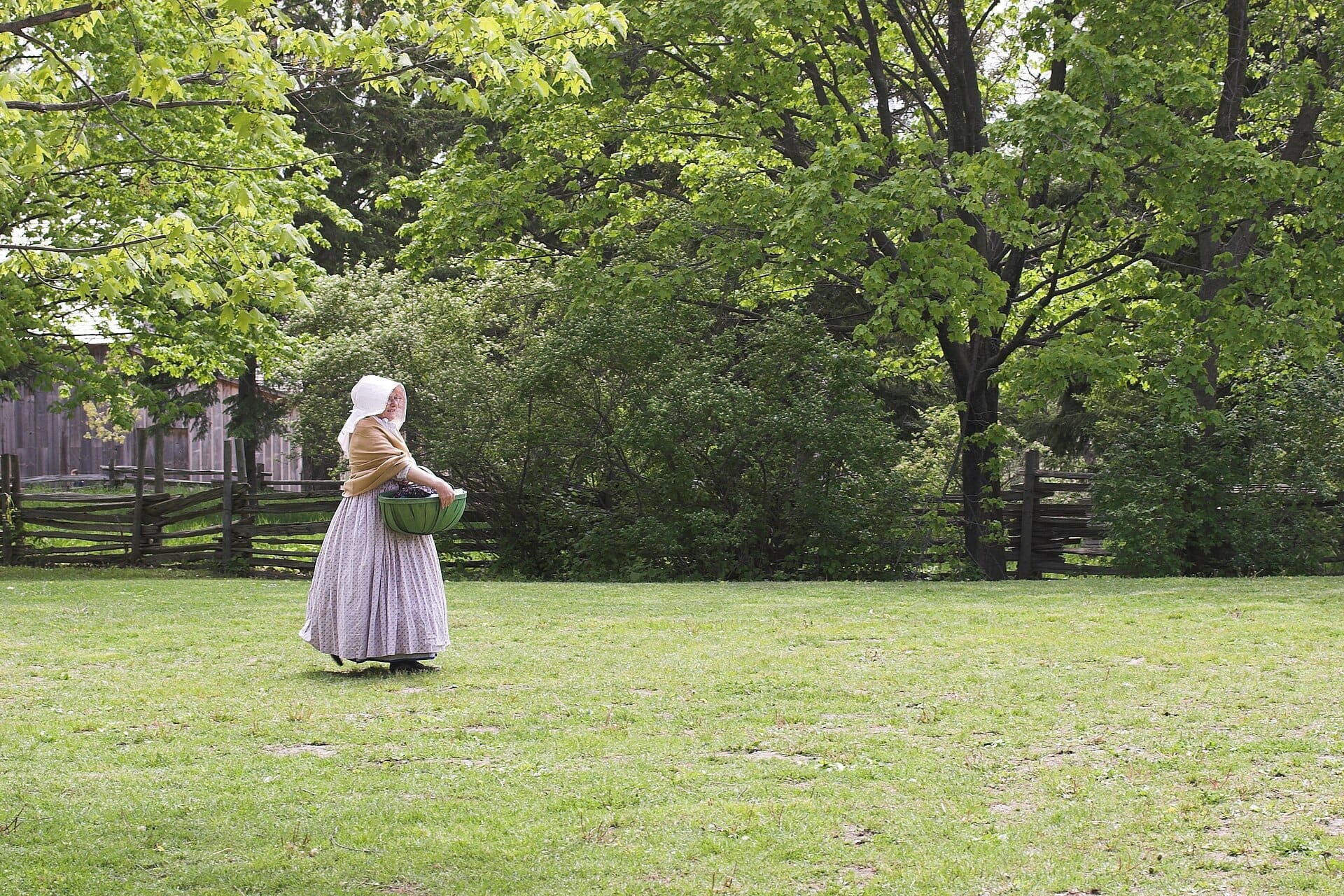
The Village at Black Creek, long known as Black Creek Pioneer Village, is an open-air living history museum that occupies a sizable stretch of greenspace in the York University Heights area of northwest Toronto. Operated by the Toronto and Region Conservation Authority (TRCA), it brings together roughly 40 historic structures, including farmhouses, a working mill, a blacksmith shop, a general store, a church, and assorted outbuildings, most dating from the mid-1800s or authentically reconstructed to that period.
Unlike a conventional museum where artifacts sit behind glass, the Village is designed to be walked through, heard, and smelled. Costumed interpreters go about period tasks: baking bread over open hearths, tending kitchen gardens, demonstrating tinsmithing, or driving horse-drawn wagons along the lane. Around 70 rare and heritage breed animals, including sheep, pigs, draft horses, and heritage poultry, live on site. Ten gardens planted with heirloom varieties add both botanical interest and a sense of working rural life.
ℹ️ Good to know
The Village recently rebranded from 'Black Creek Pioneer Village' to 'The Village at Black Creek.' Some transit apps and older maps may still show the former name; the address (1000 Murray Ross Parkway) and the Pioneer Village subway station remain unchanged.
The Historical Context: Why This Village Exists
The story of the Village begins with the settlement of Upper Canada in the early 19th century, when German-speaking Mennonite families from Pennsylvania, alongside British and Irish immigrants, established farms in the region north of what is now Toronto. The Black Creek valley was productive agricultural land, and the buildings preserved here reflect the pragmatic, often beautifully crafted structures those settlers built. Many original structures were relocated to this site to save them from demolition as Toronto expanded outward through the mid-20th century.
This preservation effort began in earnest in the 1950s and 1960s, a period when Toronto's rapid post-war suburban growth threatened dozens of 19th-century rural buildings across the region. The resulting village is not a single historically unified settlement but rather a curated collection of the era's architecture and trades, assembled to illustrate the full spectrum of rural Ontario life, from modest pioneer homesteads to the comparatively prosperous homes of established merchants and craftspeople.
For visitors interested in how the city around it developed, pairing this visit with a look at Fort York provides a useful chronological bracket: Fort York anchors the story of early colonial Toronto, while the Village shows what the surrounding countryside looked like as that town grew.
Tickets & tours
Live prices and dates from our booking partner. If you book, we may earn a commission at no extra cost to you.
Toronto Old Town: Dark Side Exploration Game and Tour
From 12 €Instant confirmationFree cancellationLEGOLAND Discovery Centre Toronto tickets
From 16 €Instant confirmationFree cancellationToronto 'Little Canada' entrance tickets
From 27 €Instant confirmationFree cancellationNiagara Falls evening tour with boat, dinner and Illumination Tower
From 77 €Instant confirmationFree cancellation
Walking Through the Village: What You Actually See
Entering through the visitor center, you pass from the 21st century into a lane of packed earth and wooden fences almost immediately. The scale is domestic rather than grand: these are small, purposeful buildings set close to the land. The half-timbered Daniel Stong farmstead, one of the oldest structures on site, has a quality of compressed intensity, low ceilings, small windows designed to retain heat, and the faint cedar smell of old timber. The blacksmith shop is a complete sensory shift: the ring of hammer on anvil carries well across the yard, and the warmth radiating from the forge is tangible from the doorway.
The grist mill is among the most impressive stops. Functioning mills of this vintage are rare, and watching the mechanism engage, the millstones turning and grain being processed into meal, makes the technology feel immediate rather than remote. The mill pond beside it attracts waterfowl and softens the industrial character of the building itself.
The village church and schoolhouse sit at the quieter end of the lane. The church interior, plain-boarded and undecorated, communicates something authentic about frontier Protestantism that a dozen written descriptions cannot. The schoolhouse, with its single room and tiered benches, is where children on school trips tend to linger longest, partly because interpreters often stage lessons there.
💡 Local tip
Walk the full outer perimeter first to get your bearings, then double back to the buildings that caught your attention. The site is larger than it appears from the entrance, and visitors who move through it randomly often miss the mill and farm paddocks at the far end.
How the Experience Changes by Time of Day and Season
Morning visits, arriving close to opening at 11:00, offer the best combination of light and relative quiet. The low angle of the sun casts long shadows across the lane and catches the texture of hand-hewn timber and stone foundations in a way that midday flat light does not. Interpreter demonstrations tend to begin at a measured pace, and there is genuine room to ask questions without a crowd forming behind you.
By early afternoon, particularly on weekends from late spring through August, the site fills noticeably. School groups are largely gone by this hour during the week, replaced by families. The animals are more active in the morning and late afternoon; during the heat of a summer midday, the livestock tend to retreat to shade and are less visible. Midweek visits in June or September represent the practical sweet spot: good weather, foliage at its best, and crowds well below weekend peaks.
The Village is open seasonally, with hours running Wednesday through Sunday, 11:00 to 16:00, though these are subject to change for special events and programming. Winter visits, when offered, give the site an entirely different character: snow on the rooftops and smoke rising from the chimneys of active hearths create a period atmosphere that summer simply cannot replicate. The annual Christmas at Black Creek event is one of the city's more atmospheric seasonal offerings.
⚠️ What to skip
The Village is primarily an outdoor site with gravel paths, wooden boardwalks, and uneven ground. Flat, closed-toe shoes are strongly advisable. Strollers can navigate most of the main lane but may struggle at some heritage building entrances and garden areas.
Practical Information: Getting There and Getting Around
The most straightforward approach by public transit is the TTC Line 1 subway to Pioneer Village Station, on the northern branch. From there, the Village entrance is an 8-minute walk south along Murray Ross Parkway. The station name itself reflects the attraction's long-established presence in the city. If you are planning a broader day in Toronto, the Toronto transit network connects efficiently to most major sights before or after a Village visit.
By car, the site has on-site parking. Coming from the south, the Allen Road or Jane Street corridors are the most direct routes into the York University Heights area. The Village shares this part of northwest Toronto with York University's main campus, so traffic around the Murray Ross Parkway entrance can slow during university term time on weekday mornings.
Admission is ticketed and priced by age category. Prices are updated periodically, so checking the official site at blackcreek.ca before visiting is the reliable approach. The on-site cafe and snack options are limited; for a longer stay, packing food for a picnic on the grounds is a reasonable strategy, especially for families.
Photography, Accessibility, and Who Should Know Before They Go
The Village is genuinely photogenic in a way that rewards patience. The combination of weathered timber, kitchen garden plantings, and animals in paddocks gives every corner a composed quality. Early morning light from the east rakes across the east-facing facades along the main lane. Afternoon light works better for the mill pond and the western farm buildings. A standard zoom lens covers most of what you will want to capture; specialist equipment is not necessary.
Accessibility across the site is mixed, as is typical of any outdoor museum built around 19th-century structures. The main lane and several key buildings are navigable for visitors with mobility aids, but interiors of some heritage buildings involve steps or low doorways that cannot be modified without compromising their historic character. TRCA provides specific accessibility information through the official site and by phone at +1 416-736-1733 or email at bcpvinfo@trca.on.ca.
Visitors who prefer urban intensity, art-focused programming, or who have limited mobility and need guaranteed full access to all areas may find this site less satisfying than others. The pacing is inherently leisurely and the content is interpretive rather than object-dense in the way a traditional museum is. Those expecting a tightly curated indoor experience should recalibrate expectations: the Village rewards wandering, conversation with interpreters, and attention to detail, not a linear tour.
For families weighing options, the Village pairs well with other accessible Toronto attractions. The Ontario Science Centre offers a contrasting, interactive indoor experience that balances out a heritage-focused day. Alternatively, the Toronto with kids guide covers a broader range of family-friendly choices across the city.
Insider Tips
- Arrive within the first 30 minutes of opening on a weekday. Interpreter demonstrations at the blacksmith and mill are more interactive when the audience is small, and staff are noticeably more conversational before the midday rush.
- The animals in the paddocks are most active and visible in the morning and late afternoon. If you are visiting with children specifically to see the heritage breed livestock, time your paddock visit to one of those windows.
- Special event days, including harvest festivals and the Christmas programming, use additional buildings and demonstrations not typically active on standard operating days. The experience on event days is substantially richer, though crowds are also higher.
- The heirloom kitchen gardens are at their peak in late July through early September. Interpreters in this area are often knowledgeable about heritage seed varieties and pre-industrial food preservation, which makes this a surprisingly detailed stop for anyone with an interest in culinary history.
- The Village sits adjacent to Black Creek and the broader TRCA greenway. Extending your visit with a walk along the creek corridor before or after adds natural context to the agricultural history being told inside the gates.
Who Is The Village at Black Creek (Black Creek Pioneer Village) For?
- Families with school-age children looking for hands-on historical learning outside a classroom
- History enthusiasts interested in Upper Canada settlement, 19th-century rural architecture, and pre-industrial crafts
- Photographers seeking textured, atmospheric subjects: heritage timber buildings, working animals, and heirloom gardens
- Visitors wanting a genuinely unhurried, outdoor cultural experience away from the downtown core
- Groups visiting during special seasonal events such as the harvest fair or Christmas programming
Nearby Attractions
Combine your visit with:
- Aga Khan Museum
The Aga Khan Museum in Toronto is one of North America's only institutions dedicated to the arts of Muslim civilizations. Housed in a purpose-built building designed by architect Fumihiko Maki, it holds over 1,200 masterpieces spanning 14 centuries. Whether you spend 90 minutes or a full afternoon, the experience rewards curiosity at every turn.
- Blue Mountain & Collingwood
Perched on the Niagara Escarpment above Georgian Bay, Blue Mountain and Collingwood form Ontario's most accessible four-season resort destination. Whether you come for winter skiing, summer hiking, or a weekend in the pedestrian village, the area rewards visitors who plan around the season.
- Canada's Wonderland
Canada's Wonderland is the country's largest amusement park, located in Vaughan just north of Toronto. With 18 roller coasters, more than 200 attractions, and a 20-acre water park, it's a full-day commitment that rewards planning. Here's how to make the most of it.
- Edwards Gardens & Toronto Botanical Garden
A free public garden in North York where a mid-century estate landscape meets a working botanical institution. Edwards Gardens combines formal rose beds, rock gardens, and a quiet ravine creek with the programming and horticultural expertise of the Toronto Botanical Garden next door.
Planning a trip? Discover personalized activities with the Nomado app.