Sticky Waterfall (Bua Tong): Walk Up a Waterfall Without Slipping
Bua Tong, known as the Sticky Waterfall, is a series of limestone cascades north of Chiang Mai where mineral-rich water deposits make the rocks surprisingly grippy. Visitors can walk directly up the flowing water barefoot, which sounds impossible until you try it. It is one of the more genuinely unusual natural experiences in northern Thailand.
Quick Facts
- Location
- Si Lanna National Park, Mae Taeng District, ~60 km north of Chiang Mai
- Getting There
- Private car or scooter via Highway 107 north; no direct public transport to the falls
- Time Needed
- 2–3 hours including the climb and surrounding trails
- Cost
- No entrance fee is currently charged to visit the waterfall itself, though policies can change; check the latest information on arrival
- Best for
- Curious travelers, families with older children, nature lovers, photographers
What Makes Bua Tong Different From Every Other Waterfall
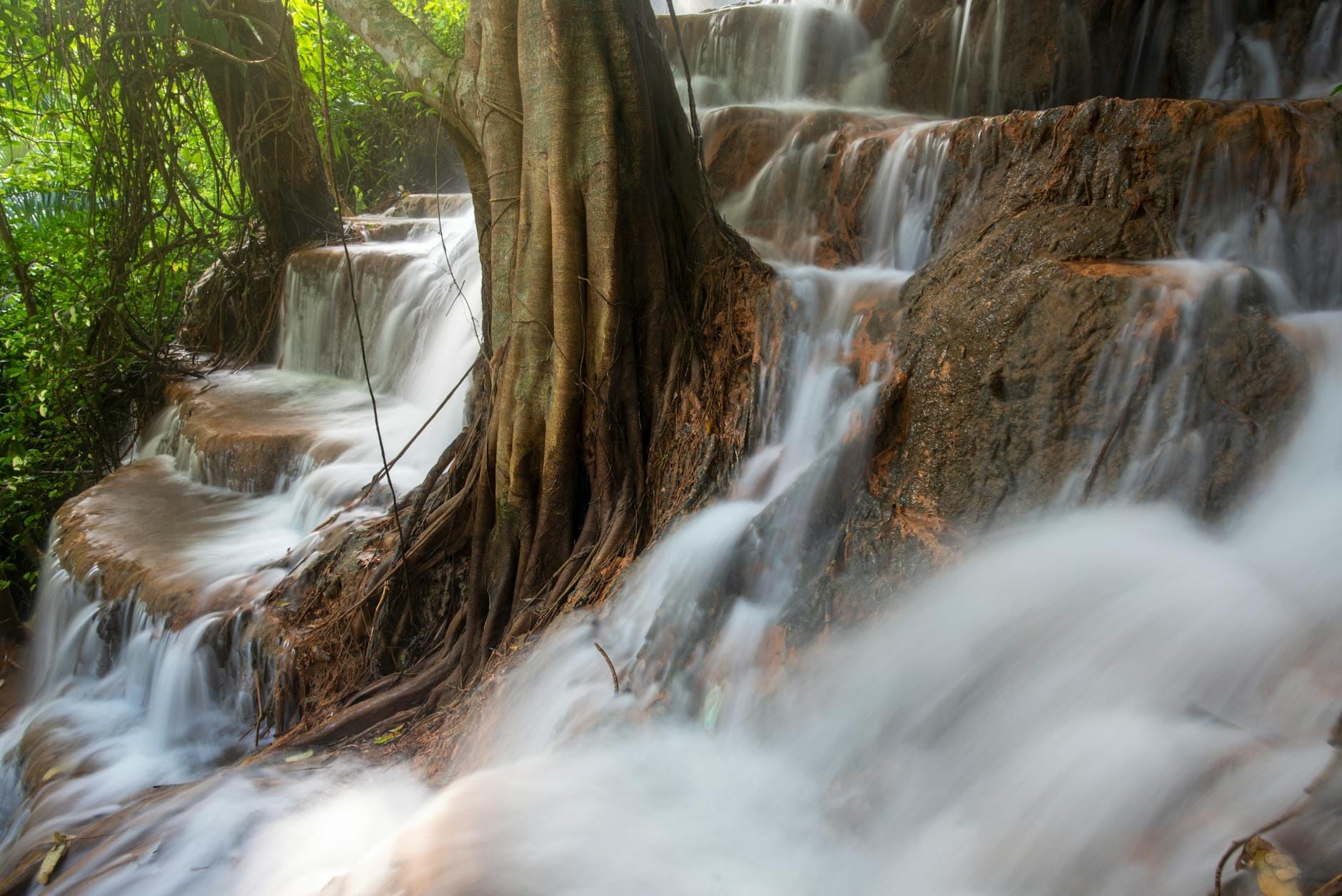
Most waterfalls in Thailand come with the same instruction: look, photograph, do not touch the slippery rocks. Bua Tong inverts that entirely. At the Sticky Waterfall, the entire point is to walk directly into the cascade and climb upward against the current, barefoot, without ropes or handrails on the lower sections. The sensation is genuinely strange the first time you try it. The rock surface under flowing water feels more like rough sandpaper than wet stone, and your feet lock in even when you lean your weight forward.
The scientific explanation is straightforward: the limestone at Bua Tong is saturated with calcium carbonate and other minerals from underground springs. As the water flows over the rock face, it continuously deposits a thin layer of travertine, building up a porous, textured surface with extraordinary grip. The same geological process that creates travertine terraces at places like Pamukkale in Turkey is at work here, just on a smaller and more climbable scale.
💡 Local tip
Bring an old pair of sandals or water shoes to walk the forest paths, but take them off before stepping onto the waterfall itself. Bare feet grip far better than any rubber sole.
The Physical Experience: What the Climb Actually Involves
The waterfall system runs across three main tiers, each with its own character. The lowest section is wide, shallow, and gentle — a good place to test your footing and build confidence. Children and cautious adults typically stop here and play in the flow, which at its deepest barely reaches the knees. The water is cool without being cold, and the sound here is a soft, continuous rush rather than a roar.
The middle and upper tiers are steeper and require a bit more commitment. The water pushes harder against your legs, and some sections ask you to use both hands against the rock face as you pull yourself up. There are rope guides installed on some of the more vertical passages, not because the rock is slippery, but because the gradient is genuinely steep in places. Most reasonably fit adults can reach the top without difficulty. The whole vertical climb covers roughly 50 meters across the three tiers.
Coming down is a different experience again. Many visitors choose to walk the forested path beside the falls on the descent, which is faster and drier. Others walk back down through the water, which requires more balance and is frankly the more entertaining option. Either way, plan to be wet from the knees down for much of your visit.
⚠️ What to skip
The climb becomes significantly more difficult during and immediately after heavy rain. Water volume increases sharply, and while the rock surface remains grippy, the force of the current can knock smaller visitors off balance. Check conditions before visiting during the rainy season (June to October).
Tickets & tours
Live prices and dates from our booking partner. If you book, we may earn a commission at no extra cost to you.
Chiang Mai private van day trip to Doi Suthep, Sticky Waterfall
From 146 €Instant confirmationFree cancellationChiang Mai private van tour with Wat Ban Den, Dantewada and Sticky Waterfall
From 132 €Instant confirmationFree cancellationPrivate van with driver to Flower Gardens and Dantewada Waterfall Park
From 146 €Instant confirmationFree cancellationHalf-day private tour with driver to Bua Thong Waterfall
From 101 €Instant confirmationFree cancellation
Best Time to Visit: Seasons, Hours, and Crowds
Bua Tong is most enjoyable during the cool dry season, roughly November through February. The air temperature is mild, the water flow is consistent without being overwhelming, and the surrounding forest is green. Weekday mornings between 8 and 10 are the quietest window. By late morning on weekends, the falls draw a steady crowd of Thai families and day-trippers, and the lower tier in particular becomes a social scene rather than a peaceful nature experience.
March and April bring hotter temperatures and reduced water flow. The climb is easier in lower water, but the heat makes the walk in and out less comfortable, and the landscape looks noticeably drier. During the burning season, smoke haze can also settle into the valley and affect visibility of the surrounding hills.
The rainy season (June to October) brings full, dramatic water flow, and the forest around Bua Tong is at its lushest. The tradeoff is that the current strengthens considerably, and the lower tiers can become challenging for children or weaker swimmers. If you are planning a broader northern Thailand trip and want to understand seasonal patterns in more depth, the Chiang Mai weather and rainy season guide covers what to expect month by month.
Getting There: The Practical Reality
Bua Tong sits roughly 60 kilometers north of Chiang Mai in Mae Taeng District, within the broader Si Lanna National Park area. The drive on Highway 107 north takes around 90 minutes depending on traffic and stops. The final approach involves a turn onto a smaller road that leads to the park entrance. Signage in English is present but inconsistent, so a downloaded offline map or GPS route is worth preparing before you leave.
There is limited but usable public transport to the falls via songthaews and buses toward Phrao, though it is infrequent and not on a clear fixed schedule for most visitors. Songthaews (shared pickup trucks) run along Highway 107 toward Mae Taeng town, but from there you would need a further connection that does not exist on a fixed schedule. The practical options are renting a scooter from Chiang Mai, hiring a private driver for the day, or joining an organized day tour that includes Bua Tong alongside other sites in the area. Renting a car gives the most flexibility if you want to combine the visit with stops at nearby attractions.
If you are planning to rent a scooter, make sure you are confident on mountain roads before committing to the route. For broader advice on moving around the city and region, the getting around Chiang Mai guide is a useful starting point for understanding your transport options.
ℹ️ Good to know
The falls are located outside the main Doi Suthep-Pui National Park and are administered as part of Si Lanna National Park. As of 2026, there is no entrance fee to visit the waterfall itself, though policies can change — check on arrival. Facilities include basic toilets and a few food vendors near the car park.
The Surrounding Area: Making a Full Day of It
The drive north along Highway 107 passes through some of the most scenic lowland countryside around Chiang Mai, with rice fields, river crossings, and mountain views. Mae Taeng District has several attractions that pair well with a Bua Tong visit. The Elephant Nature Park is located along this same corridor, and some visitors combine an ethical elephant experience in the morning with the waterfall in the afternoon.
Other nearby options include the Mae Sa Waterfall in the Mae Rim valley to the southwest, which has a more developed park infrastructure and a different character, better suited to families wanting flat paths and clear signage rather than an active climb. For travelers spending several days in the area, day trips from Chiang Mai outlines how to structure routes that cover multiple sites efficiently.
Photography at Bua Tong: What Actually Works
The visual appeal of Bua Tong comes from the pale, almost cream-colored limestone contrasted against clear flowing water and green forest. The light is best in the morning, when it angles in from the east and catches the surface texture of the rock. By midday, the overhead light flattens everything and the white rock tends to overexpose in photographs.
A waterproof case or dry bag for your phone or camera is strongly recommended. The mist from the upper tiers drifts unpredictably, and at the lower section it is easy to take a stumble into a shallow pool even when you feel secure. Action shots of people climbing the falls work well from the banks, particularly from slightly above and to the side where you can show both the person and the water simultaneously.
For more specific guidance on capturing northern Thailand's natural landscapes and temples, the Chiang Mai photography guide covers equipment, timing, and key locations across the region.
Honest Assessment: Is Bua Tong Worth the Journey?
The drive is longer than most day trips from central Chiang Mai, and for visitors with only two or three days in the city, the time investment deserves honest scrutiny. Bua Tong is not a dramatic, multi-tiered jungle waterfall with thundering drops and dramatic pools. The scale is modest. What it offers instead is a genuinely unusual physical interaction with a natural feature that very few places in the world can match.
Travelers who prefer passive sightseeing, who have mobility limitations, or who are not interested in getting wet will find the experience underwhelming relative to the distance. If you are someone who travels to do things rather than just see them, Bua Tong delivers something that stays with you: the simple, improbable fact of walking straight up a waterfall.
For context on how Bua Tong fits into a broader itinerary, including how to combine it with temples, markets, and city highlights, the 3-day Chiang Mai itinerary covers practical sequencing for shorter visits.
Insider Tips
- Arrive before 9 AM on weekends to have the lower tier largely to yourself. After 10:30, the rocks fill with groups and the social atmosphere changes the experience significantly.
- Wear shorts that dry quickly rather than swimwear. The walk in from the car park is around 10 minutes through forest, and full swimwear looks out of place and dries slowly in the shade.
- The rope guides on the steeper sections are helpful but not always taut. Test each rope before putting weight on it rather than trusting it automatically.
- A small dry bag clipped to your person is far more practical than leaving valuables at the base. There is no supervised storage area, and the banks of the lower pool can get crowded.
- If you visit midweek, you may have the upper tier almost entirely to yourself. The difference in atmosphere between a quiet weekday morning and a busy Sunday afternoon is significant.
Who Is Sticky Waterfall (Bua Tong) For?
- Active travelers who want to engage physically with a natural landscape rather than observe from a distance
- Families with children aged 8 and above who are comfortable in water and on uneven surfaces
- Photographers interested in unusual textures, flowing water, and natural light on pale limestone
- Day-trippers combining the northern corridor with other Mae Taeng District attractions
- Anyone curious about travertine geology and why the rock behaves the way it does
Nearby Attractions
Other things to see while in Doi Suthep & Mountain Area:
- Bhuphing Palace (Bhubing Palace)
Perched on the slopes of Doi Buak Ha in Doi Suthep-Pui National Park at around 1,000–1,200 metres elevation, Bhuphing Palace is the Thai royal family's official winter residence in the north. When the royals are not in residence, the palace grounds open to visitors who come for the manicured formal gardens, cool mountain air, and sweeping valley views across Chiang Mai.
- Chiang Mai Night Safari
Chiang Mai Night Safari is Thailand's largest night zoo, where open-air tram rides carry visitors through illuminated savannah and forest zones after dark. It's a family-oriented attraction with genuine nocturnal animal encounters, though the experience varies significantly depending on when you go and which zones you prioritize.
- Chiang Mai Zoo
Spread across forested hillside terrain at the base of Doi Suthep, Chiang Mai Zoo is one of northern Thailand's most visited family attractions. Home to giant pandas, big cats, reptiles, and hundreds of species, it offers a full day of wildlife encounters in a setting that feels closer to a nature park than a concrete enclosure.
- Doi Pui Hmong Village
Perched at over 1,200 meters on the slopes above Chiang Mai, Doi Pui Hmong Village offers a window into northern Thailand's Hmong hilltribe communities, complete with a small opium history museum, traditional textile vendors, and cool mountain air. It sits just beyond Wat Phra That Doi Suthep, making it a logical extension of any mountain day trip.
Planning a trip? Discover personalized activities with the Nomado app.