Stained Glass Museum Kraków: Inside a Working Art Nouveau Workshop
The Stained Glass Museum (Muzeum Witrażu) occupies a purpose-built 1902 stained-glass workshop at al. Zygmunta Krasińskiego 23. Visits are guided only, so you see both the historic interiors and a working studio where stained glass is still designed, cut, painted, and assembled.
Quick Facts
- Location
- al. Zygmunta Krasińskiego 23, 31-111 Kraków (west of the Old Town, near the National Museum)
- Getting There
- Walk from Rynek Główny in about 15 minutes; nearby tram stops include Muzeum Narodowe and Jubilat
- Time Needed
- 45–60 minutes for the guided tour; longer if you book a workshop
- Cost
- English guided tour: 80 PLN single / 256 PLN family (2 adults + 2 children under 16); children up to 4 free
- Best for
- Art lovers, craft enthusiasts, Art Nouveau fans, and visitors interested in working studios
- Official website
- muzeumwitrazu.pl/en/
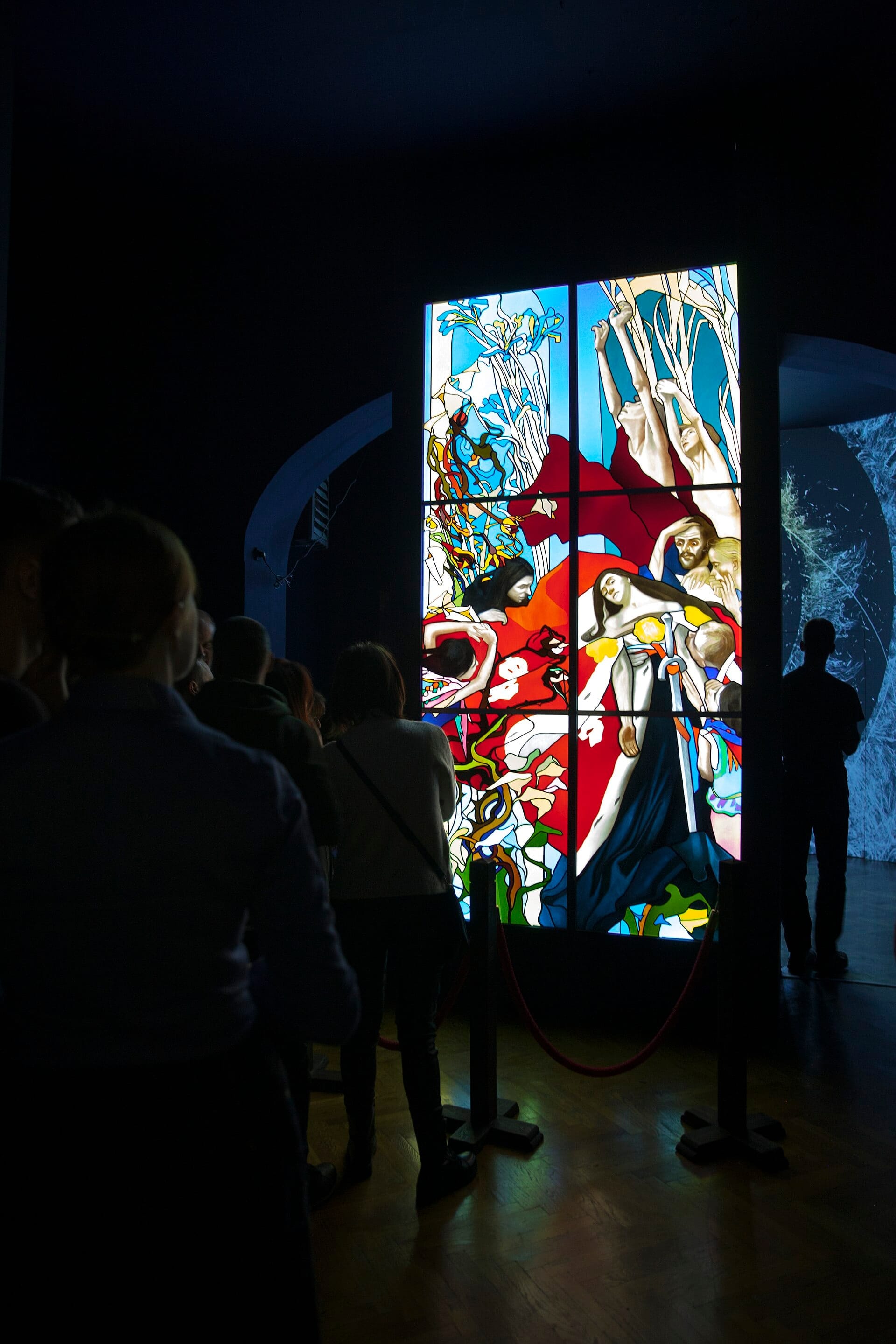
What Is the Stained Glass Museum?
The Stained Glass Museum (Muzeum Witrażu) is a living museum and working stained-glass studio at al. Zygmunta Krasińskiego 23. The building was designed for the Krakowski Zakład Witrażów S.G. Żeleński stained-glass workshop and opened in 1902, during the height of Kraków's Art Nouveau and Young Poland period.
Unlike a conventional gallery, the museum is built around process. A guided visit moves through historic rooms and active workshop spaces, showing how designs become full-scale cartoons, how glass is selected and cut, and how painted details are fired before panels are assembled in lead. The appeal is not only finished stained glass but the craft infrastructure that makes it possible.
ℹ️ Good to know
Visits are guided only. English tours usually start at 12:00 and 15:00 from Tuesday to Saturday, last about 45–60 minutes, and require at least two participants.
Why This Workshop Matters
Kraków's stained-glass tradition is closely tied to the Young Poland movement, when artists, architects, and craftspeople treated interiors as complete works of art. The Żeleński workshop became one of the places where those designs were translated into glass, including church, civic, and private commissions.
The museum's strength is that it keeps the workshop logic visible. Instead of treating stained glass as a static decorative object, it shows the sequence of skills behind it: drawing, colour selection, glass cutting, painting, firing, leading, and installation. That makes the visit useful even for travellers who usually find art museums too passive.
Understanding the craft also helps you read the city around you. The stained-glass windows at the St. Mary's Basilica and the Franciscan Church both make more sense after seeing how stained glass is made. The museum gives you the technical context for windows you may pass elsewhere in the Old Town without fully noticing.
Tickets & tours
Live prices and dates from our booking partner. If you book, we may earn a commission at no extra cost to you.
Krakow evening boat trip with a glass of wine
From 22 €Instant confirmationFree cancellationEntrance ticket for the Legends of Krakow robotic show
From 9 €Instant confirmationFree cancellationWieliczka Salt Mine guided tour with hotel pickup from Krakow
From 58 €Instant confirmationFree cancellationWieliczka salt mine guided tour from Krakow
From 60 €Instant confirmationFree cancellation
What You Actually See
Cartoons, Glass, and Workshop Tools
The most useful objects to study are the full-scale cartoons and technical drawings used before glass is cut. They show how a window begins as line, proportion, and colour planning. Guides usually explain how the cartoon is translated into separate glass pieces, then reassembled into a finished panel.
You also see the material side of the craft: coloured glass sheets, cutting tools, glass paints, kilns, lead came, and partially assembled works. That practical sequence is the museum's main advantage over a display-only collection.
Finished Panels and Active Commissions
Finished panels and sample works help connect the technical explanation to the final visual effect. Because the building still functions as a studio, you may also see work in progress, though access depends on current commissions and conservation needs.
The experience is guide-led, so the quality of the visit depends partly on listening closely and asking questions. If you want a silent, independent gallery visit, this is not the right format.
The Building: A Purpose-Built 1902 Workshop
The building was designed for stained-glass production rather than adapted later for it, which is why the museum feels different from Kraków's palace or townhouse museums. Workshop needs shaped the interior: light, vertical space, room for large designs, and practical circulation between design, glass work, painting, and assembly.
Krasińskiego Avenue sits just west of the Old Town, about 15 minutes on foot from Rynek Główny. The walk takes you through the Planty park ring and toward the National Museum area, a useful route if you are linking several west-side cultural stops.
💡 Local tip
Because visits move through a historic working building, accessibility can depend on the exact tour route. If you have mobility requirements, contact the museum before booking.
When to Visit and What to Expect by Time of Day
The museum normally welcomes visitors Tuesday through Saturday, with English guided tours at set times, commonly 12:00 and 15:00. It is closed on Sundays, Mondays, and holidays. Because sightseeing is guided-only, your timing is determined by the tour schedule rather than by open-ended gallery hours.
Book ahead if the museum is a priority. The official booking system guarantees a place at your chosen time, while box-office tickets depend on remaining capacity. Tours only run when at least two participants arrive, so solo travellers should avoid assuming that an unscheduled walk-up will work.
Light is part of the subject here. Even when the tour focuses on workshop process, pay attention to how guides talk about colour, transparency, and the way glass changes under different conditions. That vocabulary will help you read stained-glass windows elsewhere in Kraków.
⚠️ What to skip
Official English guided-tour prices are 80 PLN for a single ticket and 256 PLN for a 2+2 family ticket; children up to 4 enter free. Check muzeumwitrazu.pl before visiting, as tour times and holiday closures can change.
Practical Walkthrough: Getting There and Around
Al. Zygmunta Krasińskiego 23 is reachable on foot from the Old Town in about 15 minutes. From Kraków's Old Town, head west through the Planty gardens toward the National Museum and Krasińskiego Avenue. Trams serving the Muzeum Narodowe or Jubilat area bring you to within a short walk; check current MPK Kraków schedules before relying on a specific line.
There is no reason to drive here unless you are already using a car outside the centre. Street parking around the National Museum and Krasińskiego Avenue is limited and often occupied. Walking or using public transport is the practical choice for most visitors.
If you are combining this with other cultural visits, the museum pairs naturally with a walk through Planty Park and the nearby Collegium Maius, the oldest surviving building of the Jagiellonian University. Together, these stops make a coherent half-day focused on Kraków's art, scholarship, and craft traditions.
Is It Worth Your Time?
For visitors interested in Art Nouveau, craft, conservation, or the behind-the-scenes mechanics of decorative art, the Stained Glass Museum is one of Kraków's most distinctive small museums. The guided-only format gives context you would not get from labels alone.
For visitors primarily interested in medieval Kraków, the castle, or Jewish heritage, this museum sits outside the main itinerary and may not be the best use of limited time. It is also less flexible than most museums because you cannot simply drop in and browse at your own pace.
Those planning a longer stay and interested in Polish art and craft will find this complements the National Museum in Kraków and the Czartoryski Museum well, building a picture of Kraków's art history from Renaissance collections through to modern craft workshops.
Visitors who should probably skip it: those on a single-day itinerary focused on Wawel and the Main Square, travellers with very young children who may struggle with a guided studio visit, and anyone who wants a flexible, self-guided museum.
Insider Tips
- Book the English tour online where possible. The museum is guided-only, tours run at set times, and walk-up places depend on availability.
- English tours usually run Tuesday to Saturday at 12:00 and 15:00. The museum is closed on Sundays, Mondays, and holidays, and tours require at least two participants.
- This is a working stained-glass studio, not a self-guided gallery. Expect tools, glass sheets, cartoons, kilns, and craftspeople's workspaces as much as finished objects.
- Pair the visit with the National Museum area, Błonia, or a short walk back through Planty Park. If you want to see finished Art Nouveau glass in a church setting, add the Franciscan Church on Plac Wszystkich Świętych.
- Ask before photographing workshop areas. Some commissions and active studio work may be restricted even when general visitor photography is allowed.
Who Is Stained Glass Museum For?
- Art and design enthusiasts with an interest in Art Nouveau and stained glass
- Craft lovers who want to see how glass is cut, painted, fired, and assembled
- Repeat visitors to Kraków looking beyond the major landmarks
- Travellers comfortable booking a timed guided tour rather than browsing independently
- Families with older children interested in hands-on making processes
Nearby Attractions
Other things to see while in Kraków Old Town (Stare Miasto):
- Cloth Hall (Sukiennice)
Standing at the centre of Rynek Główny since the Middle Ages, Kraków's Cloth Hall is part market, part museum, and part architectural monument. The ground-floor arcade sells amber, linen, and crafts; upstairs, the National Museum's Gallery of Polish Art fills Renaissance rooms with 19th-century masterpieces.
- Collegium Maius
Collegium Maius is the oldest surviving building of the Jagiellonian University, founded in 1364. Housing a museum of rare globes, scientific instruments, and royal regalia beneath a serene Gothic arcade, it offers one of Kraków's most quietly impressive indoor experiences.
- Czartoryski Museum
The Czartoryski Museum holds one of Poland's oldest and most important art collections, anchored by Leonardo da Vinci's Lady with an Ermine. Housed in a historic Old Town complex near the Florian Gate, it combines fine art, antiquities, and decorative arts across several interconnected buildings.
- Florian Gate & City Walls
St. Florian's Gate is the sole surviving medieval gate of the eight that once pierced Kraków's city walls. Standing about 33 metres tall at the northern tip of the Old Town, it anchors the Royal Route that once led from the city entrance down to Wawel Castle. Walking through is free; climbing the wall gallery costs a small fee and pairs naturally with the adjacent Barbican.
Planning a trip? Discover personalized activities with the Nomado app.