National Museum in Kraków (Main Building): What to Expect Before You Go
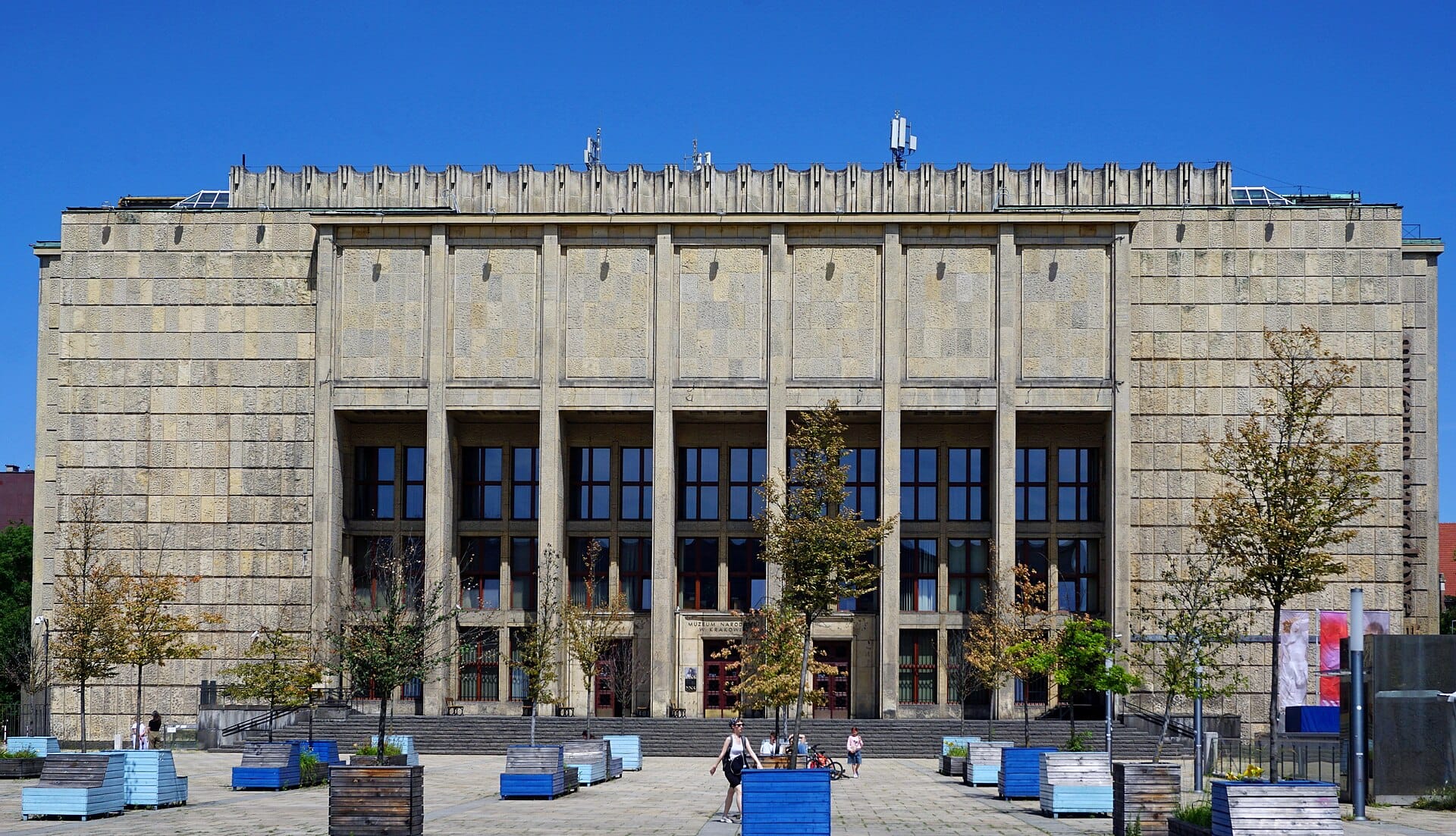
The Main Building of the National Museum in Kraków is Poland's oldest national museum, set in a striking modernist structure on al. 3 Maja 1. It holds three permanent galleries covering Polish decorative arts, arms and uniforms, and 20th-century painting, making it one of the most substantive cultural stops in the city.
Quick Facts
- Location
- al. 3 Maja 1, 30-062 Kraków (west of Krakow Old Town, near the Planty Park ring and Błonia Park)
- Getting There
- Trams 1 and 20; buses 109, 124, 134, 144, 152, 164, 169, 173, 179, 194, 249, 304, 424, 502, 503 and others stop near the museum
- Time Needed
- 2–3 hours for the permanent galleries; half a day if a major temporary exhibition is running
- Cost
- Paid entry (prices vary; free admission to permanent exhibitions every Tuesday). Verify current rates at mnk.pl before visiting.
- Best for
- Polish art and history enthusiasts, rainy-day culture seekers, budget visitors on Tuesdays
- Official website
- mnk.pl/en/branches/mnk-main-building
What the National Museum in Kraków Actually Is
The National Museum in Kraków (Polish: Muzeum Narodowe w Krakowie) is not a single building tucked in a medieval courtyard. It is a network of branches spread across the city, and the Main Building at al. 3 Maja 1 serves as its headquarters. This is the purpose-built modernist structure most visitors mean when they refer to the National Museum, and it is where the three permanent collections are housed.
The institution itself has deep roots: it was founded by a resolution of the Kraków City Council on 7 October 1879, making it Poland's oldest national museum. The current Main Building has a more complicated biography. Construction began in 1934 in a stripped classical-modernist style, but World War II halted the project and the building sat incomplete for decades. It was finally finished in 1992, after the end of communist rule, which explains why the interior feels simultaneously grand and slightly austere.
💡 Local tip
Permanent exhibitions are free every Tuesday. If your travel schedule is flexible, that single day can save a meaningful amount per person, especially for families or groups.
The Three Permanent Collections: What You Will See
The Main Building organizes its permanent holdings across three distinct galleries, each with its own character and pacing. Understanding what each contains helps you allocate time properly rather than rushing through everything.
Gallery of Decorative Arts
This collection covers Polish and European applied arts from the medieval period through the early 20th century: furniture, glassware, ceramics, textiles, and metalwork displayed chronologically. The pieces are well-lit and clearly labeled in Polish and English. It rewards visitors who slow down, particularly around the Renaissance and Baroque sections where craftsmanship detail is exceptional.
Gallery of Arms, Uniforms, and Military Insignia
One of the more distinctive and underrated sections of the museum. Poland's military history is layered and often unfamiliar to international visitors, and this gallery covers centuries of it through armor, weapons, ceremonial uniforms, and regimental insignia. The collection spans from medieval knightly arms through to 20th-century conflicts. It is unusually strong on the Hussar tradition and on the Napoleonic period, when Polish legions served under Bonaparte with significant consequences for the national identity.
Gallery of 20th-Century Polish Painting
This is the collection that most art-focused visitors come for. Polish painting of the 20th century developed in relative isolation from Western European movements during long stretches of the communist period, which produced a distinctive visual language. The gallery includes work from the Young Poland movement through interwar modernism and into post-war abstraction and Socialist Realism. If you are familiar with Central European art history, this gallery will confirm and complicate what you know. If you are not, it is a good starting point.
Tickets & tours
Live prices and dates from our booking partner. If you book, we may earn a commission at no extra cost to you.
Entrance ticket for the Legends of Krakow robotic show
From 9 €Instant confirmationFree cancellationWieliczka Salt Mine guided tour with hotel pickup from Krakow
From 58 €Instant confirmationFree cancellationWieliczka salt mine guided tour from Krakow
From 60 €Instant confirmationFree cancellationKrakow: Jewish ghetto and Schindler's Factory entrance ticket and guided tour
From 30 €Instant confirmationFree cancellation
The Building Itself: Architecture Worth Noticing
The Main Building at al. 3 Maja 1 sits along the western edge of the Planty Park ring, which encircles the Old Town where the medieval city walls once stood. The structure's facade is sober and imposing: wide stone steps, a long horizontal roofline, and minimal ornamentation. It reads as confident civic modernism, the kind of institutional architecture that was meant to project permanence and seriousness.
The building's location just outside the historic core means it is a short walk from Rynek Główny (the Main Market Square) and the Planty Park ring path. Arriving on foot along the Planty gives you a cleaner approach than arriving by bus: you see the building as it was intended to be seen, from across open green space.
How Visits Change by Time of Day
The museum opens at 10:00 Tuesday through Sunday (closed Monday; hours may vary on some public holidays). The first hour after opening tends to be the quietest, and this is when the large, high-ceilinged galleries feel most contemplative. Natural light enters through upper windows in some sections, and the morning quality of light is better for examining painted surfaces than the flatter lighting of midday.
Tuesdays are the busiest days despite being free, or rather because of it. School groups arrive in organized waves starting around 10:30. If you visit on a Tuesday, arriving right at 10:00 or after 14:00 will help you avoid the most congested periods. On paid-entry days, mid-morning through noon is typically calm.
The museum closes at 18:00. Arriving after 15:30 on most days gives you a comfortable two-hour window, which is enough for two of the three permanent galleries if you move with purpose.
⚠️ What to skip
The museum is closed every Monday. This is easy to overlook when planning a Kraków itinerary, particularly for visitors on short trips. Always confirm current hours and any holiday closures at mnk.pl before visiting.
Getting There
The museum sits at al. 3 Maja 1, a short walk west of the Old Town. From the Main Market Square, the walk takes roughly 10–12 minutes on foot through the Planty. Trams 1 and 20 serve stops near the museum, as do multiple bus lines including 109, 124, 134, 144, 152, 164, 169, 173, 179, and 194.
If you are planning to see several museums in Kraków, the Main Building combines well with a visit to the Czartoryski Museum (home to Leonardo da Vinci's Lady with an Ermine), which is closer to the Old Town. Plan the National Museum Main Building as either the first or last stop of a museum-heavy day, not a middle stop, since it requires sustained attention.
Practical Details: Tickets, Audio Guides, and Accessibility
Ticket prices at the Main Building have been subject to change, and published figures vary across sources. Free admission to permanent exhibitions on Tuesday is confirmed by the museum itself. For paid days, you should verify the current normal and reduced prices directly at mnk.pl before visiting, as prices are periodically adjusted. Reduced tickets are typically available for students, seniors, and children; a family ticket is also available.
Audio guides are available for hire at an additional fee (prices have been listed as 7 PLN standard, 5 PLN reduced in recent visitor sources, but again, verify current rates). For a first visit, the audio guide to the 20th-century painting collection in particular adds meaningful context that the wall labels alone do not fully provide.
The museum's official website lists contact numbers for the ticket office, and visitors with specific accessibility requirements are advised to contact the museum in advance. Detailed step-free access information is not consistently documented in public sources, so a direct inquiry is the most reliable approach for anyone with mobility needs.
ℹ️ Good to know
Audio guides are available for an extra fee. If Polish 20th-century art is unfamiliar territory, the guide for that gallery is worth the cost.
Photography, What to Wear, and Honest Limitations
Photography rules in Polish museums can vary by exhibition and by whether temporary shows are running. As a general approach, avoid flash and always check posted signage at gallery entrances. The decorative arts and arms collections tend to have more permissive policies for personal photography than temporary exhibitions, which often involve loan agreements with external institutions.
There is no dress code beyond ordinary standards for an indoor museum visit. In winter, the building is well-heated; in summer, the thick stone walls keep galleries noticeably cooler than outside, which can feel like a relief on a July afternoon. Comfortable shoes matter more than clothing choice since the galleries involve sustained standing and walking on hard floors.
A practical note on expectations: the National Museum Main Building is not a highlight for every visitor to Kraków. Travelers primarily interested in medieval history or the city's Jewish heritage will find more relevant content at other sites. The collections here are deep but require engagement with Polish cultural history to be fully meaningful. Visitors who arrive expecting something like the Louvre or the British Museum in terms of international breadth will be disappointed. What the museum does exceptionally well is document Polish artistic and material culture across several centuries, which is a specific and valuable thing.
For a broader sense of how Kraków's museums fit together, the guide to the best museums in Kraków can help you prioritize based on your interests.
Insider Tips
- Tuesday free admission draws school groups in the late morning. Arrive at opening (10:00) or after 14:00 to avoid the crowds in the permanent galleries.
- The 20th-century painting gallery is the most demanding section and is best visited when you are fresh, not as the final gallery after two hours of decorative arts and military collections.
- The building's ground floor often hosts temporary exhibitions that are separately ticketed. Check what is running before you go so you can factor in the additional cost and time.
- The Planty Park approach from the Old Town is the most pleasant way to arrive on foot, and it gives you a clear view of the building's full facade, which is easy to miss if you exit a bus directly in front of it.
- If you are visiting the Czartoryski Museum on the same day, do that first. It is smaller and more concentrated, and it pairs well with the National Museum Main Building as a longer afternoon stop.
Who Is National Museum in Kraków (Main Building) For?
- Visitors with a specific interest in Polish art history, from the Young Poland movement through 20th-century modernism
- Travelers who appreciate applied arts and want to see Polish decorative craftsmanship across several centuries
- Budget-conscious visitors who can schedule a Tuesday visit for free permanent gallery access
- Rainy-day culture seekers who need a substantial indoor stop with several hours of content
- Anyone building a deeper picture of Polish cultural identity alongside visits to Wawel and the Old Town
Nearby Attractions
Other things to see while in Kraków Old Town (Stare Miasto):
- Cloth Hall (Sukiennice)
Standing at the centre of Rynek Główny since the Middle Ages, Kraków's Cloth Hall is part market, part museum, and part architectural monument. The ground-floor arcade sells amber, linen, and crafts; upstairs, the National Museum's Gallery of Polish Art fills Renaissance rooms with 19th-century masterpieces.
- Collegium Maius
Collegium Maius is the oldest surviving building of the Jagiellonian University, founded in 1364. Housing a museum of rare globes, scientific instruments, and royal regalia beneath a serene Gothic arcade, it offers one of Kraków's most quietly impressive indoor experiences.
- Czartoryski Museum
The Czartoryski Museum holds one of Poland's oldest and most important art collections, anchored by Leonardo da Vinci's Lady with an Ermine. Housed in a historic Old Town complex near the Florian Gate, it combines fine art, antiquities, and decorative arts across several interconnected buildings.
- Florian Gate & City Walls
St. Florian's Gate is the sole surviving medieval gate of the eight that once pierced Kraków's city walls. Standing about 33 metres tall at the northern tip of the Old Town, it anchors the Royal Route that once led from the city entrance down to Wawel Castle. Walking through is free; climbing the wall gallery costs a small fee and pairs naturally with the adjacent Barbican.
Planning a trip? Discover personalized activities with the Nomado app.