St. John's Church Riga: A Medieval Lutheran Landmark in the Heart of Old Town
St. John's Church stands on Skārņu iela in the core of Riga's Old Town, a medieval structure with centuries of religious and architectural history. Originally founded as a Dominican friary church, it later became one of the city's principal Lutheran congregations. The interior is austere and atmospheric, a contrast to the more tourist-heavy landmarks nearby.
Quick Facts
- Location
- Skārņu iela 24, Old Town Riga (entrance from Jāņa Sēta iela)
- Getting There
- Walk from Riga Central Station (~10–15 min); nearest tram/bus stops along Aspazijas bulvāris
- Time Needed
- 30–60 minutes
- Cost
- Verify current admission at the door; entry may be free or low cost
- Best for
- Architecture enthusiasts, history seekers, quiet reflection mid-sightseeing
- Official website
- www.janabaznica.lv
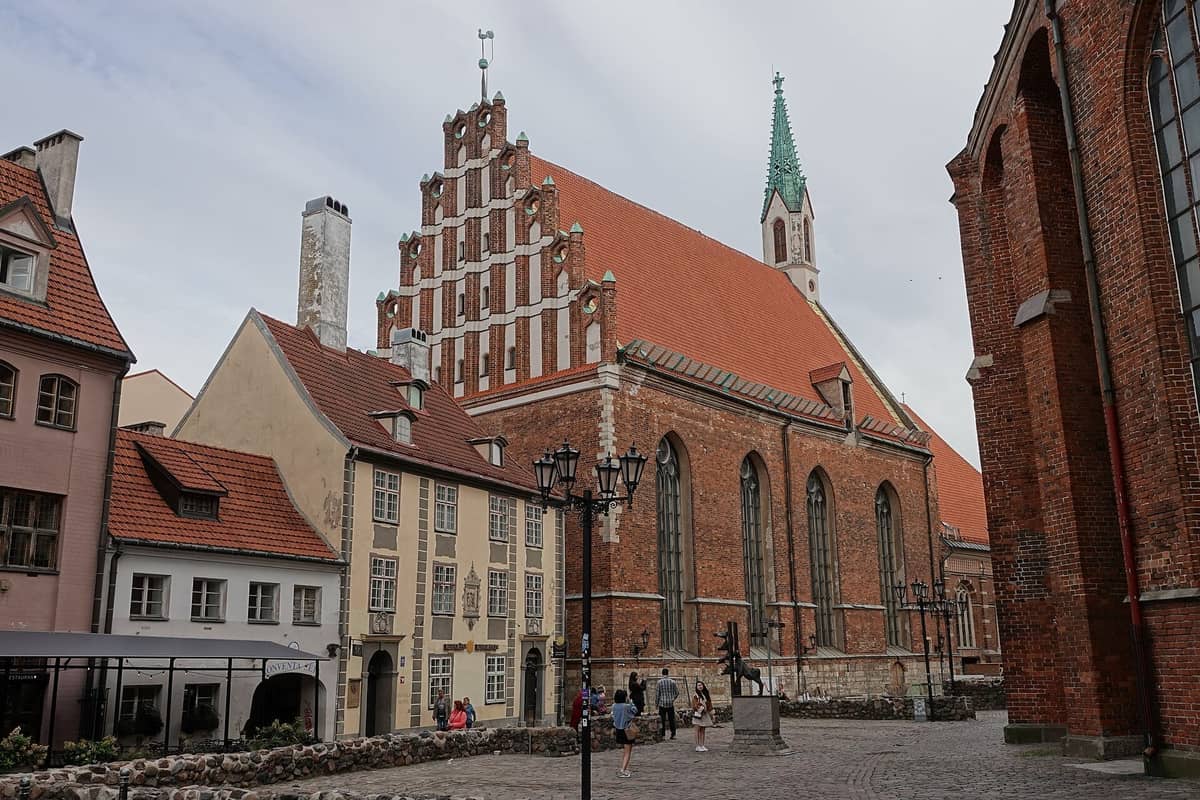
What Is St. John's Church and Why Does It Matter?
St. John's Church (Latvian: Svētā Jāņa Evaņģēliski luteriskā baznīca) is one of the older surviving churches in Riga, occupying a position between the more famous St. Peter's Church to the south and the commercial mass of Galerija Centrs to the north. That location alone tells you something: this is a place that has endured centuries of change without ever becoming the obvious headline attraction, which is precisely why it rewards the visitor who actually steps inside.
The church's origins trace back to a Dominican friary established in medieval Riga. After the Reformation swept through the Baltic region in the 16th century, it passed into Lutheran hands and has remained a Lutheran congregation ever since. The architectural fabric reflects that layered history: Gothic stonework, later additions, and the stripped-back interior aesthetic that characterizes Baltic Lutheran churches. The result is a building that feels genuinely old in a way that heavily restored landmarks sometimes do not.
ℹ️ Good to know
The church is an active place of worship, not only a tourist site. Worship services in Latvian and, every Sunday at 12:30 PM, in English are held here. Check the official website at janabaznica.lv for current service times before planning your visit around them.
The Architecture: Gothic Bones, Baltic Character
From Skārņu iela, the church presents a relatively plain stone facade, the kind that requires a second look to appreciate. The Gothic structural lines are clear in the nave and the pointed arches, but St. John's lacks the soaring height of Riga's Dome Cathedral or the landmark spire of St. Peter's. That comparative modesty is not a flaw. It reflects the church's original function as a friary chapel rather than a civic or episcopal showpiece.
What draws architectural observers is the coherence of the interior space and the way the building has been maintained without being sanitized. The walls carry the texture of real age. For travelers working through a structured Old Town walking tour, St. John's provides a useful counterpoint to the more elaborate nearby monuments: it shows what medieval religious architecture looked like when it was built for community use rather than civic prestige.
The entrance from Jāņa Sēta iela (St. John's Courtyard lane) adds a small but pleasant transition: the narrow passageway opens into a courtyard before you reach the church door, giving the arrival a slightly contemplative quality that the main street does not.
Tickets & tours
Hand-picked options from our booking partner. Prices are indicative; availability and final rates are confirmed when you complete your booking.
Canal boat sightseeing tour in Riga
From 13 €Instant confirmationArt and culture walking tour of Riga with a local
From 66 €Instant confirmationFree cancellationSelf-guided discovery walk in Riga - the essential old town and its secrets
From 30 €Instant confirmationFree cancellationExclusive private guided tour of Riga's architecture with a local
From 175 €Instant confirmationFree cancellation
Inside the Church: What to Expect
The interior is calm, relatively unadorned, and genuinely atmospheric during quieter hours. Lutheran church interiors across the Baltic tend toward simplicity after the Reformation cleared away much of the Catholic decorative tradition, and St. John's fits that pattern. The light entering through the windows changes significantly depending on time of day: morning visits catch a cooler, more diffuse light across the stone floors, while afternoon sun picks out details in the upper nave.
There is an organ, consistent with the strong Lutheran musical tradition in Latvia. The acoustic quality of the nave is noticeable even when no music is playing: sounds carry clearly, and the ambient noise of the Old Town outside drops away almost immediately upon entering. For visitors who have been walking through Riga's tourist core for several hours, the contrast in atmosphere is considerable.
💡 Local tip
Visit on a weekday morning during the seasonal opening window (roughly May to mid-October, Monday to Saturday from around 10:00 to 18:00) if you want the interior largely to yourself. Weekend afternoons attract more visitors, and Sunday opening is typically limited to afternoon hours from approximately 14:00 to 18:00.
Visiting Hours and Practical Access
Opening hours at St. John's Church follow a seasonal pattern. During the warmer months, roughly May through mid-October, the church is generally open to visitors Monday to Saturday from around 10:00 to 18:00, with Sunday hours typically from 14:00 to 18:00. Outside this window, access is less predictable and may be limited to service times or arranged visits. These hours are subject to change, so verifying directly via the official website before you go is strongly recommended.
The address is Skārņu iela 24, but the practical entrance for visitors is from Jāņa Sēta iela, the small lane running alongside the building. If you approach from Skārņu iela and find a closed-looking facade, walk around to the courtyard side. First-time visitors sometimes miss this and assume the church is closed when it is not.
Admission pricing was not independently verified at the time of writing. Some Baltic Lutheran churches operate on a voluntary donation or small entry fee model. Confirm current pricing at the door or check what's genuinely free in Riga before budgeting your day. The church is located fully within the Old Town and is easily combined with other nearby sites without additional transport.
How It Fits Into an Old Town Visit
St. John's Church sits in the southern section of Riga's Old Town, a short walk from St. Peter's Church and from Riga's Town Hall Square. This cluster of medieval and early modern landmarks can realistically be covered in a half-day on foot. St. John's will not take as long as either of those sites, but it offers something they do not: a quieter, less commercialized experience of the same historical period.
Travelers interested in Riga's longer religious and cultural history might also want to include the Riga Dome Cathedral in the same itinerary. The Dome is larger, more ornate, and more visited, but comparing the two gives a clearer picture of how ecclesiastical architecture evolved and diversified across Riga's medieval and Reformation-era history.
If you are visiting with children, be aware that St. John's is a working church with an expectation of quiet. It is not an interactive museum, and there is no dedicated children's content. Families with young children may find the visit brief, though the courtyard approach is a pleasant enough space for a short pause.
Practical Assessment: What This Attraction Is and Is Not
St. John's Church will not be the most dramatic single thing you see in Riga. Travelers who come expecting soaring Gothic interiors on the scale of Cologne or Prague will find the scale here more modest. The building does not have a tower you can climb, an extensive museum wing, or a gift shop. What it has is genuine historical fabric, a working congregation, and an atmosphere that feels substantially different from the commercial centre of the Old Town a few hundred metres away.
For architecture and history travelers, the church is worth 30 to 45 minutes and fits naturally into any serious exploration of Old Town Riga. For travelers who are primarily interested in views, nightlife, or food, it may not justify a specific detour, though it costs little to step inside if you are already in the area.
⚠️ What to skip
The church is an active place of worship. If a service is in progress when you arrive, wait until it concludes before entering the main nave. Dress modestly as a matter of basic courtesy, as you would in any functioning religious building.
Insider Tips
- The entrance is on Jāņa Sēta iela, not on the main Skārņu iela facade. Walk into the small courtyard passage and you will find the visitor door. Many people walk past without realizing the church is open.
- If you want the interior in near-silence, aim for a Tuesday or Wednesday morning in late May or early June, before the main summer tourist wave arrives in Riga's Old Town.
- The church hosts worship services in English every Sunday at 12:30 PM. If your visit coincides with one, the acoustic quality of the nave makes even a short service worth attending as a cultural experience, independent of religious interest.
- Pair the visit with the courtyard of St. John's itself: the small lane approach has a compressed, medieval-street quality that photographs well in the late afternoon when the stone walls catch warm directional light.
- Out-of-season visitors (November to April) should email or check the official website before traveling specifically to see the church, as visitor access outside the main seasonal window is not guaranteed.
Who Is St. John's Church For?
- Architecture and history travelers working through Old Town Riga systematically
- Visitors who want a quiet interior space away from the tourist-heavy squares
- Travelers interested in the Reformation's impact on Baltic religious culture
- Those combining several Old Town churches in a single half-day walk
- Photographers looking for medieval courtyard textures and Gothic stone detail
Nearby Attractions
Other things to see while in Old Town (Vecrīga):
- Bremen Town Musicians Sculpture
Standing on Skārņu iela in Riga's medieval Old Town, this bronze sculpture of four stacked animals tells a Brothers Grimm story while carrying a quietly powerful political message about the end of the Iron Curtain. Cast in 1990 and gifted by the city of Bremen, it's free to visit, open around the clock, and one of the most photographed corners of Vecrīga.
- House of the Blackheads
Standing on Town Hall Square in Riga's Old Town, the House of the Blackheads is a reconstructed 14th-century guild hall with an ornate Dutch Renaissance facade that stops pedestrians cold. Behind the stone and gilded detail lies a layered story of medieval merchant culture, wartime destruction, and Latvian national pride.
- Museum of the Occupation of Latvia
Housed in the heart of Riga Old Town, the Museum of the Occupation of Latvia documents 51 years of Soviet and Nazi rule from 1940 to 1991. It is one of the most carefully assembled historical museums in the Baltic states, and a visit here fundamentally changes how you understand the country around you.
- Powder Tower & Latvian War Museum
The Powder Tower (Pulvertornis) is the sole surviving tower from Riga's medieval city walls, first recorded in 1330. Today it houses the Latvian War Museum, a free, well-curated institution spanning centuries of Baltic military history. It stands at the northern edge of Old Town, easy to find and easier to underestimate.