Spiaggia di Tuerredda: The Southwest Coast Beach Worth the Drive
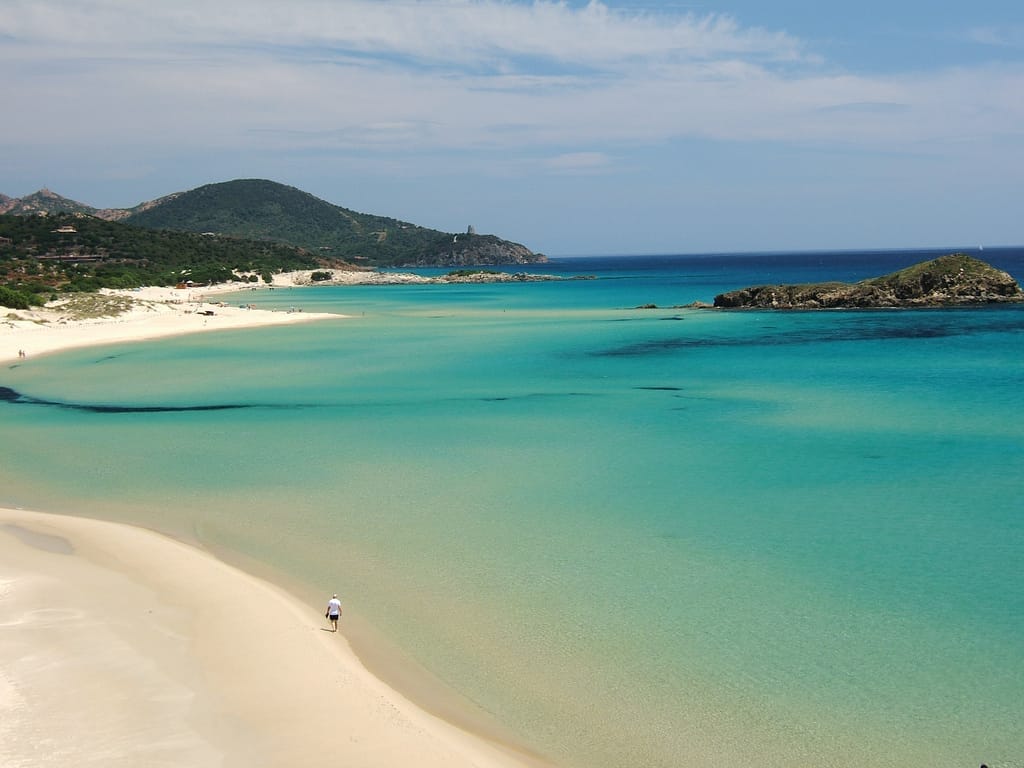
Spiaggia di Tuerredda sits on Sardinia's southwestern coast between Capo Malfatano and Capo Spartivento, in the municipality of Teulada. Its 500-metre arc of pale sand curves around a shallow bay directly facing a small offshore islet, and the water runs through every shade of blue and green that Sardinian postcards promise. Access is managed seasonally to protect the environment, making it one of the few beaches on the island where visitor numbers are actively controlled.
Quick Facts
- Location
- Municipality of Teulada, southwestern Sardinia, between Capo Malfatano and Capo Spartivento
- Getting There
- By car via SS 195 from Cagliari toward Pula, then follow signs for Chia and continue approx. 10 km to the beach. No regular public transport reaches the site.
- Time Needed
- Half day minimum; most visitors stay 4–6 hours
- Cost
- Beach access is free; a voluntary environmental contribution of €1 is collected at the entrance during the managed season (1 June – 13 October, subject to annual confirmation by the Municipality of Teulada)
- Best for
- Swimmers, snorkellers, photographers, couples, and anyone who prioritises water quality over beach infrastructure
- Official website
- tuerredda.spacli.it
What Tuerredda Actually Looks Like
Spiaggia di Tuerredda is a crescent of fine, pale sand roughly 500 metres long, sitting near one of the southernmost points of Sardinia on its southwestern coast. The beach faces almost due south, which means it catches sun for the whole day. The most immediately striking feature is not the sand itself but the Isolotto di Tuerredda, a small rocky islet sitting a few hundred metres offshore that you can wade or swim to at low tide. Between the shore and the islet, the water is shallow and almost perfectly calm, sheltered from the open sea's swell. The colour shifts from near-white in the shallows to a saturated aquamarine further out, and the transition is sharp enough that photographs rarely need a filter.
The sand is fine and light-coloured but not powdery in the way of volcanic beaches further north; it compacts slightly underfoot, which makes walking along the waterline comfortable. The shoreline slopes into the water gently, making it one of the more reliably safe beaches for children who can swim. Further out, past the islet, the seabed drops and the water darkens to deep blue, but the inner bay stays navigable without flippers.
ℹ️ Good to know
During the managed season (1 June to 13 October), visitor numbers at Tuerredda are capped and checked at the entrance. Check current availability on the official site at tuerredda.spacli.it before making the drive, particularly on weekends in July and August.
How the Beach Changes Through the Day
Early morning at Tuerredda is a different experience from the mid-afternoon rush. Before 9 a.m., the light comes in from the east and catches the water at a low angle, making the islet and the shallow bay glow. At this hour the beach fills slowly; you can spread out comfortably and the sea is at its calmest. The smell of salt and scrubby Mediterranean vegetation from the surrounding macchia is strongest in the morning cool before the heat builds.
By late morning the beach fills steadily, and by midday in peak summer it is crowded in the central section near the main beach access. The afternoon sun hits the sand directly, making the pale surface reflect heat intensely; bring sandals rather than flip-flops with thin soles if you plan to walk any distance from a sunbed or towel. The noise level rises predictably — families, music from portable speakers near the bar, children near the shallows. It is not a quiet, contemplative experience in August.
Late afternoon, from around 5 p.m., the crowd begins to thin as families with young children leave. The light softens and turns golden by 6 p.m., which is one of the best windows for photography: long shadows on the sand, warm colour on the islet, and fewer people in frame. The beach access management typically concludes its active operation by early evening, but verify current closing arrangements at the official site before planning a late visit.
Tickets & tours
Hand-picked options from our booking partner. Prices are indicative; availability and final rates are confirmed when you complete your booking.
Vineyard Guided Tour and 7 Wine Tasting in Palau
From 84 €Instant confirmationFree cancellationFull-Day Sailboat Tour in La Maddalena Archipelago from Cannigione
From 112 €Instant confirmationFree cancellationHiking excursion to the Devil's Saddle
From 35 €Instant confirmationFree cancellationExcursion to the Archaeological site of Nora
From 70 €Instant confirmationFree cancellation
The Water: Snorkelling and Swimming
The inner bay between the beach and the islet is the main draw for anyone who gets in the water. The seabed is sandy with patches of Posidonia oceanica, the protected seagrass that indicates clean, well-oxygenated water and is itself home to small fish, sea urchins, and occasionally octopus if you look carefully along the rocky margins. Snorkelling here does not require experience or special equipment beyond a basic mask and snorkel; the water is clear enough to see to the bottom even in the deeper sections beyond the islet.
The swimming season at Tuerredda effectively runs from late May through October, with water temperatures that are comfortable from June and reach their warmest in August and September. September is arguably the best month for swimming here: the sea has accumulated summer warmth, the crowds are noticeably smaller than in August, and the light for snorkelling is still excellent. October remains swimmable but the beach facilities begin to scale back.
For a broader look at what the southwestern coastline offers in the water, the Sardinia snorkelling and diving guide covers the region's best sites with detail on depth, marine life, and access.
💡 Local tip
Bring your own snorkelling equipment if possible. Rental options at the beach are limited and quality varies. A basic mask, snorkel, and fins take little space in a day bag and transform the experience in the bay around the islet.
Getting There and the Access System
Tuerredda is not reachable by any scheduled public transport. A car is effectively required. From Cagliari, the drive takes roughly 60 to 75 minutes depending on traffic; you follow the SS 195 coastal road toward Pula, pass through the beach resort area near Chia, and then continue toward Teulada following signs for Tuerredda. The final section of road is narrow but paved, and parking is available near the beach entrance, though it fills fast on summer weekends.
The access management system introduced by the municipality of Teulada is one of the more practical environmental measures applied to any beach in southern Sardinia. During the regulated season, the number of visitors on the beach at any one time is capped. The voluntary €1 environmental contribution collected at the gate goes toward maintaining the beach and managing waste. The process is low-friction in practice: you check availability online or at the gate, pay the contribution if you choose, and proceed. It does mean, however, that arriving on a Saturday afternoon in August without checking ahead risks finding the beach at capacity.
Tuerredda sits within the broader Sulcis-Iglesiente coastal area. If you are planning a longer trip through this part of the island, the Sardinia road trip guide includes route suggestions that connect the southwest coast beaches with nearby historical and natural sites.
When to Visit: Season, Crowds, and Weather
In short, is that Tuerredda in July and August is a well-known beach doing exactly what well-known beaches do in peak Mediterranean summer: it fills up, prices at nearby accommodation rise, and the sense of discovery shrinks. It is still a beautiful place, but the experience is fundamentally social rather than solitary.
June is the sweet spot for most independent travellers: the managed access is in operation, the water is warm enough for comfortable swimming, the beach is not yet at capacity on most weekdays, and the surrounding countryside, including the scrubland and rocky headlands visible from the shore, is still green rather than bleached by summer heat. Late September offers similar benefits, with the added advantage of warmer sea temperatures than June.
Outside the managed season, from mid-October onward, the beach reverts to an unmanaged public space. Autumn weather on the Sulcis coast can still be warm and clear into November, but services are not available and the beach has a noticeably different, quieter character. Winter visits are possible on a fine day but the road out to the headland feels isolated, and the sea is cold.
For month-by-month climate detail and sea temperature ranges across Sardinia, see the best time to visit Sardinia guide, which covers conditions across the island's different coastal zones.
⚠️ What to skip
The road to Tuerredda is exposed to the Mistral wind that periodically sweeps the southwestern coast. On Mistral days, the sea can become rough despite the generally sheltered position, and the beach itself is unpleasant with blowing sand. Check local wind forecasts before making the drive.
Practical Details: What to Bring and What to Expect
The beach has some facilities during the managed season, including a beach bar and sunbed rentals in the main central area, but it is not heavily developed. There are no large resort structures, no hotels directly on the beach, and no major commercial strip. This is part of what keeps it worth visiting. Bring water, sunscreen, and food if you want to stay for a full day without depending on the bar, which can have limited stock and a long queue at peak times.
Shade is limited. The beach is open to the sky and the surrounding hillside vegetation does not extend to the sand itself. An umbrella or a beach tent is useful, particularly for anyone spending more than a couple of hours in the midday sun. The reflected heat from the pale sand is more intense than it appears.
For photography, the islet is the key compositional element. A wide-angle lens or phone set to the widest frame works well from the waterline at low sun angles; the foreground of clear shallow water leading back to the islet is the defining image of this beach. A polarising filter, if you use one, dramatically reduces surface glare and reveals the seabed colours. Drone photography in the area is subject to Italian aviation authority regulations and any restrictions posted at the site; always check current rules before flying.
Accessibility for visitors with mobility limitations is constrained by the natural beach terrain. The path from parking to the sand involves some uneven ground, and the beach itself is soft sand without firm pathways. Verify current accessibility provisions directly with the beach operators via the official site before visiting.
The Surrounding Area: What Else Is Nearby
Tuerredda sits within a stretch of coast that rewards exploration. The beaches near Chia to the east, reached by continuing along the SS 195, are similarly high-quality with slightly more infrastructure. The Spiaggia di Chia area includes dunes, a lagoon with flamingos in season, and a Spanish watchtower on the headland — making it worth a combined day trip from Cagliari if you want variety beyond the beach.
Further into the Sulcis interior, the area holds significant archaeological and industrial heritage that contrasts sharply with the coastal scenery. The Sulcis and Southwest Coast region is one of Sardinia's less-visited zones despite containing some of the island's most interesting historical layers, from ancient Phoenician settlements to the remains of 19th and 20th century mining operations.
If Tuerredda is part of a longer stay in southern Sardinia, Cagliari makes a practical and rewarding base. The capital offers a full range of accommodation, restaurants, and cultural sites within an hour's drive of the southwest coast beaches. The day trips from Cagliari guide includes Tuerredda as one of the southwestern options alongside other coastal and inland destinations.
Insider Tips
- Arrive before 9 a.m. on a clear summer day and you will have the bay largely to yourself for at least an hour. The light at that time is also the best for photography, and the water is at its calmest before wind picks up.
- The islet is reachable by wading or a short swim depending on the tide. Walk around its rocky perimeter rather than just landing on the main face; the sheltered side has better snorkelling and is usually free of other swimmers even when the main beach is crowded.
- If the beach is at capacity when you arrive, the access managers can sometimes indicate an expected wait time based on people leaving. Midday departures happen when families head back to accommodation for lunch; arriving at 1 p.m. and waiting 30 minutes is often more productive than arriving early and finding no space.
- The narrow road out to the beach has very limited passing places. Drive slowly and use pull-ins when meeting oncoming traffic; the locals who work the beach do this routinely at speed, which can be alarming on a blind bend.
- Bring a reusable bag for your rubbish. Waste facilities at the beach are present but modest. The environmental contribution system only works if visitors treat the beach accordingly; the condition of Tuerredda compared to unmanaged beaches on the same coast is a direct result of this collective effort.
Who Is Spiaggia di Tuerredda For?
- Swimmers and snorkellers who prioritise water clarity and a natural bay environment over resort facilities
- Couples or small groups looking for a high-quality beach day within reach of Cagliari without crossing to the east coast
- Photographers interested in the islet-framed coastal compositions that define this stretch of the southwest
- Travellers visiting in June or September who want the full Sardinian beach experience without August crowds
- Families with children who swim: the shallow, sheltered bay between the shore and the islet is unusually calm and safe
Nearby Attractions
Other things to see while in Sulcis & the Southwest Coast:
- Carloforte (Isola di San Pietro)
Carloforte is the sole inhabited centre on Isola di San Pietro, a small island off Sardinia's southwestern coast with a strikingly un-Sardinian character. Founded in 1738 by Ligurian settlers from Tabarka, it retains its own dialect, cuisine, and urban architecture — a place that rewards slow exploration rather than quick sightseeing.
- Costa Verde
Costa Verde is a 47-kilometre arc of coastline in the Comune di Arbus, in Sardinia's southwest, running from Capo Frasca to Capo Pecora. It holds some of the most remote beaches on the island, including Piscinas, where dunes reach up to 60 metres high, making it one of the largest dune systems in Europe. There are no entry fees, minimal resort infrastructure directly on the beaches, and no public transport. That combination is exactly why it rewards visitors who make the effort to get here.
- Is Zuddas Caves (Santadi)
Carved into 530-million-year-old Cambrian dolomite beneath Monte Meana, the Is Zuddas Caves near Santadi are among the most geologically significant showcaves in Sardinia. Guided tours of a flat 500-metre route reveal towering stalactites, aragonite helictites, and chambers that once served as an alabaster quarry before local speleologists rescued them for science and tourism in 1971.
- Isola di Sant'Antioco
Sant'Antioco Island sits off Sardinia's southwest coast, connected to the mainland by a bridge over an ancient isthmus. With roots stretching back to Phoenician colonizers in the 8th century BC, it pairs serious archaeology with quiet beaches, a still-functioning fishing port, and some of the least-crowded coastline in the region.